Southern siblings of color at higher risk for HIV/AIDS: ‘We need to reduce the stigma’
Over the past four decades, great strides have been made in the fight against HIV/AIDS.
The virus was first reported in June 1981 in the United States by the Centers for Disease Control. Since then, prevention and destigmatization campaigns, testing and early detection, as well as the development of antiviral drugs have led to an overall 12% decline in newly reported cases in the U.S. from 2018 to 2022.
The fight, though, is far from over especially now as federal funding cuts threaten the advancement and availability of life-saving medicine to those in need locally and globally.
“We are going backwards,” said the Rev. Carmarion D. Anderson-Harvey, who recently joined the United Church of Christ’s National Ministries as its new Minister of Congregational Leadership (FAITH Info). “The loss of funding puts underserved populations at risk, many of whom rely on Medicaid due to limited income, and who won’t be able to get medication.”
Anderson-Harvey, who unabashedly shares her “deep South” roots, having grown up in Texas with “deep family ties to family in Natchez, Mississippi,” noted how new HIV/AIDS cases are still on the rise, especially among Blacks and Latinos below the Mason-Dixon line.
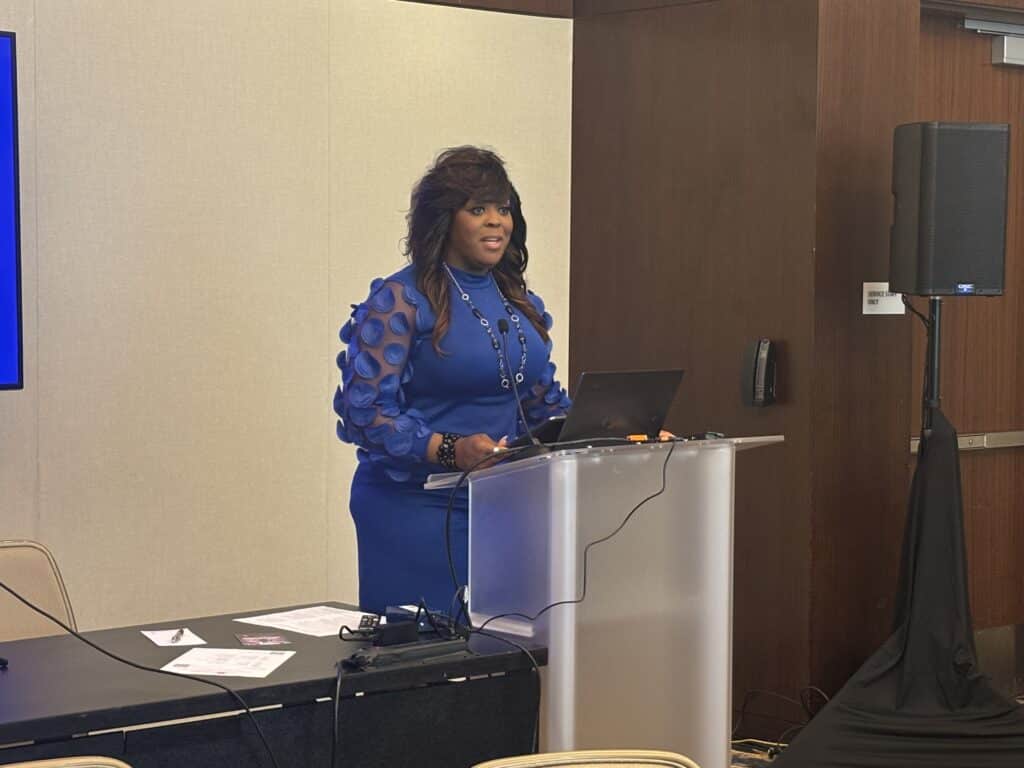
“Data shows that our black and brown siblings are still at high risk in the South, as are those aged 13-24,” she said.
The minister and activist, who was also the first transgender person of color to serve in a senior leadership position as the Alabama state director with the Human Rights Campaign, said that continued HIV/AIDS stigmatization is a leading culprit fueling the infection rates.
“HIV/AIDS is something that was rarely spoken about in the deep South. We need to reduce the stigma and engage in conversation,” said Anderson-Harvey. And these conversations, she adds, need to be in the church.
“The role of the local church is to ensure that we are being a spiritual support for all people. That means we need to continue talking about preventing the infection, finding ways to open the conversation in worship, perhaps during prayer and sermons. If we lift concerns such as heart disease and breast cancer, why not HIV/AIDS?” said Anderson-Harvey.
For pastors and congregants who might feel ill equipped to broach the HIV/AIDS conversation, Anderson-Harvey offers this advice: seek outside help.
“Find an organization to partner with and get resources to offer the congregation,” she said, adding that she also told her Southern pastors especially to “take necessary professional development” to gain the skills and knowledge to begin advocating for HIV/AIDS awareness.
The faith community continues to rally
Anderson-Harvey believes houses of faith can — and will — have a powerful impact when it comes to ensuring the continuation of great strides in HIV/AIDS prevention and treatment. She is not alone.
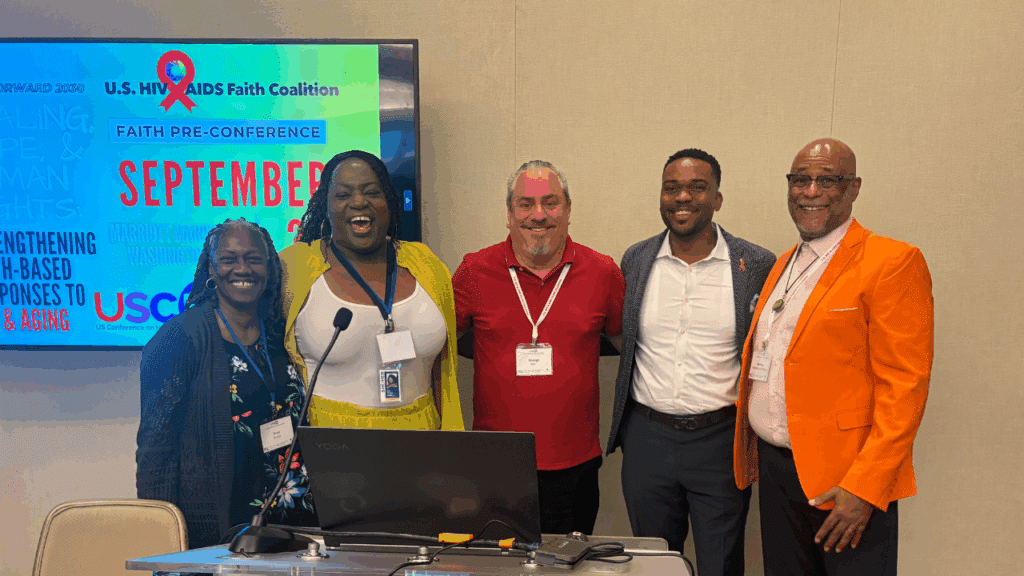
On Sept. 3, Anderson-Harvey and the Rev. Bentley deBardelaben-Phillips, Minister and Team Leader of Education for Faithful Action and Transitional Executive of UCC’s Love of Church, joined other faith leaders and HIV/AIDS activists at the United States Conference on HIV/AIDS (USCHA) Interfaith Preconference hosted by the U.S. HIV & AIDS Faith Coalition.
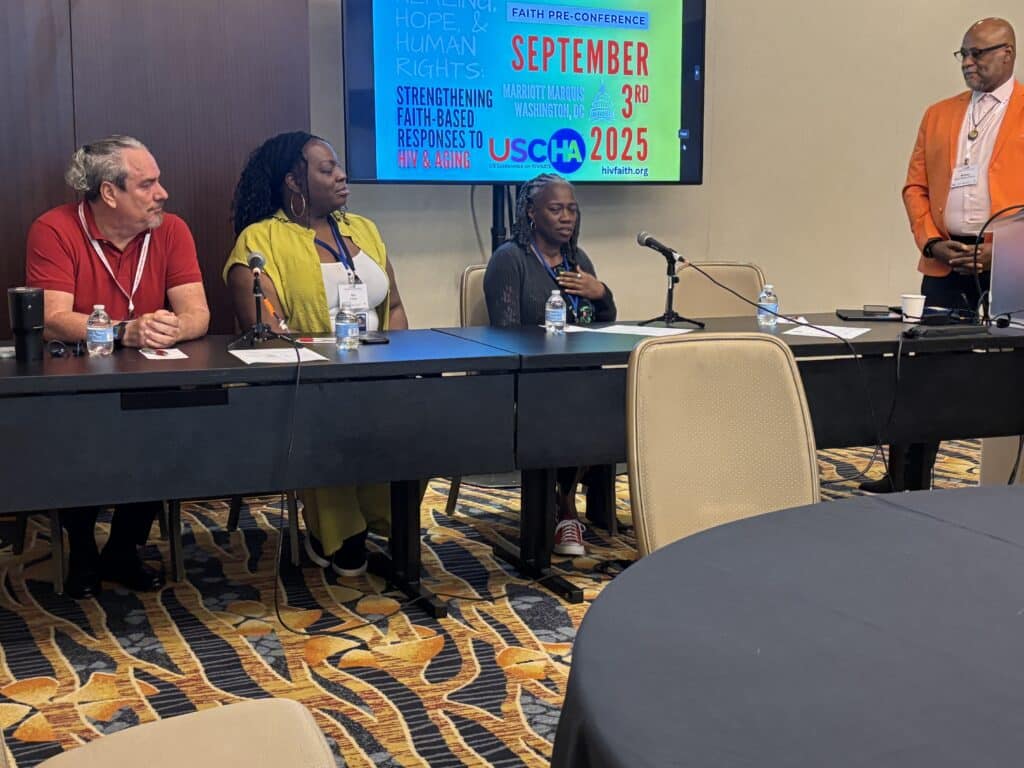
USCHA is the largest gathering of community leaders, service providers, government officials, policymakers, and healthcare professionals in the United States. For the past decade, an interfaith preconference has been a venue for faith-specific conversations. The theme of this year’s preconference was “Healing, Hope & Human Rights: Strengthening Faith-Based Responses to HIV & Aging.”
You can watch the conference here:
For Anderson-Harvey, it was an uplifting gathering, reminding all that the net to cast in HIV/AIDS awareness and advocacy continues to be wide.
The UCC has been a long-time vocal HIV/AIDS witness, approving a 1983 General Synod resolution for care and research funding and then, in 1989, establishing the UCC HIV and AIDS Network (UCAN).
Click here to learn about the available UCC resources.
Other helpful resources include an HIV/AIDS funding tracker available here as well as an interactive online map (here), visualizing the impact of the HIV epidemic on communities across the United States.
Content on ucc.org is copyrighted by the National Setting of the United Church of Christ and may be only shared according to the guidelines outlined here.
Related News
Hawaii UCC church welcomes volunteers into community’s work toward healing from wildfires
At Po’okela Church, new seats in the first rows of the sanctuary have a special purpose. The...
Read More
In The Weeds
Spring like weather is emerging across the United States. The winter months were challenging...
Read More
Women’s History Month and the Work of Justice
Women’s History Month is often framed as a time to look back, to remember the pioneers who...
Read More