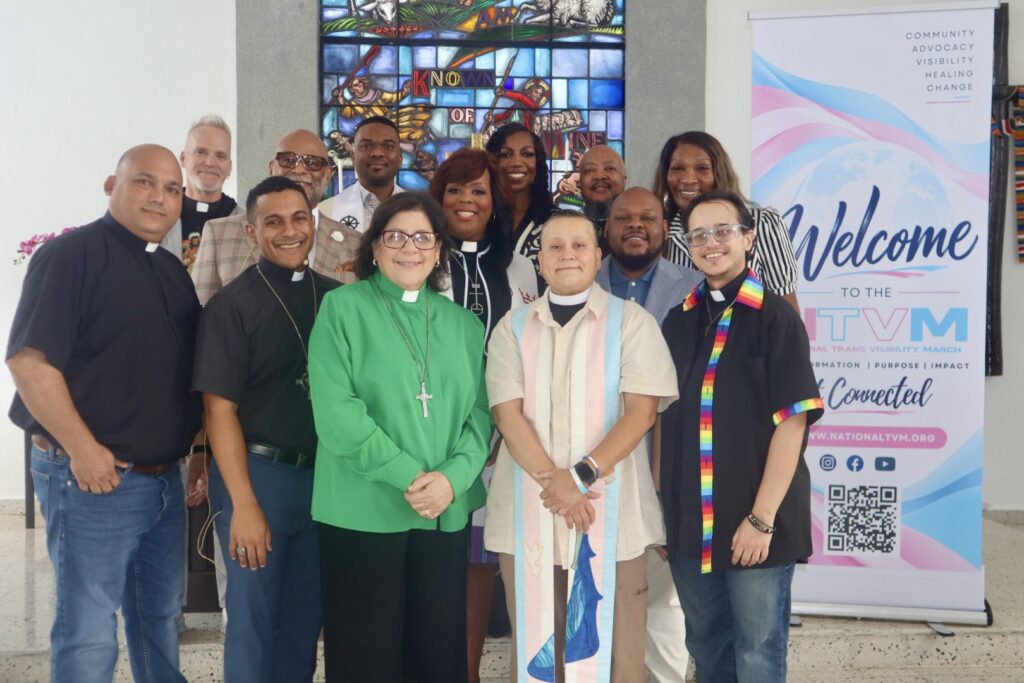
Faith, Visibility, and Justice: UCC Joins National Trans Visibility March in Puerto Rico
The following is a roundup of the National Trans Visibility March and Gathering that was held in Puerto Rico October 14-17. The Rev. Carmarion D. Anderson, Minister for Congregational Leadership recounts the event, offers reflections and shares the importance of fighting for Trans rights.
Against a backdrop of increasing political attacks, threats to health care access, and challenges to the fundamental rights of transgender people, a gathering of advocates, faith leaders, organizers, and allies was held in San Juan, Puerto Rico, for the 2026 National Trans Visibility March (NTVM), October 14–17.
The multi-day gathering created opportunities for education, advocacy, spiritual reflection, community building, and collective action. With participants representing Puerto Rico, the continental United States, the Caribbean, and beyond, the event emphasized a powerful message: transgender visibility must extend beyond recognition to include meaningful protections, equitable resources, and lasting systemic change.
Through its Gender and Sexuality Justice Ministry, the United Church of Christ (UCC) continued its commitment to transgender justice by supporting faith-centered programming and creating opportunities for dialogue at the intersection of religion, public policy, and human rights. The Rev. Bentley de Bardelaben-Phillips, Minister and Team Leader for Education for Faithful Action (EFA), represented the UCC, extending the denomination’s official greetings and affirming its partnership with the National Trans Visibility March and the broader movement for transgender justice.
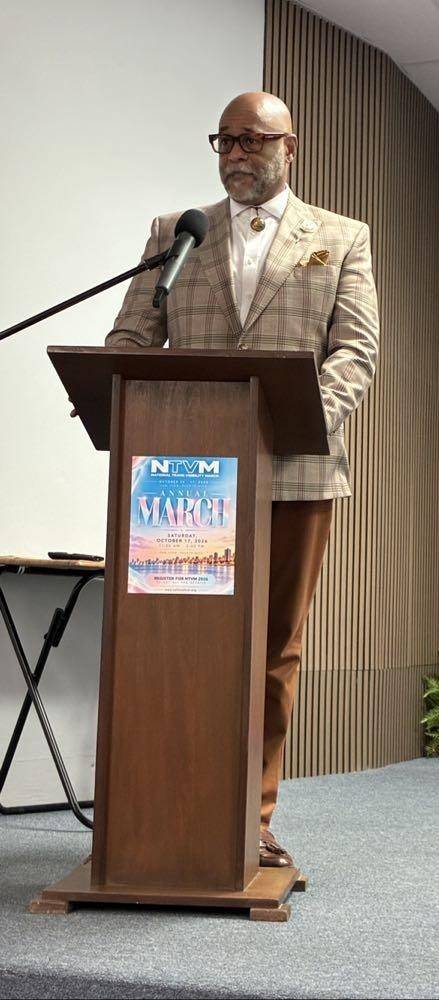
The first full day of programming, October 15, featured a “Policy, Safety, and Wellness Summit” that brought together community advocates, organizational leaders, and public health professionals to examine the urgent needs facing transgender and gender-expansive communities.
The opening plenary addressed the realities of living amid heightened political hostility, discrimination, and barriers to essential services. Speakers identified persistent gaps in health care access, personal safety, legal protections, and public policies that disproportionately affect transgender people, particularly transgender people of color and others from historically marginalized communities.
Public health conversations were also central to the gathering. Major sponsors, including Gilead Sciences and ViiV Healthcare, supported discussions addressing HIV prevention, sexually transmitted infections, and access to culturally responsive health care.
The conversations reinforced that health equity requires more than medical treatment. It also demands affirming environments, accessible prevention tools, community education, and policies that recognize the dignity and lived experiences of transgender people.
An important component of the summit was a UCC-sponsored Global Faith and Policy Roundtable, which brought together diverse faith and advocacy panelists to examine the relationship between faith, public policy, and the global movement for transgender justice.
The roundtable provided an opportunity to explore how religious communities can move beyond symbolic inclusion toward public witness, meaningful partnerships, and sustained advocacy. The conversation also challenged faith institutions to recognize their responsibility to confront religious narratives that have been used to justify discrimination and exclusion.
For the UCC, this engagement reflected its longstanding commitment to extravagant welcome, human dignity, and the belief that faith must be expressed through justice-seeking action.
On Friday, October 16, the UCC once again sponsored the NTVM’s interfaith worship service, which it has sponsored and supported since the organization’s inception.
Hosted at Iglesia Evangélica Luterana de la Transfiguración in San Juan, the service created sacred space for worship, reflection, spiritual affirmation, and solidarity within the transgender community.
The worship gathering was coordinated and developed by the Rev. Elder Carmarion D. Anderson, Minister for Congregational Leadership in the UCC’s National Ministries, who also serves as National Strategy Director for Faith-Based and Wellness Initiatives for the NTVM. The service theme focused on Created for Such a Time as This: Rising in Hope, Rooted in Courage. Additionally, the Rev. Yadi Martinez-Reyna, Co-Pastor of First United Church of Christ in Second Life and Founder of ColorSplash Out, served as co-coordinator, helping ensure that the worship service was inclusive, accessible, and welcoming to participants across bilingual and multicultural communities.
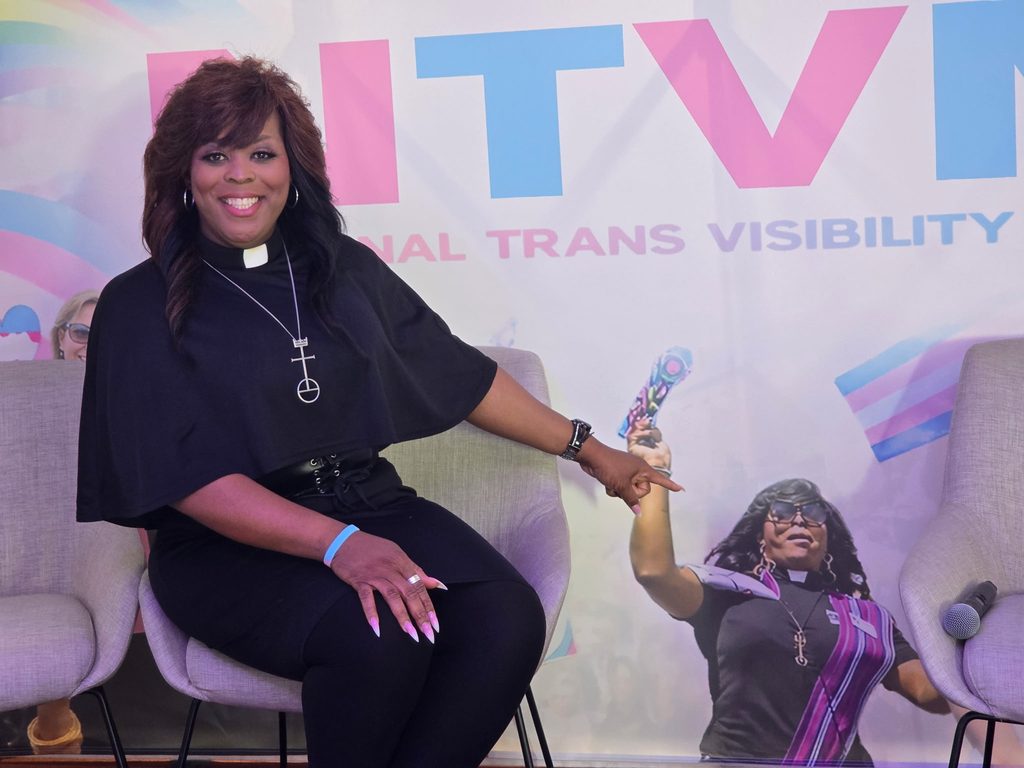
Bringing together spiritual traditions and voices from across communities, the service reflected the importance of cultivating faith spaces where transgender and gender-diverse people are not simply tolerated but fully welcomed, celebrated, and empowered.
For many transgender people, religious institutions have historically been places of rejection, exclusion, and spiritual harm. The interfaith service offered a different witness, one rooted in love, healing, belonging, and the sacred worth of every person.
The gathering reinforced a vital theological conviction: transgender people are not outside the reach of God’s love, nor are they outside the call to spiritual leadership and community transformation.
The UCC’s continued sponsorship also demonstrated that transgender justice is not separate from the church’s mission but deeply connected to its commitment to building a just world for all.
Friday’s programming also featured strategic empowerment and wellness conversations, including discussions among funders, advocates, and community leaders about the importance of strengthening resources and long-term support for transgender-led organizations.
These discussions underscored the need for sustainable investment in community-based organizations, particularly those providing critical services in health care, housing, education, economic empowerment, and advocacy.
The evening concluded with the annual Labor of Love Awards celebration, recognizing individuals whose leadership, service, advocacy, and commitment have advanced and enhanced the well-being of transgender communities.
The celebration provided an important reminder that, even amid significant challenges, transgender communities continue to demonstrate extraordinary leadership, creativity, resilience, and joy.
On Saturday, October 17, the National Trans Visibility March brought advocates, community members, and allies into the streets of San Juan for a public demonstration of solidarity, resistance, and hope. The Rev. Todd Atkins-Whitley, Senior Pastor of Danville Congregational Church, United Church of Christ, offered the official invocation on behalf of the denomination.
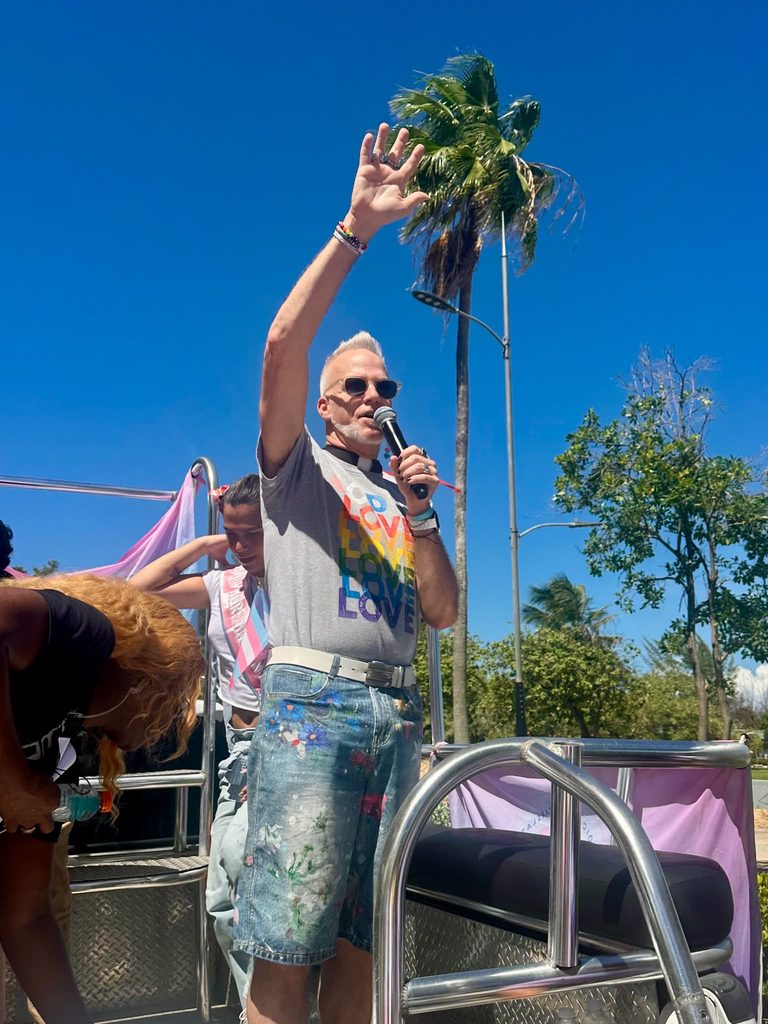
The march concluded at the Puerto Rican Capitol, where participants drew attention to anti-transgender legislation and called for greater protections, equitable access to health care, and recognition of transgender people’s human rights.
Among those participating in the gathering were Puerto Rican activists, legal advocates, and community leaders working to confront policies that threaten the safety and well-being of transgender and gender-diverse people.
The choice of Puerto Rico carried particular significance. Amid legislative restrictions affecting gender-affirming health care and other protections, the gathering served as a visible expression of solidarity with local transgender communities and their ongoing struggle for equality.
The march affirmed that transgender people will not be silenced, erased, or pushed to the margins of society.
For faith communities, the gathering also offered a reminder that solidarity cannot end at the sanctuary doors. The call to love one’s neighbor must extend into legislative chambers, public health systems, community organizations, and the streets where people are demanding justice.
Since its first national march in Washington, D.C., in 2019, the National Trans Visibility March has evolved into a movement connecting advocacy, public policy, community wellness, and collective organizing.
The 2026 gathering reinforced the importance of building coalitions that cross geographical, cultural, religious, and institutional boundaries.
The UCC’s participation in this year’s gathering represented more than sponsorship. It embodied a continued commitment to standing alongside transgender communities, challenging injustice, and affirming the sacred dignity of all God’s people.
As participants departed Puerto Rico, the message remained clear: the movement for transgender liberation requires more than visibility. It requires sustained advocacy, meaningful partnerships, accessible resources, and the courage to confront systems that deny people their humanity.
Visibility may bring us together, but justice must be what moves us forward.
For communities of faith, that work is not simply a matter of social responsibility. It is a sacred calling.
The 2027 National Trans Visibility March will be held in Atlanta, Georgia, in July 2027.
Content on ucc.org is copyrighted by the National Setting of the United Church of Christ and may be only shared according to the guidelines outlined here.
Related News
Connecticut clergy urge men to break silence around sexual violence
A group of male clergy gathered recently in Connecticut to share the message that “silence...
Read More
What’s Next?
Midterm elections are here, with high stakes and potential shifts in power causing anxiety and...
Read More
Peace at the polls: UCC clergy and laity show up on Election Day, providing calm for the anxious and agitated
When the Rev. Allison Smith arrived at Lewiston, Maine’s polls for early voting, it wasn’t...
Read More