As Chicago Theological Seminary ends 170 years of educating ministry leaders, talks to affiliate with Yale Divinity School get underway
Chicago Theological Seminary (CTS) and Yale Divinity School (YDS) have announced a proposed affiliation agreement, which they say is “grounded in shared commitments to theological education, public leadership, and communities dedicated to justice. If approved by both institution’s boards and other regulatory entities, CTS will become known as the Chicago Theological Institute at Yale Divinity School. This would effectively end CTS’s 170-year history as a degree granting institution.
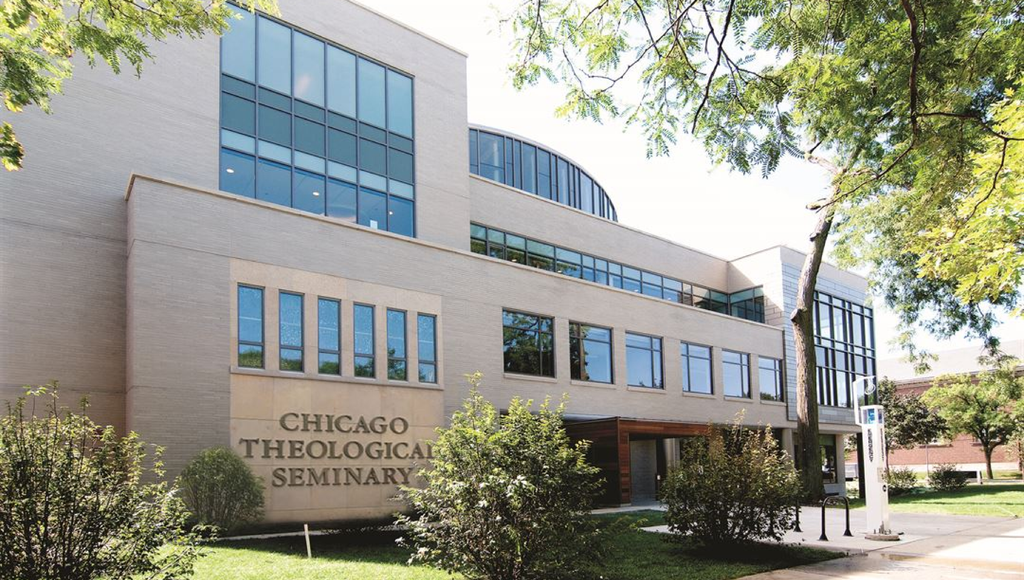
The news comes after CTS, an affiliated seminary of the United Church of Christ, paused admissions for the 2026–2027 academic year and, by mutual agreement with the University of Chicago, concluded its lease on the university-owned building it had occupied since 2012 at 1407 East 60th Street in Chicago’s Hyde Park neighborhood. The university has not yet made public its plans for the four-story, 78,000-square-foot space, which is close to the new Barack Obama Presidential Center.
The seminary is currently offering remote learning for this academic year.
CTS, which was founded in 1855 and located in Hyde Park since the 1920s, has faced serious financial problems in recent years. In addition to pausing admissions of new students to its degree programs, the seminary reported annual operating deficits exceeding $1 million, according to a report by the Chicago Tribune in April.
‘The arithmetic of grace’
According to a press release from both institutions, CTS entered a “multiphase process” beginning in 2026. The three-part phase includes CTS continuing operations as normal for the remainder of the academic year. The seminary plans to hold its 2027 commencement ceremonies, and will work with YDS to advance the proposed affiliation towards final approval. Phase 2 calls for CTS to graduate remaining students or transfer them to approved teach-out partner schools. Phase 3, the final phase, if the proposed affiliation is approved, calls for CTS to become the Chicago Theological Institute at Yale Divinity School.
Through continuing education and online certificates, the Institute would serve bi-vocational religious leaders, professionals seeking values-centered leadership, and curious learners eager to understand how religion and spirituality shape the world, according to both CTS and YDS.
The Rev. Brad R. Braxton, president of CTS, says the proposed affiliation carries the seminary into a new era rather than ending it. Braxton said the conversation began at a lunch meeting with YDS Dean Gregory Sterling in May 2025. After the CTS Board of Trustees and Leadership Team examined several pathways, the Board voted in June 2026 to pursue the proposed affiliation with YDS.
“As that conversation continued, a quiet clarity surfaced,” said Braxton. “It was a whisper of possibility, and it was that awareness that CTS’s mission and legacy might flourish within YDS’s expansive ecosystem.”
Braxton said CTS entered a strategic planning process roughly four years ago that considered several pathways to long-term sustainability, including a possible university affiliation. According to Braxton, YDS and CTS share a deeper alignment that has to do with a “generous appreciation for diverse denominational heritage.”
“By the arithmetic of grace, we are trusting that one plus one can be more than two,” said Braxton.
Mounting financial woes
CTS stopped admitting new students to its degree programs this past April amid growing financial difficulties. The seminary reported operating losses of about $1.8 million in fiscal year 2024, and $1.4 million in fiscal year 2025, according to the Chicago Tribune. Enrollment has also been a challenge for the 170-year-old institution, having fallen from 297 students in 2023 to 214 in the fall of 2024.
According to a 2025 report from The Association of Theological Schools (ATS), total enrollment at seminaries and theological programs exceeded an 81,000 headcount, or roughly 50,000 full-time equivalents across its member schools in the US and Canada. These numbers, however, favor large, conservative, and evangelical institutions, while mainline and mid-sized schools, like CTS, face significant headwinds.
That same report said that Master of Arts (MA) and Doctor of Philosophy (PhD) degrees outpaced the traditional Master of Divinity (MDiv) degrees, though the MDiv degree remains a staple with tens of thousands of applicants annually.
A strong alumni response
When news of the proposed affiliation agreement was made public, reaction from alumni across the country was swift and not everyone was happy with the news. Comments on CTS’s Facebook page ranged from questions about what the proposed affiliation means to criticism about how the seminary wasn’t transparent about how much financial stress they were in.
“I’m bewildered at the demise of Chicago Theological Seminary,” wrote the Rev. Chuck Currie, an ordained UCC minister and a 2015 graduate of CTS’s Doctor of Ministry program. “CTS has, from my perspective, done a poor job of communicating how much trouble the seminary has been in. All these changes came without notice.”
The Rev. Shari Prestemon, Associate General Minister and Co-Executive of Global Ministries is a 2008 graduate of CTS, and also sat as a member of their Board of Trustees for several years. Prestemon says that while she is sad the seminary won’t be around in the same way, she understands the difficult challenges many freestanding seminaries are facing, especially in today’s political landscape.
“As a former CTS trustee and leader in the church, I also understand that these decisions are never made easily,” said Prestemon. “I trust that the Board of Trustees has chosen this path after much prayerful and agonizing discernment.”
According to Braxton, the decision to enter into the proposed affiliation with YDS was one that was carefully weighted against many different options, including other UCC affiliated seminaries and Chicago-area institutions. He said that as the process went forward, it became clear that many of the institutions CTS was in conversations with faced some of the same headwinds reshaping theological education.
“As we listened and learned alongside them, [it became clear] that some of those paths they are pursuing did not fully match CTS’s aspirations for this moment,” said Braxton. Braxton reiterated that there was “no disregarding” of the UCC’s importance and legacy, but a “deep embrace of that legacy with a different way of framing it.”
A path forward
While the news about the proposed affiliation came as a shock to many in the CTS community, it is not final and must go through each institution’s governing board and other regulatory entities before it becomes a reality. That process is more than likely several years away from fruition, according to Braxton.
Gregory E. Sterling, the dean at YDS says that Yale is committed to maintaining the legacy of CTS while making access to theological education its priority in the proposed transition.
“At YDS, we plan to maintain our residential model for degree-seeking students while also expanding online certificate offerings—especially for those who may be unable to come to New Haven to pursue a degree,” said Sterling. “I am grateful for CTS’s thoughtful partnership throughout these initial conversations and look forward to expanding what theological education can offer to a new generation of leaders.”
Rev. Karen Georgia Thompson, the UCC’s General Minister and President/CEO said that CTS played an important role in the formation and educating of UCC ministers and leaders. Thompson wants CTS to be celebrated for its many contributions, years of ministry and mission, and its ecumenical engagement.
“This is also a time for reflection on the future of theological education which continues to evolve,” said Thompson. “There is a future for CTS, one that will look different from its historical offerings. This change would allow CTS to continue to provide continuing education and perhaps assist in addressing emerging needs for congregations.”
“Our task, as I understand it at this moment, is to adjudicate with care the creative tensions among CTS’s past, present, and future,” said Braxton. “I hope that these musings will bless the family in one way or another, and of course our ongoing commitment to multiple opportunities for discussion and discernment.”
Content on ucc.org is copyrighted by the National Setting of the United Church of Christ and may be only shared according to the guidelines outlined here.
Related News
As Chicago Theological Seminary ends 170 years of educating ministry leaders, talks to affiliate with Yale Divinity School get underway
Chicago Theological Seminary (CTS) and Yale Divinity School (YDS) have announced a proposed...
Read More
‘An act of love’: A UCC church’s commitment to preserve and share African American history in South Dakota town
A small, 140-year-old African Methodist Episcopal (AME) Church in Yankton, South Dakota, was...
Read More
No Judgment Zone
These days, it seems the lines are drawn in the sand with rigidity when it comes to political...
Read More