‘An act of love’: A UCC church’s commitment to preserve and share African American history in South Dakota town
A small, 140-year-old African Methodist Episcopal (AME) Church in Yankton, South Dakota, was open to the public as a museum of the city’s African American history for the first time this summer.
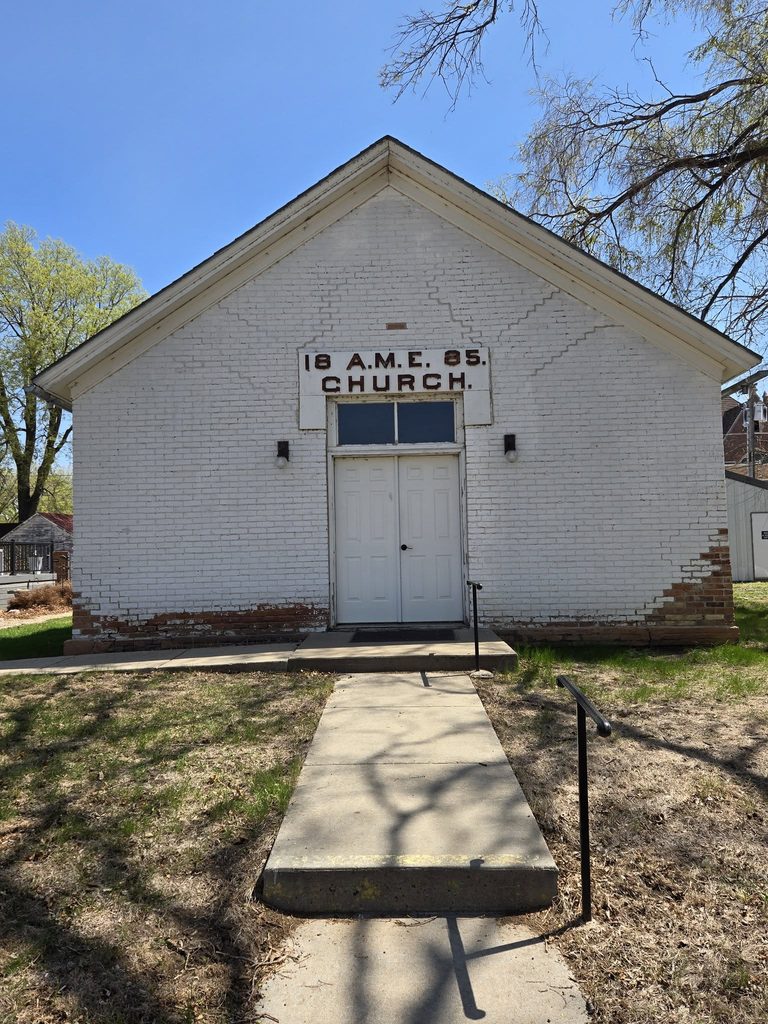
The simple brick Yankton AME church has been under the care of the Yankton United Church of Christ (Congregational) since 2002. The historic church is older than the state of South Dakota and one of the region’s earliest African American-founded churches.
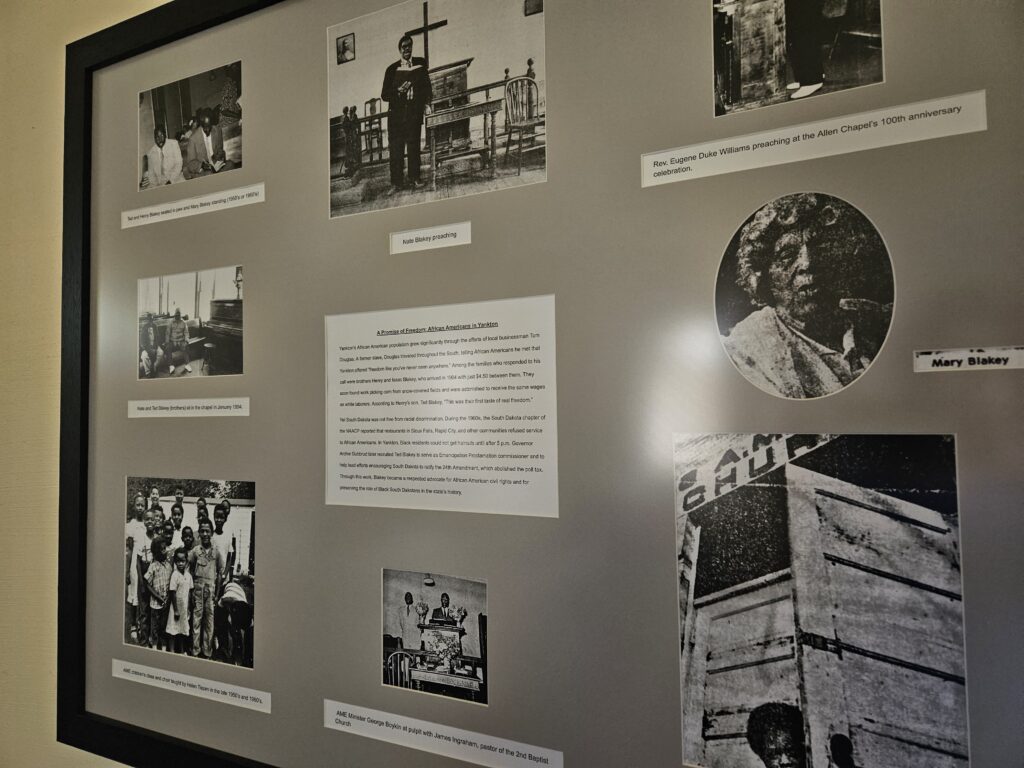
It was in 2002 that Ted Blakey, the last-known living member of the Yankton AME Church, transferred its ownership to the nearby Yankton UCC. Then-pastor, the Rev. Nelson Stone, committed to working with Blakey to preserve the AME building and support Blakey’s dreams of converting the church to a center for African American history in South Dakota. Blakey, who died in 2004, is known as one of South Dakota’s civil rights champions.
The connection to the Yankton UCC happened because of proximity – the AME church sits across a parking lot from the UCC church – but, more importantly, because of a strong relationship and trust.
Both Stone and Blakey were “great storytellers and believers in equity,” said Jennifer Powell, a Yankton UCC member who has invested in historical work with the Yankton AME church. “They just fell in line together, and it became a project.”
It was a long-time coming to open the Yankton AME Church as a museum to the public this year on July 3 as part of a city-wide “Museum Tour Day,” an event of America at 250. But that event helped create a deadline for Yankton UCC volunteers to focus on condensing the research and photos filling thick scrapbooks into historical displays for the church, Powell said.
As around 150 people visited the church in July, “it felt like we were honoring our promise to the last member of the AME church,” reflected Laura Johnson Andrews, Yankton UCC church administrator.
Seeking ‘freedom like you’ve never seen anywhere’
Part of that history involves African Americans migrating to Yankton in the 1870s. Yankton, then the capitol of what was designated Dakota Territory, had become a busy steamboat port on the Missouri River with work opportunities where African Americans described experiencing less racial prejudice.
According to the research now displayed in the church, local businessman Tom Douglas, who had been formerly enslaved, toured the South promising African Americans that Yankton offered “freedom like you’ve never seen anywhere.” Among those who heeded this call was Blakey’s grandfather, who arrived in Yankton in 1904 and was “astonished to be paid the same wage as white workers.”
As African Americans migrated to the area, an AME church began meeting in the shop of Henry Robinson, a Black barber in Yankton. In 1885, congregants purchased land and built the Yankton AME Church with wood from an old steamboat wreck. Amos S. Lewis, who had been formerly enslaved, laid the walls with locally-made Yankton bricks. John T. Coxhead built pews and a side table, which remain in the church.
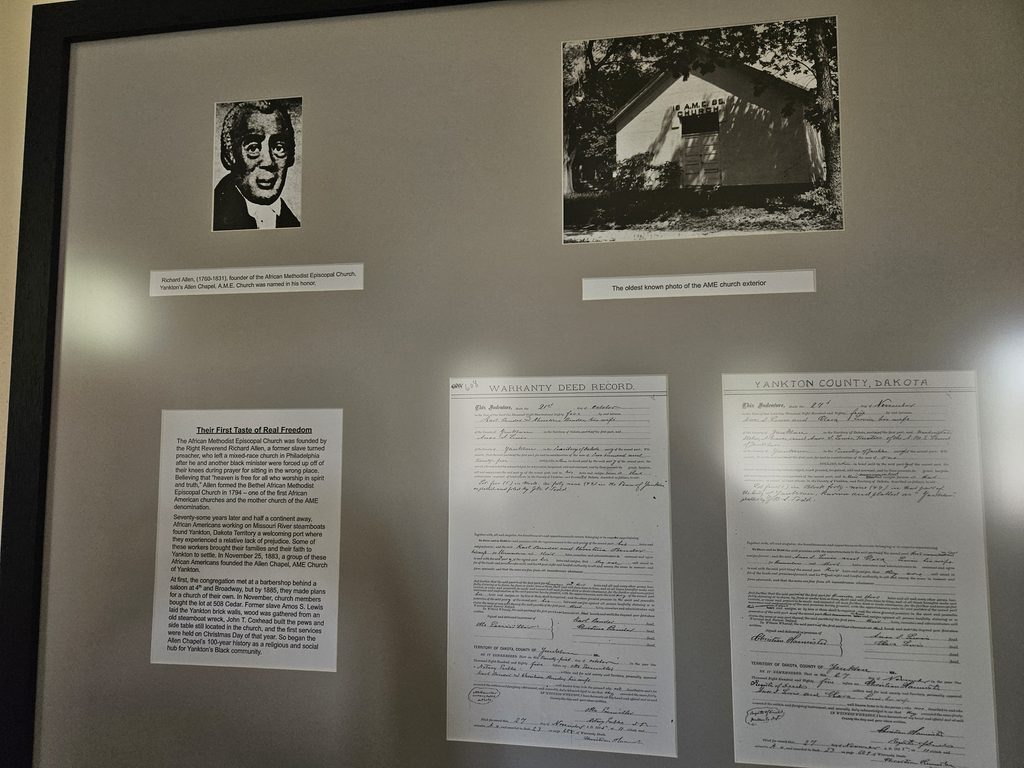
The church founders named it the Allen Chapel after the AME denomination’s founder, Richard Allen, and held its first services on Christmas 1885.
By the 1980s, after a century of worship, the church had diminished to a handful of regular worshippers. Over the decades, many African Americans had moved to places like Sioux Falls when industry closed in Yankton, Anderson described learning through research.
Yankton AME closed its doors soon after celebrating its centennial in 1985. Blakey, who had grown up in the church and witnessed its unique history, eventually entrusted the building and the dream of preserving its history to Yankton UCC.
Restoring a legacy
Yankton UCC has remained devoted to stewarding the building and ensuring its stories remain known in Yankton. There have been several phases of restoration.
In the early 2000s, Yankton UCC worked with Blakey to have the building designated a historic site and gain significant funding for renovations. This included adding an indoor restroom, small kitchen, and storage and utility rooms to make the space more versatile. They also added heating and cooling systems and handicap-accessible sidewalks.
A re-dedication service was held at the Yankton AME Church in 2004, with Blakey present. He passed away later that year.
“The building itself, the museum itself, is kind of a tribute to Ted Blakey,” Powell said. “He was an outstanding individual citizen in Yankton and South Dakota. He’s in the South Dakota Hall of Fame.”
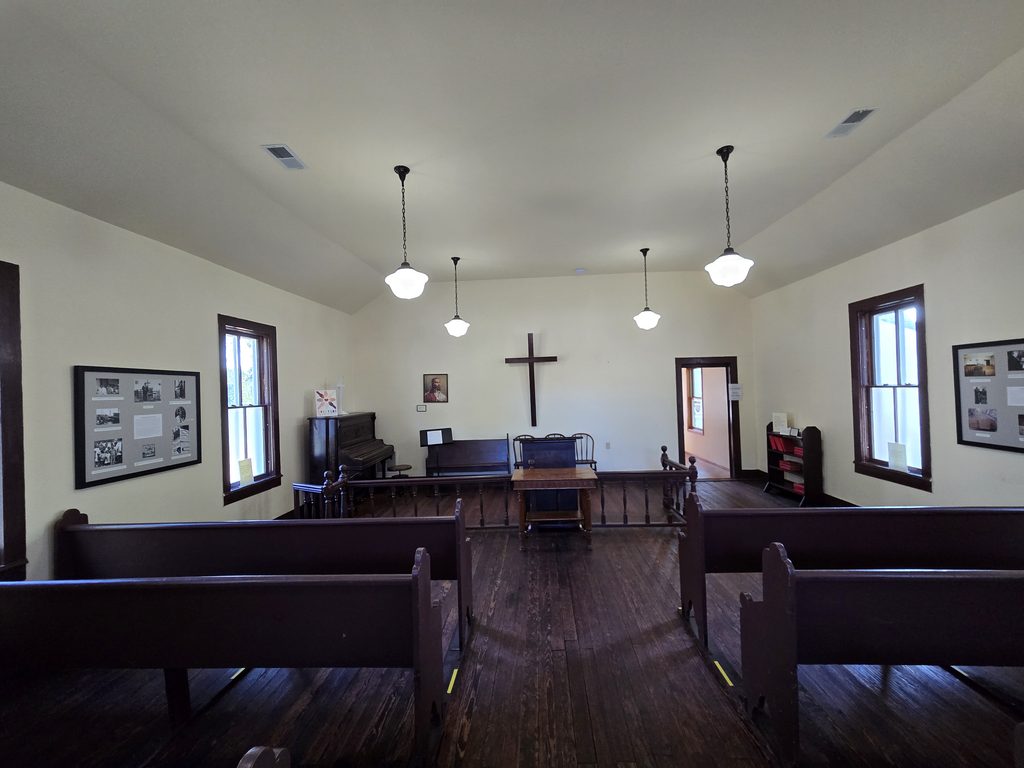
These days, the Yankton AME church is what Powell describes as a rustic, intimate space that has been used for music performances, book clubs, public forums, and group meetings. It once housed a literacy group that needed temporary work space.
Yankton UCC members have donated skills and work on the building throughout the years. A church volunteer built new storm windows to replace the originals – tedious work because no two windows had the same measurements, Powell said.
In preparing to open the AME church as a museum, church volunteers restored the wooden floors and affixed the original pews and altar rails to the floors. They secured some church and local funding, and had the historical displays framed locally.
“I always felt the best about how we asked people to help, and so many people out of so many interests came together to get it together within a couple of months,” Powell said.
For a finishing touch, volunteers painted the original “I8 A.M.E. 85 CHURCH” sign above the door a fresh red.
‘We owe a lot of people for where we are now’
When around 150 people visited the Yankton AME Church in July, it was an opportunity to share this labor of love with the broader community, Powell reflected.
“I had some friends here in Yankton who have been in the community and never seen the building and didn’t know what it was for. For them to be there and grow to appreciate the work and history that this African American community put into this building and so many buildings in the town – we owe a lot of people for where we are now. That’s good to recall and know,” she said.
“I love that we have it set up as a church again,” Anderson said. “Some elements can be moved and used differently, but when you walk in the door, it’s a church. If Ted Blakey could walk in tomorrow, it’s his church that he could come back and sing in. I love honoring that.”
‘An act of love’
Members of the Yankton UCC church have given significant consideration to how they, as a predominantly white church, can best steward this African American history. At the center is respect, learning, and continued commitment to the relationship and promise that Yankton UCC made.
Powell described a natural alignment of this work with their UCC church values of promoting diversity and acceptance, and being open and affirming.
“We really want to appreciate the work that these early pioneers did, to make sure their work isn’t lost, and to bring more education to our community, church, and children,” she said.
“This is something that extends what we believe in the church. As a church we want to be caring,” Anderson said. “It’s the message that Jesus gave, to love God and love our neighbors as ourselves. We think love is important. This is an act of love.”
Content on ucc.org is copyrighted by the National Setting of the United Church of Christ and may be only shared according to the guidelines outlined here.
Related News
As Chicago Theological Seminary ends 170 years of educating ministry leaders, talks to affiliate with Yale Divinity School get underway
Chicago Theological Seminary (CTS) and Yale Divinity School (YDS) have announced a proposed...
Read More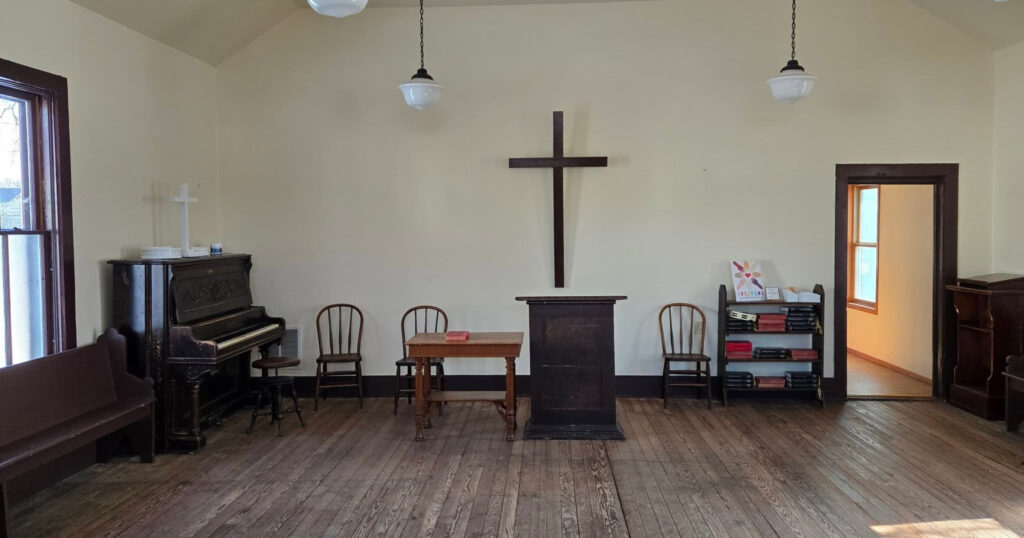
‘An act of love’: A UCC church’s commitment to preserve and share African American history in South Dakota town
A small, 140-year-old African Methodist Episcopal (AME) Church in Yankton, South Dakota, was...
Read More
No Judgment Zone
These days, it seems the lines are drawn in the sand with rigidity when it comes to political...
Read More