
A Loss for Words: When Bread becomes a Weapon
A statement delivered at a Gaza Fast Press Conference in Detroit, Michigan, August 26, 2025
I confess that for a press conference I find myself at a loss for words. So let me begin by reading something from my journal entry at the beginning of this fast…
“my friend Hassan, 84,
remembers in his family’s forced walk, the Nakba,
and works without rest
decades relentless
in the name of free
Palestine, now
drops his hands to his side.
all but spent, at wit’s end
and the body’s powerless seem,
he begins, nothing left
to lose,
a fast.
at least he can refuse to eat. for and with the people.
when tongues grow thick and dry, limbs thin
as they starve.
nothing for him but liquids and the heart’s pain.
the medicos watch
his weight, clock his vitals.
a personal counting and a call,
love become pure grief.
me? a doc charts my own ailments and
warns, parses, permits.
so. I am along for the collective rolling fast.
a day at a time and limit certain.
something foregone as intercession,
the solidarity of spirit.
tuesdays for the heart’s rhythm
ache upon ache upon ache.
always before, time to break, to take that first
bite, simple and sweet with gratitude
the mouth wells and waters ready, but now
I can barely swallow, thinking
of children’s faces, the huge
beaten and empty pots
held out. toward me. where I am in this world”
I read this partly because this morning I’m at a loss for words.
In a month when we remember the US bombing of Hiroshima and Nagasaki,
what do say when Gaza looks so much like a Hiroshima rubblescape.
Maybe nothing more than recognizing that the US and Israel have dropped
the equivalent of six Hiroshimas on Gaza.
What do you say when “food aid stations” are designed as razor wire corridors of death,
lined with American mercenaries firing automatic weapons.
In my own Christian tradition, bread is a sacrament of community and the very presence of God.
In Judaism it is a sign of liberation, of walking free.
In Islamic tradition it is the emblem of hospitality, of love, justice and extended table.
So what do you say when bread is used as a weapon, an instrument of genocide?
At least you say it is not only a violation of international law, a crime against humanity,
not only an assault on the most basic of human moral witness,
you say it is a blasphemy against God
leaving us all but speechless.
“If I must starve, let it be with dignity in my children’s eyes, not with my hands tied by silence. Let the world witness that I did not bow to hunger but stood, even as the sky emptied and the earth closed her mouth. If I must starve, let it be while I still cradle my child’s hope, not as a number lost in footnotes. Let the sea carry my name to shores that forgot my people, and let the wind whisper: she fed love when the bread was gone.”
– Nour Abdel Latif
TAKE ACTION
LEARN MORE AND DEEPEN YOUR SOLIDARITY
- Take some time to read the recently-passed General Synod resolution “Declaration for an End to Genocide in Palestine.” Collaborate with others in your community to consider how you might embody the call to “Stand in solidarity with the Palestinian people and to denounce the ongoing genocide whether that be through the context of public witness, legislative advocacy, legal action, or non-violent direct action.”
- Connect with the UCC Movement for Palestinian Solidarity and join their weekly pause for Palestine on social media.
- Organize a fast for Gaza in your own community.
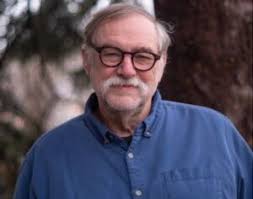
Bill Wylie-Kellermann is non-violent community activist, teacher, writer, sometimes poet, and Methodist pastor retired from St Peter’s Episcopal Church. A native and vocational Detroiter, he is now also based at Kirkridge Retreat and Study Center in Stroudsburg, PA. The author of seven books beginning with one on “liturgical direct action,” his most recent is Celebrant’s Flame: Daniel Berrigan in Memory and Reflection (Cascade 2021). A graduate of Union Theological Seminary NYC, Wylie-Kellermann has been engaged in resistance and direct action for justice and peace now 5 decades, beginning with anti-war and anti-nuclear actions, but also increasingly urban, for example with the Detroit water struggle and Michigan Poor Peoples Campaign. His teaching, writing, and action are generally framed by a theology of the “principalities and powers.” He bets his life on gospel non-violence, good news to the poor, Word made flesh, and freedom from the power of death.
Related News
The Girl in the Orange Dress
Lois Curtis was a Black artist born in Georgia in 1967, who at the age of 11 was...
Read More
Hope for Resistance
The following words are reflections, explorations, questions, and communal conversations with...
Read More
The Future of Family Farms
I am an Iowa farm girl. I grew up on a second-generation family dairy farm nestled in the...
Read More