Sermon Seeds: Wait
Sunday, February 15, 2026
Transfiguration Sunday | Year A
(Liturgical Color: White or Green)
Lectionary Citations
Exodus 24:12-18 • Psalm 2 or Psalm 99 • 2 Peter 1:16-21 • Matthew 17:1-9
https://lectionary.library.vanderbilt.edu/texts/?z=e&d=23&y=17134
Focus Scripture: Exodus 24:12-18
Focus Theme: Wait
Series: Descending From Heaven (Click here for the series overview.)
Reflection
By Cheryl A. Lindsay
Have you ever had an experience of waiting for something for a very long time? Have you ever started something that you realized you would not be around the fruit of your efforts? I was in a meeting with an ecumenical group of colleagues working through a complex theological issue when one person said, “We have to realize this work may extend beyond our lifetimes.” Immediately, we realized she was right, and it also had the impact of changing the conversation. The importance of the issue did not change, nor did our commitment to continue to address it. Frankly, the urgency of response remained, but there was still a release of pressure—not to get it right—but to get it resolved. It was the word we needed to help us to continue to move forward in a more measured and responsive way. We did not have to solve it for all time, we just needed to address the particular need of this moment.
There’s waiting that arises because of uncertainty—we do not know what to do. And, there’s waiting that arises from inactivity—we do not do what needs to be done. But, there also exists the strain of waiting when you know what to do and you want to do it, but the time is not right for it. There’s a tension tangibly apparent in the body of a sprinter, crouched on the starting line, waiting for the race to begin. We witness the agonized hope of a couple dealing with infertility and also struggling with the treatments and procedures to overcome it. Many of us know what it is to wait for the phone to ring or our inbox to receive confirmation that a new opportunity, new relationship, or new resource has become available to us. Waiting strains and stretches us with feelings of anticipation, dread, or disarray. Yet, we spend much of our lives waiting.
As the last chapter before the section that deals mainly with the building of the tabernacle (chs. 25–40), Exodus 24 is a transitionary chapter of sorts. It revisits a number of things we have seen throughout the book. The covenant, whose stipulations have been recorded in 20:22–23:19, is confirmed through worship, sacrifice, personal dedication, and the writing of the law. But this chapter also looks ahead. As it opens, Moses is called to ascend the mountain yet another time (24:1). He does so in verses 13–18, and during this time on Mount Sinai he receives instructions concerning a number of things that will not only dominate the concluding chapters of Exodus, but the Pentateuch and much of the Old Testament: the building of the tabernacle, the priesthood, and Sabbath regulations. Also during this visit the famous golden calf incident takes place (ch. 32).
Peter Enns
The passage presented here is simple and easy to overlook given what will follow. It may function, in our reading, as a preview like a movie trailer. It prepares us for what is to come. The temptation to see it only as instructive for Moses, his companions, and the people of that moment squanders an opportunity to consider the instructions as relevant for other transitory moments.
Note that the Holy One informs Moses with detail regarding their ensuing encounter. Moses knows the purpose of his excursion up the mountain. Joshua accompanied him. Yet, the inference is that the elders remain oblivious to what will happen. They are told to wait and what to do if there are disputes among the people.
Perhaps the Holy One forbade him from being transparent with the elders, but it appears that Moses does not sufficiently prepare them for leadership without him. Likely, Moses did not know how long he would be unavailable, but he knew enough to know that he needed to delegate his authority at least partially and explicitly to Aaron and Hur who remained behind.
He anticipates conflict but not confusion. He expects disagreements but not despair. Moses made provision for arguments but not assurance. How do we prepare ourselves to wait?
Verses 12–18 are parallel to the two parts of verses 1–11, with emphases on (1) the divine authority that lies behind the “instruction” given to the people and (2) the theophanic context for the tabernacle instructions, which provide a worship complex in which the presence of God is the central reality. This ties law closely together with worship. Worship grounds the ins and outs of daily life in God. Obedience to the task set for the people is in need of the sustenance provided by the ongoing experience of the promised presence of God in worship. Without the presence of God, there would be no point in Israel’s continuing journey (so chaps. 33–34). Worship must inform and undergird obedience.
Terence E. Freitheim
Interestingly, Moses leaves Aaron, the priest, in charge. It would have been within Aaron’s strengths and experience to lead the people in extended worship while Moses remained on the mountain. Worship would have served as an antidote to uncertainty and despair. They would have reminded themselves of the covenant and God’s wonderful acts in their history. They would have encouraged one another in the wait. Moses considered what to do if things went wrong, but did not provide guidance to facilitate things going right. Considering how much worship, and keeping the Sabbath specifically, will be highlighted in the commands Moses received, it seems a particularly wasted opportunity.
Contemporary discussion of Sabbath has moved in a very different direction from the traditional concerns about the proper day or the approved activities. The most pressing concern in current reflection on Sabbath is the frantic pace of work and cultural lifestyle of modern society, as well as growing economic injustice in the global economy. In 1998, Pope John Paul II addressed the problem of the frantic lifestyle of modern society in the apostolic letter Dies Domini. He cautioned Catholics to resist the “weekend” mentality that has come to dominate modern culture by keeping the Lord’s Day holy. Other modern authors expand on the same problem of our fast-paced, work-oriented culture. Wayne Muller, for example, bemoans the relentless emphasis on success and productivity, which deprive contemporary humans from any life rhythm or time for reflection (Muller, 1–12). Abraham Heschel deepens the same perspective, arguing that Sabbath is not an interlude between work, but the climax of living (Heschel, 101). The contemporary discussion moves even further away from the past concern about time and orthodox observance by tying Sabbath to the problems of social justice in the global economy. Richard Lowery argues that Sabbath is about recovering proportion, social solidarity, and economic justice in the global marketplace (Lowery, 1–6). The emphasis on economic justice returns to the central theme of Sabbath law in the Decalogue and in the Jubilee laws (Leviticus 25).
Thomas B. Dozeman
Tricia Hersey, in her book Rest Is Resistance: A Manifesto, argues about the centrality of rest as a countercultural act that affirms dignity, celebrates life, and resists oppressive systems. Naps are a ministry; retreat is holy. Rest is good.
As these texts are considered within the lens of Transfiguration Sunday, the gospel reading enters the conversation. Jesus takes his own companions on an excursive up a mountain for a divine encounter. The Law and the Prophets, already established, meet there with the Incarnation. There is a continuum representation of God’s abiding presence and pursuit of relationship with Creator’s people. Peter, as those familiar with the text, famously wants to stay. He often gets chastised by that, but it is not only a reasonable response…perhaps it was a desired one.
Jesus would send these disciples into ministry and leadership of a movement. He taught them to spread the good news in word and deed. He enabled them to apprentice him in signs and wonders. Why would he not also teach them to rest?
Learning to wait is also learning to rest. In waiting, there is an opportunity to trust in God’s timing and the process of transformation. Still, Jesus recognized that while rest is necessity, gift and birthright given by God, it can lead to inactivity, and that is not what waiting does.
We can still act while waiting. We can still have impact while waiting. Waiting for one thing does not mean we become still to everything else. Waiting brings anticipation and readiness when we use the wait to prepare, to encourage, to worship. Let us learn to wait.
Reflection from Voices of People of African Descent
The 33rd General Synod adopted a Resolution to Recognize the United Nations International Decade for People of African Descent (2015-2024). As part of its implementation, Sermon and Weekly Seeds offers Reflection from Voices of People of African Descent related to the season or overall theme for additional consideration in sermon preparation and for individual and congregational study.
I remember standing on a street corner with the black painter Beauford Delaney down in the Village, waiting for the light to change, and he pointed down and said, ‘Look.’ I looked and all I saw was water. And he said, ‘Look again,’ which I did, and I saw oil on the water and the city reflected in the puddle. It was a great revelation to me. I can’t explain it. He taught me how to see, and how to trust what I saw. Painters have often taught writers how to see. And once you’ve had that experience, you see differently.
James A. Baldwin
For Further Reflection
“Maybe you think you’ll be entitled to more happiness later by forgoing all of it now, but it doesn’t work that way. Happiness takes as much practice as unhappiness does. It’s by living that you live more. By waiting you wait more. Every waiting day makes your life a little less. Every lonely day makes you a little smaller. Every day you put off your life makes you less capable of living it.” ― Ann Brashares
“I’ve learned that waiting is the most difficult bit, and I want to get used to the feeling, knowing that you’re with me, even when you’re not by my side.” ― Paulo Coelho
“Patience is power.
Patience is not an absence of action;
rather it is “timing”
it waits on the right time to act,
for the right principles
and in the right way.” ― Fulton J. Sheen
Works Cited
Dozeman, Thomas B. “Isaiah 40-66” Gale A. Yee, Ed. Fortress Commentary on the Bible: Two Volume Set. Minneapolis: Fortress Press, 2014.
Enns, Peter. The NIV Application Commentary: Exodus. Grand Rapids: Zondervan, 2002.
Freitheim, Terence E. Exodus: Interpretation. Louisville: Westminster John Knox Press, 2010.
Suggested Congregational Response to the Reflection
During the Season After Epiphany, highlight and give thanks for the glimmers of joy and hope in your community.
Worship Ways Liturgical Resources
https://www.ucc.org/worship-way/after-epiphany-6a-february-15/
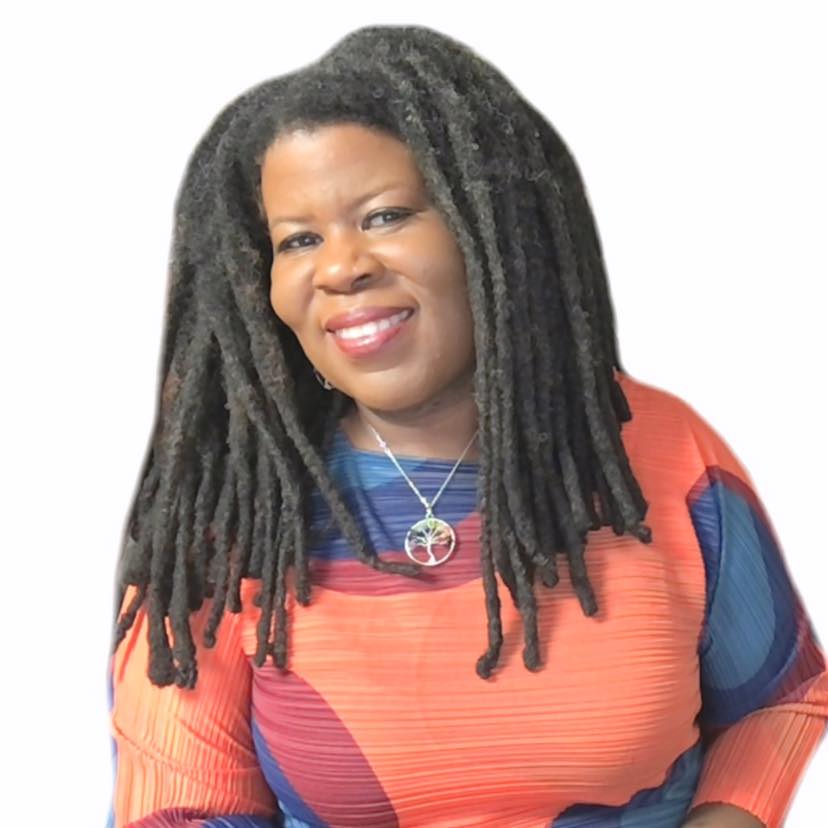
The Rev. Dr. Cheryl A. Lindsay, Minister for Worship and Theology (lindsayc@ucc.org), also serves a local church pastor, public theologian, and worship scholar-practitioner with a particular interest in the proclamation of the word in gathered communities. You’re invited to share your reflections on this text in the comments on our Facebook page: https://www.facebook.com/SermonSeeds.
A Bible study version of this reflection is at Weekly Seeds.