
Unsee(n) Indifference
Last week, along with the members of the Executive Committee of the World Communion of Reformed Churches and its staff, I visited the Bergen-Belsen Memorial. Between 50- 70,000 people died at Bergen-Belsen including Anne Frank and her sister Margot, who were 16 and 19 years old at time of death from typhus.
Starting in 1935, the site operated as a prisoner of war camp, a concentration camp, then a camp for displaced people following the war. The memorial tells the story of the visitors and survivors of the atrocities that took place at the camp. And it tells the story of those who stood by and watched, there were also those who said they did not see what was going on even though they lived in the community or were adjacent to the events of the day to be fully aware of what was happening.
As I walked the grounds on a cold, grey spring morning, I was troubled by the history of the place and the stories attached to those inside and outside of the barbed wire fence that surrounded the camp. The mass graves indicated the number of persons estimated to be buried in them. Across the property these mounds could be seen, interrupting the flat landscape.
Listening to the testimonies of people being rounded up and marched to the camp, had me ruminating on the current state of the world. With narratives that shift and change about people and communities labelled as unsafe, there is the intentional act of “sticking one’s head in the sand” as a way of rending social and political actions as unseen, while attempting to unsee the realities of yesterday and today. These actions of indifference contributed and continue to contribute to the loss of lives associated with cruelty, civil rights violations and human rights organizations.
The Bergen-Belsen Memorial is one of many sites around the world that hold before us the cruelty of the past. Elmina Castle. Hiroshima Peace Memorial. The repeated failures of humanity are well documented by historians in books and by memorials and signs that point to the ways in which people have chosen to eradicate the lives of other people. These sites of conscience call us to remember. They dare us to see what we have done. They challenge us to remember that the past is a great teacher, one that can guide us to a different future.
“Unsee” (verb) means to intentionally forget, erase from memory, or mentally reverse the act of having seen something unpleasant, disturbing, or embarrassing.
We are living through a time when the attempts made to unsee the history of the past, to re-write events in ways that render them less than they are is an intentional strategy. We cannot unsee the atrocities of genocide. We cannot unsee the decimation of indigenous communities globally. We cannot unsee 122.6 million displaced people, including immigrants, refugees and asylum seekers, and the treatment of those who find themselves in these categories of people. We cannot unsee the history any more than we can unsee the current challenges which are presenting and emerging with the challenges to democracy, the embracing of kleptocracy and authoritarianism, and the on-going creation of policies that are promoting nationalism rooted in fear and xenophobia.
Commitments to justice require confrontation with the truths of the moment which are many, and requires that there is an increase in knowledge and resources that will be a catalyst for change. We cannot change what we do not know. The call to action and advocacy is built on a foundation that insists on seeing beyond what we perceive with vision, and rests in knowing that comes from mental perception. To ignore the opportunities to raise awareness and know what the current challenges are is to render people, concerns and systemic issues unseen.
Unseen (adjective) means invisible, unnoticed, or previously unknown.
The current global polycrisis requires our attention, along with the intersectionalities of issues which are related to the myriad of issues before us. Justice means seeing beyond the 24/7 news cycle, the rhetoric that is loud and makes no sense, and well beyond the social media generated content and its leaning toward disinformation. This is a commitment to justice rooted in loving our neighbors as ourselves and overcoming the fear that would render us silent and unable to act on behalf of “the least of these.”
The road to Bergen-Belsen was paved over years marked by shifts in policy, in the labelling and othering of neighbors, and the identification of a supremacist culture and a superior people. The result was the hatred fear and indifference seen at concentration camps across Europe. There too, the slow boil led to the normalization of suffering, the removal of people from their homes and from the streets.
The opposite of love is indifference. Indifference is a root cause of the unseeing. Our indifference kills.
Content on ucc.org is copyrighted by the National Setting of the United Church of Christ and may be only shared according to the guidelines outlined here.
Related News
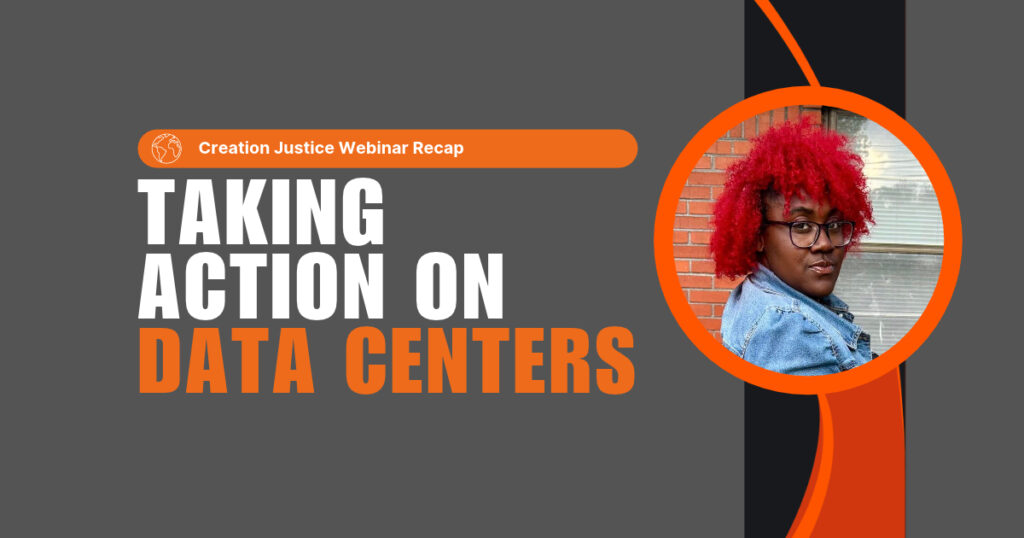
Creation Justice: How people in Memphis have been taking action against hyper-scale data centers
When Alexis Humphreys began working on a grassroots effort to confront Elon Musk’s xAI data...
Read More
The good old church dinner gets reimagined as hunger and loneliness rise: Free meals are life-saving ministries
She was one of many who came forward to the communion table, taking with her two tiny cups...
Read More
National Ministries, along with Central Pacific Conference release joint statement condemning school shooting in Bend, Oregon
The United Church of Christ, in collaboration with the Central Pacific Conference, has...
Read More