
The Un-Remembered
Every year, the global community commemorates World AIDS Day on 1 December. World AIDS Day was started in 1988 by two public information officers at the World Health Organization (WHO) as an international health day, to raise awareness about the global HIV/AIDS pandemic, to honor those who have died, and to celebrate the progress made in prevention, treatment, and care. This annual day of remembrance brings meaningful focus to what continues to be a major public health issue globally.
The theme for World AIDS Day 2025 was: “Overcoming disruption, transforming the AIDS response” with a focus on “calling for sustained political leadership, international cooperation, and human-rights-centered approaches to end AIDS by 2030.” HIV response is a major concern for the global community requiring attention and awareness, financial resources, advocacy, and reduction in stigma to bring an end to AIDS. WHO, the Global Fund and UNAIDS all have global HIV strategies that are aligned with the SDG target 3.3 of ending the HIV epidemic by 2030. These organizations will need the support of faith communities to achieve these undertakings, working through local and national collaborative partnerships.
The global statistics are concerning: In 2024, an estimated 40.8 million people were living with HIV globally, approximately 630,000 people died from HIV‑related causes, and an estimated 1.3 million people acquired HIV. Meanwhile, in the United States, approximately 1.2 million people have HIV. About 13 percent of those infected don’t know it and need testing. In 2022, an estimated 31,800 people acquired HIV in the U.S.
As global leaders, organizations and communities gathered on 1 December 2025 for this year’s day of remembrance and commemoration, for the first time in its 37 years of existence, World AIDS Day was not officially commemorated by the United States. The State Department instructed employees not to mark the day. This was seen as yet another sign of the current administration’s lack of care for vulnerable communities, as communities across the globe commemorated World AIDS Day, reaffirming a commitment to end an epidemic that has killed more than 44 million.
Since the start of President Trump’s second term, almost a year ago, his administration has made major cuts to global health spending and programming as it champions an America First approach and emphasizes countries being weaned off aid. This has disrupted HIV/AIDS care in many parts of the world — including making it challenging for some HIV-positive individuals to get their medication. These cuts have followed on the 20 January 2025 Executive Order “Withdrawing the United States from the World Health Organization”.
Funding cuts by the current US administration are a disruption to the response to ending the epidemic, with the decision by the President of the United States contrasting with the intentions of the theme for 2025. It will take global commitments and partnerships, working within the multilateral system, to bring about the changes needed for vulnerable populations and communities. The church as a part of civil society must continue to show up in support of the work of the World Health Organization and as an advocate for the human rights of those living with HIV/AIDS.
The partnerships required for addressing AIDS/HIV include faith communities as places which include people living with HIV or with vulnerability to contracting HIV. The commitment to justice is a commitment to address the health needs and human rights of those whose lives are disrupted by health disparities. Remembering those who died and advocating for medical care, reduced stigma, and the rights of those living with HIV is an important witness for the church and for people of faith. Being silent increases the risks of losing the advances made over the years.
This year’s decision by the President of the United States to not observe and not remember the lives of those lost to this epidemic should serve as a catalyst to further the commitments and support for people living with HIV. The call to care includes World AIDS Day and will continue all year. Programs and services are available through the UCC HIV & AIDS Ministries as the church does its part to bring an end to this epidemic. We will remember.
Related News
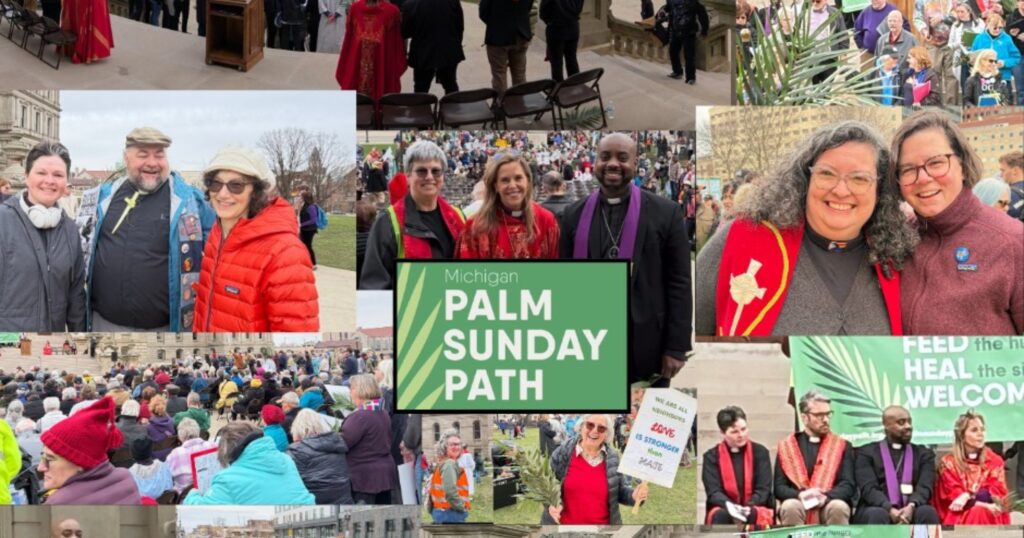
In Michigan and elsewhere, folks carried palms in the streets with calls to ‘feed the hungry, heal the sick, welcome the stranger’
On Palm Sunday, after churches participated in the annual practice of waving palms within...
Read More
Women’s History Month comes to an epic conclusion
March, Women’s History Month, comes to an epic conclusion, with the groundbreaking...
Read More
UCC to host discussion of ‘The Global Rise of Religious Nationalism’ in hybrid event
Religious Nationalism is not only shaping political and religious landscapes in the United...
Read More