
The next 250 years: A legacy of sacred rebellions informs and inspires today’s faith shapers
On July 8, 1776, with the newly minted Declaration of Independence in his hands, Colonel John Nixon read to the crowd gathered at Philadelphia’s State House Yard — one of America’s earliest public gardens — the “self-evident truths” that would shape an emerging nation. Among them being that “all men are created equal” and, as such, had the “unalienable rights” to “life, liberty, and the pursuit of happiness.”
The crowd let out a thunderous cheer. But not everyone was elated.
Lemuel Haynes, a Continental soldier who would become the first Black man to be ordained in a Protestant denomination in the United States, was skeptical.
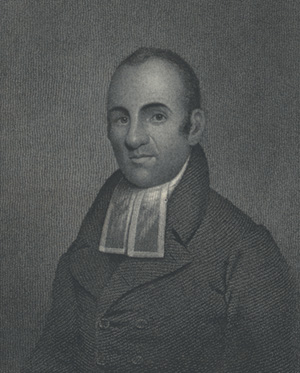
As copies of the Declaration of Independence spread like wildfire throughout the colonies, Haynes wrote his own treaty asking the urgent question: If all men were equal, then why did slavery persist?
“Liberty Further Extended: Or Free Thoughts on the Illegality of Slave-Keeping” was never published in Haynes’ lifetime. The argument, though, that slavery robbed people of their “unalienable rights” would become Hayne’s life sermon.
It was a sermon the soldier-turned-pastor would preach passionately to the predominately white Congregational churches he served in Middle Granville, New York and West Rutland and Manchester, Vermont.
Building a brighter democracy
As the smoke clears from the many spectacular fireworks ignited over the weekend marking the country’s 250th birthday, Hayne’s inheritors of the Congregational legacy in America — the United Church of Christ congregations of today — continue the pursuit of “unalienable rights.”
Pastors like the Rev. Dr. Eric Jackson of the Eliot Church of Newton in Massachusetts who prefers not to romanticize a country’s past, but to let history instruct what he calls one’s “moral imagination.”
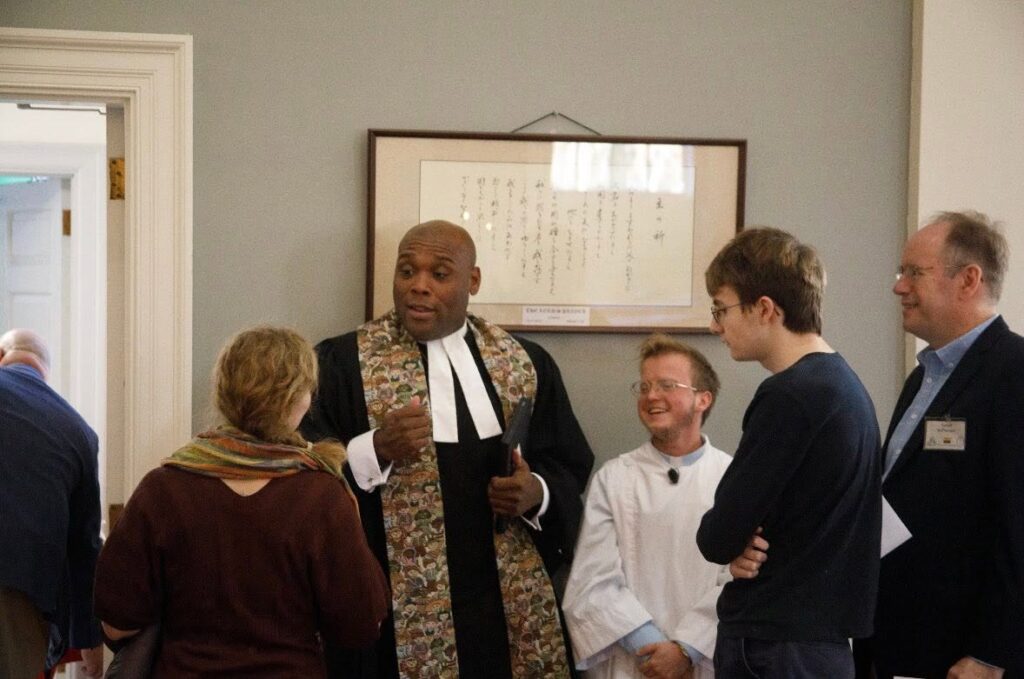
“We can build a bolder and brighter democracy for the next 250 years,” said Jackson.
Jackson observes, though, that such work begins by overcoming the “fear mongering” which has gripped much of the nation.
“We have to have courage and must triumph over our fears,” he said.
As the nation’s 250th birthday began escalating into full-blown party mode, Jackson spent more time grounding himself in his faith and reflecting on the future.
“I have been asking what the vision is I have in my heart — and then I need to make that vision happen,” he said.
Jackson is hopeful in a better tomorrow, seeing a shift (albeit slow at times) from commemorating the past to solving present-day systemic economic and social challenges.
As this shift happens, a guiding question the pastor often asks is not just who isn’t at the proverbial table that the Church likes to talk about, but who is being pushed away from that table.
‘A look in the mirror’
It’s a revolutionary observation that would make Lemuel Haynes smile, and one that hit Jackson powerfully while viewing the “Sacred Rebellion: Congregationalists in Revolutionary Massachusetts” exhibit curated by the Congregational Library & Archives in Boston.
The exhibit displays sermons and rare artifacts — among them Benjamin Franklin’s baptismal record — that give voice to the Congregationalists caught up in faith, freedom and fighting. It was time, too, when many clergy were given the derisive “black robed regiment” nickname by the British.
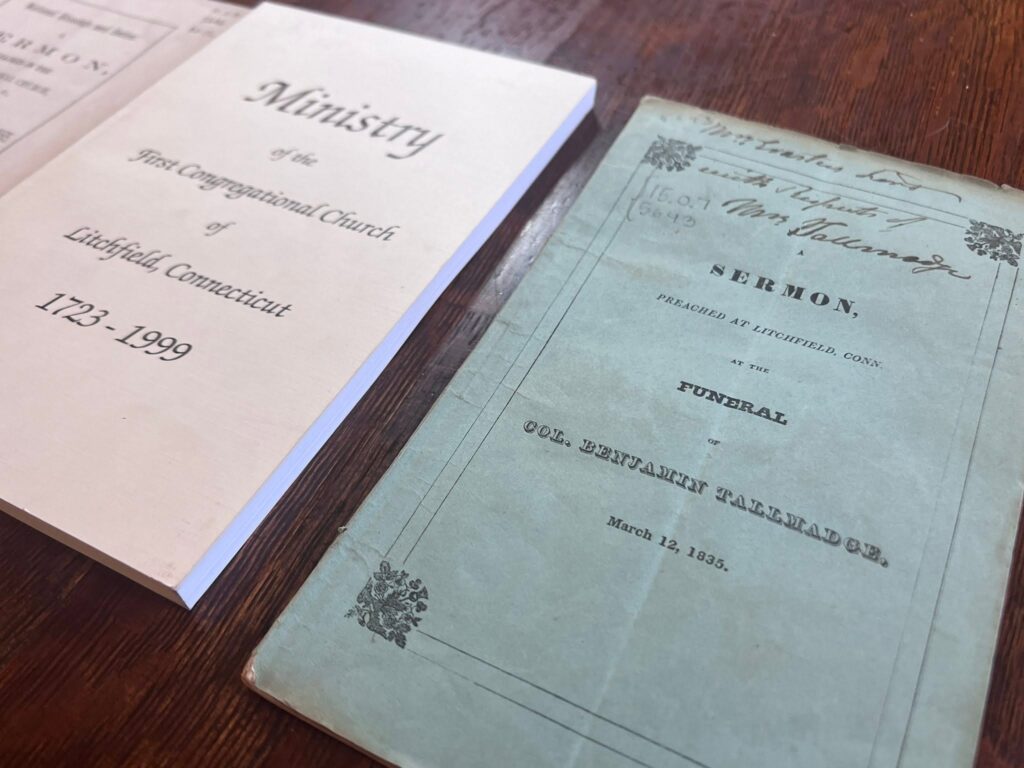
For Jackson, the exhibit wasn’t a stale history lesson. It was a “look in the mirror.”
“The exhibit made it clear to me that this act of sacred rebellion is what it took to form the United States of America. They lived amid tensions as well. Not everyone was in support of it, but it showed me what could be done,” said Jackson. “Our call for today is to look at the words in the preamble of the Declaration of Independence and hold on to those truths, hold America to this social contract.”
Jackson shared his thoughts after viewing the “Sacred Rebellion” exhibit in an op-ed in a local newspaper (read here), citing that America has always been a tale of two cities.
“One city where faith props up power and another city where faith inspires resistance to oppression,” Jackson wrote. “Both cities were alive then. Both are alive now.”
Inspiring tomorrow’s faith shapers
Understanding the tensions that are still forming a nation was one of the reasons the Rev. Daniel Doty of the First Congregational Church of Tallmadge in Ohio, took this year’s confirmation class to view the “Sacred Rebellion” exhibit, which was just one of the many stops on a history trail adventure that has become a long-standing tradition for the youth.
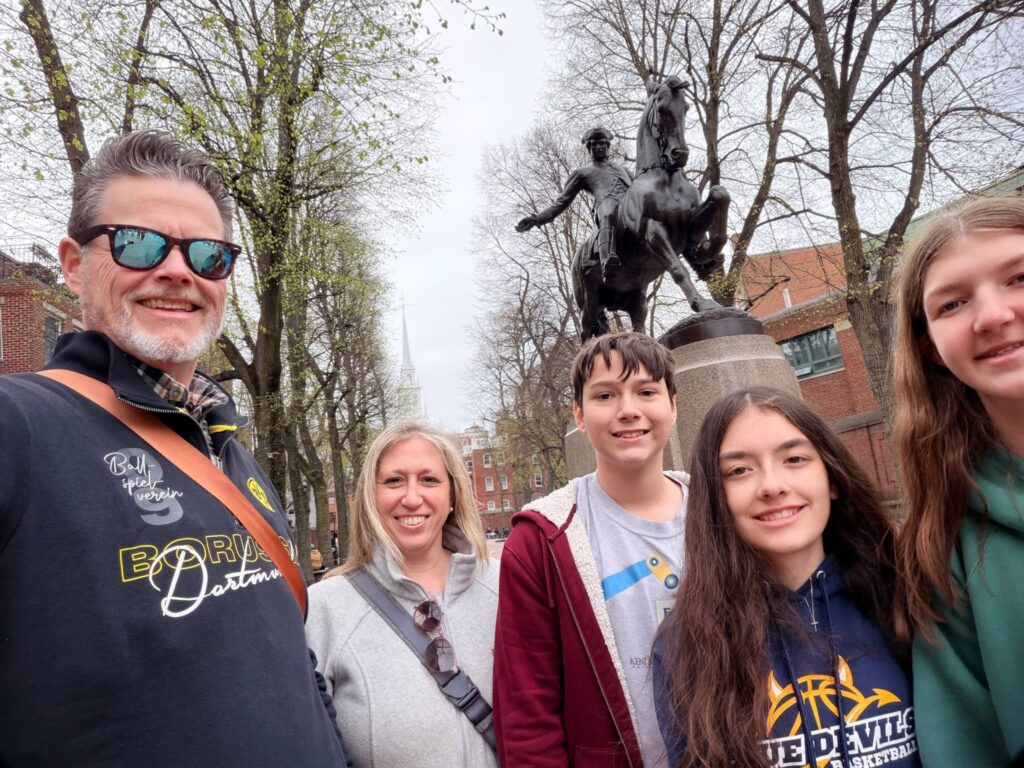
“First Congregational has a history of taking the confirmation classes to Boston to explore the roots of their Congregational faith/history. For me, it is a significant investment in the youth of our church,” said Doty. “They get a broader and richer sense of where we come from and the people that helped forge the congregational presence in the New World.”
Doty said the “Sacred Rebellion” exhibit especially was a “fascinating history of how the lives of Congregationalists were intertwined with the struggle for independence.”
“It was also an eye opener for the youth who realize that they were part of the ongoing story of freedom and faith,” he added.
Beyond being enthralled with the seeing the actual baptismal record of Benjamin Franklin, the teens walked away from the exhibit with a deeper understanding of what faith in action means and looks like.
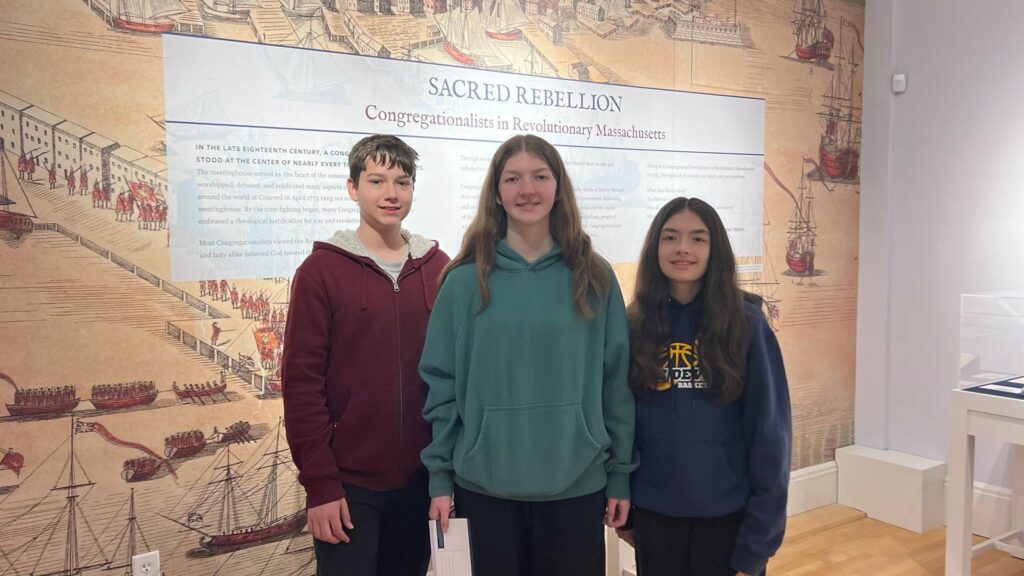
For Katy Higham, the exhibit made her realize that being a “faith shaper isn’t always easy.”
“You never know how people will respond to your opinions. They might be encouraged to stay in the church, inspire someone new to join, or even cause someone to walk away,” she shared, adding, “Seeing how so many people have shaped the beliefs and values of the UCC over the years has inspired me. I can do my part to be open, inclusive, and welcoming to everyone.”
Lauren Scoven found it surreal to realize that she, “in a way, am connected to some of the history.” That connection added a sense of responsibility for the teen.
“It means we should all try to learn from what has happened in our history to help better our future,” said Scoven.
Marcus Hoffman agreed with Scoven.
“Understanding the historical aspect gave me a connection to my faith. Many before me have been impacted by war and rebellion and they stood strong in their faith,” said Hoffman. “I guess I would want my faith experience to help others in their own faith journey.”
Just as Lemuel Haynes did 250 years ago.
Content on ucc.org is copyrighted by the National Setting of the United Church of Christ and may be only shared according to the guidelines outlined here.
Related News
Creation Justice: How people in Memphis have been taking action against hyper-scale data centers
When Alexis Humphreys began working on a grassroots effort to confront Elon Musk’s xAI data...
Read More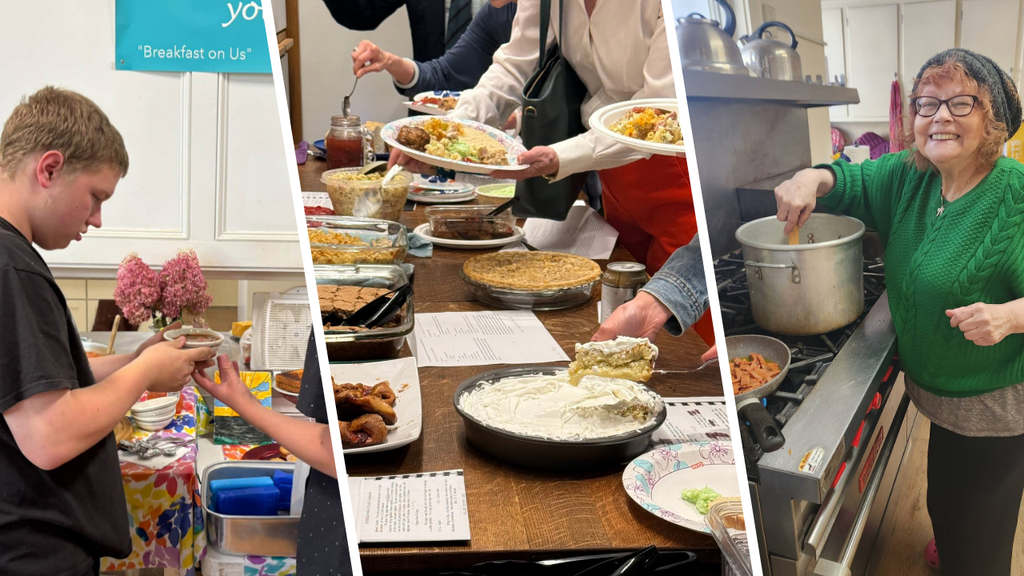
The good old church dinner gets reimagined as hunger and loneliness rise: Free meals are life-saving ministries
She was one of many who came forward to the communion table, taking with her two tiny cups...
Read More
National Ministries, along with Central Pacific Conference release joint statement condemning school shooting in Bend, Oregon
The United Church of Christ, in collaboration with the Central Pacific Conference, has...
Read More