The good old church dinner gets reimagined as hunger and loneliness rise: Free meals are life-saving ministries
She was one of many who came forward to the communion table, taking with her two tiny cups brimming with grape juice and a handful of bread cubes back to the pew. There, a non-verbal, five-year-old squirmed in a stroller waiting eagerly to drink and eat what her mother had to offer. When the service was over, the woman thanked a member of United Community Church of Morrisville for the “snacks” the Vermont church provided for her child.
“The member was like ‘oh my goodness, we have all this food in our kitchen. Come, we can give your child a real cup of grape juice,’” said the Rev. Becca Girrell.
Tears still come to Girrell’s eyes when she shares how the sacrament of the Lord’s Supper was thought to be a snack for a hungry child. It’s a story, too, that fuels a congregation’s commitment to providing free meals in rural Lemoille county, where the demographic of “working homelessness” grows along with the state’s unaffordable housing market.
The lack of shelter isn’t the only challenge, though, facing communities like Morrisville as now the worry of securing one’s daily bread soars with the price of groceries. And no one is exempt from that fear.
“It’s not just the unhoused or the unemployed who are having difficulty providing food for their table,” said Girrell. “Many people who give to this church are finding their budgets stressed.”
A recent Washington Post-Ipsos poll confirms what Girrell voiced, noting that 66% of Americans described groceries as outright “unaffordable,” a sharp increase from 45% earlier in the year.
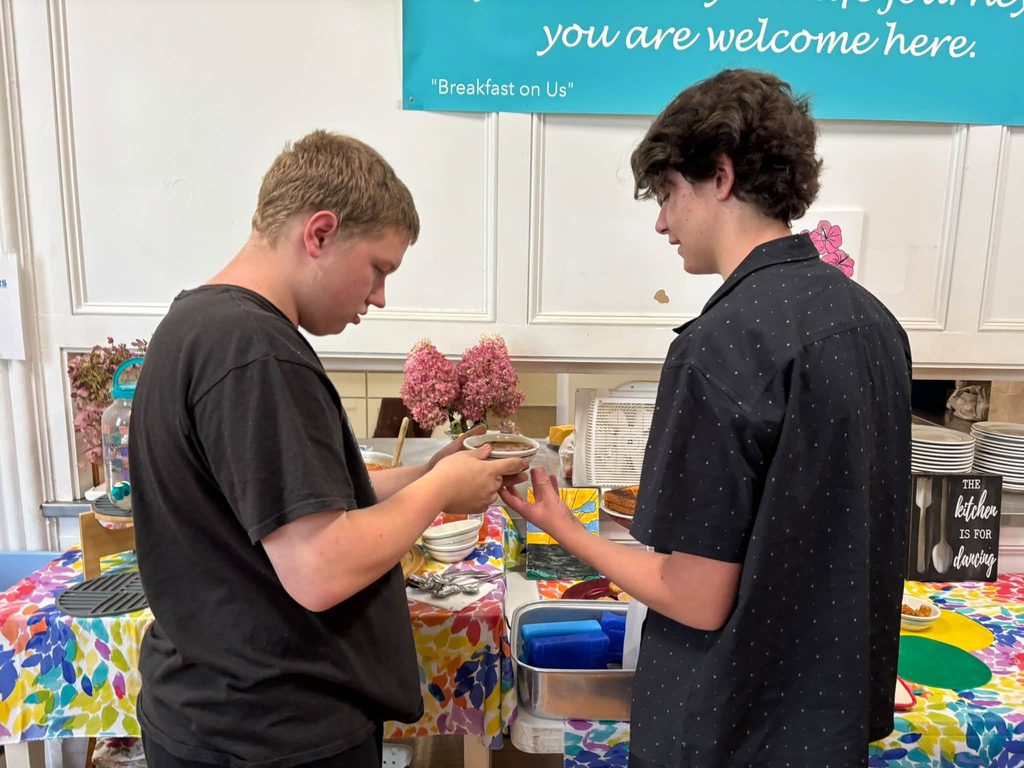
The pastor admits that her own food budget has been eased by United Community’s many free meals. “And I am considered middle class, and yet the costs are still extreme,” she added.
Girrell also sees an ever-growing urgency for free church meals as resources are stripped down. In August, the USDA reported that the number of Vermonters enrolled in SNAP dropped 9.4% due to stricter federal work requirements that went into effect in March, heightening food insecurity among vulnerable communities.
One such vulnerable community that has been especially “heartbreaking” for Girrell has been the number of homeless seniors coming for the church’s free meals.
“It is a devasting realization how many people without housing are in their 60’s and 70’s,” she said.
The church that feeds people
United Community Church of Morrisville became known as the church that feeds people thanks to the 2018 merger in which the United Methodists literally brought to the table an established free monthly dinner and the United Church of Christ women brought their breakfast ministry.
While both are still going strong, Girrell said, it has been the free breakfasts — served five days a week — that has seen an uptick.
“We are now in our third year of serving 10,000 breakfasts yearly. That’s about 800-900 meals a month,” said Girrell. “The need is significant.”
Monetary and food donations make the breakfasts possible, as do the caring volunteers, many from outside the church, who come to set tables, prepare meals and clean up afterwards. These volunteers are a blessing for her aging congregation, noted the pastor.
United Community recently began offering a free lunch on Mondays as well, providing a warm place for people to come in from the elements since the usual gathering place, the library, is closed on that day.
“We quickly realized if we were going to have people in this space, we were going to have to feed them,” said Girrell.
United Community now averages 25 people at the Monday lunch, who are often joined by representatives of local agencies and non-profits sharing helpful resources with them.
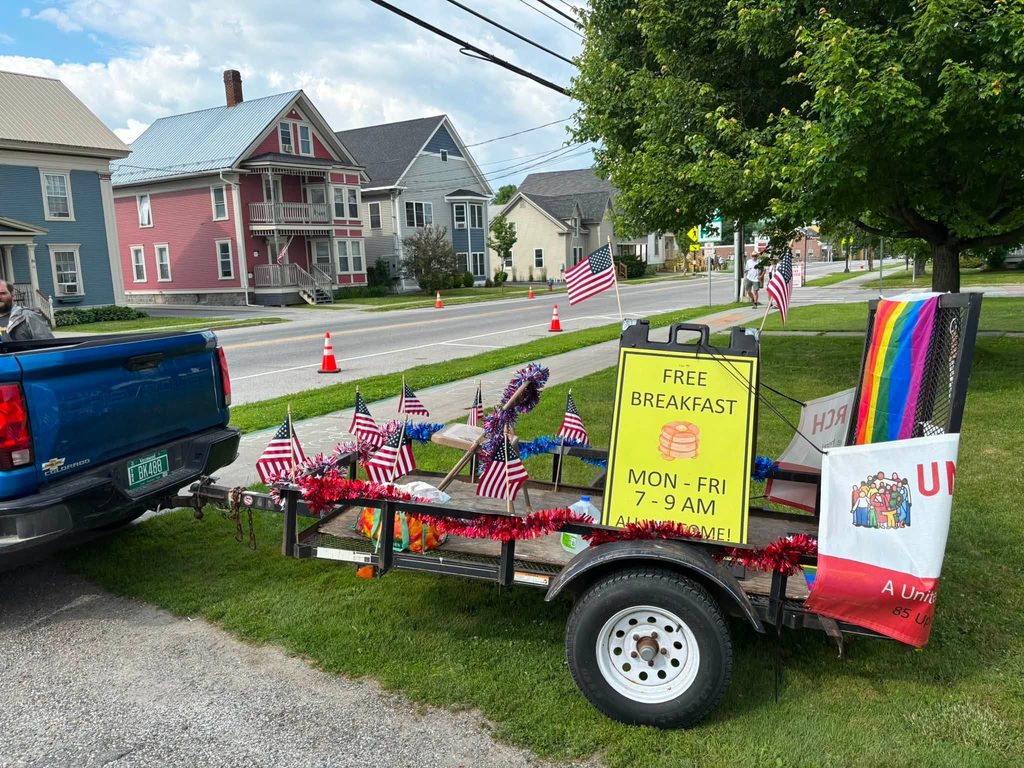
While the numbers at these church meals grow towards the end of the month when benefits and budgets run low, not all who come are food insecure or unhoused. Many come for something just as life sustaining as food for the body. They come for sense of belonging and connection.
“We have people who show up just for a cup of coffee and conversation,” said Girrell.
Redefining for an old tradition
Potlucks, Lenten soup gatherings and the ubiquitous chicken and biscuit fundraiser have been part of church culture for centuries. Today, though, congregations like United Community of Morrisville are redefining church meals as an act of radical welcome for the hungry, companionship for the lonely, and wholeness for the broken.
In Craftsbury Common, Vermont, the United Church of Craftsbury sets a monthly table for those who are grieving, hosting a “Living with Loss Potluck” meal. While in Avon, Connecticut, the Avon Congregational Church strengthens community ties with a Heritage Dinner. Held every two to three years, the gathering invites people to not only share their treasured family recipes, but to share the memories so often attached to food.
The Congregational Library & Archives in Boston is now preserving such memories. Two years ago, the staff began acquiring church cookbooks from around the country. Currently there are 58 in the archives, with the oldest dating back to 1898.
For librarian Meaghan Wright the cookbooks read like a fascinating novel, with “interesting and fun” recipes that provide a glimpse into history with each pinch of salt and whisked egg.
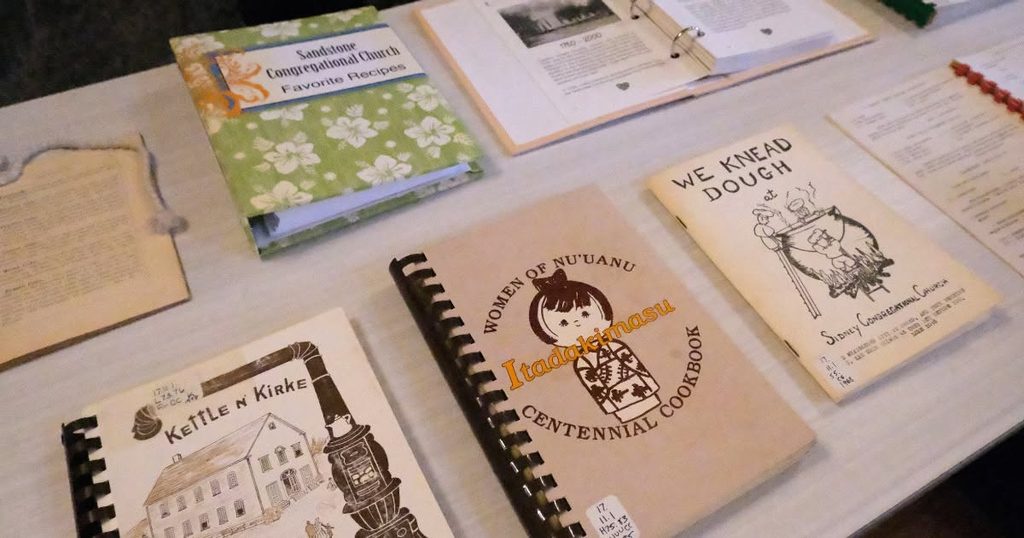
Wright had the opportunity to share these books with the public this past August. Thanks to a grant to fund public monthly programs, the library pulled out the cookbooks for 17 attendees to review and taste several recipes made by library staff.
While Wright’s contribution was a Hungarian sweet bread filled with jam, a church cookbook retrospective wouldn’t be complete without something made from Jello.
“A staffer did make a pineapple cottage cheese Jello mold for the event, which was pleasantly delicious,” said Wright.
A beloved meal’s timely return
When First Congregational Church’s free meal returned this summer after a four-year hiatus due to church building renovations, it was Jello that took a starring role on the menu.
“You might laugh, but that is what many people were looking forward to,” said Nikki Ketchum, business manager of the Dubuque, Iowa church and lead coordinator for the Wednesday night Café ministry which feeds an average of 120 people weekly.
The Jello was served in honor of one of the founding members of the food ministry which began in 1994. The name “café” stands for “Christians Activated to Feed Everyone.”
“I brought it in memory of Terry, who was known as the Jello lady among the many guests we would feed,” said Ketchum.
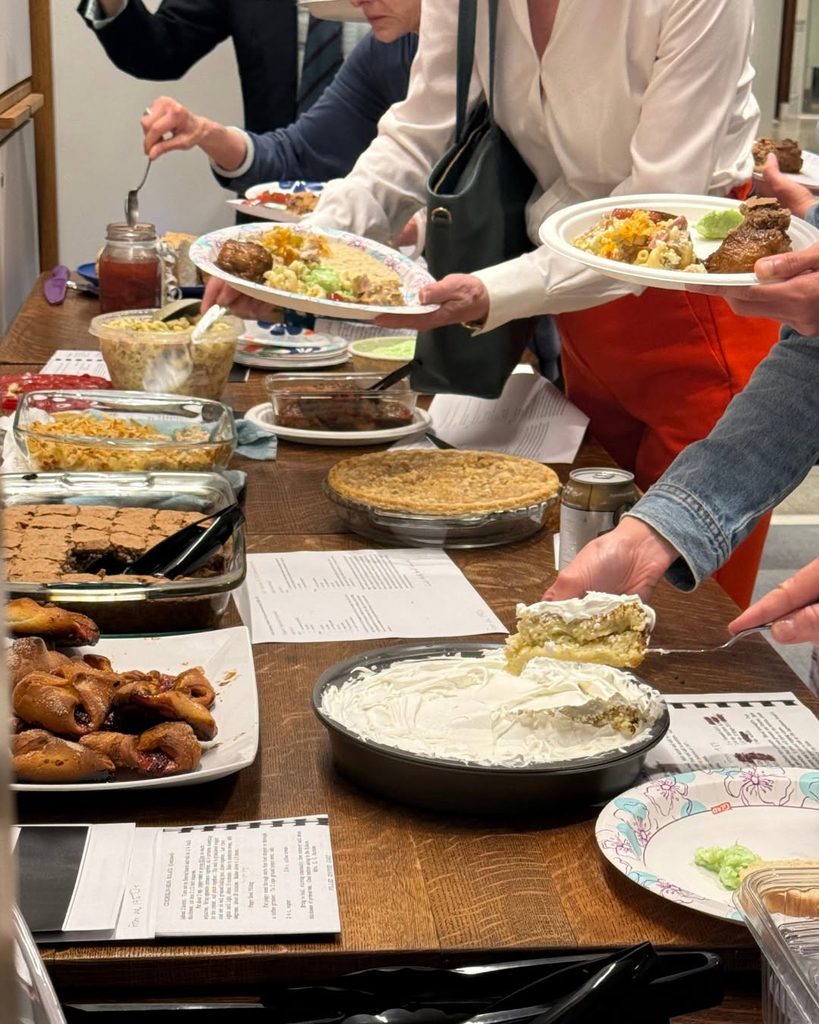
The powerful connection to favorite foods at the Café goes beyond Jello, with Ketchum getting many requests once again for her specialties: chicken and rice casserole and meatloaf.
While both church and community are excited to have the food ministry back in downtown Dubuque — which has been renamed the “New Café” — those dormant years have brought changes and challenges.
For starters, its return was a timely one as the local Catholic diocese, in its move to consolidate and close parishes, closed the church that was providing a free dinner on Wednesday. First Congregational, having just returned to its downtown building after years of renovations and repairs and eager to restart its free dinner, stepped in to fill the void which has become more pressing as hunger in the area has risen.
According to Feeding America, in northeast Iowa, 45,000 people are food insecure, an increase of 15,000 over the last three years.
“While are seeing up to 120 people, we cook for 150 people as we do want to folks to have seconds and be able to take leftovers in to-go containers,” said Ketchum.
The faces of those coming for a free meal have changed as well, with more families sitting at the communal table.
“It’s startling for us to see how many families are now showing up,” said Ketchum, noting that there is now a split between the number of older individuals and families.
The increase in mouths has meant an increase in expenses, which are currently being met by donations. Ketchum is busily writing grants to ensure funding, especially important as her church also faces financial strain as for the first time in church history, the congregation has a mortgage to pay.
“We had to close for renovations because a wall of our building was crumbling. That work meant we had to secure a mortgage,” she said.
The biggest hurdle perhaps that First Congregational had to overcome was the dwindling pool of helpers and an aging congregation in which to pull from. Ketchum realized that New Café would truly have to be new in terms of it being a ministry of not just her church, but of the other houses of worship and community partners.
“Trying to do God’s work is a little tough for everyone right now, but we are called to do it. We need to divide and conquer,” said Ketchum.
Today, Ketchum oversees the coordination of the weekly menus and shopping lists. She has also created volunteer options for other congregations to choose from. There is the option to pay for a week’s dinner, an option to come and prepare the meal, and the option to be set up and clean up. In addition to the Lutherans, Presbyterians, Methodists and Catholic sisters, Ketchum has groups such as Boy Scouts and Girl Scouts come to be part of the weekly meal.
“We even have teachers from an elementary school helping, modeling for their students what it means to serve others,” she said.
As for Ketchum, who loves to cook, the New Café is not only feeding growling bellies, but her soul.
“The church dinner has broken down so many barriers. It used to be the Congregationalist are doing this and the Presbyterians are doing that. Now all the churches are working together,” said Ketchum. “It has also broken down barriers in the way that all who come know they are welcomed and are in a safe place. Volunteers sit and talk with the guests. And guests have come to know our names. The free church dinner has made a place for community.”
Content on ucc.org is copyrighted by the National Setting of the United Church of Christ and may be only shared according to the guidelines outlined here.
Related News

Creation Justice: How people in Memphis have been taking action against hyper-scale data centers
When Alexis Humphreys began working on a grassroots effort to confront Elon Musk’s xAI data...
Read More
Unsafe and Unwelcome
Issues of safety and welcome have long been a topic of conversation in the United States. The days...
Read More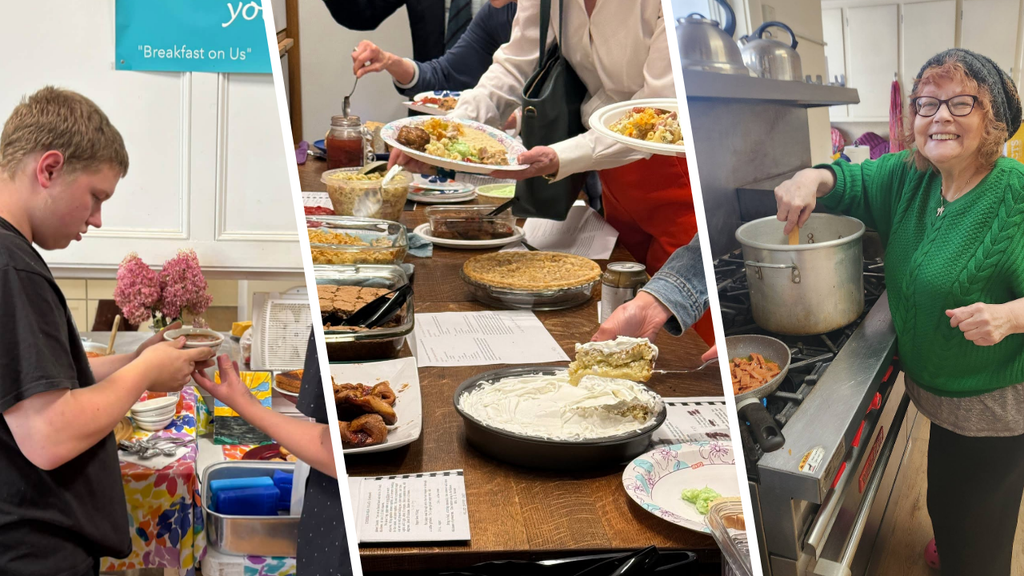
The good old church dinner gets reimagined as hunger and loneliness rise: Free meals are life-saving ministries
She was one of many who came forward to the communion table, taking with her two tiny cups...
Read More