Sermon Seeds: Who Is Thirsty
Sunday, May 24, 2026
Day of Pentecost | Year A
(Liturgical Color: Red)
Lectionary Citations
Acts 2:1-21 or Numbers 11:24-30 • Psalm 104:24-34, 35b • 1 Corinthians 12:3b-13 or Acts 2:1-21 • John 20:19-23 or John 7:37-39
https://lectionary.library.vanderbilt.edu/texts/?z=s&d=51&y=17134
Focus Scripture: John 7:37-39
Focus Theme: Who is Thirsty
Series: That Message Spread (Click here for the series overview.)
Reflection
By Cheryl A. Lindsay
Thirst causes discomfort. First, the feeling of a dry mouth leads to craving something to add moisture. That dryness makes talking more difficult and may lead to coughing or a sore throat. Thirst may also cause other parts of the body to feel dry, such as the skin and eyes. When we experience thirst for an extended period of time, it may manifest as muscle cramps, lethargy, headaches, and joint pain. All of these are signals that the body needs to replenish itself, but they also demonstrate that lack of adequate hydration causes a host of problems in the body.
Our physical beings need water to live. Hydration is necessary for survival; therefore, thirst is a warning that unless conditions change, death is inevitable if not imminent. Generally, human beings cannot live more than three days without water. Yet, even before death, sustained periods of thirst sometimes cause irrevocable damage to the functioning of organs and biological systems. As with so many aspects of our lives, the physical also points to the spiritual. How then do we function, or even live, when spiritually depleted? What do our spirits do to replenish their thirst?
The focus reading comes from the Book of Signs, the first part of the Gospel according to John, where the writer concerns the audience with the identity of Christ. The community has gathered from around the region to observe the Festival of Tabernacles. As Adele Reinhartz notes, “John 7 takes place during yet another pilgrimage festival, Tabernacles. During this harvest festival, families and communities are required to live in booths reminiscent of the temporary dwellings in which the Israelites lived during their forty-year wandering in the desert.” On the last day of that religious commemoration, Jesus stands with an invitation to all who thirst. Water played a significant role in the Feast, especially on the last day.
Every day during Tabernacles, priests marched in solemn procession from the pool of Siloam to the temple and poured out water at the base of the altar. The seventh day of the festival, the last day proper (Lev. 23:34, 41–42), was marked by a special water-pouring rite and lights ceremony (m. Sukkah 4.1, 9–10). This was to be followed by a sacred assembly on the eighth day, which was set apart for sacrifices, the joyful dismantling of the booths, and repeated singing of the Hallel (Ps. 113–18). Hence, by the first century, many Jews had come to think of the Feast of Tabernacles as an eight-day event. Whether Jesus’ words in 7:37–38 and 8:12 were uttered on the climactic seventh day, with its water-pouring and torch-lighting ceremonies, or on the eighth day of joyful assembly and celebration, they would have had a tremendous impact on the pilgrims. Just when the events of the feast, and their attendant symbolism, were beginning to sink into people’s memories, Jesus’ words promised a continuous supply of water and light, perhaps also alluding to the supply of water from the rock in the wilderness. Jesus cried out (see commentary at 7:28), “If anyone thirsts, let him come to me and drink.” Tabernacles was associated with adequate rainfall (Zech. 14:16–17), and this passage was read on the first day of the feast according to the liturgy in b. Meg. 31a. Another OT passage associated with this feast was Isa. 12:3: “With joy you will draw water from the wells of salvation.” This water rite, though not prescribed in the OT, was firmly in place well before the first century A.D. The festival seems to speak of the joyful restoration of Israel and the ingathering of the nations. Here Jesus presents himself as God’s agent to make these end-time events a reality.
Andreas J. Köstenberger
From the first creation narrative in Genesis 1, water has been anthropromorphized, or attributed human characteristics. The waters were given a face swept over by the wind of God. In this text, the divine is attributed with the nature of water. Jesus calls those who are thirsty to draw near because the Holy One has the ability to quench that thirst and satisfy their spiritual needs. Water has also served as a sign of God’s presence, power, and protection. The waters of the Red Sea parted in order to open safe passage to the Israelites fleeing captivity and oppressive rule from the Egyptian Empire. Then, they closed to cut off the advancing Egyptian army. The Holy One enabled Moses to draw water from a rock in the desert, but later has to remind Moses that power is not his own but sourced from God and not be used independently or without divine authority. Water floods the earth with destructive force during the days of Noah and his family then recedes to allow creation renewal, regeneration, and reset to take place.
Divine encounters happen near or in the water. The Prophet Jonah needs to be thrown overboard a ship catalyzing a string of events that finally lead him to being obedient to God’s call. John the Baptist brings disciples to the Jordan River to be baptized as a sign of repentance. Jesus launches their public ministry and the Trinity reveals themselves as Jesus enters those baptismal waters. Jesus has another revelatory encounter outside the closed faith community at Jacob’s well with a woman who herself has been ostracized from the outsider community of Samaria. It is the first time in the Johannine account that Jesus links themselves with salvation, and they do it through the metaphor of living water and an invitation to drink.
Yet it should not be forgotten that Jesus told the Samaritan woman, “Everyone who drinks of this water will thirst again, but whoever drinks of the water that I will give him will never ever thirst. Instead, the water I will give him will become in him a spring of water rushing to eternal life” (4:14). The point there was that the “living water” Jesus offered was self-replenishing. To say that it would become in the believer “a spring of water rushing to eternal life” was simply a more dramatic and more eloquent way of promising that those who drink of it would “never ever thirst” The Samaritan woman, even in her misunderstanding, promptly drove the point home with her plea, “Sir, give me this water, so that I will not thirst and have to keep coming back here to draw” (4:15). Again, two chapters later, Jesus as “the Bread of life” promises that “The person who comes to me will never go hungry, and the person who believes in me will never ever thirst” (6:35).22 Here in the temple his meaning is probably the same. To say of the believer that “From his insides will flow streams of living water” is yet another way of promising that he will “never ever thirst.” As he told the Samaritan woman, the “living water” he offers is a never-failing, self-replenishing stream. The point is not, as is often thought, that the believer will necessarily become a channel of “living water” to others, but that the believer’s own well will never run dry. As Jesus will later announce, “I have come that they might have life, and have it in abundance” (10:10). These considerations also reinforce the punctuation used in our translation (that is, with a period after “If anyone thirst, let him come to me and drink”). The other punctuation (“If anyone thirst, let him come to me, and let him drink who believes”) contradicts the notion that those who believe will “never ever thirst.” If they never thirst, they have no need to drink. The participle “Whoever believes in me” is best understood as referring not to someone being invited to “come and drink,” but to a person who has already done so, never to thirst again.
J. Ramsey Michaels
It may seem paradoxical to focus intently on water in observing the Day of Pentecost, most markedly symbolized by fire. Water, generally speaking, puts fire out. Yet, as two essential building blocks of life and components necessary for flourishing life, they remind us that distinctiveness and differing functions do not have to be competing. Further, this text also centers the essential need and function of the church—to satisfy the spiritual thirst of all who are thirsty.
We live in a thirsty world. Loneliness is virtually a public health crisis manifesting in self and communal harm. Fascism and tyranny are rising around the globe; the support of tyranny is antithetical to the gospel that proclaims that the Holy One alone is sovereign. Economic inequity is also widening allowing the haves to have exponentially more and the have-nots to wither and die despite the abundance of God’s creation.
Jesus extends an invitation to a new way of life, guided by Spirit, that redeems and restores the created order in mutuality, compassion, and love. Christ’s church was birthed to be the public manifestation of that way in the world so that all my drink. Let the church turn toward the world and ask in a loud voice,
Who is thirsty?
Reflection from Voices of People of African Descent
The 33rd General Synod adopted a Resolution to Recognize the United Nations International Decade for People of African Descent (2015-2024). As part of its implementation, Sermon and Weekly Seeds offers Reflection from Voices of People of African Descent related to the season or overall theme for additional consideration in sermon preparation and for individual and congregational study.
So you have stopped
Stood in solitude
Slid the world out of you
Invited the silence to calm you
Sighed pain and sadness
Lost your physical sensations
Surfaced away from your body
You feet are no longer
Tied in gravity of earth
You are:
A sprit that swims in the sky
Finally you understood
To touch the sky
You need not be a bird
Nor fly a plain
Just your sprit soul unchained
—Nasra Al Adawi
For Further Reflection
“But I don’t want comfort. I want God, I want poetry, I want real danger, I want freedom, I want goodness. I want sin.” ― Aldous Huxley
“As eye-catching as it may seem, the ripest fruit on the tree isn’t always the healthiest.
Its sweetness may please the tongue, but the juice might damage your organs.
The desire for a bite is always alluring, but failure to heed comes with a cost.
Give your body what it needs to thrive, not what will satisfy your thirst.” ― Eduvie Donald
Works Cited
Köstenberger, Andreas J. John (Baker Exegetical Commentary on the New Testament). Grand Rapids: Baker Academic, 2004.
Michaels, Jr. Ramsey. The Gospel of John (New International Commentary on the New Testament). Grand Rapids: Wm. B. Eerdmans Publishing Company, 2010.
Reinhartz, Adele. “John.” Gale A. Yee, Ed. Fortress Commentary on the Bible: Two Volume Set. Minneapolis: Fortress Press, 2014.
Suggested Congregational Response to the Reflection
During the Season of Easter, commit to spreading the good news of God’s liberating, redeeming, and reconciling love through consistent communication. Consider the tangible ways your faith community has been positioned to demonstrate the power of new life.
Worship Ways Liturgical Resources
https://www.ucc.org/worship-way/day-of-pentecost-year-a-may-24/
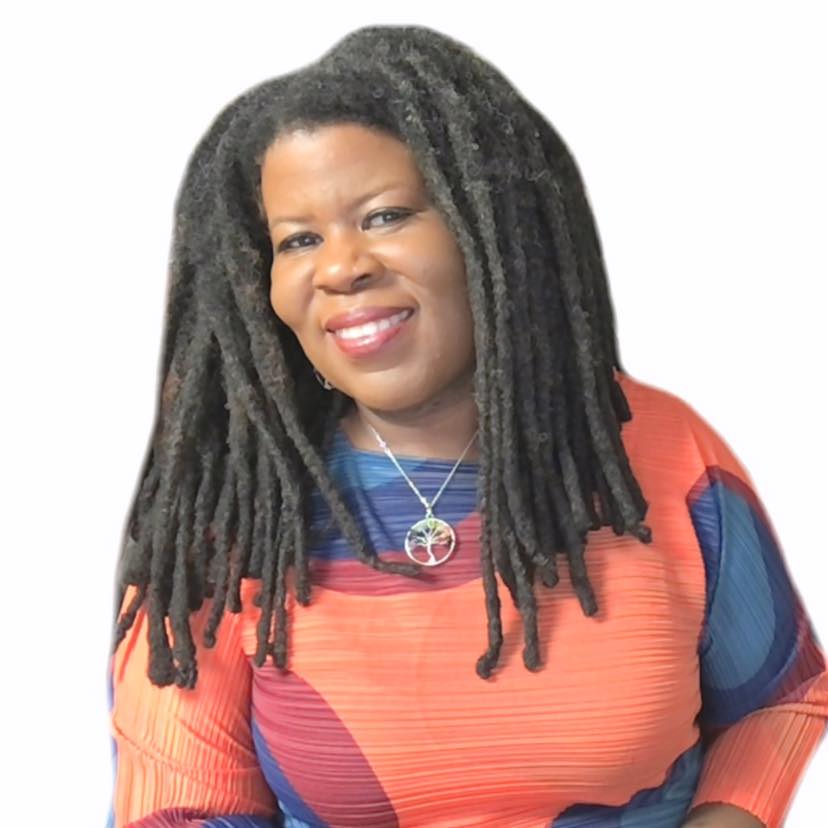
The Rev. Dr. Cheryl A. Lindsay, Minister for Worship and Theology (lindsayc@ucc.org), also serves a local church pastor, public theologian, and worship scholar-practitioner with a particular interest in the proclamation of the word in gathered communities. You’re invited to share your reflections on this text in the comments on our Facebook page: https://www.facebook.com/SermonSeeds.
A Bible study version of this reflection is at Weekly Seeds.