Sermon Seeds: What is This?
Sunday, July 26, 2026
Ninth Sunday after Pentecost| Year A
(Liturgical Color: Green)
Lectionary Citations
Genesis 29:15-28 and Psalm 105:1-11, 45b or Psalm 128 • 1 Kings 3:5-12 and Psalm 119:129-136 • Romans 8:26-39 • Matthew 13:31-33, 44-52
https://lectionary.library.vanderbilt.edu/texts/?z=p&d=66&y=17134
Focus Scripture: Genesis 29:15-28
Focus Theme: What is This?
Series: Faithful and Vital (Click here for the series overview.)
Reflection
By Cheryl A. Lindsay
No one likes to be deceived. The action violates trust and can destroy lives. Deception roots itself in evil means and intentions. Simply, deception encourages or leads someone or a group of people to believe something that is not true. Lying is a form of deception in which the deception is transmitted through verbal statements or written communication. But, it does not take words to deceive. Sometimes, what remains unsaid deceives as fiercely as a lie shouted in the public square. Actions can also be employed in deception.
During the age of computer generated imagery (CGI) and artificial intelligence (AI), humans must be particularly vigilant and discerning to know what is real and what has been manufactured. Powerful forces behind select media outlets have utilized propaganda as long as mass communication has been available. With the advancement of technology, however, one need not be particularly wealthy or well-resourced to have a negative impact on public truth telling. There’s an app for that. Imagine what Jacob and Laban might have used these tools for their purposes.
The story enters the significant time period in which Jacob deviated from the fulfillment of the birthright blessing he had stolen from his brother, Esau, and began his family. While these chapters continue to advance the overall narrative, Jacob ceased his focus on Esau to shift to marriage and children.
Over the next several chapters, Jacob will meet Rachel at a well and be led to his uncle Laban’s house (Gen. 29:1–14), fall in love with and arrange marriage to Rachel (Gen. 29:15–20), and be tricked by his uncle to marry the “lovely” in terms of her eyes (Gen. 29:17 NRSV) or “tender eyed” (Gen. 29:17 KJV) Leah. (There is considerable disagreement on the meaning of rakkôt among translators of Gen. 29:21–30; see von Rad, 291; Sarna, 204; Fretheim, 553). He will eventually marry both of Laban’s daughters (an arrangement wisely prohibited in Lev. 18:18) and be given the enslaved women Zilpah and Bilhah, each of whom will bear children for him. This complex arrangement unfolding over Genesis 29–30 establishes a fierce sibling rivalry between Rachel and Leah (e.g., 30:15) that will extend to the offspring of Jacob in the next generation.
Rodney S. Sadler, Jr.
While Jacob may have enjoyed a long reprieve from his conflict with Esau, he remained immersed in familial rivalry and discord that begins with Laban’s duplicity. Jacob, having deceived his own father, has to endure the consequences of his father-in-law’s deceptive action. Had Jacob been more shrewd, he might have questioned the unusual concession of being able to marry the younger daughter. Laban, after all, does not act outside of the conventional norms of his time. The same impulsive and non-reflective behavior that Jacob demonstrated when he followed Rebekah’s instruction to deceive his father in order to steal his birthright is at work in Jacob when he believes he will be able to circumvent the traditional order observed in a marriage contract.
The agreement reached between Laban and Jacob is intended to provide for the bride price that was an essential part of marriage contracts. This was a payment made from the groom or his family to the family of the bride. Its function was to serve as a trust fund of sorts to provide for the support of the wife should the husband divorce her or die….Marriage customs in the ancient Near East combined legal and festive elements in different ways from current Western practice. The legal aspect did not feature a formal ceremony by a licensed cleric or public official. Instead, it was reflected in a private marriage contract drawn up by the families involved. Such contracts did not depend on the agreement of the bride and groom and sometimes were made while they were still children. When the agreed-upon time arrived, a marriage feast was held to honor the couple. It included a ritual, celebratory meal and concluded with the couple retiring to consummate the marriage. Even after the feast the bride continued to live in the house of her father for several months and receive conjugal visits. Often the conception of a child signaled the time for the couple to begin their own household.
The traditional feast is held in 29:22–24. A bride was veiled during these public festivities, and it was not uncommon for the celebratory mood to lead to drunkenness. Though we have no indication that Jacob is drunk, that is one way to account for his inability to recognize the substitution of Leah for Rachel. In verse 25, the text offers only a summary statement of what must have been a very distressed response from Jacob in the morning. It is not difficult to imagine him sitting astride a flattened Laban with teeth bared and knife in hand, though perhaps he is more reserved and respectful than today’s movie version might make him. Whatever scenarios we may conjure up, the point is that Jacob is not pleased to be on the victim side of a deceptive masquerade.
John H. Walton
This could have been an important lesson for Jacob, yet there is no evidence that he connected his situation to his brother’s. Later, he will flee his home to avoid a confrontation with Esau, but that seems to be driven more by fear than shame or remorse. In many ways, Jacob demonstrates the peril of unexamined actions. He was driven by his love of Rachel, but that did not extend to ensure that she was the party of the marriage contract and the wedding night. As a narrative, the events play out more as a game than the account of a covenanted family line.
The story should be heard as a humorous narrative designed for entertainment. Its inherent playfulness is heightened by the fact that it is partisan lore. It permits the Israelites not only to laugh with the success of their hero, but to laugh at Laban. And through Laban, they laugh at their perennial antagonists, the Arameans. The humor is not disinterested. It is partisan and polemical…. The humor is lightened by several allusions to magic and superstitious manipulation. It is not clear how seriously these ought to be taken. Possibly, they are old folklore elements which are perpetuated without being particularly valued by our narrator. But they are there and should be appreciated as ways in which the story is paced and suspense sustained…. The theme of Jacob as a man of conflict continues to be advanced in this narrative…. Of course the primary conflict is between father-in-law and son-in-law. The entire narrative of Jacob and Laban, from the marriage ploy (29:21–30) through the division of property (30:-32–43) to the departure (31:17–42), is one long recital of conflict…. In interpreting the narrative, attention should be given to the ambiguous and ambivalent character of Jacob. He is at times an unseemingly deceptive man. At other times, he seems to be a believer, or at least he is able to sound that way…. It is this earthy man through whom the resilient purposes of God are being worked out.
Walter Brueggemann
Biblical characters often become idolized as exemplary when their lives reflect a very different story. He may become the father of a nation, but Jacob lacked integrity, ethical boundaries, and good judgment. Further, the relationships illustrated through this story lack honesty, trust, and respect.
What happens to a community shaped by transaction rather than trust? How can strong, lasting relationships form and thrive when clouded by manipulative and duplicitous actions tying people together rather than shared vision, hope, and love? When Jacob asks Laban, “What is this you have done to me,” the question transcends more than a single act. It questions an entire relationship.
What is this…when decisions are based on lies of omission and commission?
What is this…when duplicity supplants honest confrontation?
What is this…when leaders exert power over one another rather than foster healthy relationships?
What is this…when human scheming overrules divine purposes?
What is this…when the Holy One is not found in the story?
This is a cautionary tale that deceit, including self-deception, is antithetical to right relationship with the Holy One and one another. The kindom of God requires and models another way built on love, truth telling, and integrity for the good of all.
For Further Reflection
“It is more shameful to distrust our friends than to be deceived by them.” ― Confucius
“Nothing is so difficult as not deceiving oneself.” ― Ludwig Wittgenstein
“Just because something isn’t a lie does not mean that it isn’t deceptive. A liar knows that he is a liar, but one who speaks mere portions of truth in order to deceive is a craftsman of destruction.” ― Criss Jami
Works Cited
Brueggemann, Walter. Genesis: Interpretation: A Bible Commentary for Teaching and Preaching. Louisville: John Knox Press, 2010.
Sadler, Jr., Rodney S. “Genesis” Gale A. Yee, Ed. Fortress Commentary on the Bible: Two Volume Set. Minneapolis: Fortress Press, 2014.
Walton, John H. Genesis: The NIV Application Commentary. Grand Rapids: Zondervan, 2001.
Suggested Congregational Response to the Reflection
For the season after Pentecost, the themes are derived from the categories of the Marks for Faithful and Vital Churches. Each subseries will invite engagement with one Mark within the category. Each local church should choose how this will be incorporated. (This could be a sermon talk-back from the lens of the Mark, a direct discussion on the Mark, a prayer or song that relates to the Mark.) The response may also be a call to action embedded in the sermon or the sending inviting engagement beyond worship.
Mark for Congregational Response: Relating to one another with gentleness, kindness, and compassion, with sympathy, empathy, and healthy, life-affirming behaviors.
Worship Ways Liturgical Resources
https://www.ucc.org/worship-way/after-pentecost-9a-july-26/
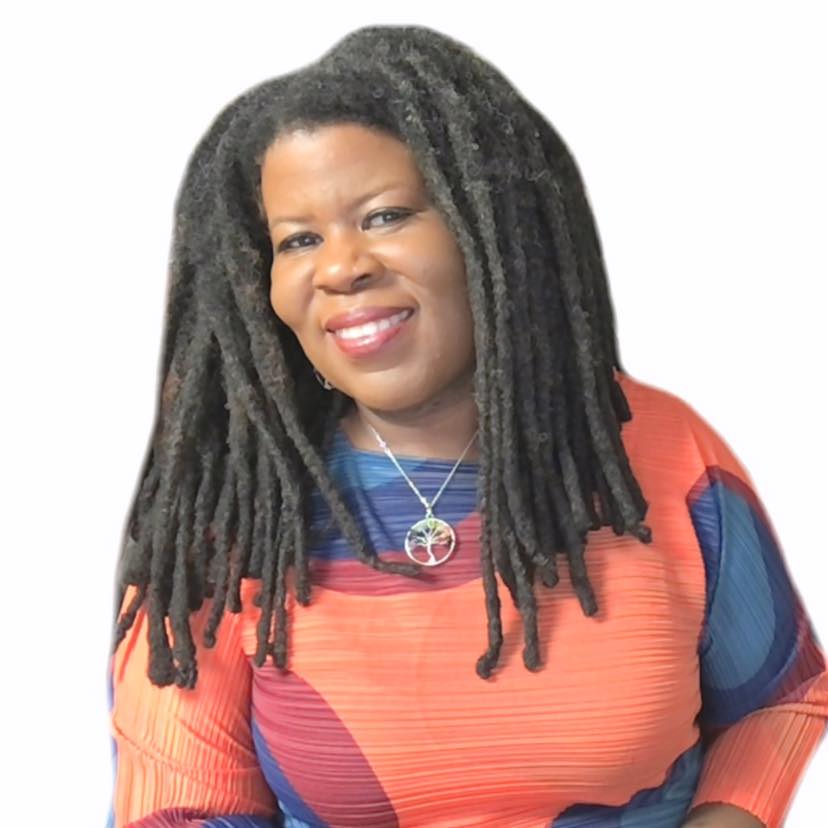
The Rev. Dr. Cheryl A. Lindsay, Minister for Worship and Theology (lindsayc@ucc.org), also serves a local church pastor, public theologian, and worship scholar-practitioner with a particular interest in the proclamation of the word in gathered communities. You’re invited to share your reflections on this text in the comments on our Facebook page: https://www.facebook.com/SermonSeeds.
A Bible study version of this reflection is at Weekly Seeds.