Sermon Seeds: What is Good
Sunday, February 1, 2026
Fourth Sunday after Epiphany | Year A
(Liturgical Color: Green)
Lectionary Citations
Micah 6:1-8 • Psalm 15 • 1 Corinthians 1:18-31 • Matthew 5:1-12
https://lectionary.library.vanderbilt.edu/texts/?z=e&d=16&y=17134
Focus Scripture: Micah 6:1-8
Focus Theme: What is Good
Series: Descending From Heaven (Click here for the series overview.)
Reflection
By Cheryl A. Lindsay
Many people take comfort and find security in having simple rules to follow. Various headlines for self-help and wellness articles confirm this truth. They promise the benefits of a twelve step morning routine or five simple things you can do at night to guarantee a good night’s sleep. Some take the form of warnings and caution against doing ten particular things. The use of numbering or bullet points in these articles encourages skimming and makes in-depth reading and scrutiny unnecessary for implementing these life-altering practices. Rules may allow us to transform something nuanced and complex into something easy and seeming attainable.
Other rules set boundaries so we know the limits of what we may or may not do. Curfews can be seen as the time by which we should be home or the latest time we can be out. The actual time is the same, but our interpretation depends upon our expectations and desires. For some, rules help regulate acceptable behavior in ways that maintain good relationships. For others, they restrict individuality and freedom of behavior. This group is the most likely to test the limits and consequences of norm-bending and rule-breaking. A rule that is not or cannot be enforced is no rule at all. Nor is a rule in effect when there is no accountability or consequence associated with its transgression.
The biblical witness contains its examples of rules given and rules broken. Some were dictates and commands, others were guidelines and invitations. From the beginning, Genesis 3 demonstrates a world of harmony between Creator and creation, including the human creatures charged with maintaining order. The only restriction placed on their actions was access to the Tree of the Knowledge of Good and Evil. One might say they only had one rule, and they could not overcome even a moment of temptation in order to keep it. While not all rules are about good and evil (many concern protection and care), the two battle within beings who have the privilege to choose between the two.
That choice has traditionally denoted the quintessential distinction that humanity has over the rest of creation. While considered a mark of superiority, it has also been a source of great harm and power struggles. How much of human conflict has been based on one group of people attempting to limit or steal the ability to make choices? That tragedy is compounded by the reality that even God does not do that. Even with the commandments, they were offered to the people as a means of maintaining right relationship with God, neighbor, and self. Reading through Leviticus makes it evident that the Holy One understood the people would be incapable of abiding by these rules; therefore, instructions and ways to receive grace, forgiveness, and reconciliation were incorporated throughout the law.
Later, Jesus offers a new interpretative framework for the rules of the law and the testimony of the prophets in the Beatitudes and the Sermon on the Mount. Explicitly, Jesus notes that he comes to fulfill the law not abolish it because the personification of heaven descending to earth recognized that people flourish when given boundaries and guidelines for living life abundantly.
The prophet Micah ministers centuries before Jesus, parallel to Isaiah’s ministry, to a people who have known exile…who have been bound by rules of an invading power. Invasions never benefit the people whose lives and land are displaced at the whim of tyrants wielding absolute or unchecked power. In the same way, even benevolent and wise kings must wrestle with the temptation that power presents.
The book of Micah is attributed to the work of Micah of Moresheth, an eighth-century-BCE Judean prophet whose prophecies were directed toward both Samaria and Jerusalem in the latter half of the eighth century. The book represents the sixth scroll of the twelve Minor Prophets in the Masoretic Text and is placed between Jonah and Nahum. In the Septuagint, it is the third scroll of the Minor Prophets and is placed between Amos and Joel. According to Mic. 1:1, the prophet Micah’s work extended from the reigns of King Jotham (742–735) to King Hezekiah (715–687), making him a contemporary of Isaiah. In the book of Jeremiah, Micah of Moresheth is celebrated as a bold prophet who was not afraid to speak to power during Hezekiah’s reign (26:18). He is also listed among the great leaders in 2 Esd. 1:38. While the book of Micah may be short in length, it is long on scathing attacks against those who use political, religious, or economic power to exploit their neighbors for personal gain. But despite its numerous threats of YHWH’s wrath and prophecies of doom, Micah also expresses God’s eagerness to maintain relations with God’s people.
Matthew J. M. Coomber
Prophets may address nations with words of warning and invitation, judgment and encouragement, cautions and convictions. The people may or may not be willing participants under human kings who may or may not be just. The message goes forth broadly so that the Holy One can reach the masses with a vision of justice and peace beyond lived experiences. Prophets speak truth to power such as rulers and kings, but they also speak truth about power to a people who may have forgotten or never known that Creator has also endowed them with power. Rules are warned to turn back to God, and people are warned not to put their trust in human rulers who may claim God but do not follow God. Tyrants only wield the power the people allow them to have. So, while the prophet often sympathizes with the condition of the people, they still hold them accountable for their willing participation in and endorsement of the oppressive regimes and systems of this world. Still, their most strident words target those at the pinnacle of power who use it for evil rather than good.
Mic. 6:1–8 presents audiences with a court setting in which Judah’s injustices are placed on trial. The passage opens with a demand that the accused people plead their case before the judgment of YHWH and the whole earth (6:1–2), and concludes with a correctional instruction in 6:8 that was considered by Northrop Frye (206) to be one of history’s greatest moral breakthroughs. This trial scene, however, breaks from some of the standard conventions of its time. Whereas court cases traditionally start with a leveling of charges against the accused, here the deity opens the proceedings in the defendant’s box, raising concerns about YHWH’s own possible shortcomings and giving the accused a chance to voice any complaints that they may have (6:3–5). Through YHWH’s line of questioning, which suggests a sense of confusion and betrayal as YHWH works to understand how it might have offended the people and caused them to go astray, YHWH highlights all that has been done for the people (6:3–5).
Matthew J. M. Coomber
After the case has been laid against the nation, the prophet communicates a simple rule: identify what is good. The set of commands or requirements is not as brief as at creation but also not as long or complex as given on Mount Sinai and expounded upon during the Sermon on the Mount or the Plains. Micah’s list omits any mention of belief, creeds, or theological claims. None of that made the list. From the indictment, it was clear that ritualistic activity had continued. Worship that does not translate into the realm of God manifested in actions and attitude becomes idolatry, empty, and meaningless. It may perhaps even be described as evil. It certainly isn’t good. “What does the Lord require of you but to do justice and to love kindness and to walk humbly with your God,” Micah states the question as the answer to what is good? It’s a simple list if not an easy one. Micah invited his audience to interpret what that meant, not in abstract, but in life. The Holy One seemed to trust the people to know the answer even if they did not live it out. The expectation is clear. There is only one guideline: what is good.
For Further Reflection
“Do your little bit of good where you are; it’s those little bits of good put together that overwhelm the world.” ― Desmond Tutu
“No one has ever become poor by giving.” ― Anne Frank
“Three things in human life are important: the first is to be kind; the second is to be kind; and the third is to be kind.” ― Henry James
Works Cited
Coomber, Matthew J. M. “Micah.” Gale A. Yee, Ed. Fortress Commentary on the Bible: Two Volume Set. Minneapolis: Fortress Press, 2014.
Suggested Congregational Response to the Reflection
During the Season After Epiphany, highlight and give thanks for the glimmers of joy and hope in your community.
Worship Ways Liturgical Resources
https://www.ucc.org/worship-way/after-epiphany-4a-february-1/
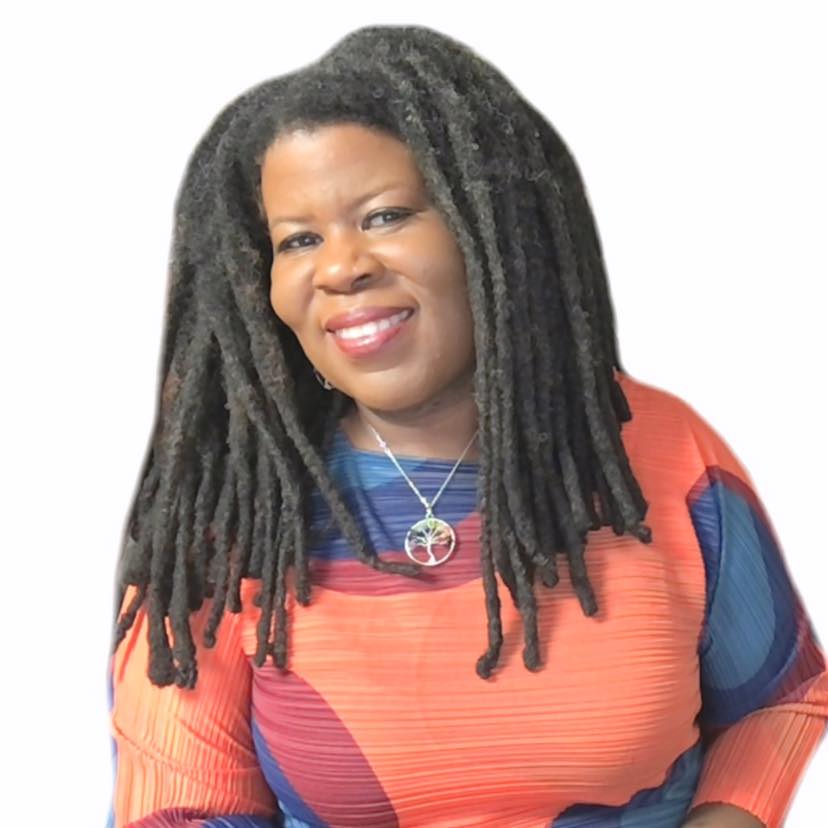
The Rev. Dr. Cheryl A. Lindsay, Minister for Worship and Theology (lindsayc@ucc.org), also serves a local church pastor, public theologian, and worship scholar-practitioner with a particular interest in the proclamation of the word in gathered communities. You’re invited to share your reflections on this text in the comments on our Facebook page: https://www.facebook.com/SermonSeeds.
A Bible study version of this reflection is at Weekly Seeds.