Sermon Seeds: The Remnant
Sunday, January 4, 2026
Second Sunday after Christmas| Year A
(Liturgical Color: White)
Lectionary Citations
Jeremiah 31:7-14 or Sirach 24:1-12 • Psalm 147:12-20 or Wisdom of Solomon 10:15-21 • Ephesians 1:3-14 • John 1:(1-9), 10-18
https://lectionary.library.vanderbilt.edu/texts/?z=c&d=11&y=17134
Focus Scripture: Jeremiah 31:7-14
Focus Theme: “The Remnant”
Series: May Peace Be Within You (Click here for the series overview.)
Reflection
By Cheryl A. Lindsay
There are many ways to approach the biblical narrative. Taking the text at face value as if it were written in the current year directly to the contemporary reader may seem to be the easiest approach, yet it is likely to be the most confusing. Beneath the text lies a context the writer does not explain because the original hearers lived in the context or with enough knowledge of what were recent events making further explanation unnecessary. Other lenses for examining these passages help to dispel some of that confusion. Historical analysis emphasizes significant events and historical figures relevant to the story. Literary analysis carefully examines the words, how they are arranged, what they mean, and uncovers idioms, figures of speech, and literary devices employed in communicating the story. Form criticism, the technique used almost exclusively by scholars and academic writing, analyzes how the books get pieced together. It looks at different versions of the same passage, the original sources, and the composition not just of an individual passage but of the passage in relationship to the whole.
A robust analysis of the text will engage with all of the above in order to reach or critique conclusions generated from study of the text. Even the face value reading gains legitimacy in conversation with historical analysis. Often, the use of multiple techniques generates more questions than answers, yet advances in biblical scholarship benefit the pursuit of biblical literacy, comprehension, and insight.
It is not entirely clear exactly when the focus passage was written and who was the original, intended audience. With the destruction of the Northern Kingdom and the displacement of those peoples, it is not a stretch to assume that the displaced people were the audience and this passage served as promise and encouragement. At the same time, this word may have reached the Southern Kingdom as an alert that their displaced neighbors and kin would return and be reunited with them. In either case, the message contains a predicted future of restoration and renewal.
Jeremiah 31:2–6 and 7–14 likewise invoke the exodus and wilderness traditions; in particular, 31:4 recalls Miriam with her tambourine (see Exod. 15:20–21; Stulman, 269). Jeremiah 30:5–6 may contain clues that this oracle once spoke to the northern kingdom. For example, the divine promise to “bring them [i.e., the survivors or remnant] from the land of the north” (31:8) elicits Jeremiah’s initial predictions of an oncoming enemy from the north in Jeremiah 2–6, but may also be left over from Jeremiah’s attempts at Josiah’s behest to bring to Jerusalem some of the people who survived the Assyrian destruction of the northern kingdom in 721 BCE. In any case, “the text offers hope” to anyone living in exile or uncertainty; thus the audience might have originally been the “Judean exiles residing in Babylon during the sixth century” (Stulman, 258).
Kelly J. Murphy
Jeremiah 31 is found within the Book of Consolation. After the long years of suffering the consequences of their actions and attitudes, relief and reprieve are imminent. The lamenting prophet finally has good news to share. Jeremiah encourages the people to rejoice as lament may now transition to praise. Glad songs and shouts will mark the change in circumstances even before it is fully realized. This is hope—to act in faith that the promises of God have come even before they materialize.
The word of both petition and declaration, “Save, O Lord, your people,” is particular. (That does not make it exclusive; specificity does not negate expansiveness.) All humanity has been created by God, but not all people needed to be saved from the same plight or in the same way.
As a prophet, Jeremiah reflected the intersection of God’s disappointment and the people’s despair. His appropriate response was expressed in lament as he carried generations of tears, despondency, and grief in his person. How does one make that shift from weeping to rejoicing? Perhaps, his reputation as the “Crying Prophet” provides the clue and his path forward.
Jeremiah does not ignore his feelings; he does not suppress his grief. He goes through this pain without detours. Recently, in a grief support session sponsored by the church I pastor, a facilitator read a children’s book. Like many books aimed at children, it was full of repetition, a literary device to emphasize an important point to remember. The repeated phrases advised the children, as the protagonist encountered multiple difficult situations that “you can’t go around it, you can’t go over it, you can only go through.”
This is a healthy message that God’s children of all ages would well remember. Perhaps that is the real consolation that Jeremiah’s ministry offers. There is power in going through…and that is the best path forward.
It is a profound paradox that when there is no way forward, when the future is cut off and death is winning, hope can appear unexpectedly, and the universe expands in unthinkable ways. After disaster, hope emerges slowly, if at all. First, it needs space in which to take root, a fallowing of the land, a turning of the soil to aerate and open it. Before hope can appear, survivors of disaster have to find language to tell of it; they have to grieve accumulations of loss and begin to place the catastrophe into larger frames of meaning. Hope arrives in stops and starts, risings and fallings, in painful switchbacks between despair and trust. Hope in Jeremiah is not optimism but unbidden, unexpected revelation of divine love. Within the larger book of Jeremiah, words of explicit hope appear sporadically, as if to keep readers going and inoculate them against utterly succumbing to despair. But even so, readers are simply not prepared for the explosive beauty of the “little book of consolation.” These brief chapters of hope are a tour de force that sweeps aside the general bleakness of most of the book.
Kathleen M. O’Connor
A reversal of fortunes is imminent, and while it may seem to be sudden, the change results from a prolonged journey with divine intervention reaching its desired ends. As Hetty Lalleman notes,
“The good gifts of the land (v. 12) are blessings from God and a sign of his grace (see v. 5). The curses for breaking the covenant (see Deut. 28:15–68) are reversed.” The faithful and sure love of God never abandoned them; in fact, it sustained them as they lived through the consequences of their faithlessness.
However, restoration does not come for all but for the remnant. Like the noted interventions of their communal testimony, not all who experienced the suffering at the onset or through the valley will reach the promise. The generation that traveled through the Red Sea lives the remainder of their days in the wilderness. In the same way, not everyone who struggled under the exile will celebrate the homecoming. That truth does not negate God’s love for those who do not experience restoration; it does charge the remnant with new purpose.
To be the remnant holds the responsibility and privilege of hope before and beyond reason. The remnant maintains the identity of the people of God. The remnant tells the story of lament and rejoicing. The remnant lives as a witness to the goodness, mercy, and peace of God. The remnant testifies to the covenant still in effect.
Reflection from Voices of People of African Descent
The 33rd General Synod adopted a Resolution to Recognize the United Nations International Decade for People of African Descent (2015-2024). As part of its implementation, Sermon and Weekly Seeds offers Reflection from Voices of People of African Descent related to the season or overall theme for additional consideration in sermon preparation and for individual and congregational study.
“The Remnant”
By Kwame Dawes
Debris spreads like the scattering of bones
on the seabed, coral growing around
the long history of bodies jettisoned.
This is a myth. The artist must
imagine a biblical calamity.
The truth is that, soon, sand will cover
all evidence, soon, even the ancestors
singing deep in the ocean will not
be heard. Soon, in the soft rumble
of walls of water moving,
deafness will be all that is left.
The space beneath the freeway,
all the vehicles emptied, the pillars holding
up the interlocking maze of asphalt
and cement, is the graveyard of all
desire. We will walk among
the broken planks, the empty cars,
the tattered garments, and here
we will find ourselves alone, the wind
moving with the constant hum
of air circling the void.
To hold ourselves intact, we must
close our eyes and imagine green,
and then, for sustenance, drag our
tongues across our foreheads, to taste
the salt and sweet of our hope.
For Further Reflection
“Jane, I approached the verge of despair; a remnant of self-respect was all that intervened between me and the gulf. — Charlotte Brontë
“The Remnants
We carry small membranes of memories
Within us
As do trees, flowers, stones,
All life force around us
Fragments of memories
Engraved in chips of iron, copper, silver…
Interlaced in the workings of men
Intertwined into the streets, buildings
The networks around us
Pathways between ages
Each carrying their
Remnants of the past” ― Maria Lehtman
“I live on remnants of dreams” ― Khaled Ibrahim
Works Cited
Lalleman, Hetty. Jeremiah and Lamentations. Downers Grove: InterVarsity Press, 2013.
Murphy, Kelly J. “Jeremiah.” Gale A. Yee, Ed. Fortress Commentary on the Bible: Two Volume Set. Minneapolis: Fortress Press, 2014.
O’Connor, Kathleen M. Jeremiah: Pain and Promise. Minneapolis: Fortress Press, 2011.
Suggested Congregational Response to the Reflection
During the Season of Christmas, invite a member of the faith community to share their testimony.
Worship Ways Liturgical Resources
https://www.ucc.org/worship-way/christmas-2a-january-4/
For those planning to observe the Feast of Epiphany: https://www.ucc.org/worship-way/epiphany-a-january-6/
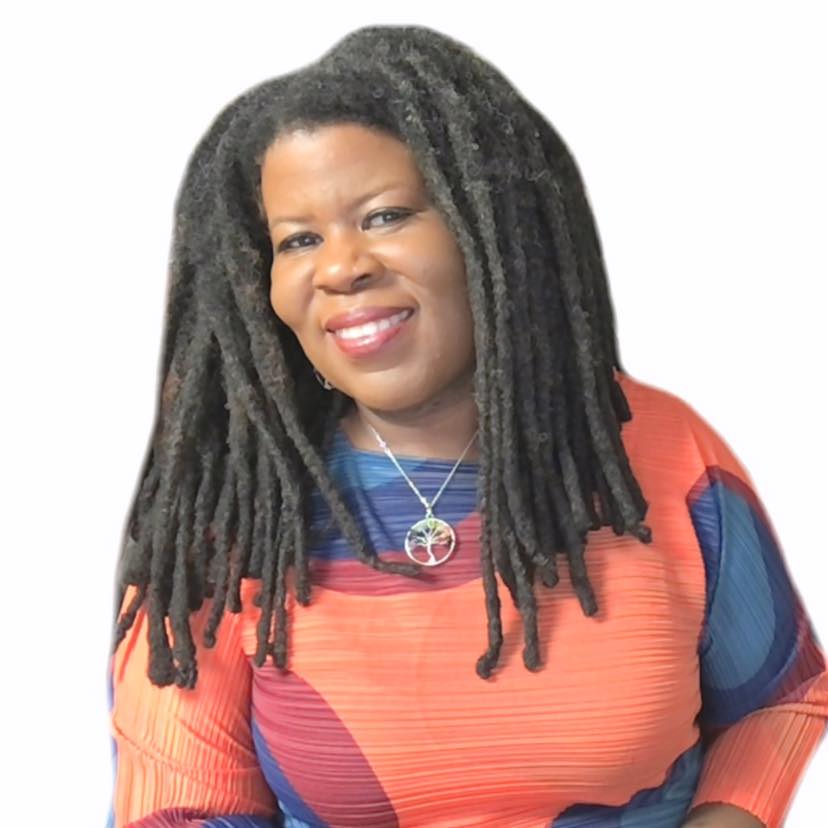
The Rev. Dr. Cheryl A. Lindsay, Minister for Worship and Theology (lindsayc@ucc.org), also serves a local church pastor, public theologian, and worship scholar-practitioner with a particular interest in the proclamation of the word in gathered communities. You’re invited to share your reflections on this text in the comments on our Facebook page: https://www.facebook.com/SermonSeeds.
A Bible study version of this reflection is at Weekly Seeds.