Sermon Seeds: The Lost
Sunday, November 2, 2025
Twenty-first Sunday after Pentecost
(Liturgical Color: Green)
Lectionary Citations
Habakkuk 1:1-4; 2:1-4 and Psalm 119:137-144 • Isaiah 1:10-18 and Psalm 32:1-7 • 2 Thessalonians 1:1-4, 11-12 • Luke 19:1-10
https://lectionary.library.vanderbilt.edu/texts/?z=p&d=82&y=384
Focus Scripture: Luke 19:1-10
Focus Theme: The Lost
Series: Raise Her Voice: Seek After God (Click here for the series overview.)
Reflection
By Cheryl A. Lindsay
Some people have the gift of hospitality. They welcome everyone they encounter in any space they occupy. They make people feel at home in unfamiliar places, and they encourage visitors to feel a sense of belonging. Hospitality may manifest as a spiritual gift and discipline that recognizes that everything we have is a gift from the Holy One, and gifts should be shared for the benefit of all.
The need for hospitality may be a regular one, such as a community meal or greeting first time attendees at a worship service. At other times, a special occasion may require a more intentional organization and preparation. Notices or invitations may need to be extended. Additional resources may be gathered in order to accommodate the needs of those gathering. Typically, the hosts make the decisions regarding date, time, location, and agenda. Generally speaking, it is considered bad form for guests to invite themselves.
In the gospel reading, Luke shares an encounter in which Jesus seems to exhibit bad form. Jesus invites themselves to dinner. Yet, the response from the recruited and enthusiastic host suggests something very different at work.
In Jericho, Jesus encounters rich Zacchaeus, also marginalized as a chief tax collector/sinner (19:7). His office assures that he is a collaborator in imperial systems. He also wishes to “see” but faces two obstacles: a crowd and his short stature (19:3). He does one thing: he climbs a tree. As Zacchaeus’s guest, Jesus enters another relationship with tax collectors/sinners that draws social protests (19:7). Zacchaeus reveals no motivation for changing relationships with mammon [material wealth] by redistributing half of his possessions among the poor and making fourfold reparation for defrauding (19:8–9). Jesus equates this change with salvation and the renewal of Zacchaeus’s Abrahamic heritage (19:9–10). Like Abraham’s daughter in 13:16, Zacchaeus is Abraham’s son.
Robert L. Brawley
This story reflects a reversal of status through a reversal of allegiance. Only superficially is this story about a short man climbing a tree to get a glimpse of Jesus. Meaningfully, Zacchaeus reflects a man engaged in an imperial system that has diminished his position in the kindom of God while ostensibly making him materially prosperous. As a chief tax collector, Zacchaeus had authority and power to extract exorbitant obligations from people attempting to safely and securely navigate life as a citizen of an empire built on conquest, violence, manipulation, and extortion. Through this position, Zacchaeus gained stature within that system at the cost of his identity as a member of the covenantal community. There’s more keeping him from Christ than a crowd, and yet, he demonstrates commitment and risk to make the connection.
Extending the status reversals that have dotted the landscape of Jesus’ journey since 9:51, recent encounters with a wealthy member of the elite and a poor blind man have displayed the formidable challenge that wealth poses to the experience of salvation (18:18–30) and the gift of saving sight for a poor man who makes up in bold, insistent faith what he lacks in social standing and economic resources (18:35–43). As the traveling company enters Jericho, diverging narrative trajectories converge in the person of Zacchaeus. He personifies mixed and indeed clashing status indicators. His extreme wealth appears to prime him for trouble, yet his role as tax collector holds out hope for a positive outcome when he comes face-to-face with Jesus. Which trajectory will prevail?
John T. Carroll
Nothing in the narrative suggests that Zacchaeus has any expectation that he will interact with Jesus. Being able to observe him directly seems to be his goal. Yet, that distant encounter does not satisfy Jesus who stops in order to address him directly with an unexpected invitation–first to dinner but ultimately to restoration.
So Jesus declares that “salvation has happened for this household” and its son of Abraham (v. 9). The conclusion seems inescapable that the experience of deliverance, of salvation, for the chief tax collector of Jericho has something to do with his commitment to respond in a particular way to God’s hospitality extended to him by his guest. Yet the verbal parallel between vv. 5 and 9 (in Greek) indicates that the key factor is the welcoming presence of Jesus himself, without which Zacchaeus’s joyful, repentant response would not have happened: “Today in your house I must stay.” (v. 5)
“Today salvation for this house has happened.” (v. 9) Much as in 15:3–32, rescue of a lost one is an act of divine initiative and grace; the pledge to enact justice and generosity is its effect, not its precondition. Nevertheless, Zacchaeus, responding as he has to Jesus’ gracious acceptance, has entered the domain of salvation (cf. Simeon’s reaction to Jesus in 2:30: “My eyes have seen your salvation”). His response has opened up a reordered life that is shaped by the values and commitments of God’s realm: honest admission of responsibility for past corrupt business dealings; resolve to make it right, to enact justice for the benefit of those whom he has wronged; and commitment to generous sharing of his great wealth to meet the needs of the poor.
John T. Carroll
Jesus orchestrates an opportunity for Zacchaeus to extend hospitality, which Jesus accepts. In the reverse invitation, Zacchaeus’ expectations for a moment to see Jesus have been exponentially surpassed. Rather than a superficial glance, Zacchaeus shares a meal in his home with the one with power and position that Zacchaeus does not have. That will inspire him to not only change his allegiance from empire to the realm of God; it will also lead Zacchaeus to offer repair. His repentance is personal with a communal impact. As a chief tax collector, the effect will move beyond himself.
Jesus declares the transformation complete as this human being, once known for being entangled in the mechanisms, systems and structures of empires, is now proclaimed as a full participant and inheritor of the covenant.
Reflection from Voices of People of African Descent
The 33rd General Synod adopted a Resolution to Recognize the United Nations International Decade for People of African Descent (2015-2024). As part of its implementation, Sermon and Weekly Seeds offers Reflection from Voices of People of African Descent related to the season or overall theme for additional consideration in sermon preparation and for individual and congregational study.
“A Laying On Of Hands”
By Ntozake Shange (excerpt from For colored girls who have considered suicide/When the rainbow is enuf )
i waz missin somethin
somethin so important
somethin promised
a laying on of hands
fingers near my forehead
strong
cool
moving
makin me whole
sense pure
all the gods coming into me
laying me open to myself
i waz missin somethin
somethin promised
somethin free
a laying on of hands
i know bout/laying on bodies/laying outta man
bringin him all of my fleshy self & some of my pleasure
being taken full eager wet like i get sometimes
i waz missing somethin
a laying on of hands
not a man
laying on
not my mama laying/holdin me tight/sayin
i’m always gonna be her girl
not a laying on of bosom and womb
a laying on of hands
the holiness of myself released
i sat up one nite walking a boardin house
screamin/cryin/the ghost of another woman
who waz missin what i was missin
i wanted to jump up outta my bones
& be done with myself
leave me alone
& go on in the wind
it was too much
i fell into a numbness
til the only tree i cd see
took me up in her branches
held me in her breeze
made me dawn dew
that chill at daybreak
the sun wrapped me up swingin rose light everywhere
the sky laid over me like a million men
i waz cold/i waz burnin up/a child
& endlessly weavin garments for the moon
wit my tears
i found god in myself
& i loved her/i loved her fiercely
For Further Reflection
“Some beautiful paths can’t be discovered without getting lost.” ― Erol Ozan
“Be lost. Give up. Give In. in the end It would be better to surrender before you begin. be lost. Be lost And then you will not care if you are ever found.” ― Victoria Schwab
“There are two tragedies in life. One is to lose your heart’s desire. The other is to gain it.” ― George Bernard Shaw
Works Cited
Brawley, Robert L. “Luke.” Gale A. Yee, Ed. Fortress Commentary on the Bible: Two Volume Set. Minneapolis: Fortress Press, 2014.
Carroll, John T. Luke. Louisville: Westminster John Knox Press, 2012.
Suggested Congregational Response to the Reflection
During this series, Raise Her Voice: Seek After God, in the season after Pentecost, we encourage the local church to engage in spiritual practices to support faith formation and ministry engagement. This week, consider the ways the ministry of your faith community counters systems opposed to the kindom of God.
Worship Ways Liturgical Resources
https://www.ucc.org/worship-way/after-pentecost-21c-november-2/
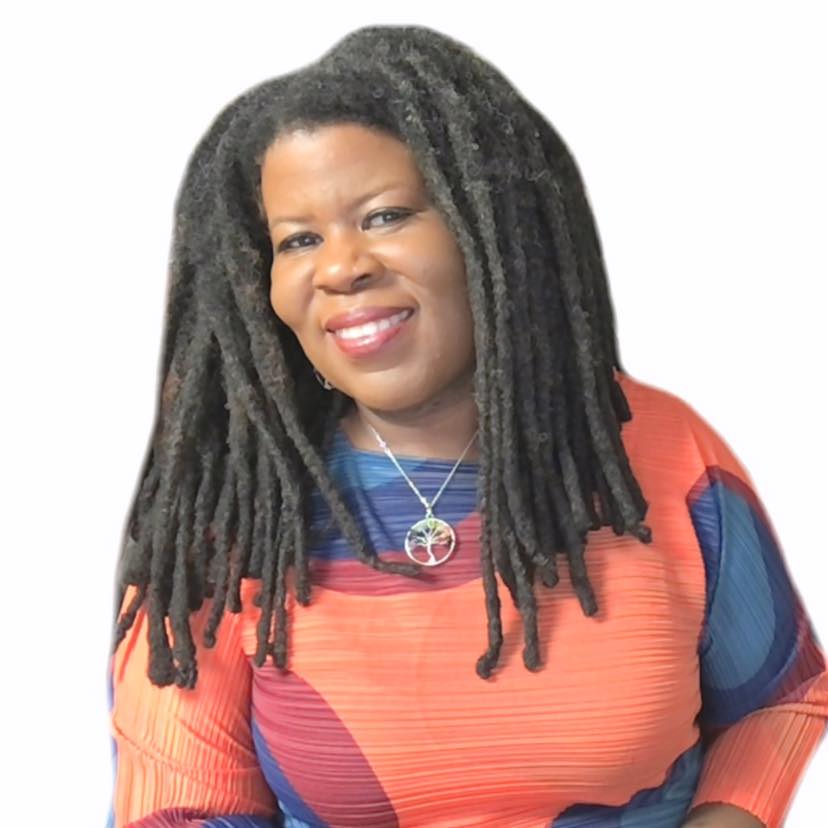
The Rev. Dr. Cheryl A. Lindsay, Minister for Worship and Theology (lindsayc@ucc.org), also serves a local church pastor, public theologian, and worship scholar-practitioner with a particular interest in the proclamation of the word in gathered communities. You’re invited to share your reflections on this text in the comments on our Facebook page: https://www.facebook.com/SermonSeeds.
A Bible study version of this reflection is at Weekly Seeds.