Sermon Seeds: Shall I Be Fruitful?
Sunday, June 14, 2026
Third Sunday after Pentecost| Year A
(Liturgical Color: Green)
Lectionary Citations
Genesis 18:1-15, (21:1-7) and Psalm 116:1-2, 12-19 • Exodus 19:2-8a and Psalm 100 • Romans 5:1-8 • Matthew 9:35-10:8, (9-23)
https://lectionary.library.vanderbilt.edu/texts/?z=p&d=60&y=17134
Focus Scripture: Genesis 18:1-15
Focus Theme: Shall I Be Fruitful
Series: Faithful and Vital (Click here for the series overview.)
Reflection
By Cheryl A. Lindsay
Consider the contrast in the readings from Genesis this week and Matthew 9 from last week. The Matthew text reeks with desperation and anticipated grief. A parent fears for the life of their child and takes a chance on the impossible—a miracle from an unknown source that rumor has it has healed the sick. In Genesis, an elderly couple has given up hope of the dream of expanding their family to include children. In both stories, divine intervention interrupts expectation. In Matthew, that expectation emanates from the doubting and derisive crowd. In Genesis, the parents struggle to receive the promised blessing. What holds these texts together is a similar response: laughter.
Laughter may take different tones. Sometimes, it’s full of joy and delight reflecting a really good joke or a wonderful surprise. Other times, laughter may be used to cover up discomfort as in nervous laughter. Some laughs are scoffing, conveying ill will, suspicion, or doubt. Focusing on the Genesis text, we may consider the possibility that there was a combination of laughter tones evidenced in Sarah’s laughter.
Sarah is a primary character in the Genesis narrative even if interpretations often reduce her to an instrumental role and only relate her existence to her husband, Abraham. Yet, when the Holy One makes the covenant, both Abraham and Sarah are specifically included as noted by the changing of their names from Abram and Sarai. They both need a new identity that connects them to their God and signifies their participation in the covenantal promise.
Sarah is shown to be a powerful figure whose actions significantly influence the unfolding story of YHWH’s covenantal promises. In fact, without her agency and her participation in these narratives, the story of Israel may well have been compromised.
Rodney S. Sadler
The agency of women and other marginalized groups proves to be a consistent theme in the biblical corpus, and that priority begins in Genesis with the matriarchal figures who are treated as equal, and at times the stronger, partner in the couples paired to lead to the formation of a nation. While that begins with Abraham and Sarah, it continues with their successors Isaac and Rebekah followed by Jacob and Rachel. Each of these women have agency and exercise their power not only in their respective relationships, but also in their roles as leaders of the children of the covenant. In the focus narrative, Sarah begins this tradition by questioning the promise. Brueggemann frames her response in this way:
The story is constructed to present the tension between this inscrutable speech of God (that comes as promise) and the resistance and mockery of Abraham and Sarah who doubt the word and cannot believe the promise. Israel stands before God’s word of promise but characteristically finds that word beyond reason and belief. Abraham, and especially Sarah, are not offered here as models of faith but as models of disbelief. For them, the powerful promise of God outdistances their ability to receive it. Once again, this story shows what a scandal and difficulty faith is. Faith is not a reasonable act which fits into the normal scheme of life and perception. The promise of the gospel is not a conventional piece of wisdom that is easily accommodated to everything else. Embrace of this radical gospel requires shattering and discontinuity. Abraham and Sarah have by this time become accustomed to their barrenness. They are resigned to their closed future. They have accepted that hopelessness as “normal.” The gospel promise does not meet them in receptive hopefulness but in resistant hopelessness. This story embodies a statement of irony, for the total Abraham/Sarah story is about a call embraced. But in this central narrative, the call is not embraced. It is rejected as nonsensical. And indeed, if no new thing can intrude, if newness must be conjured from present resources, the promise announced here truly is nonsensical.
Walter Brueggemann
While much of Brueggemann’s analysis has validity, his characterization of Abraham and Sarah’s response as resistance and mockery reflects a narrow and presumptive framing of their initial reaction to this extraordinary claim.
Consider this scenario from Sarah’s perspective. She is long past the years of fertility, but that period of her life certainly shapes her response as much as her biological condition. They have been married for a long time, and in that time, it is reasonable to assume they desired children. Those years were filled with hope followed by disappointment, communal curiosity followed by condemnation or scorn, relational strain between them followed by resignation. Now, they have become accustomed to the underlying grief, public pity, and pain of unrealized longing. They have made their way together to forge a life without a family beyond themselves. Assuredly, they have bombarded heaven with prayers to overcome their barrenness for years before reconciling themselves to their fate.
Maybe their faith can be questioned apart from considering the journey of keeping faith alongside constant and consistent heartbreak. If anything, rather than being labeled as disbelieving, they may be accused of mistaking God’s “not yet” to be a “no” as a response to the prayers they no longer have hope to pray.
So, Sarah laughs.Again, laughter has various tones. The Genesis account does not describe her tone, but it does present her question, which does get twisted in the confrontation. The remixed version claimed she said, “Shall I indeed bear a child, now that I am old?” But, that is not exactly what she said, and while it is a reasonable paraphrase, the nuance of the meaning found in her original wording becomes obscured. She said, “Shall I be fruitful?”
It has been at least twenty-four years since the Holy One first called Abram and Sarai into covenantal relationship. At that time, they first assumed their relative, Lot, would be their heir. After that possibility was removed, Sarai plans for her servant Haggai to serve as her surrogate. The Holy One assures them that their descendants will be the offspring of both of them. When Sarah asks if she will be fruitful, she’s not just asking if she will be a mother or if the barrenness that plagued her marriage during her fertile years will be reversed. She’s asking if she will be able to fulfill her purpose. She wants to know if she will be able to live up to her part of the covenant, not just for herself, but also for the descendants promised as the blessing of the Holy One in the covenant.
So, perhaps she laughs because she’s incredulous. Maybe, she laughs in delight at the improbable made possible. Her laughter may have been a nervous response to an overwhelming moment or a way of transitioning from disbelief to belief. But, it is not credible to frame her response to the dream and hope of a lifetime coming to fruition as derisive or mocking.
It took an extraordinary long time for Sarah and Abraham to bear this fruit. Their story not only reminds us that the Holy One keeps promises, blesses the beloved, and performs the miraculous. This story also demonstrates that those promises take the time necessary for them to come to fruition. While there were years when it seemed that God had abandoned the promise or when the promise encountered delays, distractions, and detours, the plan of God mirrored the progression of the leader’s daughter who appeared to be on her death bed. As Jesus said to him, she “is not dead but sleeping.”
Throughout human (and biblical) history, there have been sustained moments when the promise of God seemed to be lost to the people of God. But, as it has been said, “a delay is not a denial.” This is the truth of Sarah and Abraham’s story: “So Sarah laughed to herself, saying, “After I have grown old, and my husband is old, shall I be fruitful?” Sometimes, the promise is at rest while the participants are prepared and readied to claim it. That’s why Sarah’s actual question is so poignant. Fruit, from a mature plant, does not take that long to grow. But a plant that bears fruit may take a long time to mature.
For a church facing acutely challenging times, the temptation may be to fixate on responding to the present threats with a quick and immediate response. Threats often cause us to seek safety and security or to fight for survival. Both are reasonable in the short term, but there is a lesson in the journey that Abram and Sarai take to become Abraham and Sarah. Transitions do not take us back to the place of comfort we have been but to the place of promise we are called to enter. How shall we be fruitful in this time and for the future? Some of us may need to prune and weed, deconstructing what no longer, and may have never, served the ministry of the gospel. Some may need to tend to depleted soil. Others may be ready to plant seeds for new life. Still others may be at a point of maturity and harvest time.
No matter the stage, it is likely to take more time than we would hope. By faith, let us rest in the God who can shock and wake us into laughter by fulfilling the promises we no longer dare to believe.
Reflection from Voices of People of African Descent
The 33rd General Synod adopted a Resolution to Recognize the United Nations International Decade for People of African Descent (2015-2024). As part of its implementation, Sermon and Weekly Seeds offers Reflection from Voices of People of African Descent related to the season or overall theme for additional consideration in sermon preparation and for individual and congregational study.
Excerpt “The Difficult Miracle of Black Poetry in America: Something like a sonnet for Phillis Wheatley”
By June Jordan
It was not natural. And she was the first. Come from a country of many tongues tortured by rupture, by theft, by travel like mismatched clothing packed down into the cargo hold of evil ships sailing, irreversible, into slavery. Come to a country to be docile and dumb, to be big and breeding, easily, to be turkey/horse/cow, to be cook/carpenter/plow, to be 5’6” 140 lbs., in good condition and answering to the name of Tom or Mary: to be bed bait: to be legally spread legs for rape by the master/the master’s son/the master’s overseer/the master’s visiting nephew: to be nothing human nothing family nothing from nowhere nothing that screams nothing that weeps nothing that dreams nothing that keeps anything/anyone deep in your heart: to live forcibly illiterate, forcibly itinerant: to live eyes lowered head bowed: to be worked without rest, to be worked without pay, to be worked without thanks, to be worked day up to nightfall: to be three-fifths of a human being at best: to be this valuable/this hated thing among strangers who purchased your life and then cursed it unceasingly: to be a slave: to be a slave. Come to this country a slave and how should you sing? After the flogging the lynch rope the general terror and weariness what should you know of a lyrical life? How could you, belonging to no one, but property to those despising the smiles of your soul, how could you dare to create yourself: a poet?
A poet can read. A poet can write.
A poet is African in Africa, or Irish in Ireland, or French on the left bank of Paris, or white in Wisconsin. A poet writes in her own language. A poet writes of her own people, her own history, her own vision, her own room, her own house where she sits at her own table quietly placing one word after another word until she builds a line and a movement and an image and a meaning that somersaults all of these into the singing, the absolutely individual voice of the poet: at liberty. A poet is somebody free. A poet is someone at home.
How should there be Black poets in America?
It was not natural. And she was the first. It was 1761—so far back before the revolution that produced these United States, so far back before the concept of freedom disturbed the insolent crimes of this continent—in 1761, when seven year old Phillis stood, as she must, when she stood nearly naked, as small as a seven year old, by herself, standing on land at last, at last after the long, annihilating horrors of the Middle Passage. Phillis, standing on the auctioneer’s rude platform: Phillis For Sale.
To read the entire essay, click: https://www.poetryfoundation.org/articles/68628/the-difficult-miracle-of-black-poetry-in-america
For Further Reflection
“The fruits of life can only grow when your roots are implanted well. Being grounded is the key to being fruitful.” ― Dr Prem Jagyasi
“Be faithful till the end. In the end, you will be fruitful.” ― Gift Gugu Mona
“To be fruitful and productive is to invest in time” ― Sunday Adelaja
Works Cited
Brueggemann, Walter. Genesis: Interpretation: A Bible Commentary for Teaching and Preaching. Louisville: John Knox Press, 2010.
Sadler, Rodney S. “Genesis” Gale A. Yee, Ed. Fortress Commentary on the Bible: Two Volume Set. Minneapolis: Fortress Press, 2014.
Suggested Congregational Response to the Reflection
For the season after Pentecost, the themes are derived from the categories of the Marks for Faithful and Vital Churches. Each subseries will invite engagement with one Mark within the category. Each local church should choose how this will be incorporated. (This could be a sermon talk-back from the lens of the Mark, a direct discussion on the Mark, a prayer or song that relates to the Mark.) The response may also be a call to action embedded in the sermon or the sending inviting engagement beyond worship.
Mark for Congregational Response: Encouraging opportunities for all to practice sabbath and spiritual renewal.
Worship Ways Liturgical Resources
https://www.ucc.org/worship-way/after-pentecost-3a-june-14/
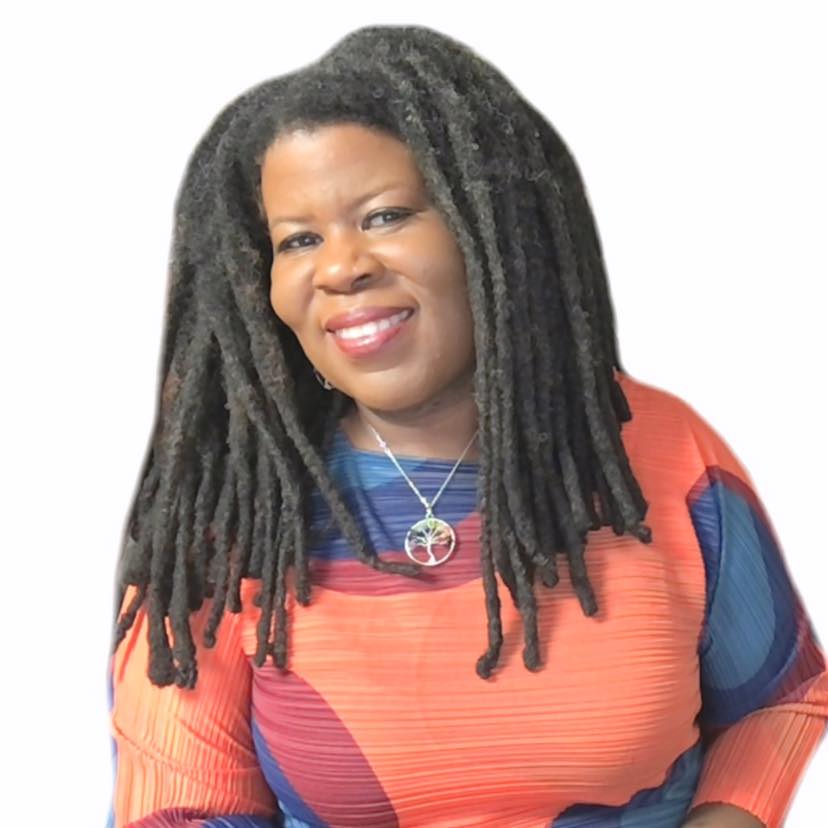
The Rev. Dr. Cheryl A. Lindsay, Minister for Worship and Theology (lindsayc@ucc.org), also serves a local church pastor, public theologian, and worship scholar-practitioner with a particular interest in the proclamation of the word in gathered communities. You’re invited to share your reflections on this text in the comments on our Facebook page: https://www.facebook.com/SermonSeeds.
A Bible study version of this reflection is at Weekly Seeds.