Sermon Seeds: Salvation May Come
Sunday, January 18, 2026
Second Sunday after Epiphany | Year A
(Liturgical Color: Green)
Lectionary Citations
Isaiah 49:1-7 Psalm 40:1-11 1 Corinthians 1:1-9 John 1:29-42
https://lectionary.library.vanderbilt.edu/texts/?z=e&d=14&y=17134
Focus Scripture: Isaiah 49:1-7
Focus Theme: Salvation May Reach
Series: Descending From Heaven (Click here for the series overview.)
Reflection
By Cheryl A. Lindsay
Some things seem out of reach. The cost extends beyond our resources. The effort exceeds our desire for achievement. The distance presents as too great for the time we have allotted. Our limitations discourage us. Our fear overwhelms us. Our hope fails us. Whether the thing, location, goal, or person proves to actually be elusive, or we believe them to be, we never reach what we decide not to pursue. Those things are out of reach.
Other things may be out of our reach. We may need assistance or a communal effort. Other objectives were never meant to be pursued on our own, either singularly or collectively. Some accomplishments take generations to achieve. Time and the persistent pursuit prove necessary to bring that distant hope into present reality. Perhaps the greatest of ends require the intervention of a Great God who makes all things new, bridges barriers, and transforms the impossible into the possible.
Deutero Isaiah (the second distinct part of the prophetic book) speaks to a people in exile who cling to a tenuous hope at best or have abandoned any positive expectation for their future at worst. The prophet’s words offer encouragement and promise along with a subtle continuation of the call to repentance found throughout the book. In this passage, the prophet equates his own call to that of his people. He is part of them, and any distance between the one who speaks on behalf of their God and the audience dissipates. He refers to himself as “Israel,” which not only points to the shared identity of the people in exile, It also references the assignment of that name to another person, Jacob, who had been living in a self-imposed exile from his sibling and family and was restored after prevailing after wrestling with God.
The prophetic ministry often wrestles with God, humanity, and the times. Unlike a formal or even contrived wrestling match, the goal is often not to win but to survive, to be transformed, to understand God’s calling, or to embrace one’s purpose. When the opponent demonstrates greater power, skill, and agility, the one wrestling from disadvantage may want the battle to end in whatever form that takes. Fatalism arises when one loses faith that salvation may be attained. Some defeat themselves before a single move is made. Others lose hope when they perceive their sustained labor has not yielded progress toward the desired outcome.
The identity and role of the servant in DI is one of the most controversial issues in the BOI. Reading the servant passages in the context of the Babylonian exile and its aftermath is essential to understanding the servant’s role. Questions asked about the servant abound: Who is the servant? Is the servant an individual, or are there many? Can the servant be identified with any individual important in Israelite history? Is it a collective term applied to all Israel? What is the role or work of the servant? Is the servant a prophet, teacher, priest, or the author of Isaiah 40–55? What is the reason for the servant’s suffering? In 49:1–53:12, the servant appears three times. In 49:1–7, he is called from birth by God to restore the survivors of Israel but laments that his work has been in vain.
Chris A. Franke
It is a brief word of lament that reminds us of the power of acknowledging the pain and suffering found in the journey. The Holy One calls the people to hard work requiring patient faith. The promise arrives in words predicting the future rather than evidence characterizing the present.
In this instance, the salvific work is redemptive. Suffering is the cost of deliverance from their oppressive condition. The question is whether that suffering is instrumental, consequential, or incidental? Does God require suffering or is it a natural condition arising from oppressive circumstances? Does God value suffering as a tool for transformation or does the Holy One redeem suffering experienced as a result of oppression?
The people understood themselves to be gathered together as a nation and to be chosen by God. Again, what is the intention behind this? The Holy One creates us for community and calls us to collective action and attitude to advance the realm of God. The chosen-ness then is particular as an assignment to collaborate under the Holy One’s direction for the benefit and blessing of the world. It does not create a hierarchy of God’s beloved nor does it justify any means toward nation-centered ends.
The promise of deliverance comes from the heart of God whose reign insists that all humanity be free.
The redemption of Israel or the chosen-ness of the Servant will itself be part of what will bring the nations to acknowledge the LORD’S faithfulness. In this sense, the fulfilment of Second Isaiah’s prophecies about bringing the people back from exile will become the way in which Gentiles will come to know the LORD and his faithfulness and power. In this way Israel’s place is assured in the LORD’S love but functions as part of a wider purpose. This missiological thinking, however vaguely sketched out, becomes an increasing focus in Third Isaiah. It also becomes the LORD’S answer to the prophet’s despair in verse 4: what seems to be vanity is actually part of a wider fulfillment than he could have imagined. The word ‘vanity’ here, used pervasively in the later work of Ecclesiastes, can refer to transience and impermanence as well as a futile endeavour. This sense of discouragement is pervasive in prophetic biographies.
Jenni Williams
Verse six makes the breadth of God’s intentions clear. The prophet and, by the equivalence established in verse three, the nation will be restored by God’s grace and for the nations. One nation’s liberation is not enough. One nation’s blessing contradicts God’s creative order. One nation’s salvation is not sufficient. “It is too light a thing” to hope to be saved while kin from other nations and communities suffer in bondage to oppressive systems. Salvation is not individualistic…not even for individual nations. It reaches until it is satisfied. Redemption is not complete until all are restored, whole, and well.
Reflection from Voices of People of African Descent
The 33rd General Synod adopted a Resolution to Recognize the United Nations International Decade for People of African Descent (2015-2024). As part of its implementation, Sermon and Weekly Seeds offers Reflection from Voices of People of African Descent related to the season or overall theme for additional consideration in sermon preparation and for individual and congregational study.
“Salvation”
By Langston Hughes
I was saved from sin when I was going on thirteen. But not really saved. It happened like this. There was a big revival at my Auntie Reed’s church. Every night for weeks there had been much preaching, singing, praying, and shouting, and some very hardened sinners had been brought to Christ, and the membership of the church had grown by leaps and bounds. Then just before the revival ended, they held a special meeting for children, “to bring the young lambs to the fold.” My aunt spoke of it for days ahead. That night I was escorted to the front row and placed on the mourners’ bench with all the other young sinners, who had not yet been brought to Jesus.
My aunt told me that when you were saved you saw a light, and something happened to you inside! And Jesus came into your life! And God was with you from then on! She said you could see and hear and feel Jesus in your soul. I believed her. I had heard a great many old people say the same thing and it seemed to me they ought to know. So I sat there calmly in the hot, crowded church, waiting for Jesus to come to me.
The preacher preached a wonderful rhythmical sermon, all moans and shouts and lonely cries and dire pictures of hell, and then he sang a song about the ninety and nine safe in the fold, but one little lamb was left out in the cold. Then he said: “Won’t you come? Won’t you come to Jesus? Young lambs, won’t you come?” And he held out his arms to all us young sinners there on the mourners’ bench. And the little girls cried. And some of them jumped up and went to Jesus right away. But most of us just sat there.
A great many old people came and knelt around us and prayed, old women with jet-black faces and braided hair, old men with work-gnarled hands. And the church sang a song about the lower lights are burning, some poor sinners to be saved. And the whole building rocked with prayer and song.
Still I kept waiting to see Jesus.
Read the entire essay here: https://friendsofjustice.blog/2014/01/21/salvation-by-langston-hughes/
For Further Reflection
“Surely the earth can be saved
by all the people
who insist
on love.” ― Alice Walker
“The world is such a marvel-it gave you trials, but if you were still and concentrated, if you tried to do the right thing, it always provided you with salvation.” Anna Godbersen
“There is only one way to salvation, and that is to make yourself responsible for all men’s sins. As soon as you make yourself responsible in all sincerity for everything and for everyone, you will see at once that this is really so, and that you are in fact to blame for everyone and for all things.” ― Fyodor Dostoevsky
Works Cited
Franke, Chris A. “Isaiah 40-66” Gale A. Yee, Ed. Fortress Commentary on the Bible: Two Volume Set. Minneapolis: Fortress Press, 2014.
Williams, Jenni. The Kingdom of our God: A Theological Commentary on Isaiah. London: SCM Press, 2019.
Suggested Congregational Response to the Reflection
During the Season After Epiphany, highlight and give thanks for the glimmers of joy and hope in your community.
Worship Ways Liturgical Resources
https://www.ucc.org/worship-way/epiphany-2a-january-18/
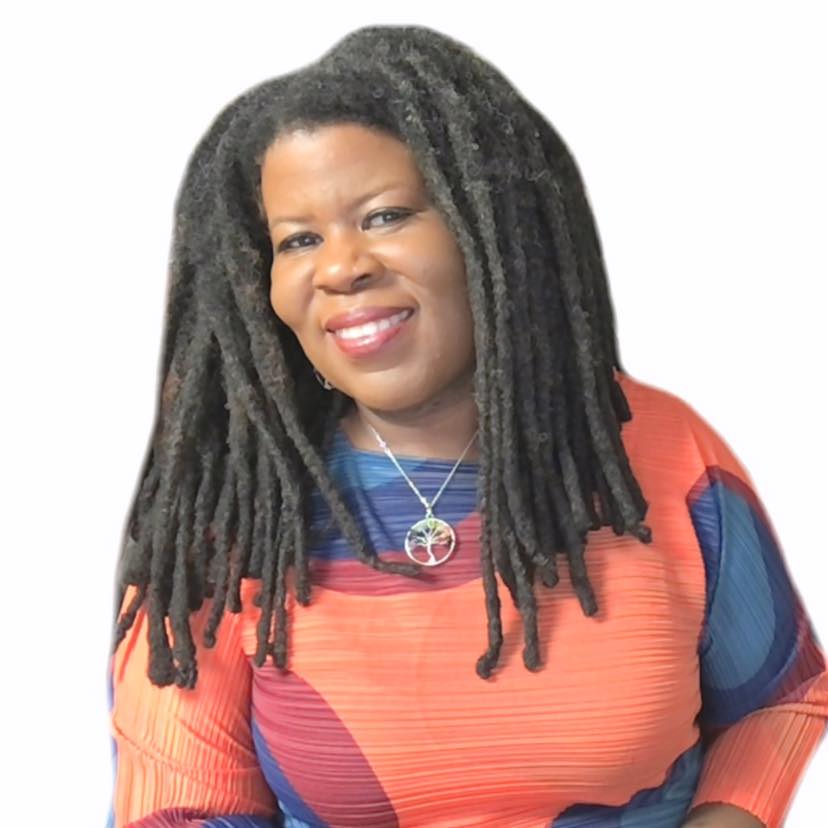
The Rev. Dr. Cheryl A. Lindsay, Minister for Worship and Theology (lindsayc@ucc.org), also serves a local church pastor, public theologian, and worship scholar-practitioner with a particular interest in the proclamation of the word in gathered communities. You’re invited to share your reflections on this text in the comments on our Facebook page: https://www.facebook.com/SermonSeeds.
A Bible study version of this reflection is at Weekly Seeds.