Sermon Seeds: Rich Toward God
Sunday, August 3, 2025
Eighth Sunday after Pentecost| Year C
(Liturgical Color: Green)
Lectionary Citations
Hosea 11:1-11 and Psalm 107:1-9, 43 • Ecclesiastes 1:2, 12-14; 2:18-23 and Psalm 49:1-12 • Colossians 3:1-11 • Luke 12:13-21
https://lectionary.library.vanderbilt.edu/texts/?z=p&d=67&y=384
Focus Scripture: Luke 12:13-21
Focus Theme: Rich Toward God
Series: Raise Her Voice: Into the Deep (Click here for the series overview.)
Reflection
By Cheryl A. Lindsay
I am fascinated by minimalists. Whether motivated by ethical and aesthetic choice or circumstances, minimalists opt to live simply, to have only what they use, and to reject unnecessary possessions. Minimalism can also translate to other aspects of their lives, but certainly, the ability to pare down to the essentials with contentment and joy demonstrates a counter to consumerism and excessive use and overuse of products and property. Minimalism is not a synonym for poverty, which is based on deprivation. Minimalists would declare that their lifestyle does not deprive them of anything; rather, it enables them to live full lives not dependent on frivolous things.
Recently, I’ve noticed social media influences refer to themselves as maximalists. In contrast to their minimalist friends, they want all the things. There’s never too much, and they pursue the acquisition of more and more and more. The problem with the proposition that there’s never too much is that leads to the embedded idea that there is never enough. When does the maximalist ever become satisfied or even grateful for what they have if their goal is to always get more? The rise in billionaires over the last few years while wages stagnate or even decline for those whose work creates and sustains profitable enterprise proves the problem of unfettered greed, hoarding, and self-centeredness. Of course, Jesus pointed the same thing out in a simple parable lesson of a rich man with the wrong priorities.
Luke places this passage within a larger section of teaching an ethical construct of discipleship and faithfulness. Despite the evidence of the crowds, following Jesus will elicit more opposition than favor, and disciples will even have to confront their own internal struggles. The “someone” in the crowd goes unnamed, but they succinctly identify their problem: their brother is not sharing the family inheritance. Presumably the brother is older, and while the cultural identity of the unnamed “someone” remains unknown, Roman and Jewish custom would have assigned full control over the inheritance to the eldest son. But, “someone” does not attempt to change the law, he seeks Jesus to support him in appealing to his brother based on what he knows of Jesus.
The sequence of events leading to this moment are interesting. Jesus had been dining at the home of a Pharisee, a hostile encounter in which the Pharisee demonstrates astonishment when Jesus does not wash his hands. This response prompts Jesus to rebuke the Pharisees as a group for the ways in which they abuse their power. After this, Jesus returns to the crowds, which have been increasing, and shares a private word with his disciples. The question from “someone” comes abruptly in the narrative. Perhaps, others were shouting their requests, questions, and hopes to Jesus, and Jesus latches onto this particular query as it will segway into the teaching moment Jesus was clearly ready to deliver.
As the air is still charged with hostility, Jesus turns to his followers and directs their response to the opposition that their mission, too, will elicit. Then he challenges alternating audiences of disciples and crowds to discern the present moment and what it demands of those who would be faithful. Prompted by a request for his mediation in a property dispute, he focuses on wealth and security, first to the crowd (vv. 13–21), then to disciples (vv. 22–34). Still speaking to the disciples, he next appeals for eschatological vigilance and readiness (vv. 35–53), before redirecting the message about eschatological awareness to the crowd (vv. 54–59). Finally, responding to a report about an atrocity committed by Pilate, Jesus teaches the crowd about repentance and seizing the opportunity created by divine mercy in the time before approaching judgment (13:1–9).
John T. Carroll
Curiously, Jesus rejects the role of judge as he immediately asked the speaker his own question, “Friend, who set me to be a judge or arbitrator over you?” Rather than pronounce a ruling or prescribing a remedy, Jesus tells a story about attitude, actions, and consequences. In the end, Jesus seems to suggest, our life choices will render the judgement on our priorities and practices. No one took the rich man’s wealth from him, he squandered it himself by storing it up with the only purpose being to possess it. This contrasts with the story of Joseph’s interpretation and implementation of Pharaoh’s dream in Genesis. The years of storing up excess had a purpose—preparing for years of famine so that all would be able to be fed, made whole, and flourish during a dry time. That storage was not only strategic, it was communal. The rich man in the parable demonstrates no concern or concept of “we.” He is the lessor for it, and no judge will need to intervene as his life sentence has already been determined.
God’s direct speech is striking; God is given voice only here in a Lukan parable. The rhetorical question God poses begs the answer “someone else.” It is not clear who demands the forfeiting of the rich man’s life; “they” resemble the unspecified “those” in 12:4 who are capable of killing the body but can do no further damage. The basic point is clear: life centered in one’s own prosperity and security is illusory. Experience teaches that to assume one will have “many years” to enjoy accumulated “goods” is to fail to reckon with the incalculable reality of death. However, the repeated first-person possessive personal pronouns in the rich man’s soliloquy betray the real problem: “my crops … my barns … my goods” (vv. 17–18). The community’s voice and need (for food) are missing from the soliloquy, though this silence is implicit here and will be developed explicitly only later (see 12:33–34; 16:19–31; 18:22–23; 19:8). In a limited-goods economy, the accumulation of goods for the wealthy man necessarily carries with it a diminishment in resources for others (Moxnes, Economy 76–98).
John T. Carroll
Jesus presents a clear message about the selfish pursuit of wealth and hoarding of resources. The parable features a rich man as the main character, but like all parables, the message extends beyond the details. Great wealth is not a prerequisite for hoarding. One does not have to be rich to have a propensity to use first person singular pronouns. Billionaires are not the only ones vulnerable to excessive accumulation at the expense and exclusion of others. This dynamic may manifest when our church doors remain closed and locked off from the surrounding community due to fear, disinterest, or disdain. When we support policies that hurt the poor or impose a litmus test for compassion, we follow in the rich man’s direction.
Jesus offers another path. This one seeks the kindom of God and God’s righteousness. Being rich toward God means loving God, neighbor, and self. The inheritance offered shares God’s abundance and flourishing as all needs are met–material, physical, social, spiritual, mental, and emotional. Being rich toward God priorities the status of the soul over the balances in financial accounts. Being rich toward God positions us for peace and joy.
Jesus provides a cautionary tale to the crowd that resonates in a culture that measures life through the lens of the financial economy and its personal impacts over every other consideration. That expresses outrage and concern over the price of eggs but is largely silent over the building of a de facto concentration camp in Florida, endless war around the planet, and continuing misuse of the natural resources of God’s good creation. Jesus’ final question and answer for the rich man continues to echo for us, “And the things you have prepared, whose will they be?’ So it is with those who store up treasures for themselves but are not rich toward God.”
Reflection from Voices of People of African Descent
The 33rd General Synod adopted a Resolution to Recognize the United Nations International Decade for People of African Descent (2015-2024). As part of its implementation, Sermon and Weekly Seeds offers Reflection from Voices of People of African Descent related to the season or overall theme for additional consideration in sermon preparation and for individual and congregational study.
“Mother to Son”
By Langston Hughes
Well, son, I’ll tell you:
Life for me ain’t been no crystal stair.
It’s had tacks in it,
And splinters,
And boards torn up,
And places with no carpet on the floor—
Bare.
But all the time
I’se been a-climbin’ on,
And reachin’ landin’s,
And turnin’ corners,
And sometimes goin’ in the dark
Where there ain’t been no light.
So boy, don’t you turn back.
Don’t you set down on the steps
’Cause you finds it’s kinder hard.
Don’t you fall now—
For I’se still goin’, honey,
I’se still climbin’,
And life for me ain’t been no crystal stair.
For Further Reflection
“It is better to live rich than to die rich.” ― Samuel Johnson
“Don’t you ever mind,” she asked suddenly, “not being rich enough to buy all the books you want?” ― Edith Wharton
“I think everybody should get rich and famous and do everything they ever dreamed of so they can see that it’s not the answer.” ― Jim Carrey
Works Cited
Carroll, John T. Luke. Louisville: Westminster John Knox Press, 2012.
Suggested Congregational Response to the Reflection
During this series, Raise Her Voice: Into the Deep, in the season after Pentecost, we invite the local church to listen to Spirit speaking among us by developing the practices of testimony and exhortation. In testimony, one recounts how the Holy One has been present, moved, and guided in the past. In exhortation, one shares discernment based on what Spirit is still speaking to the church today. This may be done during worship as an immediate response to proclamation or in another format (i.e. blog posts, short videos on social media).
Worship Ways Liturgical Resources
https://www.ucc.org/worship-way/after-pentecost-8c/
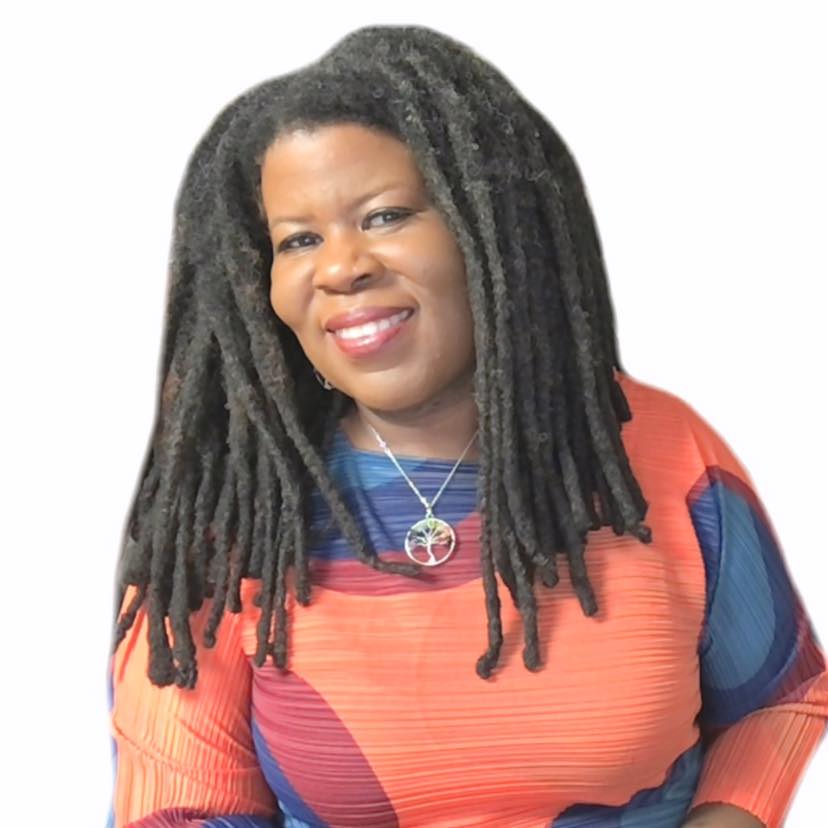
The Rev. Dr. Cheryl A. Lindsay, Minister for Worship and Theology (lindsayc@ucc.org), also serves a local church pastor, public theologian, and worship scholar-practitioner with a particular interest in the proclamation of the word in gathered communities. You’re invited to share your reflections on this text in the comments on our Facebook page: https://www.facebook.com/SermonSeeds.
A Bible study version of this reflection is at Weekly Seeds.