Sermon Seeds: Rest Made Holy
Sunday, May 31, 2026
Trinity Sunday| Year A
(Liturgical Color: White or Green)
Lectionary Citations
Genesis 1:1-2:4a and Psalm 8 • 2 Corinthians 13:11-13 • Matthew 28:16-20
https://lectionary.library.vanderbilt.edu/texts/?z=p&d=52&y=17134
Focus Scripture: Genesis 1:1-2:4a
Focus Theme: Rest Made Holy
Series: Faithful and Vital (Click here for the series overview.)
Reflection
By Cheryl A. Lindsay
You need your rest. How many times have you heard this or directed these words to someone else? When asking someone how they are doing, how often does the response reflect the lack of rest when the person feels less than optimal? Rest is essential to the human body. Our biological functions depend on us taking roughly a third of our time in a state of rest. During that time, much of the body still operates. Hearts keep beating, lungs keep breathing, and brains keep the system going. Still, even vital operations and processes slow down and enter their version of rest.
Humanity does not hold a unique position among living creatures in needing rest. The rest of the animal kindom lives unfold in a similar way. Plant life also has their systems of alternating growth and renewal. The seasons of the year may be categorized according to what species go into a period of rest or a period of activity. Even the Earth reflects the need for rest. If rest, then, has been built so prolifically into the created order, should it surprise anyone that even Creator found space and significance for the routine practice of rest?
The first creation narrative frames the act of creation as a progression. Each creative action gives space for the next. While many declare, as I admittedly have in the past, that it culminates in the creation of humanity, that is the penultimate fruit. The pinnacle reached at the conclusion of the seven steps of creation takes the Holy One to rest for themselves. Ultimately, rest is also created as the completion of work. It is not the opposite, it is the conclusion.
The founding of the world, or the primordial history (chaps. 1–11), introduces the reader to God, the world, and humanity. It is from this section of the larger book that we first encounter the chief protagonist in the biblical narratives, God. God, introduced by several names (e.g., Elohim, YHWH Elohim, YHWH, El Shaddai, El Elyon) and described with various character traits, is shown to be at the center of this book and, indeed, the entire created order. It is God who alone is able to create, the sole subject of the Hebrew verb bārā’ (“create”) in the Hebrew Bible. As Creator, God stands alone in authority, autonomy, and in awesomeness; this quality is used in numerous instances in Scripture to authenticate God’s right to act in the world (see chaps. 37–40, where God’s creative power serves to legitimate his ability to act unabated by human consideration).
Rodney S. Sadler, Jr.
Sadler also notes that this creation narrative introduces a broader theme found throughout the First Testament: God’s provision. Through that lens, all of creation benefits from and demonstrates that the Holy One provides. Rest, then, offers an opportunity to receive and enjoy God’s abundance and to trust in God’s future provision. God can rest because Creator has done their work to build an ecosystem that enables flourishing for all creation. Humanity’s role is to be caretakers endowed with creative attributes modeled after the Holy One. These image bearers, as noted above, have been crafted to require rest. This is not an optional role or characteristic of human life; it is essential to human functioning and flourishing.
Further, the Holy One’s evaluation of creation presents a world in which what is, or has come into being, is sufficient and satisfactory. There is, embedded in the text, a theology of enough. Creation does not unfold as a completed project; it is a continuous work that allows Creator to move through the progressive stages once a particular outcome has been declared good. The Holy One does not tinker endlessly until any aspect of it is perfect. Good is enough to move forward to the next day, and creation is good enough for the Worker to rest. In a society that often conveys messages encouraging the pursuit of unattainable perfectionism even to the point of devastating physical, mental, spiritual, financial, and relational consequences, the narrative breaks in to remind us that perfectionism is a human construct that the Holy One did not pursue.
At the end of this first creation story, the original audience could have seen the narrative’s overall purposes. It has confirmed that God is orderly and morally “good,” that the world is orderly and “good,” and that with the inclusion of humanity the overall schema is “very good.” This positive assessment of theology, cosmology, and anthropology marks this narrative in a way that would have been clear to its early audience. Perhaps finding its final form as an address to a community that experienced exile in the aftermath of the Babylonian captivity in the latter sixth to early fifth centuries BCE, this story was intended to contrast the creation narratives of the Babylonians (Brueggemann, 25), whose stories of creation posited that the world was the by-product of the slain corpse of Tiamat, the goddess of the sea, and that humans were crafted from the blood of Kingu, her illegitimate spouse, to be slaves to a host of spiteful deities. This narrative offers a distinct view of God, the world, and humanity that would have answered its initial audience’s questions quite well. Further, by cohering with the seven-day paradigm for a week that culminates in Sabbath, which would have already been known to the original audience, this narrative would have validated the world as they knew it.
Rodney S. Sadler, Jr.
The contrast with other creation accounts of the ancient world is significant and begins the biblical corpus. The Holy One creates not out of pettiness, spite, avarice, or violence. Creation brings order, diversity, and relationship. It flows out of the identity of the Creator. It is progressive from the beginning, and the stage of rest is yet another progressive step. Creation continues. Rest, by nature, is a pause from activity. Because the Holy One is Creator, creation never stops, it rests.
Finally, the Holy One made rest holy by participating in it. It is the one aspect of creation that God immediately enjoys for themselves. This is distinct from the second creation narrative and perhaps the most significant difference from a theological perspective. The first creation narrative does not place the Creator into the produced work of creation until God creates rest. Every other stage, or day, demonstrates Creator separating elements of creation from itself. In instituting rest, rather than separation, the Holy One chooses participation. Because God is holy, the rest that God creates, enjoys, and models has been made holy too.
Reflection from Voices of People of African Descent
The 33rd General Synod adopted a Resolution to Recognize the United Nations International Decade for People of African Descent (2015-2024). As part of its implementation, Sermon and Weekly Seeds offers Reflection from Voices of People of African Descent related to the season or overall theme for additional consideration in sermon preparation and for individual and congregational study.
Excerpt from “Naming and Numbering: God of Many Names on Trinity Sunday”
Sermon by Professor Wil Gafney
https://www.wilgafney.com/2016/05/17/naming-and-numbering-god-of-many-names-on-trinity-sunday/
The church has largely settled on one way of naming God to our great poverty. The blessed, holy Trinity is one way and only one way of naming the God of many names, the God of Isaiah, the God of Jesus and our God. It is not the only way and it is not my way. If you know me you are not surprised by that. I once famously – or perhaps infamously – responded to a question during a job interview about the Trinity in the Hebrew Bible by saying I didn’t believe the Trinity. There’s a reason some preachers call Trinity Sunday Heresy Sunday.
God is beyond numbering and naming. The scriptures use many more than three names or images to describe God and do not limit us to any. And the scriptures do not mention the Trinity at all. Three names make a nice poetic flourish. But God is not bound or limited by our limitations. God is One, and Two – Incarnate and Incorporeal, and Three and Seven (the “seven spirits of God” in Rev 3:1; 4:5; 5:6) and God is Many and Ineffable.
But since today is Trinity Sunday, Let’s name God in Threes:
Author, Word and Translator;
Sovereign, Savior and Shelter;
Majesty, Mercy and Mystery;
Creator, Christ, and Compassion;
Parent, Partner, and Friend;
Earth-Maker, Pain-Bearer and Life-Giver;
Holy Incarnate Majesty, Holy Incarnate Word, Holy Abiding Spirit;
Creator, Redeemer, Sustainer;
God who brings us to life, calls us to freedom, and moves between us with love;
The God of Isaiah, the God of Jesus and our God.
The God of many names is our God, Isaiah’s God and the God of Jesus the Messiah. How do you name God?
warrior, king, mother, father, righteous judge,
shepherd, banner, rock, fortress, deliverer,
peace, light, salvation,
strength and shield,
devouring fire
abiding presence.
For Further Reflection
“There was both unity and diversity in the Trinity, the first cause of all life, and until we find that communion with God, we can have no real unity within ourselves or with our fellow human beings.” ― Ravi Zacharias,
“The greatest feat is the ability to cultivate all the attributes of the Divine Trinity in order to stay balanced, utilizing the Divine Power, Divine Love and Divine Intelligence to achieve enlightenment.” ― Master Del Pe
“Love is made up of three unconditional properties in equal measure:
Acceptance
Understanding
Appreciation
Remove any one of the three and the triangle falls apart.
Which, by the way, is something highly inadvisable. Think about it — do you really want to live in a world of only two dimensions?
So, for the love of a triangle, please keep love whole.” ― Vera Nazarian
Works Cited
Sadler, Rodney S. “Genesis” Gale A. Yee, Ed. Fortress Commentary on the Bible: Two Volume Set. Minneapolis: Fortress Press, 2014.
Suggested Congregational Response to the Reflection
For the season after Pentecost, the themes are derived from the categories of the Marks for Faithful and Vital Churches. Each subseries will invite engagement with one Mark within the category. Each local church should choose how this will be incorporated. (This could be a sermon talk-back from the lens of the Mark, a direct discussion on the Mark, a prayer or song that relates to the Mark.) The response may also be a call to action embedded in the sermon or the sending inviting engagement beyond worship.
Mark for Congregational Response: Encouraging opportunities for all to practice sabbath and spiritual renewal.
Worship Ways Liturgical Resources
https://www.ucc.org/worship-way/trinity-sunday-year-a-may-31/
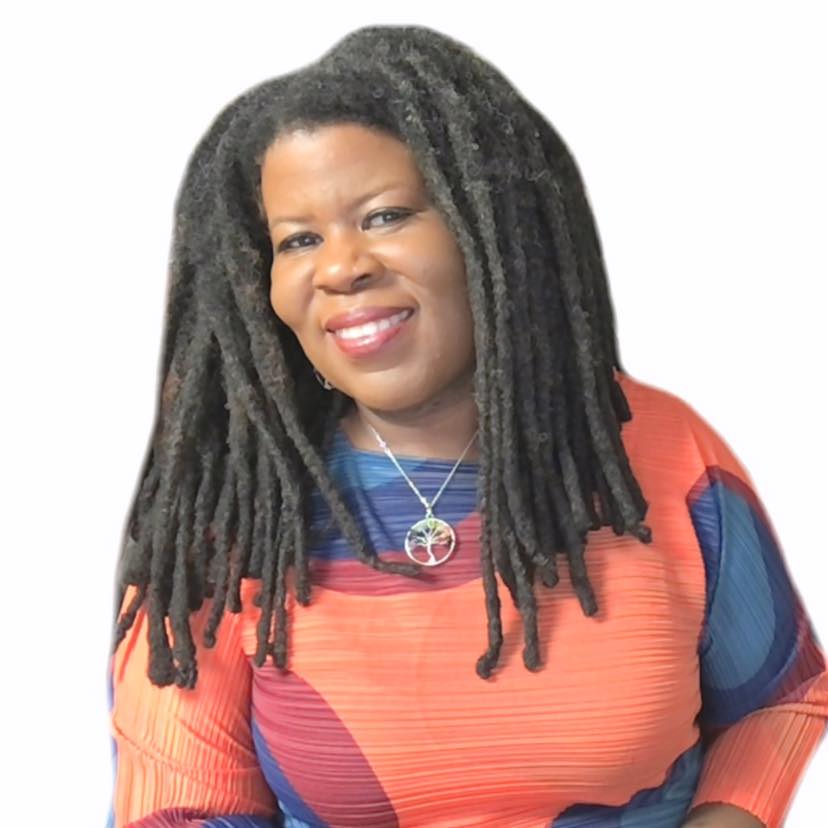
The Rev. Dr. Cheryl A. Lindsay, Minister for Worship and Theology (lindsayc@ucc.org), also serves a local church pastor, public theologian, and worship scholar-practitioner with a particular interest in the proclamation of the word in gathered communities. You’re invited to share your reflections on this text in the comments on our Facebook page: https://www.facebook.com/SermonSeeds.
A Bible study version of this reflection is at Weekly Seeds.