Sermon Seeds: Remove the Yoke
Sunday, February 8, 2026
Fifth Sunday after Epiphany | Year A
(Liturgical Color: Green)
Lectionary Citations
Isaiah 58:1-9a (9b-12) • Psalm 112:1-9 (10) • 1 Corinthians 2:1-12 (13-16) • Matthew 5:13-20
https://lectionary.library.vanderbilt.edu/texts/?z=e&d=18&y=17134
Focus Scripture: Isaiah 58:1-9a (9b-12)
Focus Theme: Remove the Yoke
Series: Descending From Heaven (Click here for the series overview.)
Reflection
By Cheryl A. Lindsay
We have to learn not to shout. Regulating our volume is a learned behavior. How many of our church services have been blessed by the loud cry of a baby or toddler followed by the embarrassed hushing of a parental figure? Those cries may indicate hunger or joy, fatigue or excitement, discomfort or participation. Nothing brings me more joy in preaching than the sound of a little one “talking back” to me in their indecipherable way. It’s like music, and I assume, without confirmation, that I have another member of the “amen corner.” Whatever the reason, the volume indicates the need or desire to gain attention. Nothing makes me sadder in worship than an adult or older youth removing the young child from the worship space not to serve their comfort but that of the rest of the gathered assembly.
Comfort may be tricky. We crave it, but it can cause harm. Often, the communal disconnections and damage done among us are based on centering one person or group’s comfort over another’s. In the case of worship, when we center the comfort of the youngest among us, we greet their age-appropriate outburst with appreciation and understanding…as well as resources like a prayground to make our gathering spaces inviting and accessible for them. When it comes to oppressive systems that marginalize and demean entire categories of people, the comfort of the privilege often leads even those who do not agree to choose silence or whispers to bold confrontation. Thus, the comfort of the powerful gets centered and normalized as the desired end.
That is not the way of the Holy One.
Isaiah 58 is part of Third Isaiah, a section that largely marks an era of homecoming and reunion. The displaced people, now under Persian rule, may return to their ancestral lands. The condition they find their reclaimed territory in does not meet their communal memory or hope. Yet, there is reason to celebrate and to return to their ritualistic practices. Regrettably, this period of transition is fraught with challenges.
Chapters 56–66 (TI) are set in Yehud (a term for Judah as a Persian province) after the exiles return to begin life in what remained of their ravaged homeland. The returnees, the Diaspora, include those who left Babylonia as well others who were exiled elsewhere after the destruction of Jerusalem. They joined people who remained in the land after 587 and eked out an existence with no infrastructure: no economic security, no food, and no governing bodies….In this mixed community, disagreements reach a high pitch. Factions argue about who is in charge, what is considered evidence of faith, what rules govern worship, and who is allowed to participate in this new community. One group emphasizes an inclusive viewpoint, accepting participation by all regardless of ethnicity or background. Another is more exclusive in perspective, especially with respect to foreigners and the indigenous populace. Chapters 56–59 describe bitter conflicts in the newly constituted Yehud….The issue in 58:1–9 is the efficacy of fasting. People protest that, while they fast and humble themselves, God does not acknowledge their acts. However, their behaviors belie the significance of fasting: they oppress their workers, quarrel with one another, and engage in acts of violence. An air of sarcasm and impatience underlies God’s accusations that they fast only for show. God redefines fasting as acts of social justice: freeing the oppressed; sharing food with the hungry, homes with the homeless, clothes with the naked; and satisfying needs of the afflicted (58:6–7, 10).
Chris A. Franke
In expressing this command, the Holy One exhorts the prophet to be loud, to raise their voice, to be heard. It is time to gain the attention of the people. No artificial politeness, whispers, or hushed tones will suffice to express the displeasure of their God.
Undeniably, the people addressed by this convicting word represent a critical mass of the people. Likely, a remnant was faithful and sincere in their worship practices and acts. But, were they quiet? Did they also observe what disturbed the Holy One without confronting their community with the truth? Perhaps the reason that the prophet was commanded to shout was because those polite mutterings fail to break through the noise of louder voices. The command is not only to be righteous and faithful; it is to be heard.
How has the silence or timid quietness of the church failed us in our call to be faithful, fruitful, and flourishing ambassadors of the kindom of God? Why have too many of us ignored the danger of louder voices…or joined the chorus of the masses because it was convenient and comfortable for us to avoid the harm, pain, and injustice visited on those not like us? What fast or other spiritual practice could possibly overcome that?
Chapter 58 opens with a command to the prophet to deal with another theological crisis. The image of the prophet is comparable to the idea of a sentinel: sentinels blew trumpets to warn of danger (Jer. 4.19, Amos 3.6) and, presumably, if the danger were imminent they also shouted. But trumpets were also part of the Jubilee observances (Lev. 25) and also used in war as a mustering signal. All of these ideas mingle together here. In chapter 58 the people are practising their religious observances with enthusiasm, but are complaining that they do not seem to get any credit for it with the LORD. The use of fasting as an expression of religious practice is also echoed in the words of Zechariah (Zech. 7.3–10) who, when asked about fasting, reminded the people that the ‘former prophets’ warned them about empty practices without acts of justice towards their fellow Israelites. The prophet here warns that they are merely using their religious observances as a cloak for oppression, in a striking reminder of chapter 1. The reference in chapter 58 to acts of fighting serves to point up the farce of their observances. The nature of the oppression of the workers is unclear but it, along with the violence, nullifies their observances. So the idea of the trumpet as marker of sentinel, religious practice and violence all echo here.
Jenni Williams
It is past time for the trumpets of the church to raise the sound of liberation…with a shout rather than a whisper. This moment invites us to move beyond our private practice to engage in bold and prophetic public witness. This has always been the call of those who claim the name of the Holy One.
If our fasting does not enable us to discern God’s will more clearly,
If our prayers do not stir us to address unmet needs around us,
If our blessings do not compel us to bless our neighbor,
If our sacramental rites do not move us to solidarity with the marginalized,
If our praise of the abiding of Creator does not lead to care and respect of all creation,
If our confession does not spur us beyond absolution to repair,
If our assurance of God’s grace does not lead us to extend mercy,
Then why would the Holy and Just God even participate in it?
Yet, if we remove the yoke among us…
If we seek justice, speak truth, and love abundantly,
If we embrace the immigrant among us,
If we make space and consideration for the ignored and isolated,
If we lend our voice for the persecuted, defamed, and disenfranchised,
If we stand up to corruption and bear witness to wrongdoing,
If we raise our voice and move beyond our discomfort,
Then we too may receive the promise of the covenant and the Holy One’s declaration of “Here I am.”
Remove the yoke.
Reflection from Voices of People of African Descent
The 33rd General Synod adopted a Resolution to Recognize the United Nations International Decade for People of African Descent (2015-2024). As part of its implementation, Sermon and Weekly Seeds offers Reflection from Voices of People of African Descent related to the season or overall theme for additional consideration in sermon preparation and for individual and congregational study.
“On the Pulse of Morning” Excerpt
By Maya Angelou
But today, the Rock cries out to us, clearly, forcefully,
Come, you may stand upon my
Back and face your distant destiny,
But seek no haven in my shadow,
I will give you no hiding place down here.
You, created only a little lower than
The angels, have crouched too long in
The bruising darkness
Have lain too long
Facedown in ignorance,
Your mouths spilling words
Armed for slaughter.
The Rock cries out to us today,
You may stand upon me,
But do not hide your face.
For Further Reflection
“The yoke is hard because the teachings of Jesus are radical: enemy love, unconditional forgiveness, extreme generosity. The yoke is easy because it is accessible to all — the studied and the ignorant, the rich and the poor, the religious and the nonreligious. Whether we like it or not, love is available to all people everywhere to be interpreted differently, applied differently, screwed up differently, and manifested differently.” ― Rachel Held Evans
“Think of yourselves as dung beetles. Yes! Dung beetles lug their balls of dung around… We all have our own ball of dung to lug around. We’re all dung beetles, in our own way.” ― Ingrid Chabbert
“I have yet to learn that I am not designed to carry the burden of men. Rather, I am designed to carry the love of God so that I might soothe the burden of men.” ― Craig D. Lounsbrough
Works Cited
Franke, Chris A. “Isaiah 40-66” Gale A. Yee, Ed. Fortress Commentary on the Bible: Two Volume Set. Minneapolis: Fortress Press, 2014.
Williams, Jenni. The Kingdom of our God: A Theological Commentary on Isaiah. London: SCM Press, 2019.
Suggested Congregational Response to the Reflection
During the Season After Epiphany, highlight and give thanks for the glimmers of joy and hope in your community.
Worship Ways Liturgical Resources
https://www.ucc.org/worship-way/epiphany-5a-february-8/
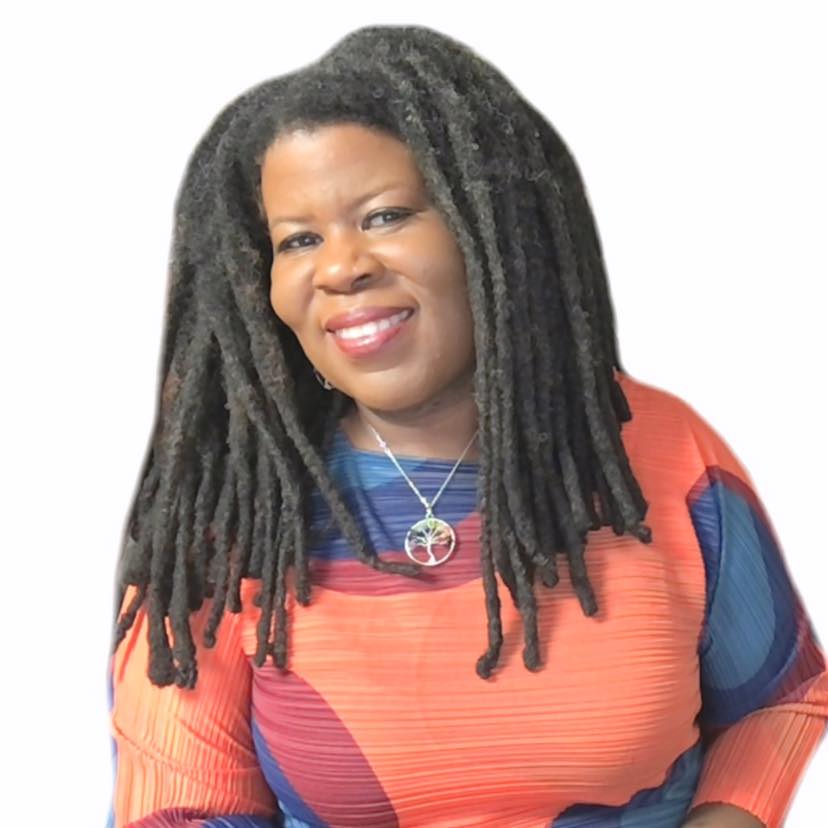
The Rev. Dr. Cheryl A. Lindsay, Minister for Worship and Theology (lindsayc@ucc.org), also serves a local church pastor, public theologian, and worship scholar-practitioner with a particular interest in the proclamation of the word in gathered communities. You’re invited to share your reflections on this text in the comments on our Facebook page: https://www.facebook.com/SermonSeeds.
A Bible study version of this reflection is at Weekly Seeds.