Sermon Seeds: Raised Above
Sunday, November 30, 2025
First Sunday of Advent | Year A
(Liturgical Color: Violet or Blue)
Lectionary Citations
Isaiah 2:1-5 • Psalm 122 • Romans 13:11-14 • Matthew 24:36-44
https://lectionary.library.vanderbilt.edu/texts/?y=17134&z=a&d=1
Focus Scripture: Isaiah 2:1-5
Focus Theme: Raised Above
Series: May Peace Be Within You (Click here for the series overview.)
Reflection
By Cheryl A. Lindsay
Mountains are known for their high elevation. Rising from the surrounding land to reach the sky, mountains arrest our attention. Simply looking at a mountain inspires awe and admiration. They may have formed over countless years of erosion or tectonic shifts or they rise relatively quickly due to volcanic forces. While it is possible for a mountain to exist in isolation, most find their place in the world in community as their ranges dominate and define the landscape. Mountains have peaks and summits to reach, and they create valleys below. They may be covered with vegetation, forestry, bedrock, or smoldering ash from the erupting earth.
Throughout the biblical witness, mountains enter the physical, spiritual, and theological landscape. Moses receives the Law on a mountain. Jesus delivers their most famous sermon on a mountain. Elevated places provide space for an encounter with the Holy One, and they represent a promise of hope, deliverance, and the abiding presence of God that transcends the current conditions of the people. The opening chapters of Isaiah take the audience to that place.
In a similar fashion, the temple also serves as a symbol with meaning beyond its function as the centralized gathering place for communal worship. It holds identity, history, culture, and hope. Its presence suggests wholeness for a people too often fractured by external as well as internal forces. By contrast, whenever the temple lays in ruins, that condition reflects the identity, security, and circumstances of the community bereft of an anchor.
In addition to the mountain and the temple, the city of Jerusalem has particular significance. The location holds history and memory, hope and promise, identity and responsibility. Jerusalem is a territory within a territory that proclaims not only the reign of the Holy One for those who sojourn to its borders but also the continuity of the people in covenant with their God.
This passage of Isaiah contains three prominent symbols within its brief verses and opens the prophecy with a strong word of encouragement for hope, purpose, and resilience before the warnings of calamity to come.
The unit presents the prophet’s announcement concerning the preparation of Zion/Jerusalem for its role as the center for YHWH’s worldwide sovereignty. The Jerusalem temple was considered the holy center of creation. The portrayal of Jerusalem here as the site of the holy temple of YHWH, to which the nations would flock to learn divine instruction and bring an end to war, appears to presuppose the role that major temples played in Mesopotamian culture. During the Babylonian Akitu or New Year’s festival, representatives of the nations subject to Babylonian rule would carry idols of their national gods in procession through the streets of Babylon to honor the Babylonian king. When the procession reached the temple of Marduk, the king would climb the steps to the top of the temple. There he would be granted the tablets of destiny, which gave him the right to rule the Babylonian Empire—and thus all creation—for another year on Marduk’s behalf. Following Isa. 2:2–4, the prophet presents three addresses that outline how the ideals expressed in this passage will be achieved.
Marvin A. Sweeney
Prophetic books are known for their calls to repentance. Perhaps even more importantly, they present a vision of what can be when God’s will is done. Some scholars suggest that the second chapter of the book is the actual beginning and the first chapter was added at a later point. If that is true, then the dire predictions and warnings found in the first chapter were not the way the prophet began. It begins with the desired end at the forefront. Even if this passage originally followed that first chapter, the book quickly turns to present the restoration to come. Repentance, like discipleship more broadly, may come with a cost. More importantly, it comes with a reward—the overwhelmingly positive consequences of surrender to the Holy One.
The places noted (mountain, temple, and city) will become a beacon to all nations. It is the city set on a hill that Jesus declares cannot be hidden. The light of God will shine forth with peace, prosperity, and flourishing. Through the transformation, the glory of God will be revealed and attract many not only to the holy mountain but to Godself who will reign in righteousness, justice, and love. From the beginning, God promises a future beyond the warnings to come. That future is for all, and the elevation of the people is for God’s glory and to reach beyond borders, boundaries, and barriers to a world that God loves.
In verses 2–4 the opening ‘word’ is an extraordinary one, reaching past the disasters Isaiah of Jerusalem is about to pronounce to a time of hope. The use of the phrase ‘In days to come’ indicates a future promise. Scholars debate the date and source of this prophecy. However, what we should note here is that it functions with the judgement that follows to demonstrate the contrast between what Jerusalem might be or even should have been, and the reality of what it is. In this prophecy, the LORD will be the source of justice and peace. The figurative image of Zion, which we might think of as a theological idealization of Jerusalem, is not as a geopolitical city but rather as a city exemplifying a blessed life under the LORD. The language of teaching, pathways and of instruction is very much like that of wisdom writing, which often concerns itself with everyday life. In Zion, instead of foreign nations being perceived as a threat, they will become an indication of the LORD’S sovereignty. This theme will be picked up and expanded in many places in Second and especially Third Isaiah but can also be seen in these first chapters. This makes the idea of the nations coming for worship all the more striking. They will also come for the LORD to judge between them. While in English that word can have a negative undertone, it relates in Hebrew to the idea of justice and this is perceived as good: a way to ensure wholeness and wellbeing in a community. Judgement as a positive force means the result of the nations’ coming will be that they will renounce war. In this section the image of the LORD is kingly: he rules the nations who submit to his judgements. For some scholars, this absence of the human king as part of the process indicates that the prophecy comes after the time of the kings, but, as I have argued, its purpose in being included here is a very clear one, to show what could be.
Jenni Williams
The text ends with an exhortation to enter, engage, and embrace this imagined future. The author includes another metaphor, the light of the Holy One. Light and dark imagery in the biblical witness has, at times, been weaponized to support colorism. The light noted here, however, does not contrast with darkness. Rather, it is fueled in the abundant darkness of God’s creation. The sun, upon which earth revolves, also represents a holy concept with a tangible object that is itself lifegiving, energizing, illuminating, and raised above.
In many instances the sun actually represented Yahweh as a kind of‘icon’. The association between Yahweh and the sun did not only occur in one or even two obscure contexts, but was well integrated into the religion of ancient Israel. Solar Yahwism during the monarchy was a feature of royal religion. The sun was understood to be a tangible expression of Yahweh in ancient Israel (Taylor 1993:259–260). The expression ‘the light of Yahweh’ seems to be the editor’s way of contemplating or characterising the ‘ways’, ‘paths’, ‘instruction’ and ‘word’ of verse 3 (Williamson 2006:187). Light is a prominent image for salvation (broadly spoken) in all parts of the Book of Isaiah (Clements 1996:68).
Alphonso Groenewald
The exhortation to walk in God’s light is a summons that resounds today. The Holy One challenges those who follow the way of Jesus to be raised above, not as a means of artificially elevating ourselves over others and not as permission to subjugate or demean those outside the faith tradition. Rather, God calls us to the hard work of ascending the mountain, which has been formed through erosion, cataclysmic shifts, and explosive forces at work in the world. Yet, the people of God also have a memory of what may be in store at the mountaintop—the glory of God shining forth with hope, peace, and restoration. Let us be raised above.
Reflection from Voices of People of African Descent
The 33rd General Synod adopted a Resolution to Recognize the United Nations International Decade for People of African Descent (2015-2024). As part of its implementation, Sermon and Weekly Seeds offers Reflection from Voices of People of African Descent related to the season or overall theme for additional consideration in sermon preparation and for individual and congregational study.
“Still I Rise”
By Maya Angelou
You may write me down in history
With your bitter, twisted lies,
You may trod me in the very dirt
But still, like dust, I’ll rise.
Does my sassiness upset you?
Why are you beset with gloom?
’Cause I walk like I’ve got oil wells
Pumping in my living room.
Just like moons and like suns,
With the certainty of tides,
Just like hopes springing high,
Still I’ll rise.
Did you want to see me broken?
Bowed head and lowered eyes?
Shoulders falling down like teardrops,
Weakened by my soulful cries?
Does my haughtiness offend you?
Don’t you take it awful hard
’Cause I laugh like I’ve got gold mines
Diggin’ in my own backyard.
You may shoot me with your words,
You may cut me with your eyes,
You may kill me with your hatefulness,
But still, like air, I’ll rise.
Does my sexiness upset you?
Does it come as a surprise
That I dance like I’ve got diamonds
At the meeting of my thighs?
Out of the huts of history’s shame
I rise
Up from a past that’s rooted in pain
I rise
I’m a black ocean, leaping and wide,
Welling and swelling I bear in the tide.
Leaving behind nights of terror and fear
I rise
Into a daybreak that’s wondrously clear
I rise
Bringing the gifts that my ancestors gave,
I am the dream and the hope of the slave.
I rise
I rise
I rise.
For Further Reflection
“As wonderful as it is
to have clarity, I want to reach back to my younger self, through the years
and past all the pain I put myself through. I want to go back and somehow
shorten the winding road she’s starting down. I would go to the night she
sat pointing at her Bible and tell her how much intrinsic value she had,
just waiting to be unleashed.” Penelope Przekop
“To falter is normal; to rise from it should become a habit. A subconscious survival skill necessary for any being to be successful” ― Udayakumar D
“A rose does not answer its enemies with words, but with beauty.” ― Matshona Dhliwayo
Works Cited
Sweeney, Marvin A. “Isaiah1-39.” Gale A. Yee, Ed. Fortress Commentary on the Bible: Two Volume Set. Minneapolis: Fortress Press, 2014.
Groenewald, Alphonso. “An Exegetical Analysis of the Vision of Peace in the Book of Isaiah (2:1-5).” Verbum et Ecclesia 34, no. 2 (2013): 1–7.
Williams, Jenni. The Kingdom of our God: A Theological Commentary on Isaiah. London: SCM Press, 2019.
Suggested Congregational Response to the Reflection
During the season of Advent, return to the Advent Wreath following the sermon and ask the gathered congregation to express (verbally or silently) where they find the emphasis of the week: Hope.
Worship Ways Liturgical Resources
https://www.ucc.org/worship-way/advent-1a-november-30/
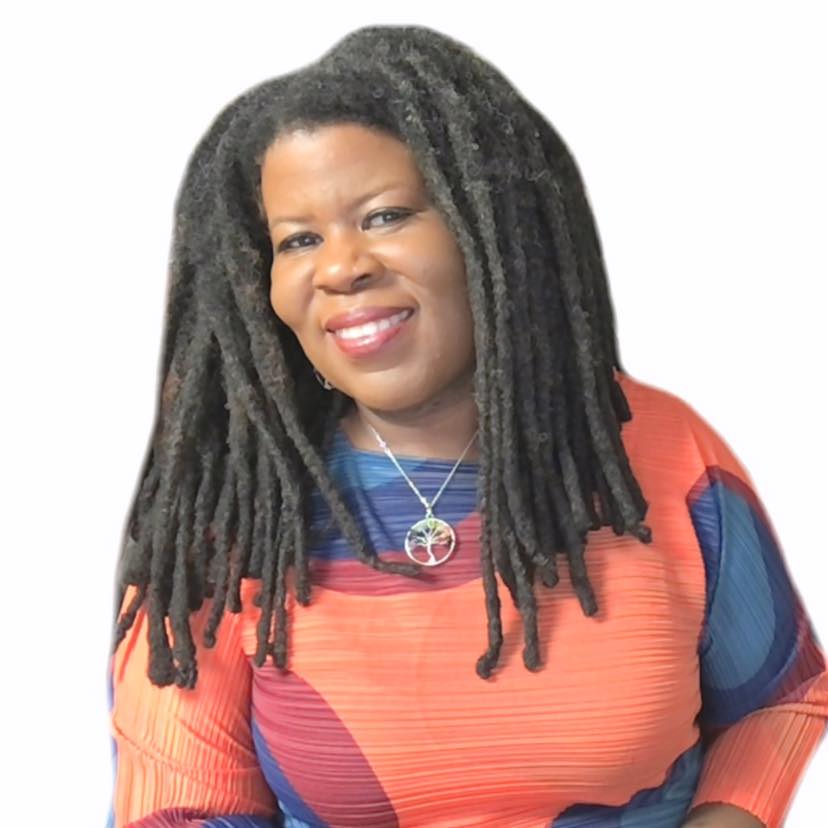
The Rev. Dr. Cheryl A. Lindsay, Minister for Worship and Theology (lindsayc@ucc.org), also serves a local church pastor, public theologian, and worship scholar-practitioner with a particular interest in the proclamation of the word in gathered communities. You’re invited to share your reflections on this text in the comments on our Facebook page: https://www.facebook.com/SermonSeeds.
A Bible study version of this reflection is at Weekly Seeds.