Sermon Seeds: Places of Honor
Sunday, August 31, 2025
Twelfth Sunday after Pentecost| Year C
(Liturgical Color: Green)
Lectionary Citations
Jeremiah 2:4-13 and Psalm 81:1, 10-16 • Sirach 10:12-18 or Proverbs 25:6-7 and Psalm 112 • Hebrews 13:1-8, 15-16 • Luke 14:1, 7-14
https://lectionary.library.vanderbilt.edu/texts/?z=p&d=71&y=384
Focus Scripture: Luke 14:1, 7-14
Focus Theme: Places of Honor
Series: Raise Her Voice: Into the Deep (Click here for the series overview.)
Reflection
By Cheryl A. Lindsay
When was the last time you hosted a banquet? Maybe a more relatable question might be: when was the last time you invited folx over for a dinner party? Perhaps, it was work related, and you were attempting to deepen collegial relationships. The dinner may have been located at your home or you made reservations at a local restaurant. Perhaps, the occasion was a family meal of celebration or remembrance like a birthday party, anniversary, or memorial gathering. Maybe you decided to gather your group of friends for a fun time to reconnect and catch up at a neighborhood tavern, brunch, or cookout in the park. Many of our faith communities hold space each week after worship services for coffee hour.
Hospitality is a communal practice and, for some, a spiritual gift. The ability, willingness, and desire to care for one another’s comfort, nourishment, and companionship reflects love, compassion, and community. At the same time, hospitality demonstrates the attitudes we hold towards another and the esteem (or lack thereof) we hold toward our guests. Even the term guests denotes welcome, inclusion, and belonging. If you have ever been an invited guest to an event when an uninvited intruder enters, you may recall the shift that occurs in the environment based on how the host handles the new entrant. In fact, their response can alter the perception of the person who arrives unexpectedly from an intrusion to a delighted surprise or vice versa.
In the gospel text, Jesus frames a status reversal as they have received the hospitality of a Pharisee for a meal. Jesus takes the opportunity as a teachable moment. First, they observe then Jesus reflects upon those observations. This passage enters into a meal that has already elicited tension. As John T. Carroll notes, “As the meal proceeds, debate about healing on the Sabbath yields to advice about meal practices, addressed by Jesus first to status-conscious guests (vv. 7–11), then to the reciprocity-minded host (vv. 12–14). In each case, Jesus’ counsel assumes prevalent cultural norms and social practices, but only so as to subvert them.”
This is the third meal that Jesus has enjoyed with Pharisees, but one wonders if the Pharisees enjoyed their company. Jesus challenges their worldview, cultural norms, and religious traditions. They name the hypocrisy of the Pharisees and show no fear at their powerful influence and status. Some biblical accounts indicate that the Pharisees used interactions with Jesus to set them up for the trial and conviction to come. At the same time, the gospels note that some of the religious sect sincerely sought out Jesus and their teaching with curiosity and admiration. Perhaps, these gatherings comprised a mixture of dispositions toward Jesus who takes the opportunity to teach and deconstruct the cultural and religious norms that counter the kindom of God.
The primary setting for Luke 14 is a meal. Again a Pharisee hosts Jesus. Close scrutiny at meals regarding social status and ethics was the norm in antiquity. So watching Jesus (14:1) hardly means hostility. Indeed, Jesus likewise scrutinizes his companions (14:7). Meals were also occasions for thought-provoking discussions. It is appropriate, then, that Jesus raises the discussion topic of healing on Sabbath (14:3). He argues by curing a man with dropsy and defends this by giving his interlocutors the perspective of a parent or farmer who would rescue a child or ox from a well on Sabbath (similarly 13:15). The other guests mount no objection. Luke’s “parable” in 14:7 is actually an exhortation against seeking honor over others, based on a proverb that inverts honor and shame (14:11). Further, Jesus challenges his host not to invite elite guests with expectations of reciprocity, but the poor and afflicted, who cannot reciprocate. Astute hearers might note that the host partially complied by inviting Jesus and the man with dropsy, presumably without expecting reciprocity.
Robert L. Brawley
While the lesson seemingly centers on seating assignments, the problem Jesus addresses centers around the honor codes so important to Greco-Roman culture and adopted by the religious community. Earlier in my career, I founded an event management company. In addition, in my community engagement work, I have often been involved in planning large events, including banquets. One of the last and most challenging tasks would often be completing the seating chart. Fundraising events, in particular, make this delicate and extremely political work. For events that worked on the first-come, first-served basis, it was a simple matter of tracking reservations in order. Most events, however, did not use that framework. Honored guests, corporate sponsors, organizational leadership were all statuses that needed to be considered in placement. Other relational knowledge, such as collegiality, also played a role. No one worked on seating assignments without having some insider knowledge and sensitivity. It was my least favorite part of the process.
In contrast, the opening processional at General Synod was a joy to envision, plan, execute, and witness. In the current national environment, I knew I wanted to center members of marginalized communities. I reached out to leaders of UCC HUGS (Historically Underrepresented Groups) and received enthusiastic responses. I also wanted to include church leadership (Officers, United Church of Christ Board, and General Synod Moderators). Along the planning process, I happened to receive a list of honored guests, including many leaders, past and present, beloved in the denomination. At a planning meeting, as I heard my colleague, R. Ward, discuss the service project of banned books, the vision became full–the procession would also feature banned books. Youth and children led the way. Once on stage, the contingent from the Council of American Indian Ministries delivered a land acknowledgment that proclaimed their continued presence and a Spirit-filled opening prayer while surrounded by representation of the fullness of the United Church of Christ. It felt like the kindom of God actualized before us.
Jesus cast a vision of the kindom that requires a reversal of the world’s commonwealth:
Verse 11 then grounds the instruction and the imagined scenario in a general comment about vertical status reversal….The negative connotation of abasement or humiliation in Greco-Roman culture (see Braun, Feasting 49–54) and the strong correlation between banquet seating and social status make it unlikely that Jesus is basing a principle on lived experience, as if it would commend intentional status reduction. Recalling the Magnificat’s praise of God for effecting reversals of status, wealth, and power (e.g., 1:51–53), Luke’s audience will probably see divine agency here too, a view that would then be confirmed by the resurrection-reward image of 14:14 and by the virtually identical phrasing in 18:14, where the context leaves little doubt that God is the author of the status inversion. The counsel Jesus offers has stinging irony; he advises nothing less than intentionally seeking out the very humiliation, in view of one’s social peers, that one most desires to avoid. What if the host doesn’t intervene to call you out and usher you to a place suitable for persons of higher status? That disconcerting scenario remains unarticulated in Jesus’ “parable.” He invites his audience, and thereby Luke invites his, to imagine an alternative community in which status defines social relations in a radically different way. Verses 7–11 thus invoke cultural norms and associated social practices relating to status- and honor-seeking, but only so as to subvert them (cf. Green 550). True honor, paradoxically, comes to the one who seeks the position of those who lack status. The next piece of advice, directed to the meal host, goes a step further, reorienting honor-seeking toward the one from whom authentic reward, or honor, comes. The countercultural character of the teaching intensifies.
John T. Carroll
Many of us do not host banquets, but we do have spaces where privilege can either be maintained or subverted. What opportunities do we have to demonstrate the reversal Jesus invites us to adopt? What places of honor do we inhabit to the exclusion, in whole or part, of our neighbor? We have models: faith communities who convert their buildings into affordable housing, churches that use their worship space as sanctuaries for asylum seekers, and followers of Jesus who give public witness in protest or advocacy on behalf of those robbed of voice and safety in courthouses, college campuses, or any given street.
Ultimately, Jesus challenges us to do what they did–abandon their place of honor to be in solidarity with those in need of liberation. Will we accept the invitation?
Reflection from Voices of People of African Descent
The 33rd General Synod adopted a Resolution to Recognize the United Nations International Decade for People of African Descent (2015-2024). As part of its implementation, Sermon and Weekly Seeds offers Reflection from Voices of People of African Descent related to the season or overall theme for additional consideration in sermon preparation and for individual and congregational study.
“I’m for truth, no matter who tells it. I’m for justice, no matter who it is for or against. I’m a human being, first and foremost, and as such I’m for whoever and whatever benefits humanity as a whole.”
“I believe that there will be ultimately be a clash between the oppressed and those who do the oppressing. I believe that there will be a clash between those who want freedom, justice and equality for everyone and those who want to continue the system of exploitation. I believe that there will be that kind of clash, but I don’t think it will be based on the color of the skin…”
― Malcolm X
For Further Reflection
“Simple, genuine goodness is the best capital to found the business of this life upon. It lasts when fame and money fail, and is the only riches we can take out of this world with us.” ― Louisa May Alcott
“I am not bound to win, but I am bound to be true. I am not bound to
succeed, but I am bound to live up to what light I have.” ― Abraham Lincoln
“Courage. Kindness. Friendship. Character. These are the qualities that define us as human beings, and propel us, on occasion, to greatness.” ― R.J. Palacio, Wonder
Works Cited
Brawley, Robert L. “Luke.” Gale A. Yee, Ed. Fortress Commentary on the Bible: Two Volume Set. Minneapolis: Fortress Press, 2014.
Carroll, John T. Luke. Louisville: Westminster John Knox Press, 2012.
Suggested Congregational Response to the Reflection
During this series, Raise Her Voice: Into the Deep, in the season after Pentecost, we invite the local church to listen to Spirit speaking among us by developing the practices of testimony and exhortation. In testimony, one recounts how the Holy One has been present, moved, and guided in the past. In exhortation, one shares discernment based on what Spirit is still speaking to the church today. This may be done during worship as an immediate response to proclamation or in another format (i.e. blog posts, short videos on social media).
Worship Ways Liturgical Resources
https://www.ucc.org/worship-way/after-pentecost-12c-august-31/
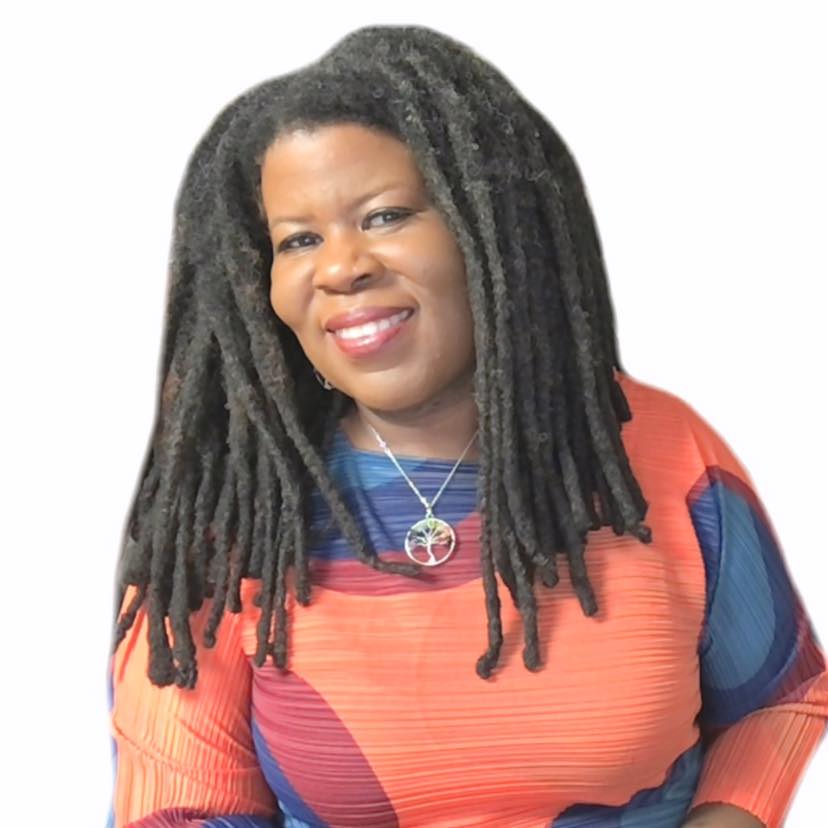
The Rev. Dr. Cheryl A. Lindsay, Minister for Worship and Theology (lindsayc@ucc.org), also serves a local church pastor, public theologian, and worship scholar-practitioner with a particular interest in the proclamation of the word in gathered communities. You’re invited to share your reflections on this text in the comments on our Facebook page: https://www.facebook.com/SermonSeeds.
A Bible study version of this reflection is at Weekly Seeds.