Sermon Seeds: Let It Be Deep
Sunday, December 28, 2025
Fourth Sunday of Advent | Year A
(Liturgical Color: Violet or Blue)
Lectionary Citations
Isaiah 7:10-16 • Psalm 80:1-7, 17-19 • Romans 1:1-7 • Matthew 1:18-25
https://lectionary.library.vanderbilt.edu/texts/?z=a&d=4&y=17134
Focus Scripture: Isaiah 7:10-16
Focus Theme: “Let It Be Deep”
Series: May Peace Be Within You (Click here for the series overview.)
Reflection
By Cheryl A. Lindsay
Have you ever considered how often we encounter and create signs? They indicate our roads, streets, and highways. Signs plaster ownership on buildings like offices, stadiums, and residences. Special occasions may warrant assigned seating with placecards indicating our designated area or the number of our table. To be inundated with signs, enter a retail store. Signs divide the larger space into sections or aisles, itemize pricing, and provide details on the available merchandise. All of those signs bring clarity, offer assistance, and lend guidance.
Other signs do the same but function with far more ambiguity and require a greater depth of discernment. There are signs that help navigate relationships. Actions and attitudes point to character. At the same time, family history, previous relationship experiences, and expectations signify potential strengths or challenges to come. There are signs that indicate vocational alignment. In my own experience, when I first began to detect the call to ministry, I asked the Holy One for signs to confirm my suspicions. After sign after sign presented itself to me, I reviewed my life’s journey and found that on that path, the signs had been placed throughout if I had been seeking them.
God gives signs and permission to ask for them. The focus passage from Isaiah opens with an invitation from the Holy One to Ahaz to ask for a sign. It is a particular encounter as most of the biblical witness reflects.
Isaiah 7:1–8:15 presents an account of Isaiah’s encounter with King Ahaz of Judah during the Syro-Ephraimitic War. Since the reign of King Jehu of Israel (842–815 BCE), the northern kingdom of Israel had been allied with the Assyrian Empire, which ensured that Israel would no longer be threatened by Aram as it was during the reigns of the Omride kings, that is, Omri (876–869 BCE), Ahab (869–850), Ahaziah (849), and Jehoram (849–842). But when King Pekah (737–732) came to the throne, he sought an alliance with Aram so that he might oppose the Assyrian Empire and bring an end to the crushing tribute that Israel had to pay. The Syro-Ephraimitic alliance therefore attempted to include all the small kingdoms of western Asia so they could present a united front against Assyria. King Jotham of Judah and his son Ahab refused to join the alliance. As Assyrian allies themselves, they knew that the Assyrians would devastate any kingdom that broke a treaty, and they likely distrusted an alliance based on two powers that had been at war with each other a century earlier. Consequently, northern Israel and Aram attacked Jerusalem in 734 BCE in an effort to force it into the Syro-Ephraimitic coalition.
Marvin A. Sweeney
Ahaz assumed the throne at the age of twenty after the death of his father, King Jothan, who died of unknown causes. Early in his tenure, he had to confront the invasion of Jerusalem. While he turned to the tools and tactics of combat, he was encouraged to trust the God of his ancestors and of the covenant to provide protection and security. Further assurance comes in this invitation to ask for a sign. Yet, Ahaz refused. While he used language to infer that his refusal stemmed from a source of respect and reverence, his words betrayed lack of faith and willfulness on Ahaz’s part. He rejected putting the Holy One to the test, not because he did not need a sign to point him in the right direction, he did not put God to the test, because he did not want a sign that would take him from the course he himself wanted to chart.
When I asked God for a confirming sign of my calling, I did have actual doubts, but I also, to some degree, used my waiting for the sign as a tactic to delay the inevitable. For me, the signs, once I asked for them, came relentlessly.
Ahaz attempted to avoid confirmation that the best path for his people would be to defer to the Holy One’s leadership. Most kings want to rule in their way, with their own plans, and without answering or ceding their power to anyone else. Receiving God’s sign would have acknowledged that Ahaz had no power apart from God, and that clearly was objectionable despite the king’s attempt to add a veil of piety to his stubborn resistance to divine assistance. The Holy One discerns the truth of Ahaz’s motivation and obstinacy, and that response makes God weary.
From Ahaz’s point of view, Assyria makes an awful lot of sense. In those days empires were not concerned with cultural assimilation. A protected vassal would be required to send money and men (for war) and in return would receive certain benefits including protection from aggressors and also a guarantee that the Assyrians would not harass loyal nations. Barton considers it is rather like protection money. If indeed it is the case that, as in a protection racket, one pays to be left alone, why would Judah hesitate? Undesirable as it might be in itself, since the kingdom would now be bound to another that has control, the alternative is worse. The answer lies in the nature of the agreement to be made. Ancient Near Eastern treaties between an overlord and a vassal king have several definable features and one of the most significant is the oath of loyalty to the overlord. From Isaiah’s point of view, the covenant with the LORD, with its understanding of exclusivity in obedience and total loyalty, precludes making a similar arrangement with any earthly king, especially one with his own gods. Judah already has an overlord and he will protect them if they follow him. The call from the LORD to Ahaz is one of refusal of the political realities Ahaz sees in favour of the LORD’S way of doing things and his covenant. It also reinforces a main theme of the book of Isaiah about the foolishness of trusting in human political alliances, which turn out to be weak and transitory (8–9).
Jenni Williams
The Holy One’s way often does not make sense in the terms that we define it. Ahaz calculated risk and reward based on the facts of his situation, his hopes for the territory he ruled, and his belief in what was likely to occur as a result of the choices he deemed to be available to him. His ambition and poor discernment obscured his judgment and impeded his leadership. His lack of faith in what God could do encouraged, rather than prevented, disaster. His pretensive attempt at piety and demonstrated self-righteousness marked the tone of his reign.
Yet, the Holy One refused to allow Ahaz to ignore and reject the generous offer of a sign. God gives signs whether the recipient embraces them or not. The sign matters because it serves as another consideration to determine potential outcomes. Signs are tangible evidence for human beings who struggle with faith in the unseen, the unknown, and the unproven. And, in the kindom of God, the signs may be deep.
When the Holy One invited Ahaz to ask for a sign, God does not suggest that the request be of a small thing. When God moves, the heights and the depths know no bounds. What if Ahaz had asked for the dismantling of the nation’s opponents plans, weaponry, and power? What if he had dared to be bold enough to ask God for a sign that would not only point to but also secure a prosperous and peaceful collective future?
What if we embraced the invitation to ask for signs? When I started asking for signs in my life and recognized that the signs were often in place before I acknowledged them, I became receptive to a sign-filled life. I not only sought them, I opened myself to their presence beyond my permission. Signs are everywhere—signs that encourage, signs that caution litter the landscape of life’s journey whether we ask for them or not. Therefore, in faith, let us seek them, and when we request them, let it be deep.
Reflection from Voices of People of African Descent
The 33rd General Synod adopted a Resolution to Recognize the United Nations International Decade for People of African Descent (2015-2024). As part of its implementation, Sermon and Weekly Seeds offers Reflection from Voices of People of African Descent related to the season or overall theme for additional consideration in sermon preparation and for individual and congregational study.
“An Aspect of Love, Alive in the Ice and Fire”
By Gwendolyn Brooks
In a package of minutes there is this We.
How beautiful.
Merry foreigners in our morning,
we laugh, we touch each other,
are responsible props and posts.
A physical light is in the room.
Because the world is at the window
we cannot wonder very long.
You rise. Although
genial, you are in yourself again.
I observe
your direct and respectable stride.
You are direct and self-accepting as a lion
in Afrikan velvet. You are level, lean,
remote.
There is a moment in Camaraderie
when interruption is not to be understood.
I cannot bear an interruption.
This is the shining joy;
the time of not-to-end.
On the street we smile.
We go
in different directions
down the imperturbable street.
For Further Reflection
“What are heavy? sea-sand and sorrow.
What are brief? today and tomorrow.
What are frail? spring blossoms and youth.
What are deep? the ocean and truth.” ― Christina Rossetti
“Sometimes I think,
I need a spare heart to feel
all the things I feel.” ― Sanober Khan
“In our deepest moments we say the most inadequate things.” ― Edna O’Brien
Works Cited
Sweeney, Marvin A. “Isaiah 1-39.” Gale A. Yee, Ed. Fortress Commentary on the Bible: Two Volume Set. Minneapolis: Fortress Press, 2014.
Williams, Jenni. The Kingdom of our God: A Theological Commentary on Isaiah. London: SCM Press, 2019.
Suggested Congregational Response to the Reflection
During the season of Advent, return to the Advent Wreath following the sermon and ask the gathered congregation to express (verbally or silently) where they find the emphasis of the week: Love.
Worship Ways Liturgical Resources
http://ucc.org/worship-way/advent-4a-december-21/
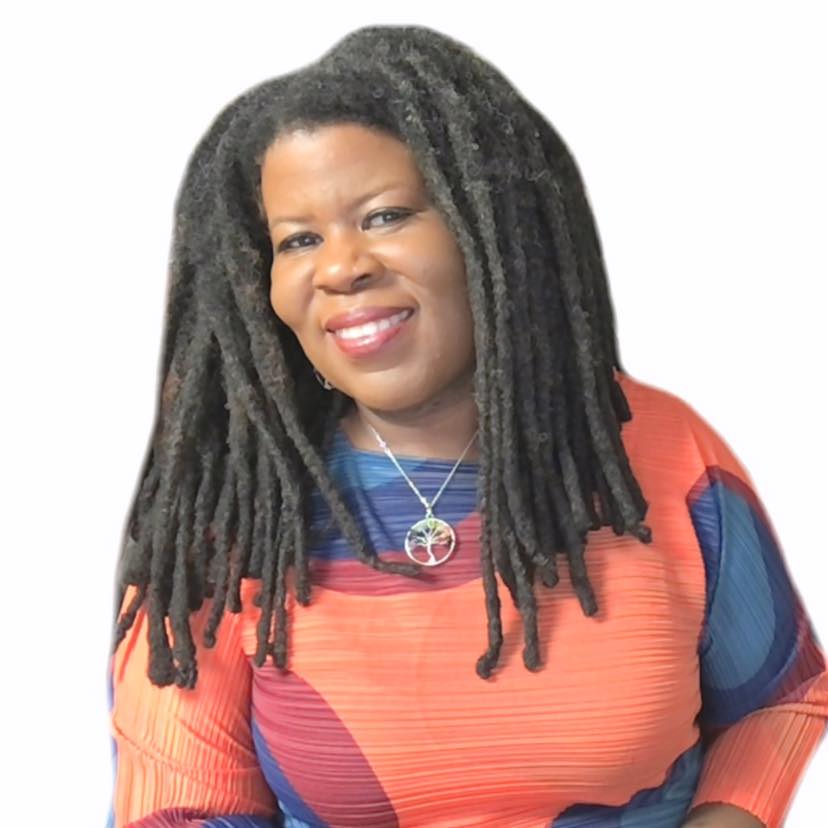
The Rev. Dr. Cheryl A. Lindsay, Minister for Worship and Theology (lindsayc@ucc.org), also serves a local church pastor, public theologian, and worship scholar-practitioner with a particular interest in the proclamation of the word in gathered communities. You’re invited to share your reflections on this text in the comments on our Facebook page: https://www.facebook.com/SermonSeeds.
A Bible study version of this reflection is at Weekly Seeds.