Sermon Seeds: Journeyed On By Stages
Sunday, June 7, 2026
Second Sunday after Pentecost| Year A
(Liturgical Color: Green)
Lectionary Citations
Genesis 12:1-9 and Psalm 33:1-12 • Hosea 5:15-6:6 and Psalm 50:7-15 • Romans 4:13-25 • Matthew 9:9-13, 18-26
https://lectionary.library.vanderbilt.edu/texts/?z=p&d=59&y=17134
Focus Scripture: Genesis 12:1-9
Focus Theme: Journeyed on by Stages
Series: Faithful and Vital (Click here for the series overview.)
Reflection
By Cheryl A. Lindsay
Stages may refer to multiple concepts but may be generally be summarized in two separate concepts. First, a stage may be an elevated platform. Stages provide the central focal points in theaters, auditoriums, and other venues that feature performances before an audience. These stages may be built into the permanent architecture or erected for temporary use. Sometimes, the platform may be placed on the side, such as a grandstand, not to showcase the action but to provide a better vantage point for spectators to observe the predominant activity. Other elevated platforms may be used in building or renovation projects, such as scaffolding that allows workers to reach higher heights safely and securely.
Beyond a physical descriptor, a stage may denote progressive steps or points in a process. Stages of development, like a lifecycle, may have defining characteristics or benchmarks that indicate which step has been completed and which one is next. A project may involve several steps that move an idea from a concept to a realized product or service. Advancement through these stages may lead to celebration of achievement or even dread at an inevitable outcome. Not all stages invite us to a desired end, such as the death of a loved one or the dissolution of a relationship. What these stages offer is a journey from where we start to where we’ll end.
The biblical narrative contains progressive journeys told in narrative books. It’s an epic depicted through an anthology of stories of the journey the Holy One has taken with particular people over a particular period of time in a particular region of the world. It does not, however, start that way. The shift from a cosmic narrative that encompasses the creation of the universe (heavens and the earth) to the formation of a nation requires a significant portion of the book of Genesis. Even the stories of human families led by Adam and Eve and Noah and his immediate kin have universal implications. Designated people groups begin to form with Abraham and Sarah, and the primary people of the Hebrew Scriptures find their national identity through their progeny, Jacob and his offspring with Leah, Rachel, Bilhah, and Zilpah.
The focus scripture introduces Abram and Sarai following the often overlooked eleventh chapter of Genesis. It begins with the introduction of diversity, specifically through language, in the Tower of Babel narrative. That is a story of a humanity that wants to elevate themselves to the same level of the Creator. In essence, they construct a platform to delude themselves into believing they can be gods. The Holy One responds by inserting confusion—an obstacle to another such project and stimuli for relying upon the Holy One. In that, God takes what could be considered a curse and transforms it into a blessing. The chapter continues a well-placed genealogy that shows the familial stages of Noah’s descendants until it arrives at Abram.
The one who calls the worlds into being now makes a second call. This call is specific. Its object is identifiable in history. The call is addressed to aged Abraham and to barren Sarah. The purpose of the call is to fashion an alternative community in creation gone awry, to embody in human history the power of the blessing. It is the hope of God that in this new family all human history can be brought to the unity and harmony intended by the one who calls. In its canonical form, Genesis is clear about two things. First, the God who forms the world is the same God who creates Israel. It is the same God who calls creation and who calls the community of faith. This same God works his powerful, creative purpose and intervenes in surprising, redemptive ways. The call to Sarah and Abraham has to do not simply with the forming of Israel but with the re-forming of creation, the transforming of the nations. The stories of this family are not ends in themselves but point to God’s larger purposes.
Walter Brueggemann
The season after Pentecost draws our attention to what it means to follow God, to live out discipleship, and to demonstrate the kindom of God. Everyone may not have a dramatic call story, but everyone has a journey of faith realized by stages. Like our natural lifecycle, our spiritual life has a progression. Sometimes, that includes steps that shift us back before going forward or turns that need correcting. That happens quickly in the Abrahamic narrative as he struggles to trust in the God of the promise and instead relies upon his own reasoning and schemes as demonstrated in subsequent chapters. The Holy One does not abandon Abram and Sarai but recognizes that journeys include delays, roadblocks, barriers, and stages.
The journey also includes incalculable blessings. In this passage, God begins to shape the covenantal promise. It begins with the assurance of offspring and land—a place connected to a particular territory in creation. This promise is not about ownership, it’s about blessing and belonging.
This narrative is also rich because of what it shows about the nature of blessing. The Hebrew term for blessing (brk) occurs five times in the space of three verses, clarifying for the reader that blessing is at the heart of the narrative. Genesis 12:3 suggests that those who bless Abram will be blessed (plural) and the one who curses him will be cursed (singular). Though this interesting textual difference could be viewed as an error in the text, it may well be intentional, denoting the favor that Abram enjoys will confer greater blessing on others than cursing. The structure of this narrative is instructive. Genesis 12:2 and 12:3 both begin by discussing the impact of the blessing on Abram and end by discussing blessings that attend to others. Abram is blessed by God, but he is not the end of this action; the end is a global blessing for “all the families of the earth.” Walter Brueggemann says that “most likely the meaning of the phrase is not that Israel has a direct responsibility to do something for others, but that the life of Israel under the promise will energize and model a way for the other nations also to receive a blessing from this God” (Brueggemann, 120). Others have seen a much more active role for Abram and his descendants in God’s blessing of others. For example, Gerhard von Rad suggests that “Abraham is assigned the role of a mediator of blessing in God’s saving plan, for ‘all the families of the earth’” (von Rad, 160). Still, others note the apparent shift in emphasis that seems a part of God’s work here. So Terence Fretheim reads verse 3b as “an initially exclusive move for the sake of a maximally inclusive end. Election serves mission” (Fretheim, 424). This passage shows that God does not choose Abram to elevate him for his own sake, but to use him to be a blessing to others; though God may use an individual and even bless him, the ultimate goal involves a universal blessing that encompasses the whole world. The blessing of Abram will be the catalyst for others being blessed. The clear implication from this is that blessing is a transitory concept; it is intended to multiply and impact others.
Rodney S. Sadler
The covenantal promise is as communal as the journey. Abram and Sarai do not journey by themselves or singularly for themselves. The roads we travel, physically and spiritually, have been populated by other sojourners and will be traversed by generations beyond us. The world in which we live has been formed through countless cycles and stages of growth and regeneration. The blessings of covenantal community elevates us all who journeyed on by stages and by faith.
Reflection from Voices of People of African Descent
The 33rd General Synod adopted a Resolution to Recognize the United Nations International Decade for People of African Descent (2015-2024). As part of its implementation, Sermon and Weekly Seeds offers Reflection from Voices of People of African Descent related to the season or overall theme for additional consideration in sermon preparation and for individual and congregational study.
“Although nature has proven season in and season out that if the thing that is planted bears at all, it will yield more of itself, there are those who seem certain that if they plant tomato seeds, at harvesttime they can reap onions.
Too many times for comfort I have expected to reap good when I know I have sown evil. My lame excuse is that I have not always known that actions can only reproduce themselves, or rather, I have not always allowed myself to be aware of that knowledge. Now, after years of observation and enough courage to admit what I have observed, I try to plant peace if I do not want discord; to plant loyalty and honesty if I want to avoid betrayal and lies.
Of course, there is no absolute assurance that those things I plant will always fall upon arable land and will take root and grow, nor can I know if another cultivator did not leave contrary seeds before I arrived. I do know, however, that if I leave little to chance, if I am careful about the kinds of seeds I plant, about their potency and nature, I can, within reason, trust my expectations.”
― Maya Angelou, Wouldn’t Take Nothing for My Journey Now
For Further Reflection
“It is good to have an end to journey toward; but it is the journey that matters, in the end.” ― Ursula K. Le Guin
“We travel, some of us forever, to seek other states, other lives, other souls.” ― anaïs nin
“For me, becoming isn’t about arriving somewhere or achieving a certain aim. I see it instead as forward motion, a means of evolving, a way to reach continuously toward a better self. The journey doesn’t end.” ― Michelle Obama
Works Cited
Brueggemann, Walter. Genesis: Interpretation: A Bible Commentary for Teaching and Preaching. Louisville: John Knox Press, 2010.
Sadler, Rodney S. “Genesis” Gale A. Yee, Ed. Fortress Commentary on the Bible: Two Volume Set. Minneapolis: Fortress Press, 2014.
Suggested Congregational Response to the Reflection
For the season after Pentecost, the themes are derived from the categories of the Marks for Faithful and Vital Churches. Each subseries will invite engagement with one Mark within the category. Each local church should choose how this will be incorporated. (This could be a sermon talk-back from the lens of the Mark, a direct discussion on the Mark, a prayer or song that relates to the Mark.) The response may also be a call to action embedded in the sermon or the sending inviting engagement beyond worship.
Mark for Congregational Response: Encouraging opportunities for all to practice sabbath and spiritual renewal.
Worship Ways Liturgical Resources
https://www.ucc.org/worship-way/trinity-sunday-year-a-may-31/
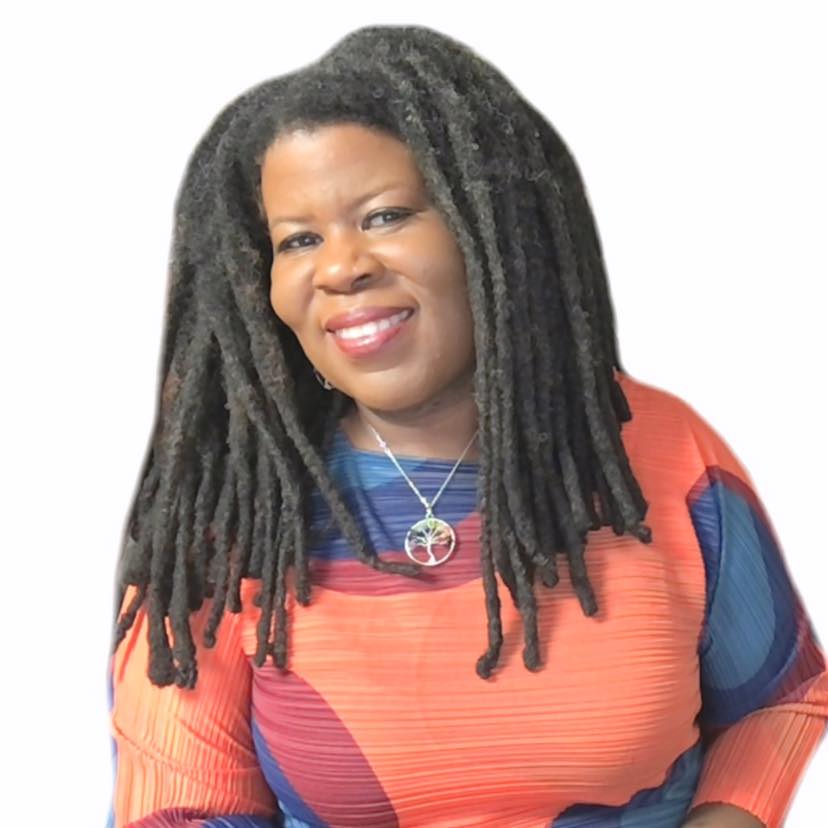
The Rev. Dr. Cheryl A. Lindsay, Minister for Worship and Theology (lindsayc@ucc.org), also serves a local church pastor, public theologian, and worship scholar-practitioner with a particular interest in the proclamation of the word in gathered communities. You’re invited to share your reflections on this text in the comments on our Facebook page: https://www.facebook.com/SermonSeeds.
A Bible study version of this reflection is at Weekly Seeds.