Sermon Seeds: Increase Our Faith
Sunday, October 5, 2025
Seventeenth Sunday after Pentecost
(Liturgical Color: Green)
Lectionary Citations
Lamentations 1:1-6 and Lamentations 3:19-26 or Psalm 137 • Habakkuk 1:1-4; 2:1-4 and Psalm 37:1-9 • 2 Timothy 1:1-14 • Luke 17:5-10
https://lectionary.library.vanderbilt.edu/texts/?z=p&d=78&y=384
Focus Scripture: October 5: Luke 17:5-10
Focus Theme: Increase Our Faith
Series: Raise Her Voice: Seek After God (Click here for the series overview.)
Reflection
By Cheryl A. Lindsay
This year, I decided to try gardening. It turns out not to have been my best decision. I traveled far too much to consistently tend to the garden. I started way too late to allow flowers and vegetables to grow to full maturity. I did not ensure enough safeguards to protect my garden from a surprising abundance of squirrels and deer in my metropolitan neighborhood. Those that I did enact actually stunted the little growth my garden had. I expended a significant amount of resources for miniscule results with only the hope of next year to comfort me. Fortunately, I made the decision early on not to begin the garden from existing plants. I started from seeds, and I have plenty left to start anew.
Seeds take longer and require more work. I realize that part of my problem was that I did not fully consider what starting from seed might require. For several chapters, Luke portrays Jesus teaching his disciples about the expectations and costs of discipleship. Interspersed with the teaching have been encounters with religious leaders who question and challenge his teaching and his ministry. To a degree, those encounters demonstrate the difficulties that Jesus predicts. The disciples may expect to encounter the same resistance and suspicion that Jesus has generated from interactions with religious elites.
Jesus directs his commentary to his disciples who open the passage with a direct request: “Increase our faith.” The plea arises in response to an admonition from Jesus to avoid causing another sibling to falter in their faith walk.
Does 17:5 skip to another issue, or is faith(fulness) the condition for avoiding skandala? Repeatedly, Luke dramatizes faith(fulness) as action. The apostles’ request implies a profusion of faith(fulness) beyond what they already have; Jesus reduces what they presume they have to less than a mustard seed (17:5–6). Is the slave who does what is commanded a positive or negative example (17:7–10)? Hearers first occupy the role of a slave owner whose slave comes in from the field. They have a choice: invite the slave to the table or command him to serve the table. If the slave serves, would they, as slave owners, express gratitude? (parallel to 12:37). But precipitously, hearers are made to play roles not of slave owners but of unthanked slaves.
Robert L. Brawley
While the lectionary omits the context of the request, it is worth noting that the disciples believe their faith is insufficient to the responsibility they have to one another. They want more faith to help them be accountable for each other. The plea is rooted in communal care and relationship. This is not a request from an individual undergoing a spiritual crisis. This is recognition from a group of disciples journeying together for a collective increase of faithfulness among them.The disciples recognize, from the extensive teaching and demonstrations of Jesus, that they need to grow to meet the ministry that will be required of them, not only to those outside their circle, but also to those within. Jesus responds accordingly.
Verses 5–6 pick up v. 2’s image of being tossed into the sea, again in a hyperbolic saying but this time spinning it in a positive direction. Stepping forward in the company of disciples, the apostles request that Jesus (“the Lord”) expand their faith (the first explicit appearance of the apostles as a group since 9:10). Although there is not an obvious connection to the preceding sayings about care for the least and the mandate of grace toward those who sin, the petition suggests sober recognition by the disciples of the challenge posed by the sayings. In reply, “the Lord” pictures faith—or faithfulness (pistis)—of miniscule proportion (mustard-seed scale) as able to accomplish the extraordinary: an obedient mulberry tree that heeds one’s command to be replanted in the sea. A little faith can accomplish a great deal, so the request to “add to” the apostles’ faith receives gentle, reassuring correction, critique apparent, moreover, in the contrary-to-fact condition Jesus employs, which assumes that the apostles do not (yet) possess the mustard-seed faith he invites them to imagine. The very next episode will present a Samaritan leper as exemplar of life-transforming faith that is open to the extraordinary activity of God (17:19).
John T. Carroll
While the correction is clearly present, Jesus also delivers encouragement explicitly. It does not take as much faith as they might imagine. Remarkably, when Jesus invited them to join his circle, he asked them to follow him…not believe in him. Belief has never seemed to be the litmus test for taking the path of Jesus. In the gospel narratives, the occasions in which he identifies himself are few, scattered, and deliberate in their impact. His teachings point to the One who sent him and focus on restoration of the realm of God and the challenges followers will face in living that out. HIs message is of love, hope, and liberation rather than dominance, acquisition, and victory. To their credit, the disciples do not request material goods or even a robust following of their own, they seek faith. Jesus lets them know that what they seek is within their reach. At the same time, he tempers that assurance with expectations.
Verses 7–10 make clear that if the apostles’ desire to be equipped with increased faith stems from an interest in enhancing their position in the community of disciples, their concern should not be the securing of advantage, recognition, or reward but simply faithful service, reliable performance of the duties they have been assigned. Once again, Jesus invites his auditors to imagine a scenario, in this case unthinkable, with the question “Which of you?” (v. 7; cf. 11:5; 14:5). Would a householder assume the slave’s role when his slaves have completed their day’s labors, preparing their meal and waiting on them, hand and foot? And would a master thank the slave for doing his job? Of course not! (17:7–9). It is somewhat surprising that Jesus places his disciple auditors in the position of slave owner—perhaps an indicator that some members of Luke’s first reading communities commanded sufficient economic resources to own slaves. Here Jesus is not endorsing or commending slavery but simply assuming the social system of his world. Verse 10 shifts to the perspective of the slave: if illumination is to be sought in this social system, then one who has been given service to perform should do so without expectation of special commendation or reward: “We are unworthy slaves; we’ve [simply] done what we were under obligation to do.” Disciples are summoned to loyal service that is not motivated by an interest in reward or in elevating their own position.
John T. Carroll
Seeds, in order to develop into plants, must die to their current state of being in order to release the fullness of what they contain within. It’s not the size of the seed that matters; it’s the potential of the life within that makes the difference. Mustard seeds resemble specks more than other seeds, yet the plant within grows disproportionally tall. This group that Jesus has assembled may resemble a group of castaways, yet the impact of their ministry will become immeasurable. It will require time, nurture, and nourishment. Branches will need to be pruned. Some plants will be cut down, but even their seeds will take root in the ground to build a garden that will spread across the earth. That speck of faith will yield a movement that will transform the world.
Reflection from Voices of People of African Descent
The 33rd General Synod adopted a Resolution to Recognize the United Nations International Decade for People of African Descent (2015-2024). As part of its implementation, Sermon and Weekly Seeds offers Reflection from Voices of People of African Descent related to the season or overall theme for additional consideration in sermon preparation and for individual and congregational study.
“On the Pulse of Morning” (excerpt)
By Maya Angelou
A Rock, A River, A Tree
Hosts to species long since departed,
Marked the mastodon,
The dinosaur, who left dried tokens
Of their sojourn here
On our planet floor,
Any broad alarm of their hastening doom
Is lost in the gloom of dust and ages.
But today, the Rock cries out to us, clearly, forcefully,
Come, you may stand upon my
Back and face your distant destiny,
But seek no haven in my shadow,
I will give you no hiding place down here.
You, created only a little lower than
The angels, have crouched too long in
The bruising darkness
Have lain too long
Facedown in ignorance,
Your mouths spilling words
Armed for slaughter.
For Further Reflection
“The function of prayer is not to influence God, but rather to change the nature of the one who prays.” ― Soren Kierkegaard
“You must not lose faith in humanity. Humanity is like an ocean; if a few drops of the ocean are dirty, the ocean does not become dirty.” ― Mahatma Gandhi
“Never be afraid to trust an unknown future to a known God.” ― Corrie ten Boom
Works Cited
Brawley, Robert L. “Luke.” Gale A. Yee, Ed. Fortress Commentary on the Bible: Two Volume Set. Minneapolis: Fortress Press, 2014.
Carroll, John T. Luke. Louisville: Westminster John Knox Press, 2012.
Suggested Congregational Response to the Reflection
During this series, Raise Her Voice: Seek After God, in the season after Pentecost, we encourage the local church to engage in spiritual practices to support faith formation and ministry engagement. This week, collectively discern and imagine the tangible ways that faith translates to action in your faith community.
Worship Ways Liturgical Resources
https://www.ucc.org/worship-way/after-pentecost-17c-october-5/
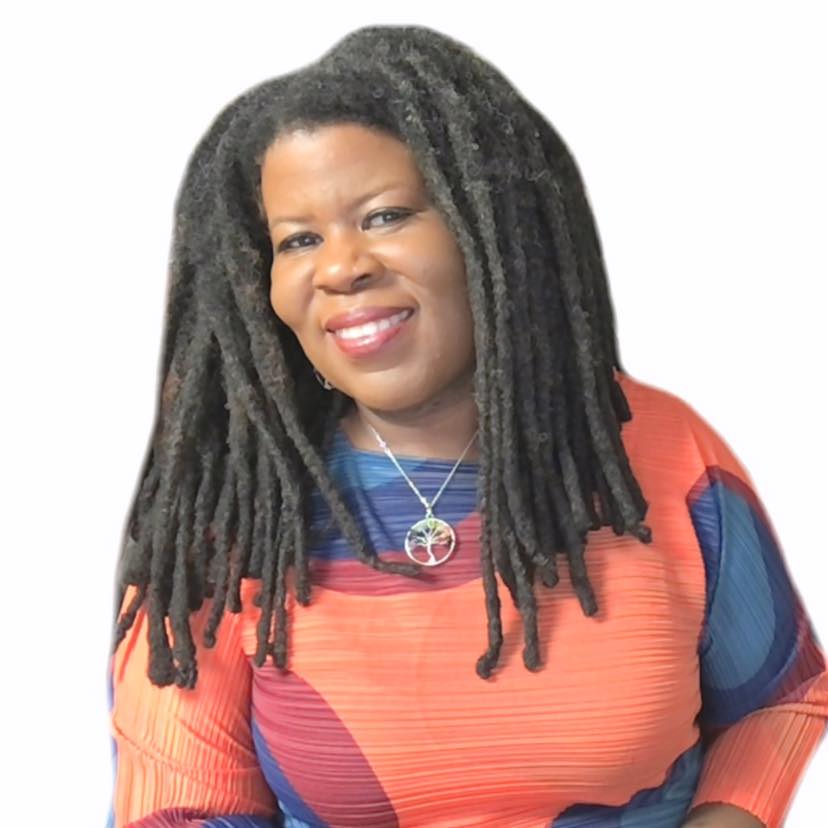
The Rev. Dr. Cheryl A. Lindsay, Minister for Worship and Theology (lindsayc@ucc.org), also serves a local church pastor, public theologian, and worship scholar-practitioner with a particular interest in the proclamation of the word in gathered communities. You’re invited to share your reflections on this text in the comments on our Facebook page: https://www.facebook.com/SermonSeeds.
A Bible study version of this reflection is at Weekly Seeds.