Sermon Seeds: In the World
Sunday, May 17, 2026
Seventh Sunday of Easter | Year A
(Liturgical Color: White)
Lectionary Citations
Acts 1:6-14 • Psalm 68:1-10, 32-35 • 1 Peter 4:12-14; 5:6-11 • John 17:1-11
https://lectionary.library.vanderbilt.edu/texts/?z=s&d=50&y=17134
Focus Scripture: John 17:1-11
Focus Theme: In the World
Series: That Message Spread (Click here for the series overview.)
Reflection
By Cheryl A. Lindsay
Are you in or out? That is a common question used to determine commitment, identity, and participation. It could be as simple as inquiring if someone is standing in line at a restaurant or to board an airplane. That question may be a nudge or a confrontation aimed at someone to make a decision, to declare allegiance, or to take a stand on an issue. The question reflects a binary choice and suggests that one cannot be both. Most choices, and even identities, do not allow for such simplistic options. Therefore, it stands to reason that the gospel and the kindom of God would be far too complex to enable such a simple choice.
Jesus does not ask this question in the gospel passage. The narrative does not involve a dialogue with the disciples. He is not speaking to them; he is praying for them. The section of the gospel is known as the Book of Glory. Interestingly, the Passion account, as well as the events leading up to it, fall within this division. This text reveals the glory of God in Christ. The text opens, “After Jesus had spoken these words,” indicating the long discourse that followed the washing of the disciples’ feet. During that exposition, Jesus reveals himself by expanding on the relationship that disciples have with the Triune God. He notes the connectedness through vine imagery and promises the coming of an Advocate among other revelations. Following the full pericope of the prayer that concludes his long exposition, Jesus faces arrest. The hour has come, and Jesus used his last opportunity before the Passion would consume his energy and engagement to pray for those he was planning, with care and intention, to leave in the world.
First, Jesus does pray for himself. He acknowledges that he was sent to be in the world for a purpose and has been finishing that work. Even when praying for himself, Jesus focuses on his disciples.
After these final words to the disciples, Jesus prays to God, not for his own benefit, or for God’s, but for those who are listening in, whether directly, as the disciples, or through the written word, as the book’s readers or listeners. In contrast to the Synoptic Savior, the Johannine Jesus anticipates his fate with satisfaction and joy, as it marks his return to the glory that he enjoyed with God before the world existed (17:5). In alluding to the prologue, this prayer provides a brief reprieve from the gritty account of the passion, which they are about to read, and recalls the cosmic significance of the narrative as a whole. The prayer advocates for the disciples, seeks God’s protection for them, and thereby reassures them of the joyous end that will await them after their pain and persecution will end. He gives their credentials—they were given to them by God, they kept God’s word (quite literally, perhaps: they have kept Jesus, the Logos, safe, 17:6), and they know that Jesus came from God (17:8). Jesus differentiates sharply between those who are “his own” and those who are not. Though his disciples live in the world, they do not belong to the world. Jesus concludes with a statement of the unity among Father, Son, and believers, and the prayer that the disciples shall indeed enter into the glory “which you have given me because you loved me before the foundation of the world” (17:24). This concludes the revelatory part of the Gospel, and it ends as it begins, with a statement about Jesus’ preexistence and the cosmic context for his earthly mission.
Adele Reinhartz
In John’s account, Jesus does not sweat blood or seek a reprieve. The One Sent is unified with the Sender and has no reluctance to completing the mission. This keeps consistency with the emphasis that the Johannine account maintains on the divinity of Christ. Details demonstrating the real humanity of Jesus are omitted or diminished in order to counter teaching at the time of John’s writing that questioned the divinity of Jesus.
Still, the compassion and companionship of Jesus permeates the recounting of these events. In a similar manner, the tangible work and spiritual glory intersect so that they serve each other in the fulfilment of Christ’s purpose in the world. The work has been for God’s glory, but the glory of God has facilitated the work. They are not presented as binary options but interrelated realities.
The Christian life invites a seeming contradiction that must be navigated carefully to reject false dichotomies. Jesus clearly states that those who follow the Way have been left intentionally in the world but are also not of the world. The value system, moral framework, and ethical considerations of being citizens of the kindom of God and accountability to the reign of God challenge the parallel considerations of the empires of this world. In essence, the Christian is called to live in the model of Jesus—as immigrants who claim divine citizenship and human residency.
Immigrants bring their culture and worldview into a new territory. They may learn the language where they reside, but they may also maintain the language of their home. Immigrants may choose to abandon their foundation or they may incorporate their identity into their relationship and interactions. Some immigrants, and their descendants, may act as if they have no history, culture, or identity outside of the place they reside. Others offer those aspects as gifts they bring to a space that lacks what they have to offer. In the same way, Jesus immigrated from heaven to earth in order to give the gifts he could only fully give while in the world.
The Son glorifies the Father by exercising the authority the Father granted him to bestow eternal life upon those the Father has given to him (cf. 5:19–30). This brings glory to the Father because it reveals the love and compassion the Father has for human beings. In Exodus 34:5–7, when Moses asked to see God’s glory, God revealed his compassion, grace, love and faithfulness….Jesus defined eternal life, Now this is eternal life: that they may know you, the only true God, and Jesus Christ, whom you have sent. Eternal life is knowing God, but, as in the OT, this knowledge is not simply information about God; it is a relationship with him. Under the terms of the new covenant, all God’s children are to know him personally (Jer. 31:34). This verse makes clear that knowing God and therefore experiencing eternal life is inseparable from knowing Jesus Christ whom God sent (cf. 3:36; 5:39–40; 14:6; 20:31). Viewed from the human side a person’s relationship with God is established by acceptance of and obedience to Jesus’ teaching.
Colin G. Kruse
Jesus was sent on mission in the world to reveal the Holy One in glory from birth to death to resurrected life. Death was never the destination; it was a predictable consequence that was utilized to increase his glory. Suffering demonstrated his solidarity not a cruelty often projected on the Sender who moves with compassion and grace. The Passion Jesus experienced reflected his response to the compelling, inferred question to the Creator of all who already seemed to have humbled themselves enough—in or out?
When Jesus was sent to the world, they said “in.”
When Jesus had the opportunity to launch a public ministry, they said “in.”
When Jesus was betrayed by those closest to them, they said “in.”
When Jesus was accused falsely, mocked, and tortured, they said “in.”
When Jesus faced death, they said “in.”
At every moment that Jesus could have chosen an out, they said “in.”
Therefore, Jesus prayed for those who would follow and claim the way and name of Christ that they would choose to be “in.” Not in a club, not in a privileged class, not in a protected and private place, but in the world that Jesus chose to be “in.”
Reflection from Voices of People of African Descent
The 33rd General Synod adopted a Resolution to Recognize the United Nations International Decade for People of African Descent (2015-2024). As part of its implementation, Sermon and Weekly Seeds offers Reflection from Voices of People of African Descent related to the season or overall theme for additional consideration in sermon preparation and for individual and congregational study.
“A man who calls his kinsmen to a feast does not do so to save them from starving. They all have food in their own homes. When we gather together in the moonlit village ground it is not because of the moon. Every man can see it in his own compound. We come together because it is good for kinsmen to do so.”
― Chinua Achebe, Things Fall Apart
For Further Reflection
“The world is a dangerous place to live, not because of the people who are evil, but because of the people who don’t do anything about it.” ― Albert Einstein
“How wonderful it is that nobody need wait a single moment before starting to improve the world.” ― Anne Frank
“The world is a book and those who do not travel read only one page.” ― St. Augustine
Works Cited
Reinhartz, Adele. “John.” Gale A. Yee, Ed. Fortress Commentary on the Bible: Two Volume Set. Minneapolis: Fortress Press, 2014.
Suggested Congregational Response to the Reflection
During the Season of Easter, commit to spreading the good news of God’s liberating, redeeming, and reconciling love through consistent communication. Consider the tangible ways your faith community has been positioned to demonstrate the power of new life.
Worship Ways Liturgical Resources
https://www.ucc.org/worship-way/easter-7a-may-17/
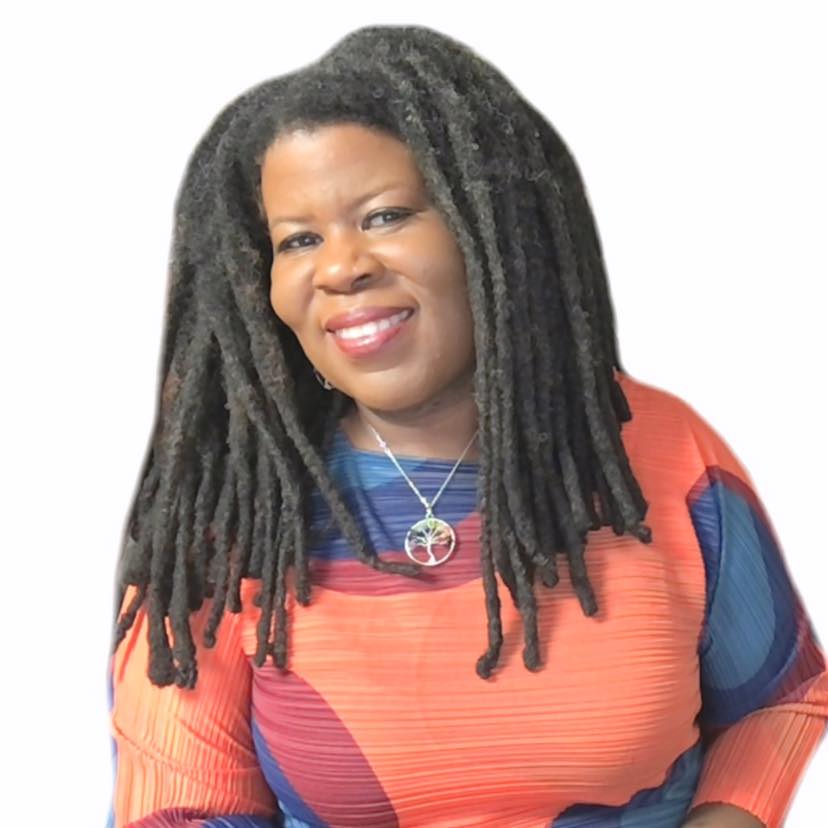
The Rev. Dr. Cheryl A. Lindsay, Minister for Worship and Theology (lindsayc@ucc.org), also serves a local church pastor, public theologian, and worship scholar-practitioner with a particular interest in the proclamation of the word in gathered communities. You’re invited to share your reflections on this text in the comments on our Facebook page: https://www.facebook.com/SermonSeeds.
A Bible study version of this reflection is at Weekly Seeds.