Sermon Seeds: Granted Prayer
Sunday, July 12, 2026
Seventh Sunday after Pentecost| Year A
(Liturgical Color: Green)
Lectionary Citations
Genesis 25:19-34 and Psalm 119:105-112 • Isaiah 55:10-13 and Psalm 65:(1-8), 9-13 • Romans 8:1-11 • Matthew 13:1-9, 18-23
https://lectionary.library.vanderbilt.edu/texts/?z=p&d=64&y=17134
Focus Scripture: Genesis 25:19-34
Focus Theme: Granted Prayer
Series: Faithful and Vital (Click here for the series overview.)
Reflection
By Cheryl A. Lindsay
How often do you make a wish? There are a number of occasions that derive from ancient traditions and cultural practices that invite wishes. The fountain pools in public spaces collect the coins of those who toss a penny to make a wish. That action follows the ancient Greek practice of throwing coins into wells as they hoped they would not run dry. How many of us have blown out candles on a birthday cake with the admonition to make a wish and to keep it to ourselves? A shooting star in the night’s sky also encourages dreams and wishes. Some of us have memories of taking the wishbone from the holiday meal and pulling it against another. Whoever snagged the larger portion was promised a wish would come true. All of these customs treat wishes as unlikely, magical events that need some form of supernatural intervention to be realized. Prayer is a different matter.
Although, sometimes we treat prayer the same way. We attach our prayers to promises of changed behavior or a transactional exchange. Some may believe certain words need to be said in a certain way in order to either convince an indifferent God to act or manipulate a pliable God to change course. While words matter and the Biblical witness reverberates with instances when speaking things into existence, a full prayer life does not require anything more than ongoing communication—speaking and listening—with the Holy One.
In the focus text, Isaac has married Rebekah yet they have not conceived a child. So, Isaac prays for their fertility. His prayer was granted, and Rebekah became pregnant. Confronted with a difficult pregnancy, Rebekah prays in despair and for understanding. Her prayer was answered with a divine explanation. Her children are at odds with one another and will continue to be divided. It is worth noting that while only a few verses describe these milestones, Rebekah and Isaac have been married for twenty years before their children are born. It likely seemed they were cursed and out of God’s favor and covenant. Once their prayer for a child was answered, Rebekah’s struggles must have seemed to confirm that God was not entirely with them.
Yet, she still seeks clarity from the only Source she trusts. This couple seems to have learned a lesson their predecessors struggled to grasp. Abraham and Sarah often defaulted to attempting to control their circumstances first and praying later. Isaac and Rebekah’s story, while not without manipulation, demonstrates the impact of praying before and during rather than just after confronted with trying times.
The answer, however, did not provide encouragement. Their children had started warring with each other in the womb. Rather than living in loving companionship as siblings, they will have a power battle in which the younger son will prevail over the other, breaking conventional norms. Further, this strained relationship seems to be God’s doing.
God has chosen and destined this man Jacob in a special way. The initial designation of Jacob is inscrutable (25:23). We are not told why God wills this inversion of “natural right.” But as the narrative is given to us, it is this designation by God which brings Jacob to well-being and prosperity. In an earthy way, this is a statement about justification by grace. God has taken one who is “low and despised” and has overturned conventional power arrangements. But it is also this designation by God that begins the trouble (25:29–34; 27:1–45) that is to mark Jacob’s entire life. This is the second reality which holds the narrative in tension. Even as the designated of God, Jacob lives a troubled life. He has conflicts with all those around him. It is the juxtaposition of special designation and a life of conflict that is the mainspring of the narrative. Apparently, it is the commitment of God to this troubled man which causes the conflict. In the end, it is this same commitment from God which resolves the conflicts in his favor. The narrator knows that the election is a blessing and a burden. The narrator, however, is not completely captivated by the special position of Jacob in the will of God. There is a curious fascination with and inclination toward Esau, the son who has “natural rights.” It is almost as if the narrator could not resist the inclination. The claim of Jacob seems to advance even against the wish of the narrator. The claim is so powerful that eventually it will shape the stories in its own way.
Walter Brueggeman
Later, Rebekah will intervene in order to elevate Jacob over Esau, but this text indicates her machinations may not have been necessary. Alternatively, the Holy One may have simply predicted what would come based on knowing these characters, and human patterns of behavior, so well. It seems clear that their distinct interests will determine their path without need of intervention.
Hiebert offers another bit of insight regarding the reversals of primogeniture like those we see in the stories of Isaac, Jacob, and Joseph. Those who benefit from the reversals are “secondary sons, that is, by those outside the positions of power in society held by fathers and their firstborn sons.” In this regard, the reversals and the trickster quality of Jacob enable him to “gain access to powers denied” to him by this birth position. So these narratives can be read as the “quest by the disenfranchised to share in the power and benefits of the family and society” (Hiebert, 21).
Rodney S. Sadler, Jr.
This narrative raises more questions than it answers, and perhaps that is the gift it offers. It foreshadows more conflict between the siblings as representative of expanding geo-political tensions. One central question surrounds the issue of birthright. How does the random circumstances of one’s birth determine one’s future? Is this the will of God or does this, and other biblical accounts, demonstrate the Holy One subverting claims of privilege based on birthright?
What are the implications for the church that considers all humanity to be beloved of God? How do we live that out…or fail to?
And, what is the relationship of prayer to the unfolding actions? Within the narrative, it seems the prayers may not have gone far enough. The Holy One answered the prayer for a child. Once they knew they were having twins with conflict, why did that not (apparently) prompt new prayers for harmony, compassion, and reconciliation? When one prayer is granted, that is not a call to stop praying; rather, it is an opportunity for a new prayer to spring forth for a progression of granted prayer.
For Further Reflection
“Prayer is a surge of the heart, it is a simple look turned toward heaven, it is a cry of recognition and of love, embracing both trial and joy.” – St. Therese of Lisieux
“Sometimes you find yourself so grateful that a prayer of yours was not answered that you pray that it be ignored. Just in case it is on the waiting list of prayers to be answered.” ― Mokokoma Mokhonoana
“What I have learned from the year past is something about miracles–miracles of healing and answered prayer and unexpected happy endings. Each came quietly and simply, on tiptoe, so that I hardly knew it had occurred.
All this makes me realize that miracles are everyday things. Not only the sudden, great good fortune, wafting in on a new wind from the sky. They are almost routine, yet miracles just the same.
Every time something hard becomes easier; every time you adjust to a situation which, last week, you didn’t know existed; every time a kindness falls as softly as the dew; or someone you love who was ill grows better; every time a blessing comes, not with trumpet and fanfare, but silently as night, you have witnessed a miracle.” ― Faith Baldwin
Works Cited
Brueggemann, Walter. Genesis: Interpretation: A Bible Commentary for Teaching and Preaching. Louisville: John Knox Press, 2010.
Sadler, Jr., Rodney S. “Genesis” Gale A. Yee, Ed. Fortress Commentary on the Bible: Two Volume Set. Minneapolis: Fortress Press, 2014.
Suggested Congregational Response to the Reflection
For the season after Pentecost, the themes are derived from the categories of the Marks for Faithful and Vital Churches. Each subseries will invite engagement with one Mark within the category. Each local church should choose how this will be incorporated. (This could be a sermon talk-back from the lens of the Mark, a direct discussion on the Mark, a prayer or song that relates to the Mark.) The response may also be a call to action embedded in the sermon or the sending inviting engagement beyond worship.
Mark for Congregational Response: Relating to one another with gentleness, kindness, and compassion, with sympathy, empathy, and healthy, life-affirming behaviors.
Worship Ways Liturgical Resources
https://www.ucc.org/worship-way/after-pentecost-7a-july-12/
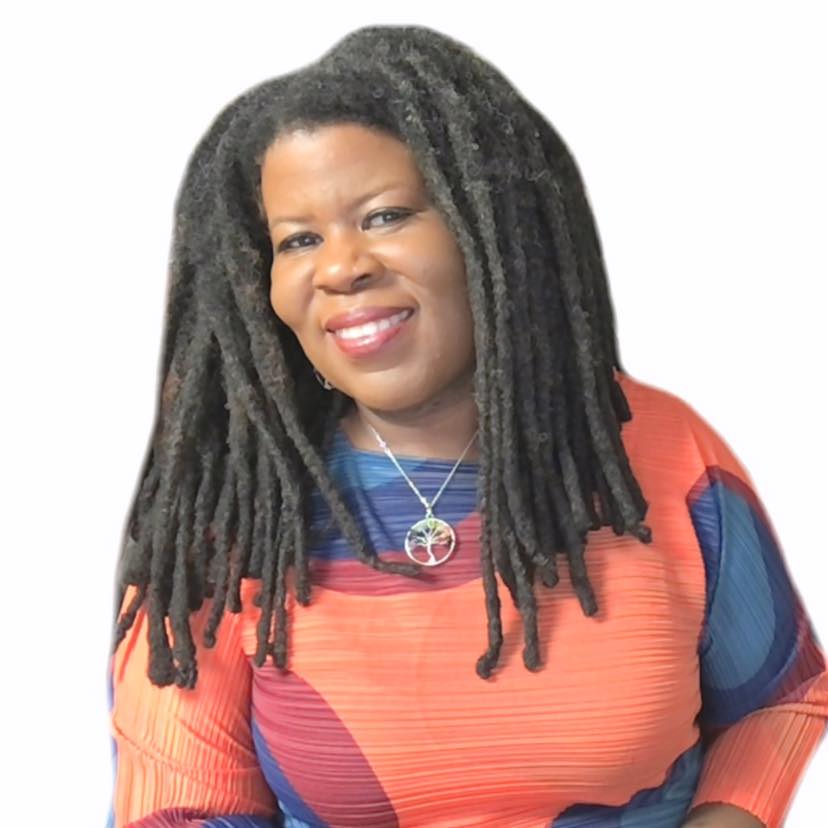
The Rev. Dr. Cheryl A. Lindsay, Minister for Worship and Theology (lindsayc@ucc.org), also serves a local church pastor, public theologian, and worship scholar-practitioner with a particular interest in the proclamation of the word in gathered communities. You’re invited to share your reflections on this text in the comments on our Facebook page: https://www.facebook.com/SermonSeeds.
A Bible study version of this reflection is at Weekly Seeds.