Sermon Seeds: Going On
Sunday, April 19, 2026
Third Sunday of Easter | Year A
(Liturgical Color: White)
Lectionary Citations
Acts 2:14a, 36-41 • Psalm 116:1-4, 12-19 • 1 Peter 1:17-23 • Luke 24:13-35
https://lectionary.library.vanderbilt.edu/texts/?z=s&d=45&y=17134
Focus Scripture: Luke 24:13-35
Focus Theme: Going On
Series: That Message Spread (Click here for the series overview.)
Reflection
By Cheryl A. Lindsay
Human beings seem to have a perennial struggle between facing forward and turning back. We live our lives tethered to the past, near and distant, and pulled into the future. Moments of drastic transition exacerbate the tension. When we recognize that the turn away from yesterday into tomorrow will be abrupt, substantial, or severe, it may elicit a commensurate response from us. We may attempt to burrow ourselves into the pit of the past or we may flee preemptively into the future. The difference often lies in the anticipated outcome. Still, even positive changes produce uncertainty and even anxiety. When leaving the circumstances, conditions, and comforts of the past creates pain or costs us something of value, we may not want to move forward no matter how much potential good the future offers.
We treat these moments of tension as if they offer more options than they do. While we always have the opportunity to choose our response to changing times, we cannot travel back and relive what has already taken place. Life–like time—functions like momentum and moves forward without requiring our permission. The desire for stagnation is fruitless and frustrating.
Astrophysicists would tell us that the universe is always in motion. Even when we remain still in our bodies, we are planted on a planet in orbit in a solar system that is part of a galaxy. Each of those parts are moving. Further, our bodies are their own system. Breath enters and exits our lungs providing oxygen and removing waste from our blood. Blood courses through our veins. These actions happen automatically even when we sleep. This automated functioning keeps us alive. When those systems are disrupted long enough, we die.
So if movement is not an option, then the responsive choice becomes direction. Where are we going? Do we go back to where we have been to try to recreate what has already passed, whether in realization or in opportunity, or do we go on to what is new and possible for us?
This is the decision facing two travelers, Cleopas and his companion, on the road to Emmaus.
After these predictions [of Jesus’ suffering and death] come to pass, Luke tells how one of Jesus’ disciples expresses some serious doubts. That disciple is Cleopas, one of two disciples who meet the risen Jesus on the road to Emmaus (Luke 24:13-35). Not recognizing his fellow traveler, Cleopas summarizes the situation so far. He relates “the things about Jesus of Nazareth, a prophet mighty in deed and word, and how our chief priests and leaders handed him over to be condemned to death and crucified him.” He then explains the source of his confusion: “But we had hoped that he was the one to redeem Israel” (Luke 24:19-21). Cleopas conveys the sentiments of Luke’s audience. He knows that Israel’s Scriptures never indicate that the Messiah will suffer a humiliating execution. His confusion is understandable. Nevertheless, it draws a stunning rebuke from Luke’s Jesus: “‘Oh, how foolish you are, and how slow of heart to believe all that the prophets have declared! Was it not necessary that the Messiah should suffer these things and then enter into his glory?’ Then beginning with Moses and all the prophets, he interpreted to them the things about himself in the scriptures” (Luke 24:25-27).
Jocelyn McWhirter
At times, living in the past manifests as clinging to unrealized expectations for the present. Many of those who followed Jesus in his ministry, despite his warnings and predictions, were taken aback when those predictions occurred. It stunned them into hiding. This group included his closest disciples who stopped journeying with him when conditions radically changed and the threat to their own lives seemed obvious.
After the report of his resurrection, doubts continued to linger among those disciples, personified by but not limited to Thomas and including Cleopas and his companion in this focus text. Cleopas tells Jesus the string of events of the Passion and indicates that he was among the disciples in hiding but he did not accompany those who went to the tomb to confirm the account of the women who proclaimed the good news of the resurrection. He makes particular note that those who went to confirm the veracity of the women’s claim did not find Jesus, indicating that critical point negated the possibility of believing the improbable claim.
Jesus appears to lose patience with Cleopas at this point. Then Jesus goes deeper into the past to recount the history of prophetic claims concerning the promised Messiah and the suffering that would accompany his ministry.
Moving forward from the past does not mean forgetting it. It means carrying sacred memory forward in order to remember the significance of what has happened, to respond to the wisdom it lends to the present, and to prepare for the future whose foundations rests upon it. The biblical witness reverberates with admonishments to remember. Considering the past as part of living in the present and facing the future is commendable and wise. Being bound by the past in such a way that we constrain our notion of what is possible is, as Jesus declares, “foolish.” Jesus does not condemn his disciples or those curious about him for having doubts. He does chastise them for ignoring what has been revealed to them.
Even though they are followers of Jesus, their knowledge of his identity remains incomplete. They understand him as “a prophet mighty in deed and word” (Lk 24:19) and even wonder whether he might be “the one to redeem Israel” (Lk 24:21). Jesus’ death, however, seems to have shattered that hope. A crucified Messiah is a contradiction in terms, and they do not know what to make of the latest news that Jesus is alive again. The two have bits of information about Jesus, but they are struggling to piece together the puzzle. The missing piece is what Scripture says about the Messiah suffering before entering into his glory.
Daniel G. Chen
This encounter on the road to Emmaus invites us to consider how the details of our remembering impact our response to reality. Both Jesus and Cleopas referenced the past. Cleopas seemed to adopt a nostalgic perspective that ignored the portions of the story that led to discomfort. Yet, in the biblical witness, those are the stories most frequently told. Sanitized versions used in Sunday School curriculum and on movie screens fail to confront the hard truths and ethical dilemmas the text intentionally presents for the audience to wrestle with. Those versions, intended as introductory lessons or entertainment, can never offer the fullness of humanity found in the biblical collection. Jesus does not express frustration with their astonishment but with their apparent commitment to ignore the prophecies of suffering.
Suffering, in the work of liberation, is inevitable. The attempt to avoid it will prevent progress. Jesus does not glorify his suffering nor does he necessarily identify it as instrumental; he understands that it was on the path to his glory. Suffering does not generate his glory. The glory made the suffering worth it.
Cleopas and his companion consider his words but do not recognize his person until they experience communion through the breaking of bread. It implies that these two had been with Jesus and the other disciples at the Last Supper. They connected the actions and now recognize Jesus in his transformed, glorious body. They can now identify what their hearts discerned throughout their interaction. Jesus disappears but they continue to go on by first going back with new understanding and a renewed call and urgent commitment to carry the good news forward.
Reflection from Voices of People of African Descent
The 33rd General Synod adopted a Resolution to Recognize the United Nations International Decade for People of African Descent (2015-2024). As part of its implementation, Sermon and Weekly Seeds offers Reflection from Voices of People of African Descent related to the season or overall theme for additional consideration in sermon preparation and for individual and congregational study.
“Ever since they left Thies, the women had not stopped singing. As soon as one group allowed the refrain to die, another picked it up, and new verses were born at the hazard of chance or inspiration, one word leading to another and each finding, in its turn, its rhythm and its place. No one was very sure any longer where the song began, or if it had an ending. It rolled out over its own length, like the movement of a serpent. It was as long as a life.”
― Ousmane Sembène, God’s Bits of Wood
For Further Reflection
“There’s more to getting to where you’re going then just knowing there’s a road.” ― Joan Lowery Nixon
“My hair was blowing in the wind and I thought it was because I was flowing, but instead I was going.” ― Dominic Riccitello
“To feel is to go to the places you were.” ― Will Advise
Works Cited
Chen, Daniel G. Esau McCaulley, Ed et all. The New Testament in Color: A Multiethnic Bible Commentary. Downers Grove: IVP Academic, 2024.
McWhirter, Jocelyn. Rejected Prophets: Jesus and His Witnesses in Luke-Acts. Minneapolis: Fortress Press, 2013.
Suggested Congregational Response to the Reflection
During the Season of Easter, commit to spreading the good news of God’s liberating, redeeming, and reconciling love through consistent communication. Consider the tangible ways your faith community has been positioned to demonstrate the power of new life.
Worship Ways Liturgical Resources
https://www.ucc.org/worship-way/easter-3a-april-19/
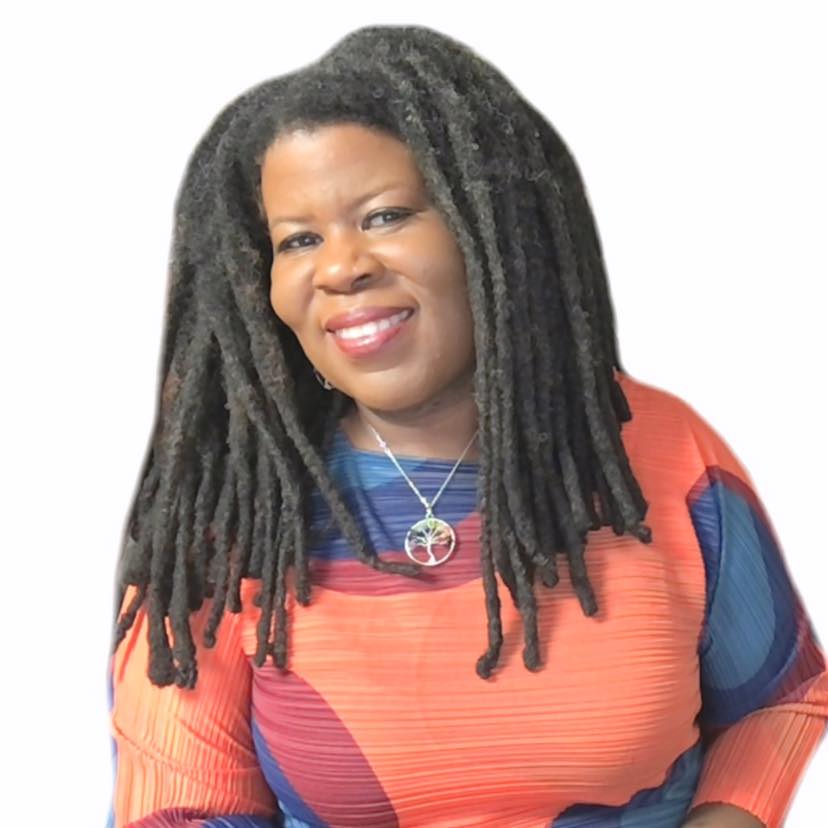
The Rev. Dr. Cheryl A. Lindsay, Minister for Worship and Theology (lindsayc@ucc.org), also serves a local church pastor, public theologian, and worship scholar-practitioner with a particular interest in the proclamation of the word in gathered communities. You’re invited to share your reflections on this text in the comments on our Facebook page: https://www.facebook.com/SermonSeeds.
A Bible study version of this reflection is at Weekly Seeds.