Sermon Seeds: God of the Living
Sunday, November 9, 2025
Twenty-second Sunday after Pentecost
(Liturgical Color: Green)
Lectionary Citations
Haggai 1:15b-2:9 and Psalm 145:1-5, 17-21 or Psalm 98 • Job 19:23-27a and Psalm 17:1-9 • 2 Thessalonians 2:1-5, 13-17 • Luke 20:27-38
https://lectionary.library.vanderbilt.edu/texts/?z=p&d=84&y=384
Focus Scripture: Luke 20:27-38
Focus Theme: God of the Living
Series: Raise Her Voice: Seek After God (Click here for the series overview.)
Reflection
By Cheryl A. Lindsay
Faith communities and popular culture have long attempted to imagine life after death. Beliefs, theories, and ponderings vary but with some commonalities. Many ascribe to some form of life after death. This may involve a transition to a new form of existence in a separated location like Sheol, heaven, purgatory, or hell. Sometimes, the new location is a direct consequence of the actions and attitudes exhibited during life on earth. In other cases, the after death destination is indiscriminate—both the just and the unjust find their home there. In this transition, the form changes, often leaving the physical presence behind while the soul moves on.
Others speculate that the being transforms but remains on earth. This may happen through reincarnation as some faith traditions affirm. This is an opportunity to live again with a new identity in a new time with the new location limited to the realm of the earth. Consequences often matter in reincarnation as the next life is predicated on the previous one. The next life may be an upgrade or a downgrade based on behavior and beliefs. The secular celebration of Halloween reminds us that some imagine scenarios in which the dead haunt the living such as zombies or ghosts. These beings may be displaced and experience an alternative afterlife trapped on earth. Again, the status results from consequences of their actions or being acted upon by others in a way of eternal curse rather than blessing.
While there are other theories, including the belief that death is in fact a final end, trying to prove or disprove any of them would be a frustrating exercise. The reality is that these are all speculations from the living about the dead, and those planes of existence do not intersect in ways that allow any certainty in theorizing. Still, that does not stop humanity from trying to crack the code.
In the gospel reading, Jesus has an encounter with a group of Sadducees, who ask him a very specific question about life after death. The perspective is legalistic and rooted in status: which marriage would still be recognized after death when one woman has been married to several brothers? There is virtually no context to explain why this question has been posed—is this a real scenario or a hypothetical conversation remains unclear. The text suggests that this is another opportunity for debate among religious leaders and Jesus. This time, the exchange involves a group newly interjected into the gospel narrative. The apostles will encounter them again, but also relatively sparingly, as noted in the second half of the Lukan account found in the Acts of the Apostles.
Appearing for the first and only time in the narrative, Sadducees approach Jesus with a question (v. 27); Sadducees reappear in Acts 4:1; 5:17; 23:6–8 as men associated with the high priest and commanding high social prestige. According to Josephus, members of this circle, evidently bearing a name derived from the high priest Zadok from the era of David and Solomon (2 Sam 8:17; 1 Kgs 1:34, 38–39), enjoyed the confidence of the wealthy but not the rest of the populace (Ant. 13.10.6), a picture that squares with the portrait of the Sadducees in Acts.
John T. Carroll
Given their prominence in religious life, it is hard to fathom that this is Jesus’ first and only encounter with the Sadducees. Perhaps, this is the first time they have been identified through this association. The only distinguishing characteristic Luke mentions is that they do not believe in the resurrection. It is worth noting and reveals the significance of a seemingly arbitrary interrogation.
The narrator’s first introduction of this character group gives them only one identifying badge: they oppose the notion of resurrection…. Apparently the Sadducees, who regarded the books of Moses (the Torah) as authoritative texts, rejected postmortem resurrection existence because they could not find this belief in their Scripture. In character, then, the Sadducees question Jesus by appealing to Moses. They set up their question for Jesus by invoking the Mosaic provision of levirate marriage, which was designed to ensure posterity for a childless widow, thus also ensuring the future “life” of her deceased husband in the form of offspring who would perpetuate his name (Deut 25:5–6; cf. Gen 38:8; Ruth 3–4). Verses 29–32 then spin an imagined scenario in which a woman remains childless and without heir after sequentially marrying all seven brothers in a family. The scenario, clearly intended (in the light of the narrator’s characterization of the Sadducees in v. 27) as a reductio (or amplificatio!) ad absurdum to demonstrate resurrection belief as nonsensical, prompts the question: “In the resurrection life, whose wife [among the seven brothers] will she be? For all seven married her” (v. 33).
John T. Carroll
The question is legalistic and perhaps adversarial masked by curiosity. Jesus has not yet been put on trial, but these men, presumably motivated to maintain the status quo or at least compelled to uphold the teachings of their sacred text, engage in a form of discovery to expose Jesus’ radical interpretation. This text, and the narrative encounter, are singular in that Luke does not record another instance of Jesus interacting specifically with Sadducees. Their naming is not to draw attention to their group for gratuitous purposes. They are named to give their questioning the context needed. There is a difference between dialogue with someone who shares your beliefs, is curious about your beliefs, is skeptical regarding your beliefs, or is hostile to your beliefs. This encounter is not about the specific answer to the hypothetical question; it’s about the school of belief and interpretive lens that undergirds the response Jesus supplied.
The presenting question is resurrection faith (denied by the Sadducees, as the narrator has made clear). But the real issue is Jesus’ fidelity and authority in interpretation of Scripture (Green 718; Tyson, Images 89–90). As in 4:1–13, divergent readings of Scripture compete. Part 1 of Jesus’ reply presents a direct response to the hypothetical scenario (20:34–36). He contrasts two ages and the character of existence within them. The present age (cf. 16:8), the one assumed by the Sadducees, is dominated by concerns with household, property, death, and therefore progeny. This is the world in which people get married (20:34), and the Mosaic provision of levirate marriage only makes sense in this age. Yet this mode of life has been radically called into question by Jesus’ praxis of God’s reign and his call to a discipleship defined by its terms (e.g., 14:25–33; 18:18–30).
John T. Carroll
The reign of God, affirmed by Jesus, is not an after death experience. As was his practice, Jesus uses the questioning encounter as an opportunity to teach. For Jesus, who anticipates his own resurrection, life follows life.
On the other hand, Jesus depicts the age to come…. As children of God, people who “are considered worthy” to enter the age to come are also children of resurrection; death is no longer a concern, for along with angelic beings with whom they now enjoy equal status and a comparable exalted state, they participate in a domain not subject to death (v. 36). With ironic wit, Jesus thus answers the scenario of a sonless widow by imaging an eschatological future that, while a marriage-free zone, nevertheless features an expansive family composed of children (sons and therefore heirs) of resurrection, children of God… Jesus’ creative interpretation of it as a text supporting the reality of resurrection life beyond death. Jesus delays the premise to the end: God is [Lord] only of the living, because all live for (or to) God…. Therefore (20:37), Abraham, Isaac, and Jacob are not dead but alive, in a postmortem, resurrection life.
John T. Carroll
The conversation mirrors the message Jesus conveys. While the scenario is clearly exaggerated, it could potentially raise a question about the systems that force a woman and her husband’s siblings to marry. The implications for the afterlife pale in comparison to those for this life in general and her life in particular. Rather than confront or interrogate those systems, the conversation clings to the hypothetical. But, Jesus insists, God is not god of the hypothetical. God is not a god of what has no impact on life. God is not god of the dead. God is God of life. God is God of a covenant still in effect. God is God of the living.
Ultimately, Jesus rejects their hypothetical scenario. The question then, is what does it mean to be living? When one holds to the promise of resurrection, death is an act of transition from life to life. Further, to be with the body or absent from the body (like Abraham, Isaac, and Jacob) is still life with the God of the Living.
Reflection from Voices of People of African Descent
The 33rd General Synod adopted a Resolution to Recognize the United Nations International Decade for People of African Descent (2015-2024). As part of its implementation, Sermon and Weekly Seeds offers Reflection from Voices of People of African Descent related to the season or overall theme for additional consideration in sermon preparation and for individual and congregational study.
“If We Must Die”
By Claude McKay
If we must die, let it not be like hogs
Hunted and penned in an inglorious spot,
While round us bark the mad and hungry dogs,
Making their mock at our accursèd lot.
If we must die, O let us nobly die,
So that our precious blood may not be shed
In vain; then even the monsters we defy
Shall be constrained to honor us though dead!
O kinsmen! we must meet the common foe!
Though far outnumbered let us show us brave,
And for their thousand blows deal one death-blow!
What though before us lies the open grave?
Like men we’ll face the murderous, cowardly pack,
Pressed to the wall, dying, but fighting back!
For Further Reflection
“Experience is the benefit of the past.
Opportunity is the benefit of the present.
Hope is the benefit of the future.
Live your best life right now, at this exact moment. You can’t fix the future harboring on yesterday’s mistakes.” ― Farshad Asl
“Life doesn’t begin when you start breathing; it begins when you start living, giving and loving.” ― Michael Bassey Johnson
“A woman has to live her life, or live to repent not having lived it.” ― D.H. Lawrence
Works Cited
Carroll, John T. Luke. Louisville: Westminster John Knox Press, 2012.
Suggested Congregational Response to the Reflection
During this series, Raise Her Voice: Seek After God, in the season after Pentecost, we encourage the local church to engage in spiritual practices to support faith formation and ministry engagement. This week, consider the ways the ministry of your faith community affirms life in the kindom of God.
Worship Ways Liturgical Resources
https://www.ucc.org/worship-way/after-pentecost-22c-november-9/
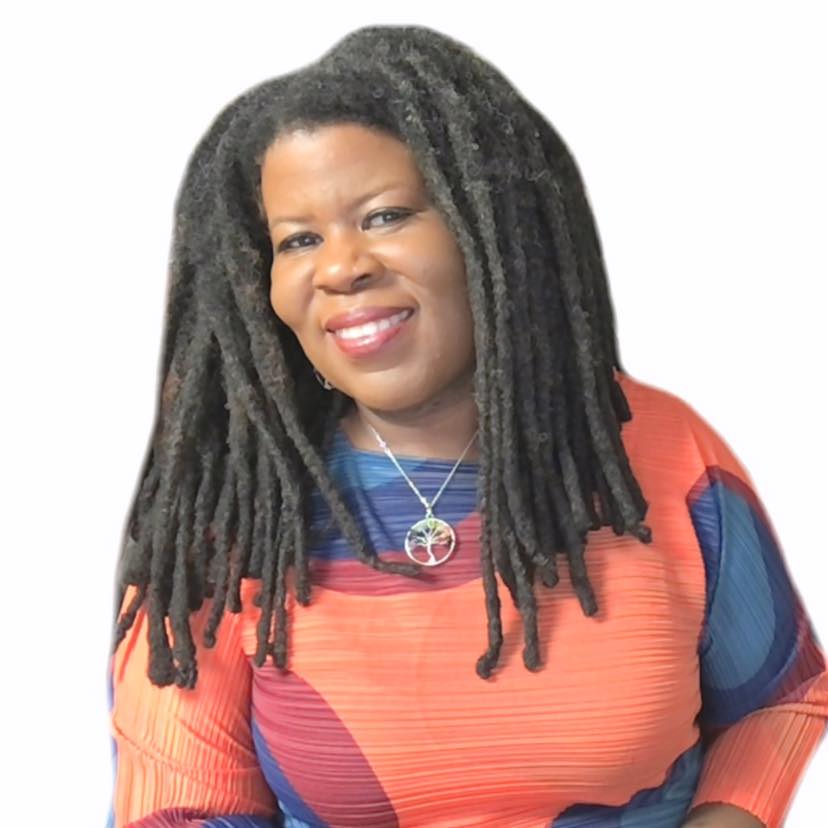
The Rev. Dr. Cheryl A. Lindsay, Minister for Worship and Theology (lindsayc@ucc.org), also serves a local church pastor, public theologian, and worship scholar-practitioner with a particular interest in the proclamation of the word in gathered communities. You’re invited to share your reflections on this text in the comments on our Facebook page: https://www.facebook.com/SermonSeeds.
A Bible study version of this reflection is at Weekly Seeds.