Sermon Seeds: Estimate the Cost
Sunday, September 7, 2025
Thirteenth Sunday after Pentecost| Year C
(Liturgical Color: Green)
Lectionary Citations
Jeremiah 18:1-11 and Psalm 139:1-6, 13-18 • Deuteronomy 30:15-20 and Psalm 1 • Philemon 1:1-21 • Luke 14:25-33
https://lectionary.library.vanderbilt.edu/texts/?z=p&d=72&y=384
Focus Scripture: Luke 14:25-33
Focus Theme: Estimate the Cost
Series: Raise Her Voice: Seek After God (Click here for the series overview.)
Reflection
By Cheryl A. Lindsay
Cost measures what resources will be required in order to obtain something. Having a cost assumes an exchange of worth, something valuable given for something else. Costs are typically established by the person or entity that possesses the thing. Even in an auction or during bartering negotiations, the owner can determine what is acceptable as remuneration or compensation. At the same time, the purchaser has the agency to determine if they will pay what is asked or seek other options. Costs make their home in a transactional system. Is discipleship transactional or relational?
Relational dynamics do not typically use the language of cost. There’s sharing, sacrifice, generosity, giving, and receiving. Yet, underneath those terms lies the basics of exchange. The difference is positioning. The language of costs assumes an exchange of equal value. Relationships are almost never equal even if they are equitable over time. If relationships are like those dangerous seesaws that littered playgrounds in my youth, they constantly move up and down as the weight of the relationship shifts from one side to another. In the end, while balance may be hoped for, the goal is not to fall off.
In this teaching, Jesus presents the decisions, commitments, and sacrifices required to follow the path he trailed. As John T. Carroll notes, “As if the convention-shattering teaching at the Pharisee’s dinner was not provocative enough, Jesus delivers an even more radical message to crowds that are accompanying him as he travels. In view of the severe demands of discipleship, he cautions his listeners to follow with eyes wide open to the cost.” Using the term costs would suggest an equal exchange for those demands yet the value of hating your closest relatives or carrying a cross and all that means hardly seems calculable.
The topic of inclusion/exclusion of disciples then takes an arduous turn (14:25–35). Severe criteria for discipleship exclude virtually everyone. Luke’s audience understands the reference to “hate” to mean the necessity to decide between God and family. Still, deciding against family members and life itself (14:26) exceeds Jesus’ earlier definition of kinship among those who do God’s will (8:19–21), but fits his warnings of family divisions (12:51–53). Abandoning all possessions (14:33) appears to conflict with the support Jesus and his disciples receive from women (8:2–3). Two parables also contradict these severe demands. The first is an analogy of possessing sufficient economic resources to complete a tower (14:28–30). The second calls for capitulation to a more numerous army with the supposition that if resources were sufficient there would be no capitulation (14:31–33). These analogies demonstrate that actions involve consequences, but poorly serve the specific conclusion of abandoning possessions.
Robert L. Brawley
What could discipleship possibly offer in exchange? That question remains unanswered as Jesus continues with two analogies that also seem improbable: building a tower and raising an army.
The tower reference takes the audience back to Babel and a building project by a people trying to reach the heavens, not for communion with God but for equal status with the Holy One. Rather than following the direction of Creator, the people chose their own path and deliberately failed to consult God’s opinion of their work and intent. They did not calculate the full cost of tower building, and perhaps that is part of the cautionary lesson Jesus offers. Discipleship must center the Holy One not the hopes and plans of the follower. While that may seem an obvious lesson, it bears repeating. One need only listen to the most popular songs on Christian playlists to find a litany of promised blessings, individualized pleas, and disciple-centric lyrics. Songs that honor God without a transactional appeal, that celebrate and invite an ethos of communal living, and that center God’s realm of justice, righteousness and peace require a search party to find. How far apart from the builders of the Tower of Babel is the Christian Church today with our near constant preoccupation with survival rather than being good news in the world, witnessing to God’s love, and radical solidarity with our neighbors near and far?
By evoking the tower, Jesus reminds the crowd and the church of the costs of not following him. When I studied economics, I learned about opportunity costs–what you pay by not doing a thing. The idea is that almost all decisions offer choices, and while there may be clear value associated with the choice one makes, there are also the costs of not doing the other thing or things. Those costs also need to be factored into the decision-making process. What would the opportunity cost be of not following Jesus?
The United Church of Christ Statement of Faith offers a clue:
God calls us into the church to accept the cost and joy of discipleship, to be servants in the service of the whole human family, to proclaim the gospel to all the world and resist the powers of evil, to share in Christ’s baptism and eat at his table, to join him in his passion and victory.
UCC Statement of Faith
Not following Jesus means missing out on the joy of discipleship. That’s what sits on the opposite side of the costs on the seesaw taking followers of the Way up and down during life’s journey.
The king raising an army presents a different framework to consider. After an assessment, the king determines that his resources are insufficient to prevail so he changes his approach from war to peace. Not only does the tactic shift, so does the outcome. Notably, it’s better than the original plan. In this, Jesus hints at the joy, the reward of his way. But, this lesson is not about that. It’s all about the costs.
Without a clear marker of the transition to a new scene, Jesus is no longer at the Pharisee’s dinner party but back on the road (v. 25), accompanied by a crowd. He picks up where he left off when addressing the crowd in 12:54–13:9, sounding the note of warning and the need for wise discernment. The focus now, however, is the need for sober realism about the cost of following him. To be a disciple means to detach oneself from the entanglements that come with household, family, and possessions. Here Jesus picks up the thread from 9:23–25, 59–62: those who would answer the call to participate in the realm of God must turn aside from ordinary household relationships and expectations. The rhetoric is even more severe and exaggerated, however: “If any come to me and do not hate their own father and mother, wife and children, and brothers and sisters—indeed, even their own life—they cannot be my disciples. Any who do not carry their own cross and come after me cannot be my disciples” (vv. 26–27). The daily cross-bearing of 9:23 has become a onetime and hence a more literal and horrible reality. Family and household, which in Jesus’ (and Luke’s) culture constitute the primary determinant of identity and status, for that very reason present a formidable obstacle to the commitment of discipleship and must be set aside. Matthew 10:37 tempers the demand, speaking against loving parents more (hence, Jesus less) rather than calling for hating kin, but in Luke the priority of the realm of God is pictured in the most extreme terms imaginable. The point of the hyperbole is not to require that potential followers detest family members and wish them harm, as modern usage of the term “hate” might suggest. Rather, Jesus is challenging listeners to embrace a singular commitment and allegiance to him and to the divine realm into which he is inviting all who would follow him (cf. 9:59–62).
John T. Carroll
Notably, this message is to the crowd that presumably assembled around him based on the tangible and demonstrated rewards they have already witnessed or heard. Jesus has healed the sick, released the bound, upended the oppressive teachings of the day, and fed the masses. His works have been recounted around the region. Yet, even miracles require something. Even though Jesus makes it seem effortless, he paid the price for it…and will continue to meet the demands of his ministry all the way to the cross.
The church struggles with the cross, either deifying it and romanticizing Christ’s suffering on it or minimizing it and Christ’s choice to carry it. Jesus came into the world to live…and knew the price of that life would be death at the hands of those he came to save from the oppressive systems that ensnare the oppressor as much as, if not in the same way as, the oppressed. That choice gets denigrated in some theological circles as the Father sending the Son to be tortured when the Source sent the Embodied One to demonstrate solidarity and communion in suffering and in victory, to pay the cost, and to participate in the joy.
Jesus speaks from his own experience. In his Incarnation and his Passion, he does not get on the seesaw, he becomes it. Balancing the joys and the costs of the kindom, Jesus invites us to get on and hold on through the ups and the downs.
Hold on when wickedness seems stronger, deeper, and more enduring.
Hold on when the costs seem too high–turning family and friends into foes.
Hold on when the costs keep mounting and joy seems illusive.
Hold on and stay on when others abandon the effort, look for shortcuts, or substitute an easier path.
Because on the other side of the dangerous seesaw of discipleship is victory—justice, righteousness, and the kindom of God on earth as in heaven. Nothing is more valuable than that. Estimate the cost.
Reflection from Voices of People of African Descent
The 33rd General Synod adopted a Resolution to Recognize the United Nations International Decade for People of African Descent (2015-2024). As part of its implementation, Sermon and Weekly Seeds offers Reflection from Voices of People of African Descent related to the season or overall theme for additional consideration in sermon preparation and for individual and congregational study.
In order to understand the Black slaves’ reaction to their enslavement, it is necessary to point out that their reflections on the problem of suffering were not “rational” in the classical Greek sense, with its emphasis on abstract and universal distinctions between good and evil, justice and injustice. The Black slaves had little time for reading books or sitting in the cool of the day, thinking about neat philosophical answers to the problem of evil. It was not only illegal to teach slaves to read, but most were forced to work from daybreak to nightfall, leaving no spare time for the art of theological and philosophical discourse. The Black slaves’ investigation of the absurdities of human existence was concrete, and it was done within the context of the community of faith. No attempt was made to transcend the faith of the community by assuming a universal stance common to “all” people. In this sense, Black reflections on human suffering were not unlike the biblical view of God’s activity in human history. It was grounded in the historical realities of communal experience….
The Black slaves’ response to the experience of suffering corresponded closely to the biblical message and its emphasis that God is the ultimate answer to the question of faith. In the spirituals, the Black slaves’ experience of suffering and despair defined for them the major issue in their view of the world. They do not really question the justice and goodness of God. It was taken for granted that God is righteous and will vindicate the poor and the weak. Indeed it was the point of departure for faith. The singers of spirituals had another concern, centered on the faithfulness of the community of believers in a world full of trouble. They wondered not whether God is just and right but whether the sadness and pain of the world would cause them to lose faith in the gospel of God. They were concerned about the solidarity of the community of sufferers. Will the wretched of the earth be able to experience the harsh realities of despair and loneliness and take this pain upon themselves and not lose faith in the faithfulness of God? There was no attempt to evade the reality of suffering. Black slaves faced the reality of the world “ladened wid trouble, an’ burden’d wid grief” but they believed that they could go to Jesus in secret and get relief. They appealed to Jesus not so much to remove the trouble (though that was included), but to keep them from “sinkin’ down.”
James H. Cone, The Spirituals and the Blues
For Further Reflection
“Just like freedom, Truth is not cheap. Yet both are worth more than all the gold in the world. But what is freedom, if there is no truth? And what is truth, if there is no freedom? Both are worth fighting for — because one without the other would be hell.” ― Suzy Kassem
“There is a cost. A cost for what I am. For what I do.” ― Jeff VanderMeer
“The cost of a thing is the amount of what I will call life which is required to be exchanged for it, immediately or in the long run.” ― Henry David Thoreau
“Simple, genuine goodness is the best capital to found the business of this life upon. It lasts when fame and money fail, and is the only riches we can take out of this world with us.” ― Louisa May Alcott
Works Cited
Brawley, Robert L. “Luke.” Gale A. Yee, Ed. Fortress Commentary on the Bible: Two Volume Set. Minneapolis: Fortress Press, 2014.
Carroll, John T. Luke. Louisville: Westminster John Knox Press, 2012.
Suggested Congregational Response to the Reflection
During this series, Raise Her Voice: Seek After God, in the season after Pentecost, we encourage the local church to engage in spiritual practices to support faith formation and ministry engagement. This week invites a time for worshippers to micro-journal (single words to short phrases up to two sentences) the costs of discipleship. Sharing may be done using online word cloud generators or a physical display.
Worship Ways Liturgical Resources
https://www.ucc.org/worship-way/after-pentecost-13c-september-7/
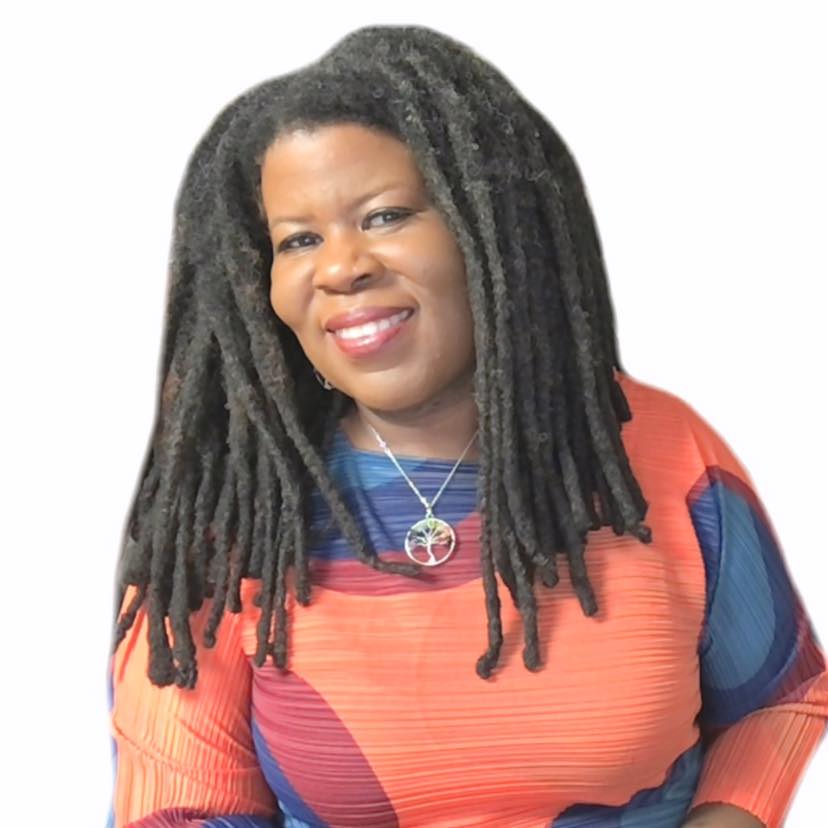
The Rev. Dr. Cheryl A. Lindsay, Minister for Worship and Theology (lindsayc@ucc.org), also serves a local church pastor, public theologian, and worship scholar-practitioner with a particular interest in the proclamation of the word in gathered communities. You’re invited to share your reflections on this text in the comments on our Facebook page: https://www.facebook.com/SermonSeeds.
A Bible study version of this reflection is at Weekly Seeds.