Sermon Seeds: Drink
Sunday, July 5, 2026
Sixth Sunday after Pentecost| Year A
(Liturgical Color: Green)
Lectionary Citations
Genesis 24:34-38, 42-49, 58-67 and Psalm 45:10-17 or Song of Solomon 2:8-13 • Zechariah 9:9-12 and Psalm 145:8-14 • Romans 7:15-25 • Matthew 11:16-19, 25-30
https://lectionary.library.vanderbilt.edu/texts/?z=p&d=63&y=17134
Focus Scripture: Genesis 24:34-38, 42-49, 58-67
Focus Theme: Drink
Series: Faithful and Vital (Click here for the series overview.)
Reflection
By Cheryl A. Lindsay
One common human need is to be adequately hydrated. I know several people who remind people to drink water as part of their service in the world. Being thirsty leads to discomfort from a dry mouth to headaches, fatigue, and irritability. Conversely, being properly hydrated may lend increased energy and a sense of physical well-being. While many beverage and even food options, such as some fruits and vegetables, can satisfy thirst, water is nearly universally considered the most effective means of hydrating.
Offering someone a drink of water is an act of hospitality that conveys welcome, but it can also serve the necessary function of ensuring that everyone is well. It serves as a gateway to something more. It could be the beginning of a relationship or an opportunity to aid someone in continuing their journey.
The narrative continues in Genesis as leadership transfers generationally. Sarah has died, and Abraham is concerned about finding a wife for his son, Isaac, from among his kin. He delegates the task to his servant who prays for a particular sign so that he will know the woman he should approach on behalf of Abraham for Isaac. The patriarch has sent gifts with his servant in order to indicate that, despite their nomadic lifestyle, the family has means to provide for her needs and comfort. They also reflect the value they assign to the future daughter, wife, and matriarch of the covenant.
For a marriage to be arranged, the groom’s family must provide a bride price while the bride’s family provides a dowry. The silver and gold objects and the garments presented to Rebekah are part of her transformation into a member of Abraham’s household. The word used in the text denotes metal worked into useful items, whether jewelry or plates and other utensils. The presents given to her brother Laban and her mother demonstrate Abraham’s wealth and the desirability of the marriage. It was unusual in the ancient world for the woman to have any part in major decisions. Rebekah is not consulted with regard to the marriage (vv. 50–51), but when the servant asks to leave right away, the men look to Rebekah for consent. Marriage contracts of this general period show a great concern for maintaining the woman’s security within her husband’s family. The presence of her own family was one of the guarantees that she would be cared for and treated properly. The ten days that Rebekah’s family requests (v. 55) would give them a little more opportunity to make sure that everything is as it appears to be. She is probably consulted because of the substantial risk involved in leaving family protection under such unusual circumstances.
John H. Walton
This is no ordinary bride and no ordinary negotiation. While the giving of gifts is not atypical given the messages Abraham wishes to convey, it is worth noting that typical negotiations would have been between Abraham’s agent and the woman’s father with a dowry, far exceeding the value of gifts given, being expected from her family. Directly presenting the opportunity to her and offering such substantial gifts signals Rebekah’s role as the future matriarch. This is not an engagement story, it is a call story.
This narrative echoes the New Testament and Jesus’ encounter with the Samaritan Woman at Jacob’s Well in John 4. The turning point of that conversation also hinged on the offer of a drink and led to the revelation of Jesus’s identity to the woman and her subsequent spreading of the good news in her community. In this earlier narrative, Rebekah will not be called as a witness or evangelist. She will be called to assume the mantle of leadership from Abraham. Isaac, in many ways, only serves as a connective vessel. In this story, he reacts and responds to what happens around him and to him. Isaac does not demonstrate great leadership, wisdom, or agency. Rebekah leads during this generation. Therefore, far more attention has been given to her story than to her husband.
That will be revealed later. In the call story, the servant charged with finding her served as the main character, and his faith was on full display.
The text provides an important opportunity to help persons think about faith, what it is and how it comes. In a culture which grasps for visible signs of faith, which is driven toward scientism, and which falls for too many religious quackeries, this story stands as a foil against easy and mistaken faith. The workings of God are not spectacular, not magical, not oddities. Disclosure of God comes by steady discernment and by readiness to trust the resilience that is present in the course of daily affairs. There is an understatedness about the action of the narrative. But it is not reticent about faith. It is an understatement that is ready to be sustained and profoundly grateful when gifts are given.
Walter Brueggemann
Still, in this story, there are concerning elements to consider:
Genesis 24 contains an elaborate mini-novella of its own in the description of Abraham’s procuring a wife for his son Isaac. Among the many questions that this passage raises are: Why is there the need to seek a wife from the same familial line? What is it about indigenous women that is deemed so wholly problematic, particularly when Abraham himself seems to marry one in the next chapter (Genesis 25)?… Through her, Abraham bears a host of children that will serve as the eponymous ancestors of many of the peoples of the Arabian Peninsula. As we look at such narratives that recount the birth of Arabian peoples through Hagar (vv. 12–18) and Keturah (vv. 1–6), we have to note that they all are descendants of Abraham, hence the fulfillment of the promise made that he would have offspring like the “dust of the earth” (Gen. 13:16) and the stars of the heavens (Gen. 15:5). In this regard, we may wish to question why they are not vested in the promise of that land deemed holy. This is particularly troubling in relation to the children of Esau in Genesis 36, for he too is a son of Isaac, through whom the blessing was conveyed. If the reason for their removal from the promise stems from the loss of Esau’s birthright (Gen. 25:29–34) and blessing (Gen. 27:30–40), then the consequences of this act of dispossession are significant indeed. Further, the effort of the authors/editors of this text to eliminate through the machinations of this literary composition all potential claimants to the promised land save those directly descended from Jacob should arouse a hermeneutic of suspicion among readers; why, we might ask, are so few of Abraham’s dustlike and starlike descendants able to participate in the fulfillment of the promise? What role did the authors/editors of the narratives play in crafting a tale that serves to their advantage, and disadvantages those considered “others” in the story?
Rodney S. Sadler, Jr.
Was the covenantal promise made to Abraham and Sarah exclusive to their shared progeny or to any and all descendants of either of them? As it is passed down from generation to generation, does it follow the same pattern? The framing of the Genesis narrative progression suggests that to be the case. The question is whether that results from divine will or authorial intent? The blessing of Hagar and Ishmael would suggest that the covenant was more universal than the story that becomes increasingly particular on the ones chosen to carry the family line. Considering this text also invites us to interrogate human impulses to particularize what the Holy One universalizes.
After all, in God’s good creation, there’s more than enough water to drink.
Reflection from Voices of People of African Descent
The 33rd General Synod adopted a Resolution to Recognize the United Nations International Decade for People of African Descent (2015-2024). As part of its implementation, Sermon and Weekly Seeds offers Reflection from Voices of People of African Descent related to the season or overall theme for additional consideration in sermon preparation and for individual and congregational study.
“Wade in the Water”
— African American Spiritual
Wade in the water
Wade in the water, children,
Wade in the water
God’s a-going to trouble the water
See that host all dressed in white
God’s a-going to trouble the water
The leader looks like the Israelite
God’s a-going to trouble the water
See that band all dressed in red
God’s a-going to trouble the water
Looks like the band that Moses led
God’s a-going to trouble the water
Look over yonder, what do you see?
God’s a-going to trouble the water
The Holy Ghost a-coming on me
God’s a-going to trouble the water
If you don’t believe I’ve been redeemed
God’s a-going to trouble the water
Just follow me down to the Jordan’s stream
God’s a-going to trouble the water
For Further Reflection
“Filthy water cannot be washed.” ~West African proverb
“What makes the desert beautiful… is that somewhere it hides a well.” ~Antoine de Saint-Exupéry
“But I do see the good side of water now. How good it is when you’re really thirsty, how it glitters and gurgles! How alive it is! “~G.K. Chesterton
Works Cited
Brueggemann, Walter. Genesis: Interpretation: A Bible Commentary for Teaching and Preaching. Louisville: John Knox Press, 2010.
Sadler, Jr., Rodney S. “Genesis” Gale A. Yee, Ed. Fortress Commentary on the Bible: Two Volume Set. Minneapolis: Fortress Press, 2014.
Walton, John H.. Genesis (The NIV Application Commentary)
Suggested Congregational Response to the Reflection
For the season after Pentecost, the themes are derived from the categories of the Marks for Faithful and Vital Churches. Each subseries will invite engagement with one Mark within the category. Each local church should choose how this will be incorporated. (This could be a sermon talk-back from the lens of the Mark, a direct discussion on the Mark, a prayer or song that relates to the Mark.) The response may also be a call to action embedded in the sermon or the sending inviting engagement beyond worship.
Mark for Congregational Response: Embracing risk-taking and a spirit of innovation as exemplified in the Gospels.
Worship Ways Liturgical Resources
https://www.ucc.org/worship-way/after-pentecost-6a-july-5/
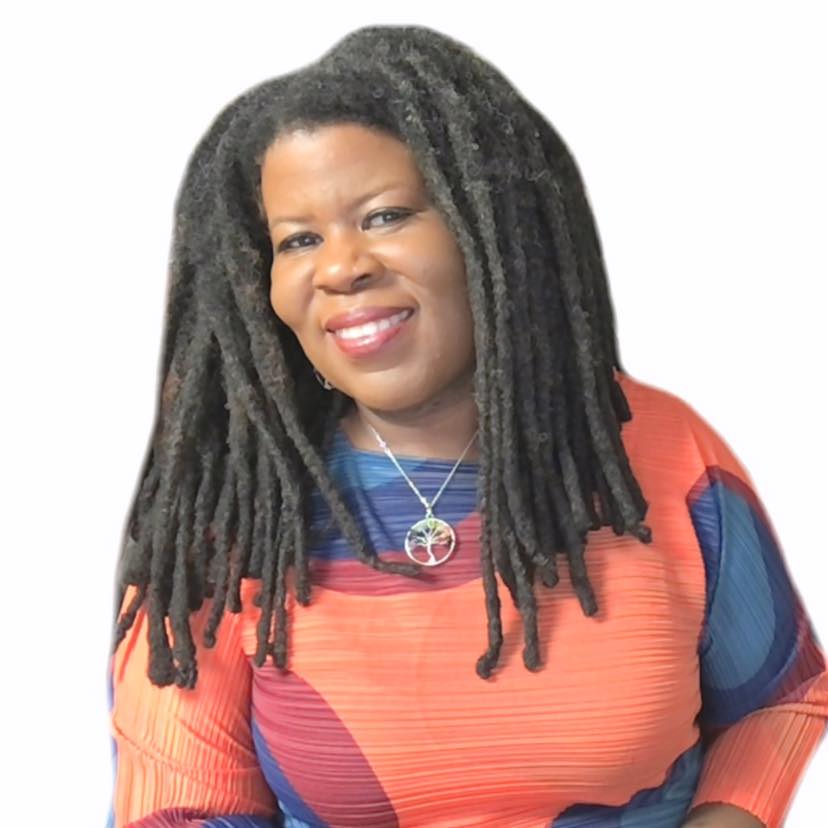
The Rev. Dr. Cheryl A. Lindsay, Minister for Worship and Theology (lindsayc@ucc.org), also serves a local church pastor, public theologian, and worship scholar-practitioner with a particular interest in the proclamation of the word in gathered communities. You’re invited to share your reflections on this text in the comments on our Facebook page: https://www.facebook.com/SermonSeeds.
A Bible study version of this reflection is at Weekly Seeds.