Sermon Seeds: Dressed for Action
Sunday, August 10, 2025
Ninth Sunday after Pentecost| Year C
(Liturgical Color: Green)
Lectionary Citations
Isaiah 1:1, 10-20 and Psalm 50:1-8, 22-23 • Genesis 15:1-6 and Psalm 33:12-22 • Hebrews 11:1-3, 8-16 • Luke 12:32-40
https://lectionary.library.vanderbilt.edu/texts/?z=p&d=68&y=384
Focus Scripture: Luke 12:32-40
Focus Theme: Dressed for Action
Series: Raise Her Voice: Into the Deep (Click here for the series overview.)
Reflection
By Cheryl A. Lindsay
In the spring, I traveled to Assisi, Italy to co-present recommendations for scripture readings for a proposed new feast for the Christian calendar celebrating God as Creator. I packed carefully, wanting to travel as lightly as possible but also taking great care to ensure my attire would be suitable for each day, including the multiple presentations I would make during breakout sessions and workshops. The list of attendees was impressive including not only the World Council of Churches leadership, but also communions representing Roman Catholic, Orthodox, Pentecostal, and Protestant traditions from around the globe. I knew the presentation on behalf of the Consultation on Common Texts, who stewards the Revised Common Lectionary and where I represent the United Church of Christ, was solid biblically, theologically, and liturgically.
I encountered a number of challenges traveling to Assisi via Rome (from Cleveland through JFK airport), which culminated in my checked bag not arriving with me. The airline only had one such flight each day so I would be without my carefully constructed wardrobe for a day. Well, the next day, the airline called the place I was staying (not me directly) to inform me that I would receive my luggage the next day adding another 24 hours of making do with what I had carried on the plane with me. That day, the trains went on strike, and that was when I realized how they would transport my luggage from Rome to Assisi, on the same two hour train ride I had taken. Now, day three of no outfits was the day of presentation. (Have I mentioned that the airport’s customer service line was only open a few hours and never answered?) My colleague presenting with me offered to wear an outfit she has already worn in solidarity with me as I did what I could to make fresh outfits out of my limited carry-on supply. With gratitude, I declined her offer, realizing that in this gathering, the focus would be on my words, not my clothing. And with that recognition, I was ready and dressed for the occasion.
In the gospel text, Jesus continues his teaching alternating between lectures for large crowds and private instruction for close companions. His subject matter centers on living in the kindom of God.
The discourse to disciples continues, shifting without transitional markers to a new thematic focus in v. 35, though one that has already been signaled by the preceding unit’s imagery of God’s realm (vv. 31–32), enduring treasure “in the heavens” (v. 33), and a thief’s approach (v. 33). God’s reign is not a timeless reality but concerns practical conduct here and now, on the way to an eschatological future that, despite its seeming delay and unpredictability, is close at hand. Images suggesting urgency and preparedness open this section: the “belt fastened,” apart from a minor change in word order, quotes Exod 12:11 (preparation for the flight of the Passover narrative) and, together with “lamps burning,” challenges the audience to be poised for immediate action (Luke 12:35). Verses 36–38 locate the summons to vigilance in the domestic sphere. When household slaves await their master’s return from his wedding, the only ones who experience a positive outcome are those who remain awake and alert so that they may open the door to their master (kyrios), even if he is delayed until the second or third watch of the night (i.e., in “the middle of the night, or near dawn” [NRSV], v. 38). In a surprising role reversal, Jesus pictures the master as serving his slaves, not the other way around (v. 37), a role reversal that Jesus himself later enacts (22:24–27)—provided they have proved to be faithful and vigilant, ready to act even in face of the master’s delayed return.
John T. Carroll
The directives come following an introductory word of assurance and promise. The kindom is theirs, as a gift, and that should be the source of their courage. Jesus speaks to them as if they will enter a new territory, and, in a sense, they will be. While residing in the kindom will not necessarily require them to relocate to a new geographical location, the transition will be remarkable and transformative.
Rather than assembling a packing list, Jesus advises them to purge and give. Immediately, the difference is apparent. Being part of the kindom has a cost, yet like earthly kingdoms, treasure will also be found. Even that, however, will not be what they might expect.
Then, analogies from nature illustrate divine provisions for subsistence. Moreover, Jesus distinguishes God’s commonwealth from the nations (12:30). Behind this lies Israel’s covenant traditions of distribution of land and its resources that are qualitatively distinct from other nations. Here Luke’s audience would understand imperial systems that exploited subsistence farmers—90 percent of the population—and funneled resources to the top 10 percent, and especially the top 2 percent (12:22–34). “Alms” as the complement to selling possessions means not mere “donations” but “merciful action” (12:33). This is but half of Jesus’ message, which also has exhortations to diligence and warnings of judgment (12:35–59). Even these are punctuated with promises of blessing for fidelity. But figurations shift from nature to master-slave relationships, presuming that masters have prerogatives to bless and punish (12:37–38; 12:42–48). Slavery was a pervasive feature of Roman imperial systems that exploited the have-nots. In contrast to the conventional notion of oppression of slaves by the master, in 12:37 the master serves the slaves.
Robert L. Brawley
The reign of God is not only countercultural; it is revolutionary and an indictment on human systems that subvert and distort God’s will for creation. Those systems may be formed by government, households, or religious traditions. The text not only echoes the sentiment of the Beatitudes and the pronouncements of blessings upon the marginalized, vulnerable, and oppressed, it also elevates them to be served rather than exploited.
The commitment to avoid exploitation and the underlying imbalance relationship to resources will require selling possessions, not for personal benefit, but in order to redistribute wealth. The notable distance between this prescription and ideologies that celebrate the hoarding of God’s generous gifts could not be made more clear.
The so-called prosperity gospel takes 12:31 to mean that striving for God’s commonwealth engenders wealth. Living in God’s commonwealth (“It is your parent’s good pleasure to give you the commonwealth,” 12:32) in contrast to the world’s nations (12:30–31) clearly contradicts this. It is elites in the world’s nations that amassed wealth by exploiting the masses. Further, 12:22–31 has to do with subsistence living, not accumulating wealth. Luke 12:35–59 is predominantly taken as anticipating the parousia. But emphasis still falls on mission in the present.
Robert L. Brawley
The emphasis particularly centers on readiness. Being a disciple requires proactive preparation and intention. Following Jesus is a journey with a packing list that includes a wardrobe that incorporates the full armor of God (Ephesians 6:10-18) and nourishment found in the fruit of the Spirit (Galatians 5:22-23). Further, this trip is not for comfort, retreat, and leisure; the road calls for action, engagement, and vigilance. This is the hope and promise of the kindom. Dress for it.
Reflection from Voices of People of African Descent
The 33rd General Synod adopted a Resolution to Recognize the United Nations International Decade for People of African Descent (2015-2024). As part of its implementation, Sermon and Weekly Seeds offers Reflection from Voices of People of African Descent related to the season or overall theme for additional consideration in sermon preparation and for individual and congregational study.
“Phenomenal Woman” (Excerpt)
By Maya Angelou
Pretty women wonder where my secret lies.
I’m not cute or built to suit a fashion model’s size
But when I start to tell them,
They think I’m telling lies.
I say,
It’s in the reach of my arms,
The span of my hips,
The stride of my step,
The curl of my lips.
I’m a woman
Phenomenally.
Phenomenal woman,
That’s me.
Access the full poem: https://www.poetryfoundation.org/poems/48985/phenomenal-woman
For Further Reflection
“Style sets you apart from others. It is your eternal trademark. With style, you are the bona fide owner of your art. No one else creates like you, and you create like no one else.” ― Utibe Samuel Mbom
“Without the body there is no dressing.” ― Lailah Gifty Akita
“Your posture is more important than the dress you wear!” ― Mehmet Murat ildan
Works Cited
Brawley, Robert L. “Luke.” Gale A. Yee, Ed. Fortress Commentary on the Bible: Two Volume Set. Minneapolis: Fortress Press, 2014.
Carroll, John T. Luke. Louisville: Westminster John Knox Press, 2012.
Suggested Congregational Response to the Reflection
During this series, Raise Her Voice: Into the Deep, in the season after Pentecost, we invite the local church to listen to Spirit speaking among us by developing the practices of testimony and exhortation. In testimony, one recounts how the Holy One has been present, moved, and guided in the past. In exhortation, one shares discernment based on what Spirit is still speaking to the church today. This may be done during worship as an immediate response to proclamation or in another format (i.e. blog posts, short videos on social media).
Worship Ways Liturgical Resources
https://www.ucc.org/worship-way/after-pentecost-9c-august-10/
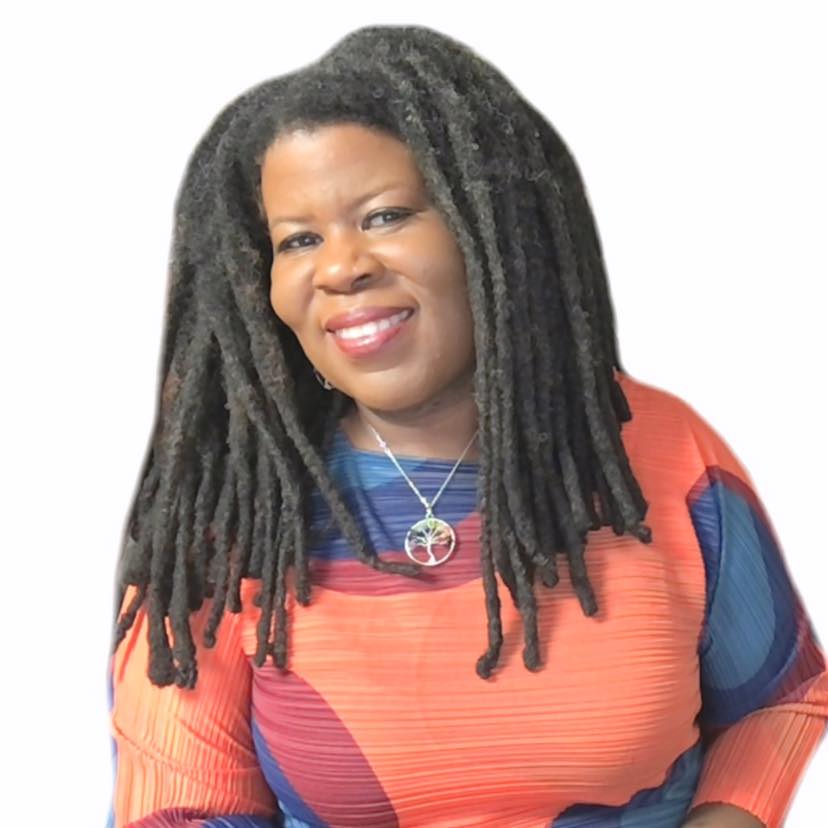
The Rev. Dr. Cheryl A. Lindsay, Minister for Worship and Theology (lindsayc@ucc.org), also serves a local church pastor, public theologian, and worship scholar-practitioner with a particular interest in the proclamation of the word in gathered communities. You’re invited to share your reflections on this text in the comments on our Facebook page: https://www.facebook.com/SermonSeeds.
A Bible study version of this reflection is at Weekly Seeds.