Sermon Seeds: Cut Branches
Sunday, March 29, 2026
Palm/Passion Sunday | Year A
(Liturgical Color: Violet or Red for Passion Sunday)
Lectionary Citations
Liturgy of the Psalms | Year A
Psalm 118:1-2, 19-29 • Matthew 21:1-11
https://lectionary.library.vanderbilt.edu/texts/?z=l&d=33&y=17134
Liturgy of the Passion | Year A
Isaiah 50:4-9a • Psalm 31:9-16 • Philippians 2:5-11 • Matthew 26:14-27:66 or Matthew 27:11-54
https://lectionary.library.vanderbilt.edu/texts/?z=l&d=34&y=17134
Focus Scripture: Matthew 21:1-11
Focus Theme: “Cut Branches”
Series: Tested. Opened. Naked. (Click here for the series overview.)
Reflection
By Cheryl A. Lindsay
Several days a week, I drive past a home that has a significant part of a massive tree fallen over its front lawn. Every time I see it, I wonder when they will cut the broken parts of the tree down. Almost immediately, I remember having a dead tree cut from my backyard years ago. The tree was extremely tall and was dead before I acquired the property. I should have made its removal part of the purchase agreement, but regrettably, I did not. My lawn care provider, who was a friend of my family, offered to cut it down for a ridiculously low amount. When he removed the tree, I was away, but a neighbor was there to witness it. He cut it down by hand and by himself, and she told me she stood nervously at her door with a phone in her hand and prayers on her lips as she was concerned he would plummet from its heights. Afterward, I felt relieved that he was safe and that the tree, which was a potential hazard, had been cut.
There are other reasons to cut branches when a tree or other plant is alive. The overall plant may be alive but some branches have died and need to be pruned for the remaining plant to flourish. Sometimes, they encroach on passageways and need to be trimmed. Routinely, branches are cut to keep them from interfering with power lines. Cutting of trees may make room for construction projects or for replacing one plant, bush, or tree with another.
In the gospel reading, the cutting of branches plays a significant ceremonial, rather than functional, role. The cuttings, along with cloaks from the onlookers in the crowd, will form the processional route leading Jesus into Jerusalem.
An ancient hearer or reader would recognize the well-established pattern of entrance processions in the Gospel accounts of Jesus’ entry into Jerusalem, such as Alexander the Great’s entrance into Jerusalem….
Paul Brooks Duff summarizes the characteristic elements of an entrance procession:
1. The conqueror/ruler is escorted into the city by the citizenry or the army of the conqueror.
2. The procession is accompanied by hymns and/or acclamations.
3. Various elements in the procession . . . symbolically depict the authority of the ruler.
4. The entrance is followed by a ritual of appropriation, such as sacrifice, which takes place in the temple, whereby the ruler symbolically appropriates the city.
Similarly, (1) Jesus is escorted into the city by the crowd, which (2) chants the traditional psalm of ascent, Ps 118. (3) The quotations proclaim Jesus as the Son of David. (4) In the Synoptic Gospels, Jesus’ demonstration in the temple (21:12–17) follows his entry into the city.
There is a second version of a royal entry, however. The primary background for understanding Jesus’ entrance in Matthew is Jewish, as signaled by the quotation of Ps 118.
R. Alan Culpepper
In Jacob’s blessing upon his descendants and in King David’s designation of Solomon as his royal successor, both pronouncements reference a processional with the new ruler riding a similar animal (i.e. foal, mule.) The cultural and historical significance of Jesus’ processional would be recognized by students of The Law and those who had recounted Psalm 118 in worship.
Much of what happened in this text followed the dictates of Jesus who sends an advance crew into a village to retrieve a donkey and colt. All four gospel writers recount this story. Matthew’s account alone has the addition of the donkey.
The presence of the colt’s mother may also foreshadow Mary’s continued presence with Jesus on another journey he will undertake within days of this event although Matthew does not identify her presence at the cross or as an observer from a distance. This is consistent with Matthew’s singular emphasis on Joseph in the birth narrative, especially the genealogy of Jesus, with the effect of diminishing Mary’s role as instrumentational. In contrast to Luke’s depiction of Mary as prophet and mother, Matthew’s Mary is relegated to being the birth mother of Jesus, and she, like Joseph, is absent from the events of Holy Week. Yet, the donkey has a place.
Notable also is the nonhuman participation in this ceremony. Matthew indicates that it is a donkey and her colt who participate in this process, leading to the somewhat humorous portrait of Jesus riding both animals (Mt 21:7). The point, though, is that an untrained colt is involved in this process and allows Jesus to ride. While Mark 11:2 explicitly states that the colt has never been ridden, in Matthew it is the presence of the colt’s mother that indicates that the colt has not yet been trained. As the community of creation is full of beings with agency, the mother and colt willingly participate with Jesus to provide him his ride.
H. Daniel Zacharias
The addition of the donkey may also serve to link the procession of Jesus into Jerusalem with the promised king of Zechariah 9:9:
Rejoice greatly, O daughter Zion!
Shout aloud, O daughter Jerusalem!
See, your king comes to you;
triumphant and victorious is he,
humble and riding on a donkey,
on a colt, the foal of a donkey.
That ruler will secure a victory of peace where his strength will be realized through dismantling the tools of war not crushing people. Alongside that rule, the Holy One will reaffirm the covenant and offer liberation, restoration, and protection as well as goodness and beauty. Again, the reference is intentional for Matthew, which is the only one of the synoptic accounts to quote Zechariah. John’s narrative includes it but almost as a continuation of the quote from Psalm 118, which all four contain. For Matthew, linkages to Messianic promise prove crucial to the progression toward the climax of the Jesus story. Further, like John, Matthew positions kingship with humility. The distinction is that John’s account, like his full narrative, emphasizes the humble divinity of Christ, Matthew focuses on the humble Son of David, whose identity characterizes Jesus’ actions and interactions throughout the Matthean gospel.
In deliberately presenting himself before Jerusalem as its messianic king, Jesus has chosen an OT model which subverts any popular militaristic idea of kingship. The meek, peaceful donkey-rider of Zech. 9:9 is not a potential leader of an anti-Roman insurrection. In 20:25-28 Jesus has spoken of a type of leadership which is completely opposed to the world’s notions of kingship and authority, and now he models it in the “meekness” of his royal processional to the city.
Richard F. France
Another reason to cut a branch is to start a new plant. While many plants, shrubs, and trees grow from seed, a quicker way to start a new plant is to cut an established branch and plant it directly into soil.
During that triumphal entry, Jesus had given instructions, but this part occurs as spontaneous response. Some bystanders removed their cloaks and placed them on the ground as a sign of honor and recognition of the sovereignty of Jesus. Yet, there were some in the crowd who turned not to the trappings of human creation but toward the majesty of God’s creation and the possibility of co-creation and started clipping from the established. They cut down branches and gave them a new position that would allow Jesus, on his claimed colt, to walk over them and facilitate them taking root and finding new life in a new place.
Branches do not die when they are cut. They die when they are not replanted in fertile soil, when new roots fail to develop, and when they lack nurture and nourishment.
The triumphal entry reminds us that not everyone needed the torture on the cross or the glory of the empty tomb to perceive and proclaim the sovereignty and transformative victory of Jesus. For some, they just needed to know that Jesus was coming their way.
The ending of the passage provides the final distinction among the four gospel accounts. When Jesus entered Jerusalem, not only the onlookers felt his impact. Matthew alone describes a city in turmoil “asking, ‘Who is this?'” Matthew’s Jesus is disruptive and agitates the status quo. Mark ends this story with Jesus going into the temple and looking around before continuing to Bethany with his disciples. In Luke, religious leaders want Jesus to subdue his own crowd, and Jesus declares that the rocks would take up the chorus. In John, the religious leaders speak to each other, rather than to the crowd or disciples, and bemoan his ascendant influence. But, in Matthew, the passage ends with the crowd declaring the name of Jesus from Nazareth in Galilee, the Son of David.
Later, Jesus will become a seed buried in a tomb. During this processional, however, he reigns over the promised hope, future, and vitality of cut branches.
Reflection from Voices of People of African Descent
The 33rd General Synod adopted a Resolution to Recognize the United Nations International Decade for People of African Descent (2015-2024). As part of its implementation, Sermon and Weekly Seeds offers Reflection from Voices of People of African Descent related to the season or overall theme for additional consideration in sermon preparation and for individual and congregational study.
“A Hymn of Praise” (1902) by Katherine Davis Chapman Tillman
Oh, God, when days were dark indeed,
When we were fast in Slavery’s chain,
Thou then our parents’ prayers did heed
And helped us freedom to obtain.
And when adrift upon the world
A child race ‘mid the great and strong,
Thy banner o’er was unfurled
And gently were we led along.
Help us to e’er remember Thee
And e’er to endless homage pay
For all the great prosperity
Enjoyed by our race to-day.
For Further Reflection
“Do not take a refuge to the close rotten branches during drowning attempt to reach to the solid ones even if they are far.” ― Kamaran Ihsan Salih
“The bare branches were silvered with frost. The berries of the holly tree looked white with rime. Old Marie said that all holly berries had once been white, but that the crown of thorns had been made of holly, and the berries had turned red when touched with Jesus’s blood. She had a story to explain everything, Old Marie.”― Kate Forsyth
“And though our roots belong to the same tree, our branches have grown in different directions.” ― Suzy Kassem
Works Cited
France, Richard F. The Gospel of Matthew: NICNT. Grand Rapids: Eerdmans, 2007.
Zacharias, H. Daniel “The Gospel of Matthew.” Esau McCaulley, Ed et all. The New Testament in Color: A Multiethnic Bible Commentary. Downers Grove: IVP Academic, 2024.
Culpepper, R. Alan. Matthew: A Commentary. Louisville: Westminster John Knox Press, 2021.
Suggested Congregational Response to the Reflection
During the Season of Lent, reflect and discern as a community the tangible acts of liberation available as a response to communal events and realities and commit to realizing those acts within the season. Love Knows No Borders is a valuable new UCC resource to consult.
Worship Ways Liturgical Resources
https://www.ucc.org/worship-way/palm-sunday-march-29/
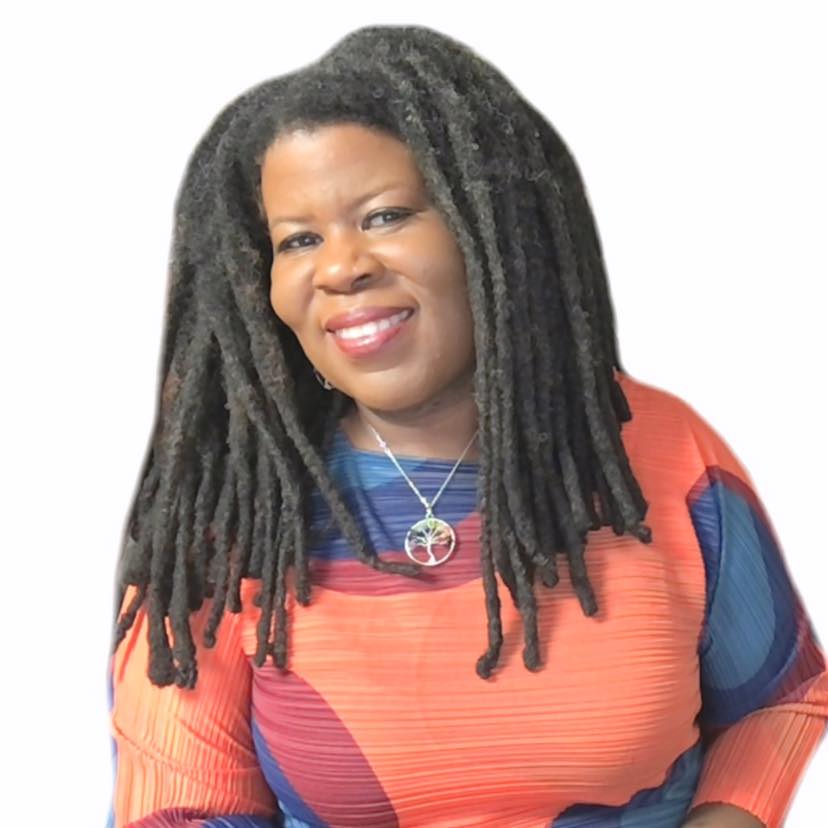
The Rev. Dr. Cheryl A. Lindsay, Minister for Worship and Theology (lindsayc@ucc.org), also serves a local church pastor, public theologian, and worship scholar-practitioner with a particular interest in the proclamation of the word in gathered communities. You’re invited to share your reflections on this text in the comments on our Facebook page: https://www.facebook.com/SermonSeeds.
A Bible study version of this reflection is at Weekly Seeds.