Sermon Seeds: Comfort and Agony
Sunday, September 28, 2025
Sixteenth Sunday after Pentecost| Year C
(Liturgical Color: Green)
Lectionary Citations
Jeremiah 32:1-3a, 6-15 and Psalm 91:1-6, 14-16 • Amos 6:1a, 4-7 and Psalm 146 • 1 Timothy 6:6-19 • Luke 16:19-31
https://lectionary.library.vanderbilt.edu/texts/?z=p&d=77&y=384
Focus Scripture: Luke 16:19-31
Focus Theme: Comfort and Agony
Series: Raise Her Voice: Seek After God (Click here for the series overview.)
Reflection
By Cheryl A. Lindsay
Exercises involving role reversal can transform a life. Or, they can at least make one think, understand, and empathize with another’s condition. Sometimes, reversing roles can lead to admiration and astonishment such as when expecting non-birthing parents wear those contraptions that mimic some pregnancy conditions, such as weight gain, back pain, and bladder pressure. It does not give the whole experience, and even the temporary nature of opting in and out may diminish the overall experience. Still, it enables the non-birthing parent to gain a greater understanding of their partner’s struggle. Other role reversals include job swapping or even life swapping.
I remember watching an episode of the television program, Wife Swap. If you are not familiar with the program, this was not about changing relationship partners. The idea was that wives would switch families, and often dramatically different life circumstances, for a week. I remember that first pair of couples involved a rural family on one side and a cosmopolitan one on the other. The first days for both couples were more than a culture shock. But the rich socialite wife and the rural farming husband were able to come to an understanding. See, she refused to do all of the farming wife’s chores, which led the husband to take up the things he felt were necessary for his family. That ultimately led him to realize how much his wife did for their household. Once the socialite saw his effort, she joined in, and the two ended the experiment as friends.
The socialite husband and the rural farming wife had a different story. There were not jobs to do but an image to uphold. That husband did not demand that wife do certain things; rather, he demeaned her for acting in a way that did not meet his expectations but was authentic for her. Even more unfortunately, he encouraged his children to approach her with the same level of disrespect. The reunion episode illustrated the contrast between the swapped pair who gained understanding and appreciation in their time together and the pair who could not wait to never encounter one another again.
How would the gospel story be different if the rich man had ever tried to understand the life condition of Lazarus—not just in life but also after his death?
The entitlement astounds, and yet the story resonates with credibility. A rich man lives a decadent life unaware and uncaring about a destitute man who lives at his gate. The rich man lacks compassion to such a degree that he could not even allow the man to eat his table scraps. The poor man dies, presumably from the effects of poverty—insufficient health care and malnutrition. In his death, the poor man’s suffering finally ends. The rich man also dies, and his suffering begins. Now, the rich man finally wants to interact with Lazarus, but for his benefit and to service him. The rich man does not come to himself and repent as he realizes he should have been kinder to Lazarus in life and now wants to make things right in death. No, the rich man sees an opportunity to use Lazarus, who finally has something the rich man values and wants for himself–relief from suffering.
Unlike the two preceding parables (15:11–32; 16:1–8a), this one exhibits not scattering of property (15:13; 16:1) but focused concentration and preservation of wealth, and strategic use of it, through lavish hospitality presumably restricted to elite peers, to maintain social prestige—a way of life already debunked by Jesus (6:27–36; 14:12–24). But where diminution of property has earned a gracious response and admits of redemptive possibilities (evident in the responses of father and rich master, respectively, in 15:20–24; 16:8), the use of wealth to serve the interests and sustain the position of the wealthy, to the neglect of the needy near one at the gate, elicits a harsh and unforgiving response, surpassing even that greeting the rich farmer of 12:16–20. The result is a dramatic and extreme role reversal.
John T. Carroll
There is something beyond presumptuous about the rich man living a form of heaven on earth while watching Lazarus navigate hell on earth and making no effort to alleviate his suffering. It was within the rich man’s power, agency, and means to so do with ease. The man who dined sumptuously surely had room for another seat at his table. It would not have cost him much. After all, Lazarus would have been satisfied with crumbs. But even that was too much to give for someone who clearly, in life, never had enough.
The rich man might have been well resourced materially but lived a spiritually deficient and bankrupt life. Finding himself in Hades, the rich man recognizes Lazarus. This time, the man is not by a gate surrounded only by dogs; he companions with Abraham, recipient of an everlasting covenantal promise of God’s abiding presence. The roles have more than reversed. Who is in need of comfort now? Who could benefit from compassion? The rich man appeals to Abraham instead of Lazarus directly. Even under their new statused positions, the rich man has no respect for the personhood of Lazarus. Abraham remains unmoved and rebukes the rich man. Seemingly undaunted, the rich man appeals for mercy for his brothers. Again, he wants Lazarus to do his bidding, but Abraham holds firm and disputes the idea that the brothers would be stirred to repentance based on an encounter with Lazarus.
After all, the rich man still has not discerned the error of his ways. His objective is to get out of hell for himself when the way of the Law and the Prophets is to repudiate hellish ways on earth.
The manner in which we live bears consequences that death does not erase. As Robert L. Brawley states, “The rich man and Lazarus is hardly about future judgment.” Justice is meant for this life. The time to repent for the rich man was any one of the occasions he noticed Lazarus at the gate in misery. He could have housed him, fed him, ensured he had care and the resources necessary for a full life. He knew he was there but did not want to interrupt his decadent life to allow Lazarus to consume what he likely threw away. The chasm that Abraham mentioned was not enacted against him but erected by him and his attachment and veneration of his riches over everything else. This man is the lead character in the story but is the only one without a name because his identity is entirely encapsulated in being rich. Was it worth the cost?
The separation between these two men, while extreme, is neither inevitable nor necessary and could have been bridged by the initiative of the rich man to open his gate and extend a generous hand. But this never happened, even though their acquaintance has a history—the rich man knows Lazarus’s name (v. 24). The “gate,” which should be a public space for rendering justice, particularly compassionate justice for the vulnerable (e.g., Amos 5:12, 15; cf. Green 609), has become a site of dehumanizing injustice. Verse 22 forms a pivot in the action, as the deaths of the two men begin to reverse their life paths. While the rich man receives the honor of burial, the poor man is accorded the greater honor (though, the silence implies, likely unburied) of being ushered by angels to enjoy the company of the patriarch Abraham.
John T. Carroll
Their status has more than reversed. As John T. Carroll further notes, “The parable enacts the role reversal Jesus has earlier announced with his beatitudes for the poor and hungry and corresponding woes for the rich and well-nourished (6:20–21, 24–25), which was itself a reprise of the prophetic vision at the heart of the Magnificat (1:51–53).” Fulfilling the prediction of his prophetic mother, Mary, Jesus confronts the religious and societal elite with a word of caution and potential condemnation. Hearing these words, they likely placed their sympathies with the rich man who faces eternal suffering for earthly selfishness, but to reduce the rich man’s offense in that way diminishes the lesson Jesus imparts. The rich man, agonized in Hades, still does not get it. He remains selfish and self-centered. He not only still has a high tolerance for Lazarus’ suffering, he wants Lazarus to join in his suffering in a way he never attempted when he had the opportunity to alleviate or eradicate Lazarus’ plight.
All too often, marginalized communities are expected to bear the uneven and unequal burden of compassion and generosity for the comfort of those already living in comfort. Preservation of the comfort of the privileged allows more injustice to occur than pure evil. At no point does the story suggest the rich man caused Lazarus to suffer initially. Yet, his inaction allowed it to continue. As Martin Luther King, Jr. declared, “In the end, we will remember not the words of our enemies, but the silence of our friends.” Silence has deadly consequences. Inaction allows evil to flourish, proliferate, and reign. As noted in the Talmud, “Do not be daunted by the enormity of the world’s grief. Do justly now, love mercy now, walk humbly now. You are not obligated to complete the work, but neither are you free to abandon it.”
The antidote to this cautionary tale is not for mercy and compassion in the afterlife; it’s for solidarity today. Jesus calls us to live in mutuality with one another, sharing God’s abundance, and connecting our flourishing with our siblings in humanity. Pursuing justice and righteousness rather than material accumulation will provide comfort and alleviate agony for all. This is the holy and tangible work of participating in the kindom and hope for this world.
Reflection from Voices of People of African Descent
The 33rd General Synod adopted a Resolution to Recognize the United Nations International Decade for People of African Descent (2015-2024). As part of its implementation, Sermon and Weekly Seeds offers Reflection from Voices of People of African Descent related to the season or overall theme for additional consideration in sermon preparation and for individual and congregational study.
“The Hill We Climb” (excerpt) – Amanda Gorman
When day comes we ask ourselves,
where can we find light in this never-ending shade?
The loss we carry,
a sea we must wade
We’ve braved the belly of the beast
We’ve learned that quiet isn’t always peace
And the norms and notions
of what just is
Isn’t always just-ice
And yet the dawn is ours
before we knew it
Somehow we do it
Somehow we’ve weathered and witnessed
a nation that isn’t broken
but simply unfinished
We the successors of a country and a time
Where a skinny Black girl
descended from slaves and raised by a single mother
can dream of becoming president
only to find herself reciting for one
And yes we are far from polished
far from pristine
but that doesn’t mean we are
striving to form a union that is perfect
We are striving to forge a union with purpose
To compose a country committed to all cultures, colors, characters and
conditions of man
And so we lift our gazes not to what stands between us
but what stands before us
We close the divide because we know, to put our future first,
we must first put our differences aside
We lay down our arms
so we can reach out our arms
to one another
We seek harm to none and harmony for all
Let the globe, if nothing else, say this is true:
That even as we grieved, we grew
That even as we hurt, we hoped
That even as we tired, we tried
That we’ll forever be tied together, victorious
Not because we will never again know defeat
but because we will never again sow division
For Further Reflection
“Truly there are different kinds of pain. But the most agonizing is the pain of regret, for which there is no lasting relief and no remedy.” ― Richelle E. Goodrich
“Some pain has no relief,it can only be sealed
You can grasp the wound to feel the scar unhealed.” ― Munia Khan
“Of pain you could wish only one thing: that it should stop. Nothing in the world was so bad as physical pain. In the face of pain there are no heroes.” ― George Orwell
Works Cited
Brawley, Robert L. “Luke.” Gale A. Yee, Ed. Fortress Commentary on the Bible: Two Volume Set. Minneapolis: Fortress Press, 2014.
Carroll, John T. Luke. Louisville: Westminster John Knox Press, 2012.
Suggested Congregational Response to the Reflection
During this series, Raise Her Voice: Seek After God, in the season after Pentecost, we encourage the local church to engage in spiritual practices to support faith formation and ministry engagement. This week, collectively discern how the pursuit of comfort has impacted your public witness and ministry and resolve to change.
Worship Ways Liturgical Resources
https://www.ucc.org/worship-way/after-pentecost-16c-september-28/
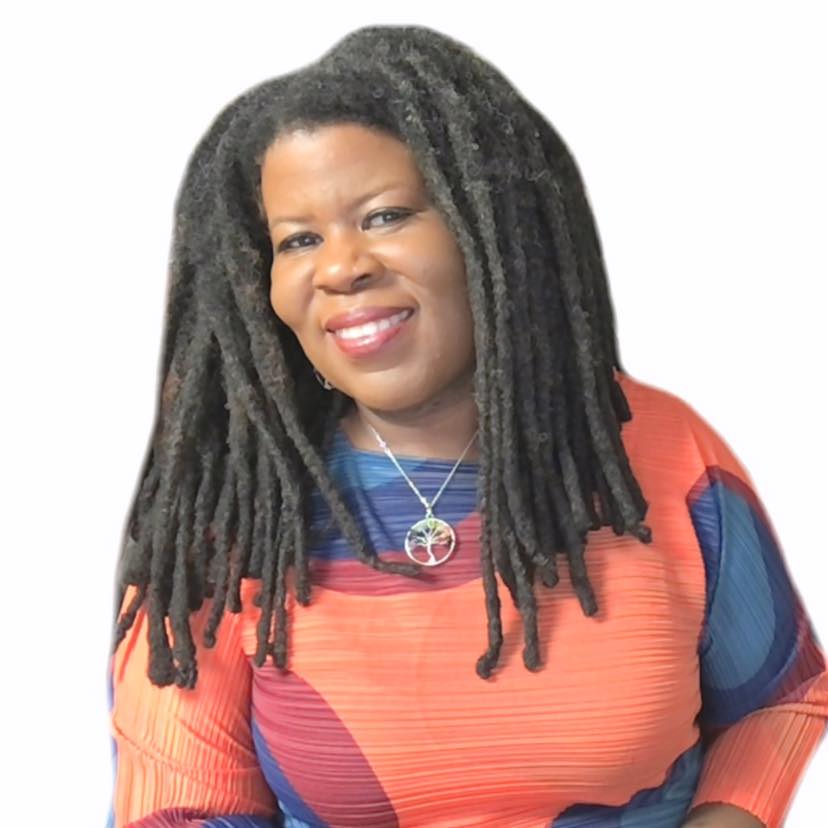
The Rev. Dr. Cheryl A. Lindsay, Minister for Worship and Theology (lindsayc@ucc.org), also serves a local church pastor, public theologian, and worship scholar-practitioner with a particular interest in the proclamation of the word in gathered communities. You’re invited to share your reflections on this text in the comments on our Facebook page: https://www.facebook.com/SermonSeeds.
A Bible study version of this reflection is at Weekly Seeds.