Liberating Women
There is a history of women’s movements in the United States and around the world. Over the years, there has been the quest for women to experience the fullness of civil rights and human rights. Voter rights were the focus of the Women’s Suffrage Movement in the late nineteenth and early twentieth centuries. Then there were strategies that brought about the change that was needed with the passage of the 19th amendment: The right of citizens of the United States to vote shall not be denied or abridged by the United States or by any State on account of sex. The right to vote was one of many attempts to address the social inequities experienced.
The Equal Rights Amendment (ERA) which was first proposed in 1923 to guarantee equality of rights under the law for all persons regardless of sex has still not been ratified by all states, prompting Congresswoman Ayanna Pressley to introduce H.J Res. 80 to the 119th Congress on March 24, 2025. The joint resolution calls for establishing the ratification of the ERA, notwithstanding the time limit placed on the amendment in 1972. The movement for equal rights for women continues well into the twenty-first century, with that historic desire for change colliding with the attempts to rescind the rights of women in these days.
The current administration has actively rolled back the rights of women by centuries. This has been accomplished through Executive Orders, funding cuts, and attitude. The blatant disrespect for women is a constant theme coming from the White House and the current administration, with the on-going support of traditional gender roles promoted and entrenched in conservative Christian rhetoric. The rights of women continue to be of importance in these days along with the need to protect women from rape and violence.
As arrests and resignations continue to impact individuals implicated in the Epstein files, the abuse of women and the stories of victims are being heard on the edges of the demands for transparency and unredacted files. Missing is the attention to the abuse of women and girls and the governmental willingness to hold accountabilities for the exploitation heard in the stories of those trafficked, used, and dismissed by people with wealth, means and a predilection for living above the law. The evasive maneuvers that continue to suppress the criminality of activities is also vilifying and dismissing those whose lives were affected – including underage girls.
The Epstein files come on the heels of the #MeToo movement with its attention to the voices and stories of survivors of sexual abuse, sexual harassment and rape culture. The movement emerged in 2006 and stayed in the headlines when multiple women in the film and entertainment industries told their stories and exposed their experiences of sexual violence and manipulation.
While women’s rights need to be supported by legislation, it is not enough to point to legislation when the law is not upheld, and impunity is the currency used by those with wealth, power, and political influence. The power of the law must also protect those who are most vulnerable.
As people of faith, our commitment to justice must include our willingness to speak truth to the powers of the day. Our witness must also contend with the truth of the sexual violence that is within the church, violence that continues to erode the truth of the gospel and God’s love.
The church cannot be silent and watch from the sidelines as power skirts accountability. The church cannot shroud itself in silence and pretend that it has not played a part in silencing the voices of women, girls, men, boys and transgendered people who were raped, sexually assaulted, and sexually harassed by clergy and lay leaders. In supporting heteronormative and gender roles for years, the church and the Bible have been used to suppress the rights of women and girls.
Lent invites confession and repentance as a part of the journey to the cross. The church is complicit in its support of nationalism and a rape culture when it stands on the side of rapists and pedophiles over the truth of the gospel.
Content on ucc.org is copyrighted by the National Setting of the United Church of Christ and may be only shared according to the guidelines outlined here.
Related News
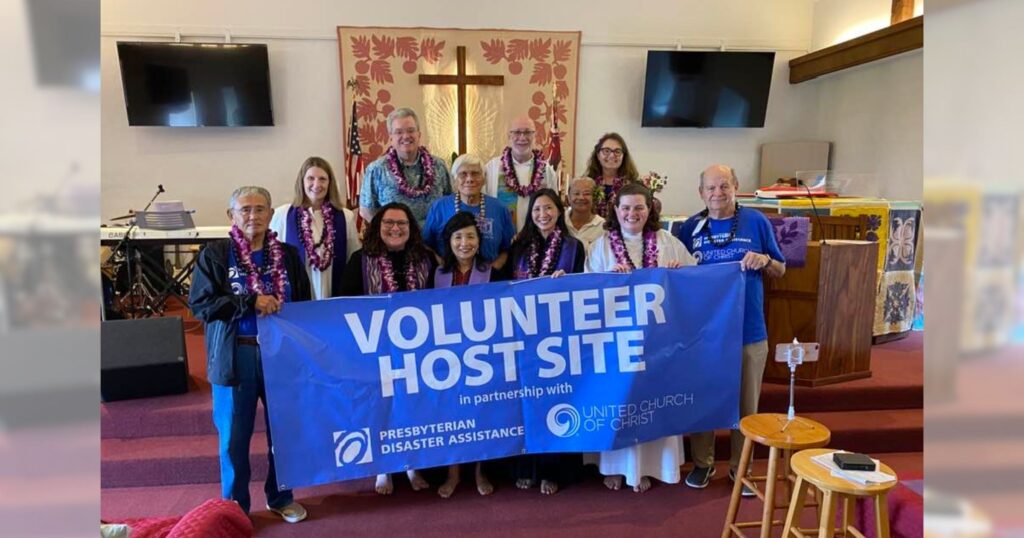
Hawaii UCC church welcomes volunteers into community’s work toward healing from wildfires
At Po’okela Church, new seats in the first rows of the sanctuary have a special purpose. The...
Read More
In The Weeds
Spring like weather is emerging across the United States. The winter months were challenging...
Read More
Women’s History Month and the Work of Justice
Women’s History Month is often framed as a time to look back, to remember the pioneers who...
Read More