Faithful Response Immigration gathering invited folks into relationship, action with speaker Ayman Soliman
The Rev. Irvin Heischman was just returning from a trip to Honduras where he was visiting two congregants who had been deported when he arrived at the Faithful Response Immigration Gathering held at Camp Christian.
West Charleston Church of the Brethren in Ohio, where Heischman is co-pastor, experienced the direct impact of ICE’s aggressive tactics when two congregants, Armando and Marlon, were detained. Though both men had followed the necessary immigration processes, they were held in prisons under “disturbing conditions” and deported by plane with shackles on their hands and feet, Heischman said.
Marlon’s family was told he could pursue due process while remaining detained, but it would have taken years. “He really didn’t have a choice but to agree to be deported and surrender all his rights,” Heischman said.
Heischman’s visit to Honduras, with support from his church, was to provide pastoral care and encouragement to Armando and Marlon, to deliver a love offering from the congregation, and to learn about his congregants’ lives after deportation. He described the immense pain and trauma Armando and Marlon expressed about treatment in detention, their forced migrations, and the separation from their families. Both have young children.
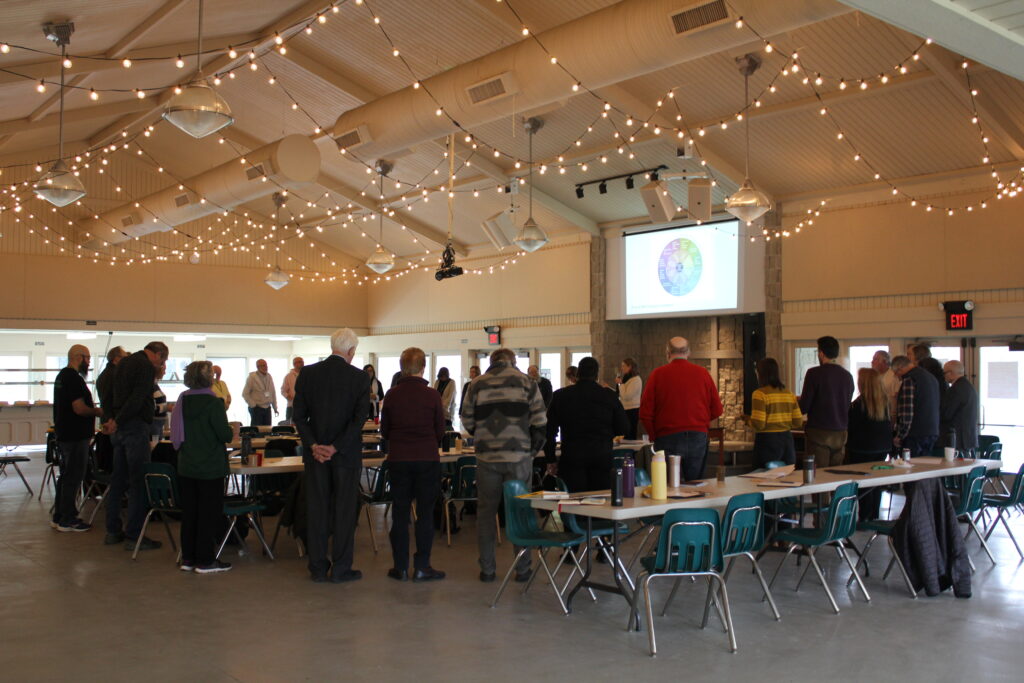
“I feel protective care because I love these folks so, so deeply, and it hurts to watch them going through this,” Heischman said. “I hope my trip helped them see in a more concrete way that they are not abandoned, they are not forgotten. Our government has rejected them, but they are not rejected by God or by us. They are important to us. Faith communities can represent in concrete ways the love of God who never abandons us under any circumstances.”
‘More of us are always needed’
This is one of many stories that people carried with them to attend the three-day Faithful Response Immigration Gathering that took place March 17-19 in Marysville, Ohio. The ecumenical and interfaith gathering was organized by leaders whose work centers on immigration justice from the United Church of Christ, Christian Church (Disciples of Christ), Church of the Brethren, and Mennonite Church USA.
“This gathering was born out of the idea that we really need each other and we really need to have strong relationships to respond to what’s happening to our immigrant neighbors,” said the Rev. Grace Kozak, associate director for Immigrant & Refugee Response at Week of Compassion. “We were able to bring people together, get them trained, and, most importantly, get them thinking about ‘How are we going to respond to this together?’ It’s not about what I can do, or my church, or even my denomination – it’s about how are we all doing this together?”
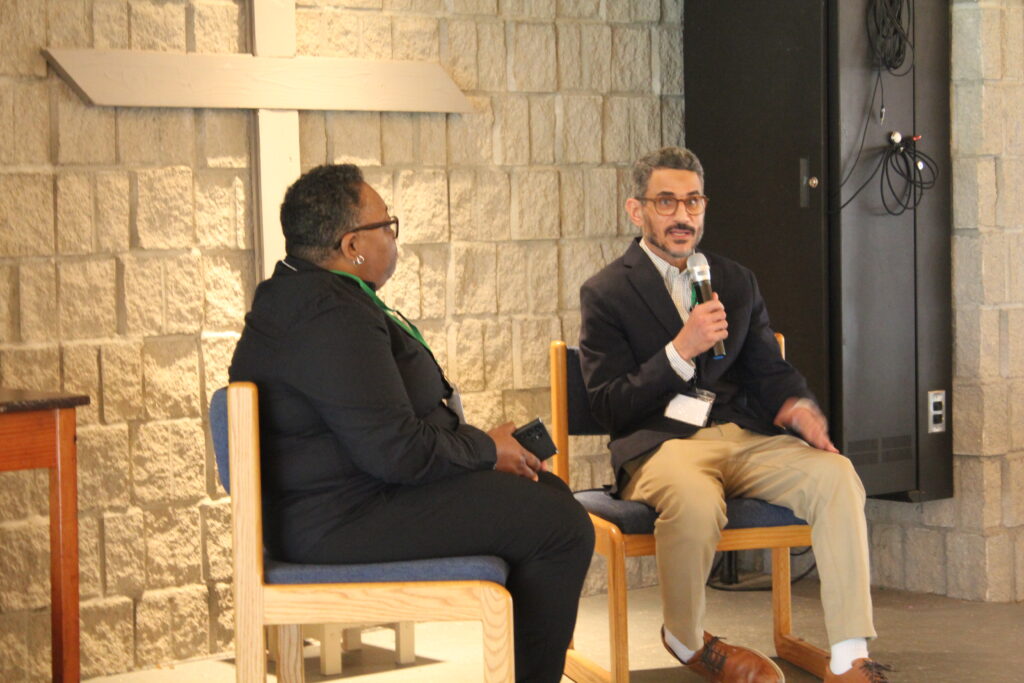
Megan Bergert, minister for UCC Refugee and Migration Services, said that in co-organizing the gathering, she carried an important pillar of organizing that was taught during the MARCH training of clergy and organizers in January: “More of us are always needed.”
“Movements for justice have to keep growing, and the circle of accompaniers for those who are marginalized, like migrants, should always be widening,” she said. “Coming together at this gathering allowed us to not only share information with each other, but to build toward the relationships and coalitions that are key to resisting authoritarian action.”
Fleeing Egpyt, detained in the U.S.
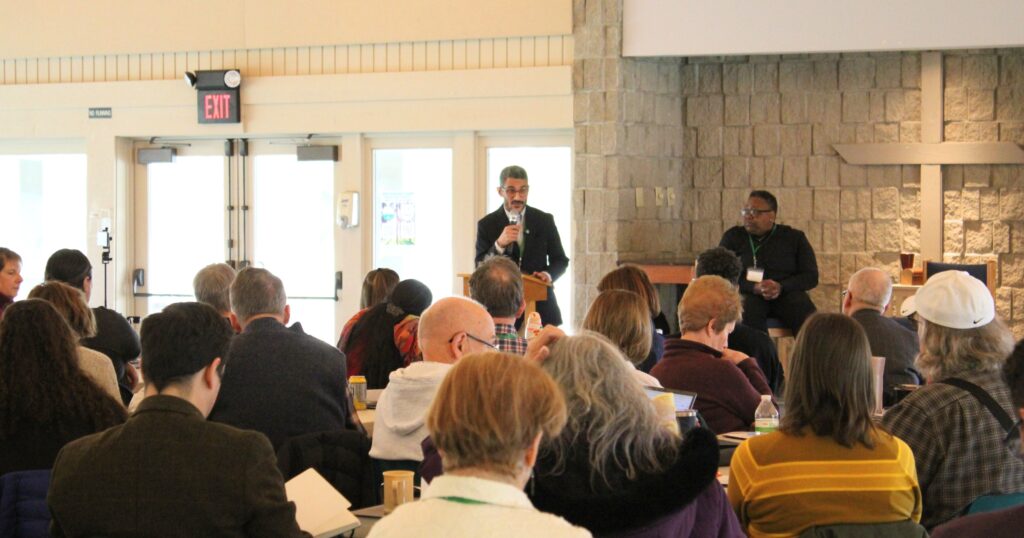
One highlight of the Faithful Response Gathering was keynote speaker, Iman Ayman Soliman.
Soliman became well-known in Ohio during a successful statewide campaign to free him from detention after his asylum status was abruptly terminated and he lost his job as a Cincinnati hospital chaplain.
Soliman shared his story of fleeing Egypt due to arrests and threats he experienced as a journalist, seeking political asylum in the United States, and how a regular immigration check-in resulted in 73 days of detainment.
“My experience at the Butler County Jail was a very, very terrible experience. I’ve been stripped of my asylum status, I’m getting deported to Egypt where I’m facing death, so for me the jail was not just a jail. It was a transitional period before I get killed,” he shared. Though he experienced torture in Egyptian prisons, he said, “I can confidently, without exaggeration, say that my experience at the Butler County Jail was far more traumatizing than my experience in Egypt.”
Soliman found deep faith that sustained him while in jail, he said. And he had the support of people of many faith traditions advocating on his behalf beyond the jail walls.
He received 760 letters while in jail, mostly from people he had never met, “which made a huge difference in my life,” he said. One letter from a Christian in Tennessee assured him that “‘since you are Egyptian like Moses, I’m sure God will save you in a miraculous way’ – which is exactly what happened to me,” Soliman recalled.
After press coverage and persistent public pressure, Soliman’s asylum status was reinstated, and he was released.
“People kept protesting and showing up. People of faith came together more than ever before,” he said. “I’ve been shown a lot of love so that I will feel loved to the last day of my life.”
The Rev. Lesley Jones, pastor of Truth and Covenant UCC in Cincinnati, led a conversation with Soliman following his talk.
Soliman shared that two of his chaplain colleagues who had advocated for him were fired, and Jones reflected, “In this work and in this space that you’re in, you have to make the decision – what are you willing to sacrifice? What are you willing to do? Because this is not work for the faint, the weak at heart, the squeamish. What we are experiencing is what has been the experience for many in America.”
Practicing lament, building relationships
The Faithful Response Gathering included spiritual practices, congregational safety planning, and resource tracks designed for both directly impacted churches and those seeking to be in solidarity with immigrants.
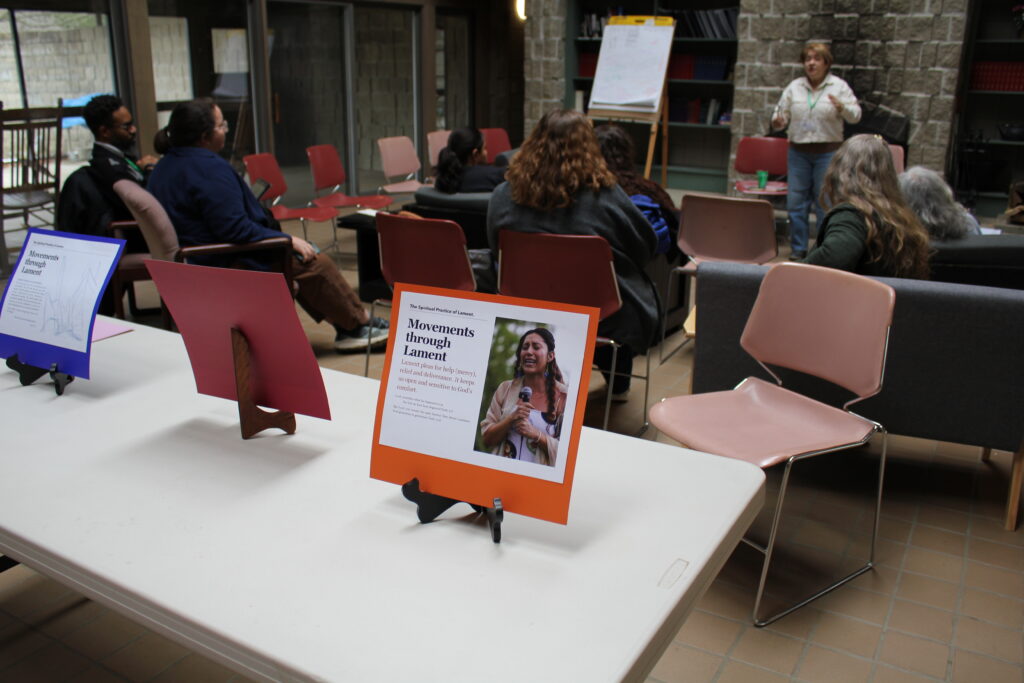
The Rev. Esther Robles, bridge pastor at First United Church Tampa, led a workshop about care for immigrant congregations. “For people who have already been active, they’re tired” and feeling it in their bodies, she said. She created space for people to acknowledge their wounds, pain, and loss. Such a practice of lament, she said, is needed to sustain hope.
“There is hope because by being in these spaces, you grab the energy of others who feel the same way, and they’re struggling with the same things, but they’re here, they’re present, and they want to be a blessing to their communities. So, the power of community is what will get us through and what will propel us to hope for something better that is hard to see, but it’s there, because we believe in a God who brings resurrection and abundant life,” she said.
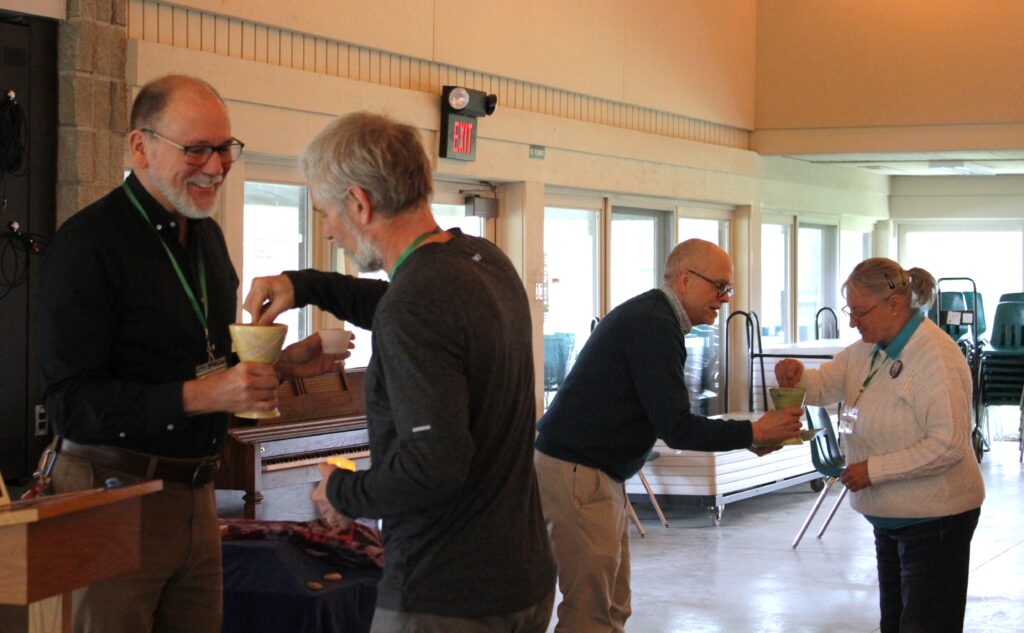
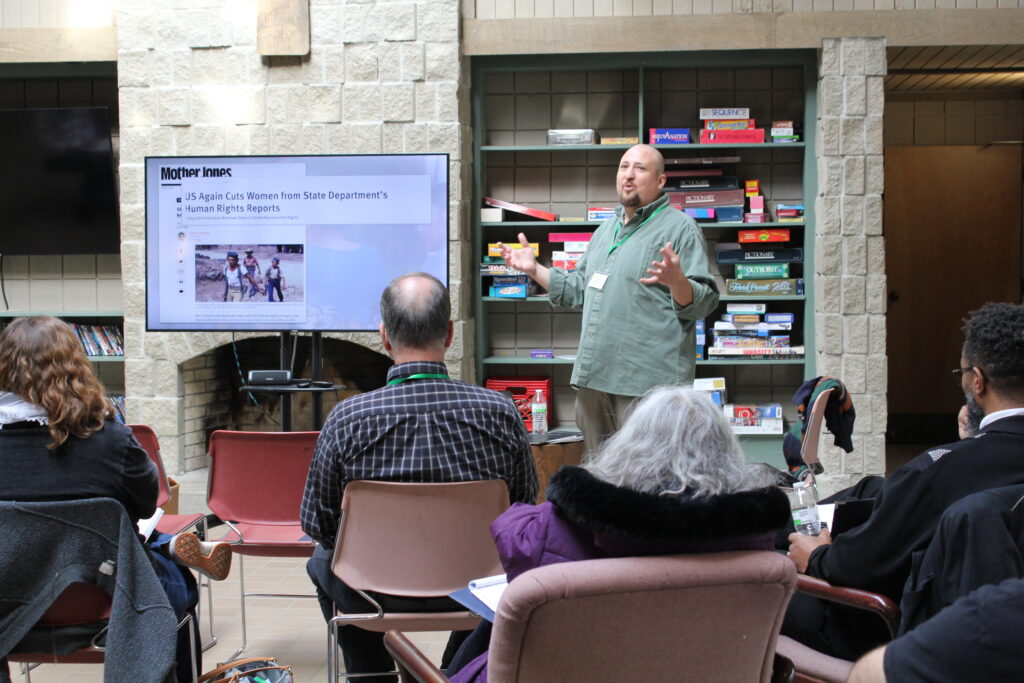
C Stonebraker-Martinez, co-director of InterReligious Task Force on Central America, offered guidance on congregational safety in response to ICE operating within communities.
“There’s a way for everyone to get involved. Start by learning. Start by talking to your neighbor,” Stonebraker-Martinez said. “If I hold all of my relationships, and you hold all of your relationships, then together we’ll be able to hold our communities and take responsibility for each other. We want to make sure that no one is disposed of in this world. We refuse to allow people to go uncared for, especially with these oppressive systems that are criminalizing, isolating, terrorizing, and just oppressing our communities, our neighbors, and our children.”
‘Together as people of faith’
The Faithful Response Gathering was part-retreat, part-conference, “which I think is exactly the kind of event that people need,” said the organizer on the Deportation Defense Response Team with Church of the Brethren. “People are hungry for training, resources, and tools to take with them, but also spiritual grounding and time away to gather with people face-to-face, away from devices. I am coming away from the gathering with new relationships, resources, deep gratitude for God’s presence among the group gathered, and renewed hope of what can be done together as people of faith if we stay connected to God and to one another.”
The Rev. David Long-Higgins, conference minister of the UCC Heartland Conference, offered music and a reflection at the gathering’s closing worship. The Heartland Conference co-sponsored the gathering in part through a UCC Global HOPE MIRA Grant.
“One of the things that I’ve been struck by is how love is made real when we show up, when we care, when we advocate, when we interrupt a narrative that demonizes folks and recovers the true beloved identity of every person,” Long-Higgins said. “This conference, for me, reminded us of the practical ways that we can do that.”
Content on ucc.org is copyrighted by the National Setting of the United Church of Christ and may be only shared according to the guidelines outlined here.
Related News
Faithful Response Immigration gathering invited folks into relationship, action with speaker Ayman Soliman
The Rev. Irvin Heischman was just returning from a trip to Honduras where he was visiting two...
Read More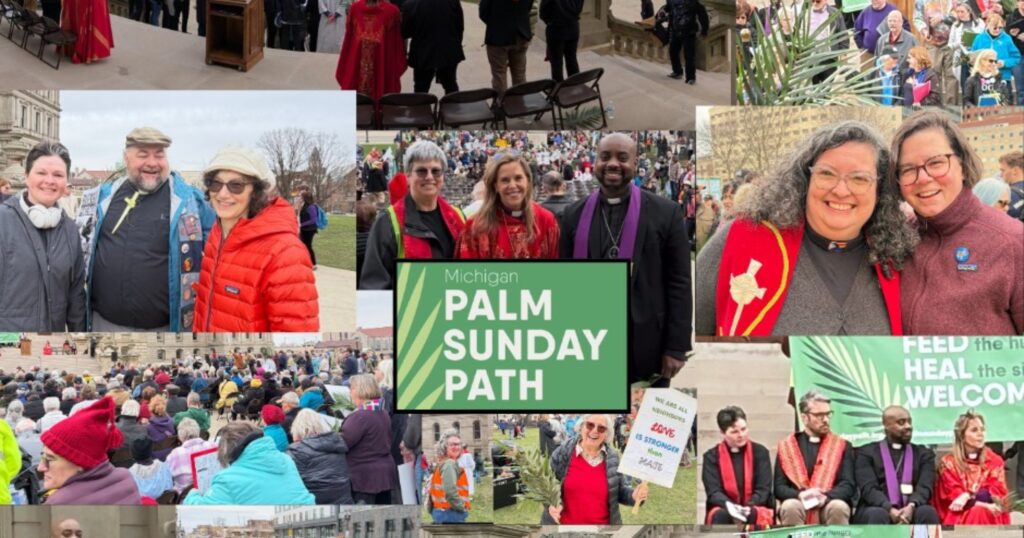
In Michigan and elsewhere, folks carried palms in the streets with calls to ‘feed the hungry, heal the sick, welcome the stranger’
On Palm Sunday, after churches participated in the annual practice of waving palms within...
Read More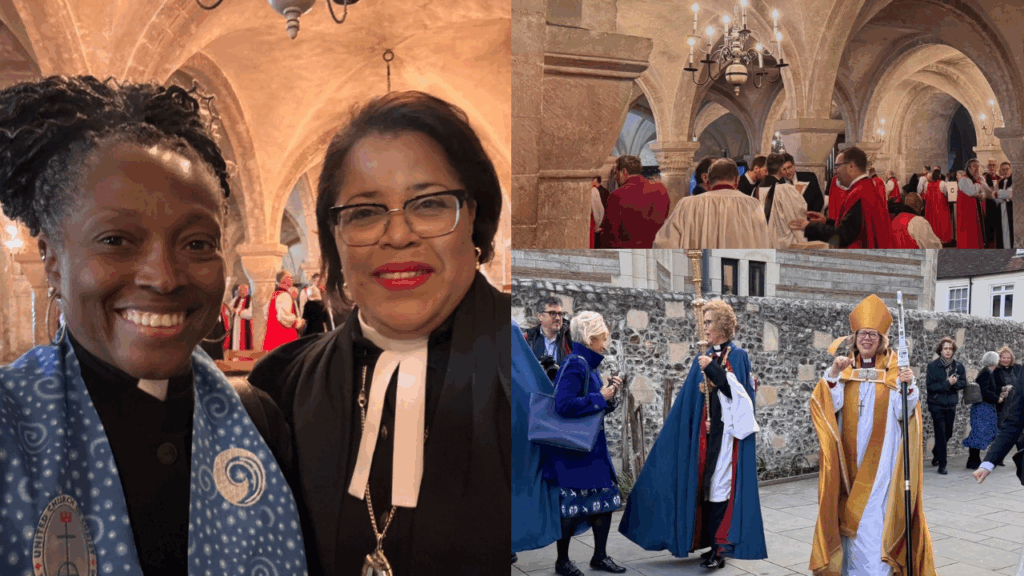
Women’s History Month comes to an epic conclusion
March, Women’s History Month, comes to an epic conclusion, with the groundbreaking...
Read More