Even Here, Even Now
The light shines in the darkness, and the darkness has not overcome it. – John 1:5 (NRSV)
The kitchen was quiet as I showed my four-year-old how to mix water into his paints, his small hand dragging a heavy stroke of cobalt across the paper. Then the headline flashed on my phone: a U.S. airstrike on an elementary school in Iran. One hundred and fifty children, gone.
I looked at my son’s stained fingers and felt a wave of nausea. How am I to sit here with my child, painting the sea, while other mothers are pulling their children from rubble? I found myself thinking: What is the point? What good is it for my child to know how to use watercolors when other children are being slaughtered with my tax dollars? In the face of such massive, state-sponsored cruelty, the beauty of the paint felt like a flimsy distraction.
Then I thought of Vedran Smailović. In 1992, after a mortar shell killed twenty-two people in a Sarajevo breadline, Smailović didn’t offer a policy paper or circulate an international petition. He was a cellist, so he put on his concert tuxedo, carried a plastic chair into the jagged crater, and played Albinoni’s Adagio in G minor. He played for twenty-two days—one day for every person killed in that line. Surrounded by senseless violence, he dared to proclaim a different reality. Beauty. Even here. Even now. Even in the midst of all the injustice and suffering. Beauty.
His music didn’t stop the shrapnel, but it did something more subversive: it refused to let the sound of mortars be the only song the city heard. And some historians believe the public reaction to Smailović’s music did much to hasten the end of that war.
It is so easy for “beauty” to become a platitude, a way to avoid the pain. But the theology of the cross suggests that God doesn’t look away; God enters the ruins. Beauty is not a replacement for advocacy or the hard work of justice. It doesn’t pay the debt of our complicity. But when we sing a hymn, write a poem, or even teach a child to paint, we are refusing to let violence colonize our imaginations. We are making a gutsy, theological claim that evil will not get the final word. Beauty does. Love does. Even when the world is at its ugliest, we belong to a God who is still creating.
Prayer
God of the Adagio, forgive us for the violence done in our name. Give us the courage to create beauty among the ruins, so our lives may ring out like a cello in a war zone. Amen.
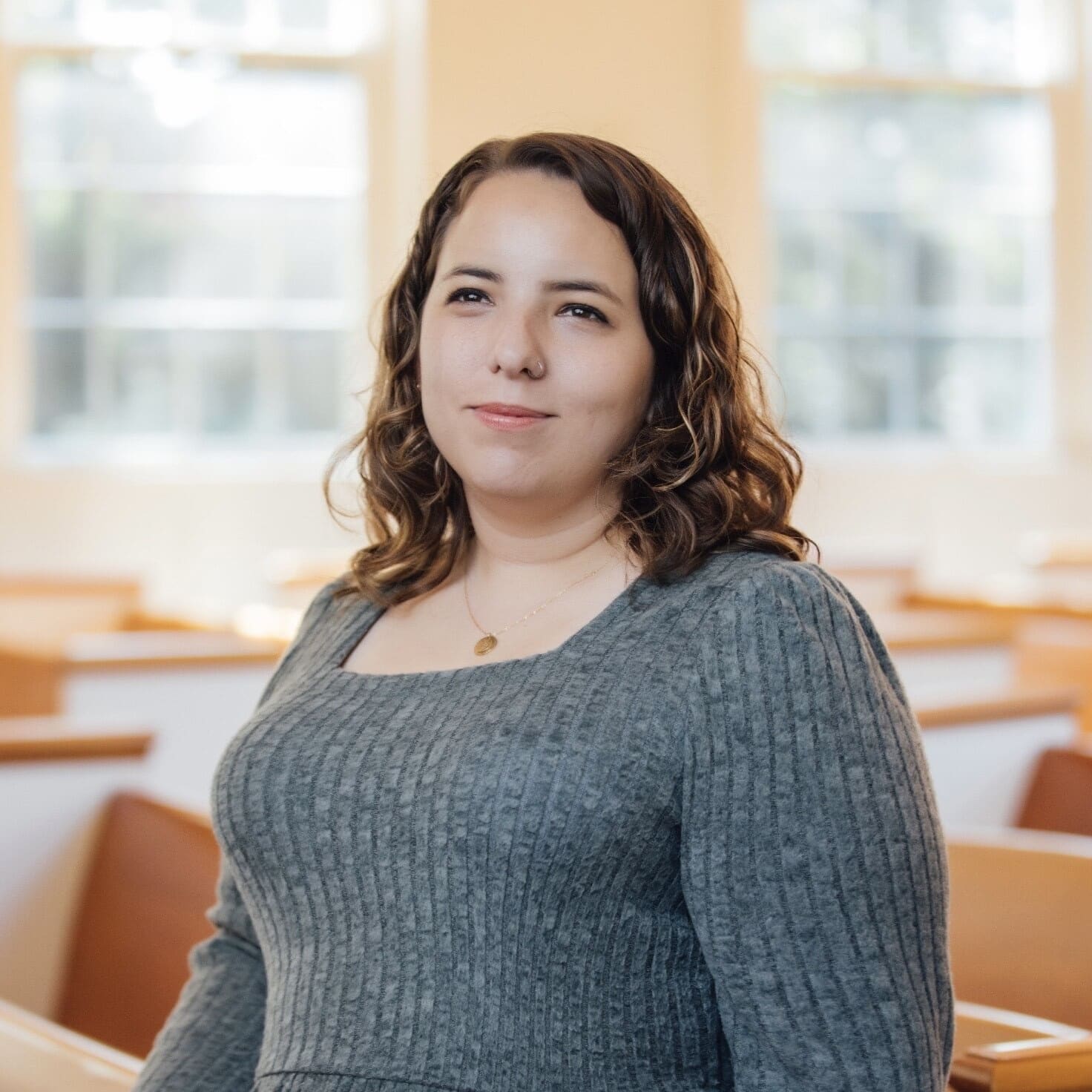 About the Author
Hannah Sachs is the Minister of Faith Formation at Rock Spring UCC in Arlington, Virginia.