A Day to Remember
The Rome Statute established the creation of the International Criminal Court, a supranational court, which was the first permanent, treaty-based court, created to prosecute individuals for the gravest crimes—genocide, war crimes, crimes against humanity, and aggression. Crimes against humanity refer to specific crimes committed in the context of a large-scale attack targeting civilians, regardless of their nationality. These crimes include murder, torture, sexual violence, enslavement, persecution, enforced disappearance, etc.
Crimes against humanity are in a category by themselves. The latest definition of crimes against humanity was made in the Rome Statute of the International Criminal Court, 17 July 1998. On that day, the Statute was adopted by a vote of 120 with 7 against and 21 abstentions. The seven against were: United States, People’s Republic of China, Israel, Iraq, Libya, Qatar and Yemen.
Annually, 25 March is observed as the International Day of Remembrance of the Victims of Slavery and the Transatlantic Slave Trade. It is a day set aside for reflection on the atrocities many have forgotten or choose to rewrite, and it is a time for remembering the millions of lives transported against their will through the Middle Passage of the Atlantic Ocean from the West African coast into the Americas.
In late 2006, the United Nations General Assembly (UNGA), through resolution 61/19, recognized that “the slave trade and slavery are among the worst violations of human rights in the history of humanity, bearing in mind particularly their scale and duration.” On 25 March 2026, almost 20 years later, UNGA adopted a resolution declaring the transatlantic slave trade the gravest crime against humanity.
The transatlantic trading of Africans began as early as the 15th century and ran through the 19th century. Four centuries of human trafficking, enslavement of people accompanied by murder, torture, sexual assault, violence, persecution and forced disappearance was finally acknowledged by some of the global bodies. On that day, 123 voted in favor. Three countries – Argentina, Israel and the United States – voted against. 52 abstained.
Once again, the United States voted against a UN resolution. Ahead of its vote, Ambassador Dan Negrea, US representative to the UN Economic and Social Council (ECOSOC), identified the text as “problematic”, further stating: the US “does not recognize a legal right to reparations for historical wrongs that were not illegal under international law at the time they occurred.” Abstentions included the United Kingdom as well as members from the European Union.
There is no denying that the enslavement of Africans occurred, although there are those who have attempted to erroneously reframe and deny 400 years of chattel slavery which contributed significantly to the Industrial Revolution and created the wealth amassed in many countries in Europe and the Americas.
For four centuries, seven European nations including the UK enslaved and trafficked more than 15 million Africans across the Atlantic. The scale of the chattel slavery was such that 18th and 19th-century abolitionists coined the term “crime against humanity” to describe it. Historians have also linked wealth from enslavement to mass industrialization in the west. This is the truth of our present – large scale crimes were committed against African people who were worked and used for free. The notion that the acknowledgement of these crimes should not occur because slavery as a system was legal at that time is itself an attempt to further dehumanize the enslaved and their descendants.
In this Lenten season, it is a time to reflect and repent on the systemic global and institutional complicity that allowed the prolonged acceptance of these crimes against humanity. This is an opportunity for the church to separate itself from the governments with which it has aligned itself and support this acknowledgement with loud and clear voice. The church was there with scripture, applying scripture and doctrine for the enslavement of people, while making room in the pews for enslavers, owners and sellers of people, rapists and thieves. Repentance has to be active and not passive, as the church wrestles through a moment in history that time will read as the church colluding in the trampling of human rights and negation of freedom.
While owning people was made legal, the conscience, morality and theological conviction of many supported and sustained the abolitionist movement, created paths for the enslaved to escape to freedom, and advocated for changes to the law. And the church was there, too. The church did justice and accompanied many to freedom, undertaking risk and defying the law to support theological conviction.
Reparatory justice is ahead. The conversations about what is owed has been divisive and coated in denial. Justice is not selective. The church is called to do justice. Instead, it has played its part in upholding the status quo. Here is another truth for Lenten reflection: no country with a legacy of enslavement, the trade in enslaved Africans and colonialism has fully confronted this past or addressed its impacts on the lives of Africans and people of African descent today. António Guterres, UN Secretary-General stated: “We can draw a straight line from the era of colonial exploitation to the social and economic inequalities of today.”
And, few churches have dealt with the legacy of enslavement, their part in the trade of enslaved Africans and colonialism. The church at large has not acknowledged or apologized – over 400 years later – as it too protects the wealth it amassed from the discussion of reparations which is more that quantification of repair for lives lost and humanity denied. A commitment to address the inequities of today must address the atrocities of the past.
A small step in the right direction: stop calling people slaves. They were enslaved – an action committed against them rather than an identity.
25 March. A day to remember. A people to be remembered. A call for repair – to change the future.
“Do justice, love mercy and walk humbly with God” is a calling for the ages. It is a call to do the right thing, at this right time.
Content on ucc.org is copyrighted by the National Setting of the United Church of Christ and may be only shared according to the guidelines outlined here.
Related News

A Day to Remember
The Rome Statute established the creation of the International Criminal Court, a supranational...
Read More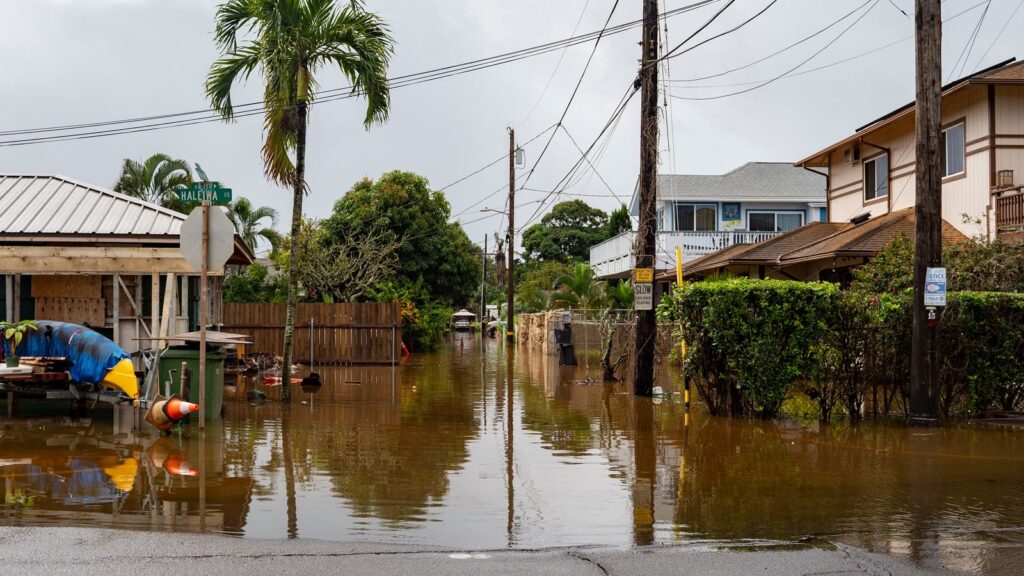
UCC issues appeal to support relief efforts as historic flooding continues to impact Hawaii
The United Church of Christ has issued an appeal to support those who’ve been impacted by...
Read More
Opening the poetic space in churches: UCC launches online poetry collective
From Genesis to Revelation, one-third of the Bible is filled with poetry, beckoning souls to...
Read More