Sermon Seeds: It Shall Be Provided
Sunday, June 28, 2026
Fifth Sunday after Pentecost| Year A
(Liturgical Color: Green)
Lectionary Citations
Genesis 22:1-14 and Psalm 13 • Jeremiah 28:5-9 and Psalm 89:1-4, 15-18 • Romans 6:12-23 • Matthew 10:40-42
https://lectionary.library.vanderbilt.edu/texts/?z=p&d=62&y=17134
Focus Scripture: Genesis 22:1-14
Focus Theme: It Shall Be Provided
Series: Faithful and Vital (Click here for the series overview.)
Reflection
By Cheryl A. Lindsay
Have you ever been encouraged to trust the process? Perhaps, you were the one with a vision that others could not perceive or a path that seemed to lead to nowhere yet you realized it offered an ideal destination. Trust challenges us to relinquish control, to act without full information, and to commit before comprehension. Trust requires evidence of trustworthiness on the part of the one requesting it and faith on the one giving it. And, trust can be a gift of honor and respect. It may be an investment in a relationship, a shared future, or a mutual goal. Trust involves risk-taking as there are, by definition, no guarantees that the trust given will be met with reciprocal honor, respect, risk, and accountability. Trust, therefore, often has to develop over time. It builds and grows in proportion to the relationship and in response to the risk-reward of trust given, received, and valued (or broken).
Trusting the process demands multi-layers and instances of trust building. Not only is one invited to trust the parties involved for good intentions, the process asks the participants to trust the individual stages, the ultimate outcome, and the route that moves the process from start to finish.
Years ago, I was returning from a conference that I used to attend annually. It was normally a relatively easy long-distance trip, and because I needed a car to get from my hotel to the conference site, I drove each year, which made me very familiar and comfortable with the route. On this particular return, GPS suggested what seemed to be an odd detour. When I observed the highway, there were no accidents or delays. I was well ahead of rush hour for the city I always planned to be through before 3 pm because of their dense traffic. So, I ignored GPS assuming that I knew better. (To be fair, this was before GPS alerted the driver of accidents or road delays on a routine basis.) It did not tell me there would be a delay or give an estimate of that delay. It did inform me that this suggested turn would add an hour to my trip, which I did not consider to be a favorable risk. Of course, I caught up with the stalled traffic within thirty minutes, and three hours later, I realized that GPS had information I did not have, whether it shared it with me or not. I will not say that I have never overruled my navigation system, but I have always paid attention when, mid-journey, it suddenly proposed an alternate route.
Life may often feel like a trip mapped out with expected landmarks and rest stops prior to reaching desired destinations such as educational achievements, career goals, family creation, home ownership, and travel bucket lists. Each of those destinations may have their own roadmaps and also belong to an entire life plan. Yet, with any significant journey, delays, detours, and distractions litter the path. Illness, competing commitments, lack of resources, and even unexpected opportunities may derail these plans temporarily or permanently.
In the Genesis account, Abraham and Sarah seemed to be positioned for their travels to become smooth. The text begins with “after these things.” While ambiguously stated, a perusal of Genesis 21 indicates that the stages leading up to this moment including the fulfilment of the promise and the removal of roadblocks. Sarah and Abraham welcomed their song Isaac. Hagar and Ishmael, surrogate and son, were sent away, and Abraham makes a covenant with Abimelech, which would seem to assure peace and prosperity for Abraham’s household while living in the land of the Philistines. Things appear to be doing well for Abraham. Then, the Holy One tests Abraham.
The birth account of Isaac in Genesis 21 has been so long in coming that it does appear to be anticlimactic when it finally comes to pass….The true consequentiality of Isaac’s birth is evident in Genesis 22, however. If the reader was not given a sense of the importance of Isaac in the account of his nativity, it is inescapable in the next chapter, as his life is put at risk by the command of God. Reading this, one might ponder what kind of God would test a faithful follower like this? How does this experience align itself with other key narratives, like that of Job, where YHWH tests a man faithful to a fault to determine the measure of his faith? These questions can introduce the notion of theodicy, or the justice of God, for they force us to attend to the fundamental question of why it is that “good” people endure “hardships” and whether there is some divine intentionality in such tests of endurance.
Rodney S. Sadler Jr.
When the Holy One enters into the covenant with Abram and Sarai, their names are changed to Abraham and Sarah, but that was a symbolic transformation which previewed the ultimate destination for them. The journey toward transformation was more fraught marked by repeated demonstrations of lack of trust. They were wanderers. In their journey, they had stays in Egypt (Genesis 12), which happens before the covenantal sign in Genesis 15 and in Gerar (Genesis 20). In both places, Abraham feared that the rulers of those territories would covet his wife and kill him to claim her as their own. Rather than trusting in God, Abraham convinces Sarah to pretend to be his sister and allow herself to be taken as a wife to the respective leader. Both rulers eventually find out their true relationship to their dismay and fear of the divine wrath that will be brought upon them and their people due to Abraham’s duplicity. While those stories may not be as widely studied, the misuse and abuse of Hagar and her son with Abraham, Ishmael, has been well documented as a departure from God’s plan and evidence of human striving and conniving over faithful trust in the Holy One’s process.
This moment, when the Holy One seems to demand an unimaginable sacrifice, provides an inconceivable test to a servant who has failed several times before. Maybe knowing Abraham so intimately compelled the Holy One to concoct a test so preposterous that Abraham would have no other option but to trust in the God of the Covenant to provide:
[Abraham] stops and says to his son, “God himself will provide the lamb for a burnt offering” (v. 8). This is the key verse of the narrative. It is simple and direct. There is God, there is to be a burnt offering, and there will be a lamb. The verb “provide” is the indispensable action. “Provide” is an unusual translation of the Hebrew “to see.” The sense is best rendered as the Latin pro-video: to see before, to see to, to see about. In spite of the dark demand, God himself will see to it. Providence means just this. Abraham trusts that the inscrutable test (v. 1) is not the last word. God will see to that. Isaac looks to his father, and Abraham looks to God. Abraham’s response, given in this decisive verse 8, comes from deep inside the mystery of faith…The human tendency is to break this tension. Either God tests or God provides, but not both. In bitterness and despair, those without hope see only the God who tests. In complacency and self-satisfaction, those who feel blessed see only the God who provides. This God is a great cosmic vending machine who spits out the good life in exchange for our tokens. It is a level-headed, businesslike, rational approach to religion which makes God a player in a market economy. But faith is not a business deal. It is not a means to an end. The hard work of faith is to embrace the tension. And this is what Abraham does at Moriah. This is what Jesus does at Gethsemane (Mark 14:36).
Celia B. Sinclair
And this is what the Holy One calls us to do. To embrace the tension is to risk disappointment and heartbreak. To embrace the tension is to potentially sacrifice what one holds dear. To embrace the tension is to take a journey when the turns are obscured and revealed stage by stage.
I now drive a different vehicle since that road trip mentioned above. It has a built-in navigation system. One drawback of it is that it only gives me the next turn. I can pull up the full projected trip on my phone, but the vehicle’s system (and display even if I use my phone’s system) only informs me of the next action to take. It forces me to anticipate the potential turns to follow and to proceed with uncertainty.
That is the journey of faith–embracing uncertainty while proceeding with hope and anticipation that whatever we need to reach our destination, with God, shall be provided.
Reflection from Voices of People of African Descent
The 33rd General Synod adopted a Resolution to Recognize the United Nations International Decade for People of African Descent (2015-2024). As part of its implementation, Sermon and Weekly Seeds offers Reflection from Voices of People of African Descent related to the season or overall theme for additional consideration in sermon preparation and for individual and congregational study.
“Daddy always thought you were dangerous because you knew too many white ways, but you were black. Too black, he said. The kind of black who watches and thinks and makes trouble. I told that to Alice and she laughed. She said sometimes Daddy showed more sense than I did. She said he was right about you, and that I’d find out some day.”
I jumped. Had Alice really said such a thing?
“And my mother,” continued Rufus calmly, “says if she closes her eyes while you and her are talking, she can forget you’re black without even trying.”
“I’m black,” I said. “And when you sell a black man away from his family just because he talked to me, you can’t expect me to have any good feelings toward you.”
He looked away. We hadn’t really discussed Sam before. We had talked around him, alluded to him without quite mentioning him.
“He wanted you,” said Rufus bluntly.
I stared at him, knowing now why we hadn’t spoken of Sam. It was too dangerous. It could lead to speaking of other things. We needed safe subjects now, Rufus and I—the price of corn, supplies for the slaves, that sort of thing.
Octavia E. Butler, Kindred (pp. 285-286)
For Further Reflection
“…in our culture, provision speaks a love language that the tongue may seldom profess.” ― Cicely Tyson
“I would rather be in the middle of Beirut in a war zone, in God’s will, than be in the most awesome tropical island, outside of God’s will…” ― Paddick Van Zyl Pr
“If God wants you to be somewhere or do something, He’ll supply everything you need at the moment you need it. And not one moment before. Never forget, Celia, God is in the business of Just In Time inventory.” ― Marie Bostwick
Works Cited
Brewer Sinclair, Celia. Genesis (Interpretation Bible Studies). Louisville: Westminster John Knox Press, 1999.
Brueggemann, Walter. Genesis: Interpretation: A Bible Commentary for Teaching and Preaching. Louisville: John Knox Press, 2010.
Suggested Congregational Response to the Reflection
For the season after Pentecost, the themes are derived from the categories of the Marks for Faithful and Vital Churches. Each subseries will invite engagement with one Mark within the category. Each local church should choose how this will be incorporated. (This could be a sermon talk-back from the lens of the Mark, a direct discussion on the Mark, a prayer or song that relates to the Mark.) The response may also be a call to action embedded in the sermon or the sending inviting engagement beyond worship.
Mark for Congregational Response: Embracing risk-taking and a spirit of innovation as exemplified in the Gospels.
Worship Ways Liturgical Resources
https://www.ucc.org/worship-way/after-pentecost-5a-june-28/
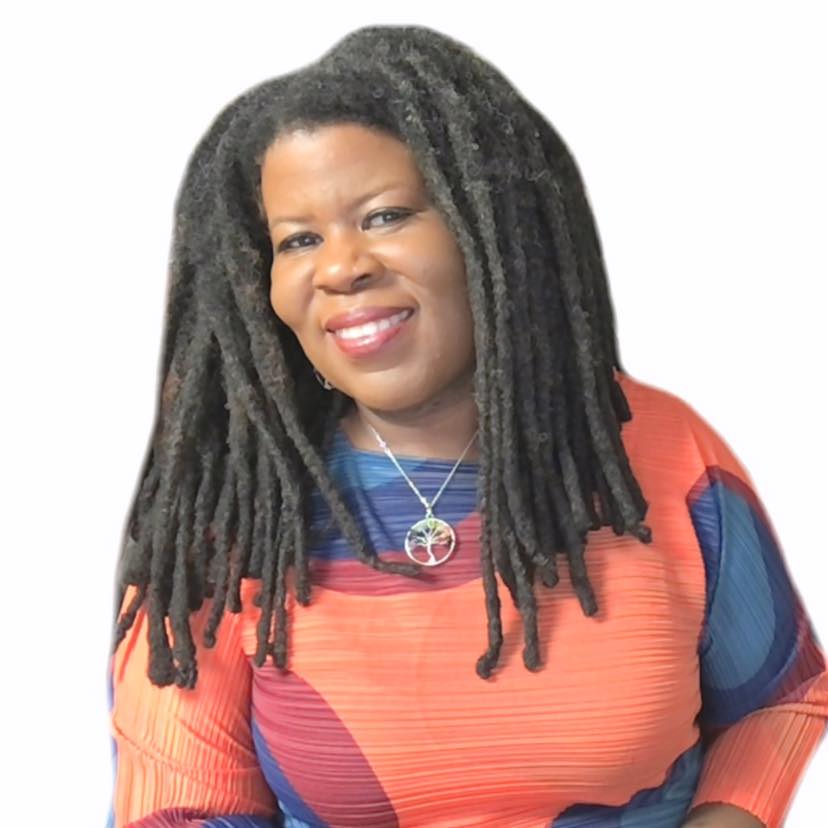
The Rev. Dr. Cheryl A. Lindsay, Minister for Worship and Theology (lindsayc@ucc.org), also serves a local church pastor, public theologian, and worship scholar-practitioner with a particular interest in the proclamation of the word in gathered communities. You’re invited to share your reflections on this text in the comments on our Facebook page: https://www.facebook.com/SermonSeeds.
A Bible study version of this reflection is at Weekly Seeds.