Sermon Seeds: And God Heard
Sunday, June 21, 2026
Fourth Sunday after Pentecost| Year A
(Liturgical Color: Green)
Lectionary Citations
Genesis 21:8-21 and Psalm 86:1-10, 16-17 • Jeremiah 20:7-13 and Psalm 69:7-10, (11-15), 16-18 • Romans 6:1b-11 • Matthew 10:24-39
https://lectionary.library.vanderbilt.edu/texts/?z=p&d=61&y=17134
Focus Scripture: Genesis 21:8-21
Focus Theme: And God Heard
Series: Faithful and Vital (Click here for the series overview.)
Reflection
By Cheryl A. Lindsay
The biblical narrative begins with the Creator speaking. Prophetic oracles and utterances often follow a statement affirming some version of “God said” or ending with some version of “Thus says the Lord.” The Holy One speaking through the rushing wind, that still quiet voice, or the thunderous noise of the storm are well-known representations of Creator communicating to creation with a particular emphasis on humanity. In those instances, the onus is placed on creation to listen to the Creator. In the Genesis 1 creation narrative, chaos responds to the spoken word by transforming into order. In the prophetic accounts, kings, nations, and peoples either turn back to God or continue on perilous paths. Consistent throughout, the Holy One expects a response when they speak.
But, what happens when God listens? Communication involves mutual exchange. While one party articulates, the other processes. The most effective communication occurs when everyone involved shares commitment to fully engage in receiving the other’s messages, thoughts, and ideas as well as expressing their own. The temptation to move quickly from receiving to responding may diminish understanding when one only listens in order to respond rather than to comprehend. Relationships strengthen, however, when both parties feel respected and acknowledged, especially in terms of communication. Who doesn’t want to be heard?
The story of Abraham and Sarah demonstrates the challenge of truly accepting the promise of God and relinquishing control while waiting for its realization. The use of Hagar to serve as a surrogate epitomizes the conflict. If the Holy One has made a covenant commitment that hinges on the appointed couple having children, and that couple has only experienced infertility, how can the promise be fulfilled? While it was Sarah’s suggestion, Abraham agrees to surrogacy. Notably, neither considered consulting the Maker of the Covenant. How can we expect God to hear our questions and concerns if we never voice them? Prayers that never get prayed should not expect to be answered.
Chaos results because while Abraham and Sarah plot and scheme, Creator already had a plan. The two paths–human and divine—seem to be at odds. Ishmael, son of Hagar, arrives first. Later, Sarah gives birth to Issac. Had they waited on the Holy One, the conflict would have been avoided? If they had trusted the Holy and faced accountability for their faithless machinations, they would not have been threatened by Hagar’s son.
The focus passage fails to mention him by name, but the audience knows who he is. The slight seems intentional. His humanity had been diminished from his conception. Ishmael has only ever been an instrument in this story except to his mother and to his God.
The conflict between the two sons, between the two mothers and within the reluctant, ambiguous father, is complex (cf. 16:1–6). The story knows what it wants to tell. Isaac is the child of the future. But the story has no easy time imposing its will on the characters. Ishmael will not be so easily reduced. He has some claims. He has a claim because he is the oldest son of father Abraham. He is not adopted, not an intruder, but born to the man of promise. And Abraham is not ready to discard him (cf. 17:18). The father is not yet ready to relinquish the realities of primogeniture. (See the same anguish for Isaac with his oldest son, 27:37.) But most compelling, God has this special commitment to Ishmael (cf. 16:7–12). For some inscrutable reason, God is not quite prepared to yield easily to his own essential plot. And so like two men coping with a cantankerous woman, God says to Abraham, “Let Sarah do what she wants. Do not worry because I will make it right” (vv. 12–13). In the midst of this narrative about Isaac, there is extended attention to a promise of being a great nation (v. 18) and an assertion of God’s abiding presence with Ishmael (v. 20) even as with father Abraham (v. 22). Most movingly and most delicately, Ishmael is given water in the wilderness (v. 10). God cares for this outsider whom the tradition wants to abandon. There is no stigma attached to this “other” son. All are agreed on the preciousness of Ishmael—Yahweh, angel, Hagar, Abraham—all but Sarah. She has a vested interest which closes that reality to her.
Walter Brueggemann
Brueggemann may have been overly gracious in considering Abraham’s treatment and attitude toward his first son. After all, if Ishmael was truly precious to his father, Abraham would never have allowed the estrangement described in this pericope. Granted, the Holy One assures Abraham of divine intervention. Still, the provisions that Abraham offers were woefully inadequate and quickly depleted. Further, Abraham’s concern and commitment should have manifested throughout the narrative and not only at the time of peril. Had he facilitated the complex family dynamics from the beginning, Sarah may not have felt threatened by Hagar and Ishmael or empowered to ostracize them. Ultimately, Abraham’s action and inaction speak louder than any emotional attachment or response. He abandons his son and leaves him for dead by failing to protect Ishmael, and his mother Hagar, within his own household.
By contrast, Ishmael’s heavenly Parent comes through with protection, provision, and promise. Once they leave the only household they have ever known, something happens. They become a new household albeit a very small one. They find themselves facing terminal dehydration and starvation. Hagar, however, knows to pray. The content of her prayer does not matter nor does the absence of a formal address. She cried out before God, and God heard. While the text does not record what Ishmael uttered, it clearly suggests that the youth speaks, groans, or cries out as well, because the text notes that “And God heard the voice of the boy.” This moment serves as the catalyst for the divine response to come. While Ishmael is the beneficiary, it is worth noting that the promise is made to Hagar, the formerly enslaved woman used as a vessel for someone else’s promise and discarded when no longer instrumental and necessary.
Yet, the Holy One hears her family and sends the divine messenger to assure her. The promise made to Hagar mirrors the promise made to Abraham and Sarah. Her descendants will be a great nation. That story branches off untold in the biblical narrative, but it was worth noting. Hagar’s children will be blessed just like Sarah’s and not as surrogates, substitutes, or secondary. She receives the blessing of God on the verge of death in the desert.
At the same time, her blessing does not negate Abraham and Sarah’s promise. They are not in competition because the Holy One moves in abundance. How different would the world be if humanity did not compete for, covet, or hoard resources out of a scarcity mentality and embraced the sufficiency of God’s creation for flourishing life? What would happen if our response to perceived or contrived scarcity was prayer first over plotting against our neighbor? What if we truly trusted God to respond to our needs and circumstances because God is not only still speaking. God is still listening and God hears.
Reflection from Voices of People of African Descent
The 33rd General Synod adopted a Resolution to Recognize the United Nations International Decade for People of African Descent (2015-2024). As part of its implementation, Sermon and Weekly Seeds offers Reflection from Voices of People of African Descent related to the season or overall theme for additional consideration in sermon preparation and for individual and congregational study.
“I, Too”
By Langston Hughes
I, too, sing America.
I am the darker brother.
They send me to eat in the kitchen
When company comes,
But I laugh,
And eat well,
And grow strong.
Tomorrow,
I’ll be at the table
When company comes.
Nobody’ll dare
Say to me,
“Eat in the kitchen,”
Then.
Besides,
They’ll see how beautiful I am
And be ashamed—
I, too, am America.
For Further Reflection
“If you haven’t developed an ear to listen past the unspoken, you haven’t developed hearing.” ― Abhijit Naskar
“Listening is the most dangerous thing of all, listening means knowing, finding out about something and knowing what’s going on, our ears don’t have lids that can instinctively close against the words uttered, they can’t hide from what they sense they’re about to hear, it’s always too late.” ― Javier Marías
“Listen to the trees as they sway in the wind.
Their leaves are telling secrets. Their bark sings songs of olden days as it grows around the trunks. And their roots give names to all things.
Their language has been lost.
But not the gestures.” ― Vera Nazarian
Works Cited
Brueggemann, Walter. Genesis: Interpretation: A Bible Commentary for Teaching and Preaching. Louisville: John Knox Press, 2010.
Suggested Congregational Response to the Reflection
For the season after Pentecost, the themes are derived from the categories of the Marks for Faithful and Vital Churches. Each subseries will invite engagement with one Mark within the category. Each local church should choose how this will be incorporated. (This could be a sermon talk-back from the lens of the Mark, a direct discussion on the Mark, a prayer or song that relates to the Mark.) The response may also be a call to action embedded in the sermon or the sending inviting engagement beyond worship.
Mark for Congregational Response: Embracing risk-taking and a spirit of innovation as exemplified in the Gospels.
Worship Ways Liturgical Resources
https://www.ucc.org/worship-way/after-pentecost-3a-june-21/
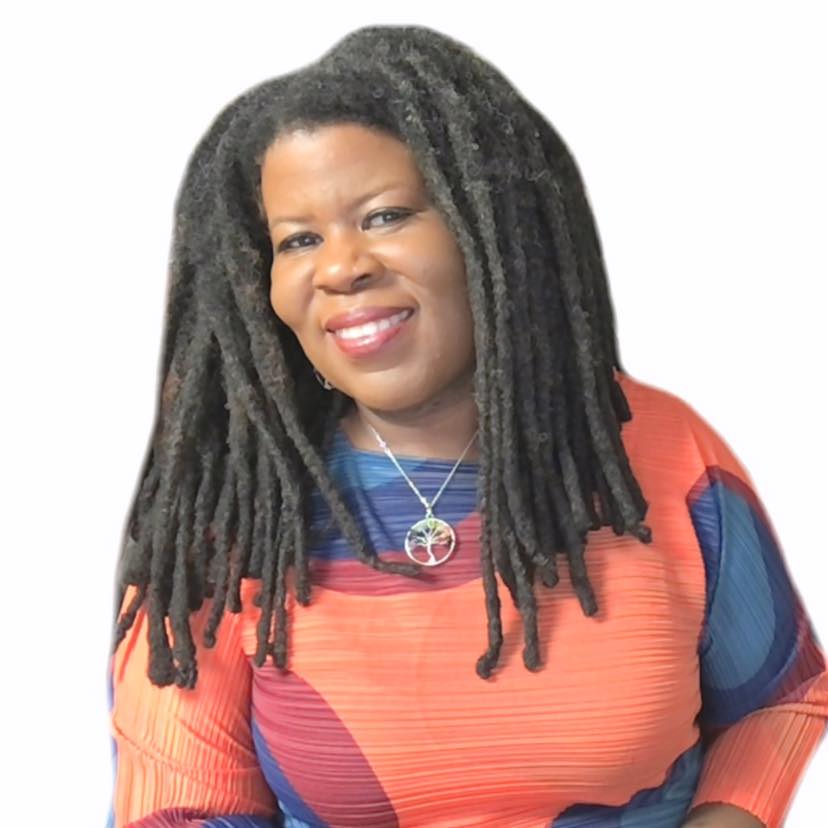
The Rev. Dr. Cheryl A. Lindsay, Minister for Worship and Theology (lindsayc@ucc.org), also serves a local church pastor, public theologian, and worship scholar-practitioner with a particular interest in the proclamation of the word in gathered communities. You’re invited to share your reflections on this text in the comments on our Facebook page: https://www.facebook.com/SermonSeeds.
A Bible study version of this reflection is at Weekly Seeds.