The rise of Christian Nationalism was the focus of a UCC event featuring the General Secretary of the World Communion of Reformed Churches
On Sunday, April 12, the United Church of Christ welcomed the Rev. Philip Peacock, the General Secretary of the World Communion of Reformed Churches (WCRC), and a leader in global ecumenism and justice advocacy, to reflect on how Religious Nationalism appears in different cultural contexts around the globe.
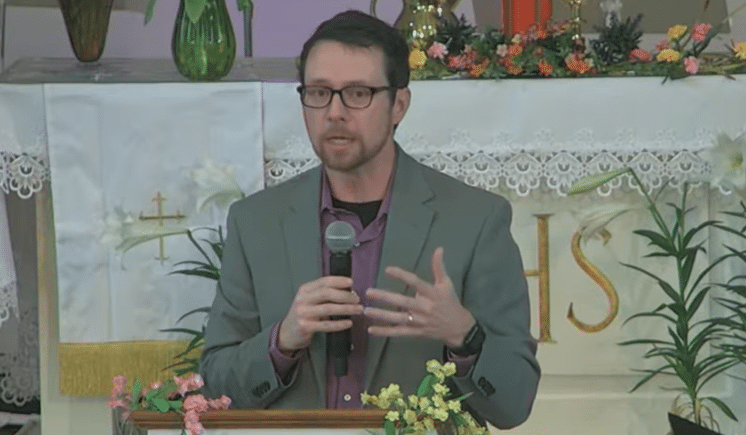
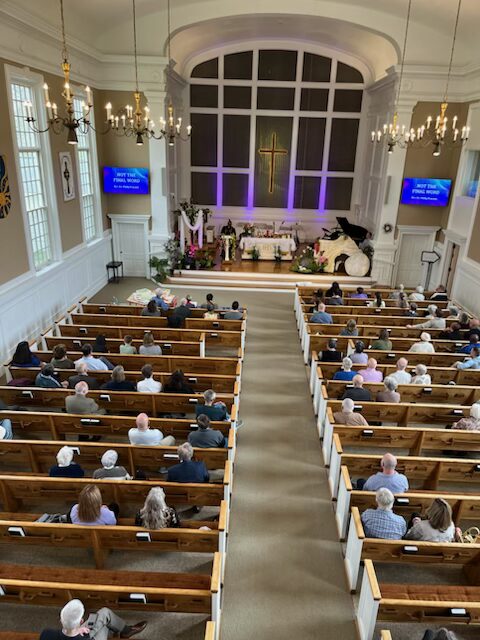
The live streamed event took place at at Olmsted Community Church, in Olmsted Falls, Ohio, and the crowd was welcomed by Pastor, the Rev. Steven Gower. Gower said he was delighted and humbled to host the event. “Christian Nationalism impacts how we interact with one another. It impacts how we define who we are and where we speak and how we speak. And I’m just so delighted for our church to be able to to host this conversation,” he shared.
UCC General Minister and President/CEO, the Rev. Karen Georgia Thompson, who also serves as President of the WCRC, offered her vision of how the global rise of Religious Nationalism came to be from a United States context. Thompson began by stating that “The truth is that the conversations around the rise of Christian nationalism in the United States are not new. People have been talking about this for over probably 15 years about the creep that was happening in many of our communities.” She urged, “So as we think about this moment, I would say the time for courage is upon us.”
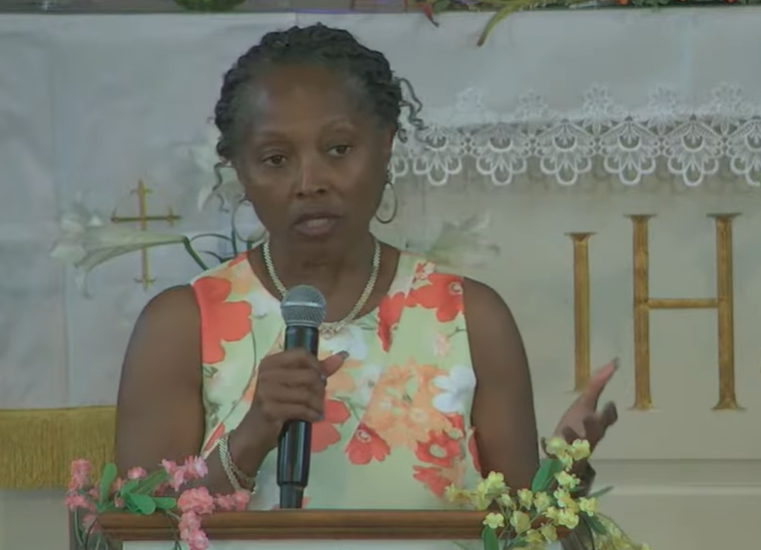
Thompson shared, “What we are experiencing in this moment is being fueled by misinformation and disinformation and that has put Christianity at yet another defining moment. As Christian nationalism is touted, lauded, and applauded, we ought to be questioning what this means for a faith that is rooted in love and compassion.”
“In the United States, the current challenge is the emergence of an extreme nationalistic ideology that is couched in what I identify as wisps of Christian theology. Little pieces here and there. The naming of this ideology as Christian nationalism in my opinion is a misnomer. It is oxymoronic given that the principles of nationalism are at odds with the Christian witness.”
Thompson goes on to clearly state her belief that, “Christian nationalism is rooted in hatred, fear, xenophobia, greed, and control and should be acknowledged as such. This brand of religious nationalism has also been called white Christian nationalism, which points to its roots in white supremacist ideologies, which has a long and sordid history in this country and around the world.”
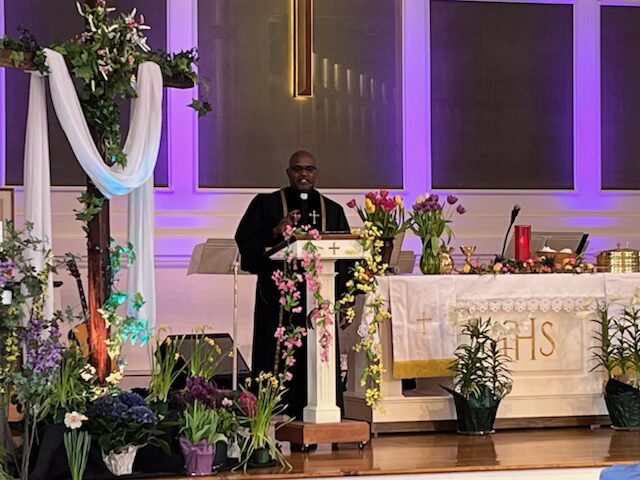
Rev. Peacock followed Thompson with his point of view from a global perspective. “Christian nationalism is not the recovery of some ancient faith. It is really a modern political project wearing ancient religious clothing,” he shared. “And this distinction matters because it means Christian nationalism can be named, it can be analyzed and it can be resisted. It is not timeless. It is historically constructed, and if it is historically constructed it means that also we can dismantle it.”
Later, Peacock made the point that Christian nationalism imposes its own liturgy and body politic. “Christian nationalism just didn’t just borrow Christian language,” he said. “It replaces Christian worship with nationalist worship. This flag in the sanctuary is not just a decoration. It’s a theological statement about which story is primary and it produces and reproduces a body politic.”
Peacock went on to ask, ‘what does faithful resistance look like’?
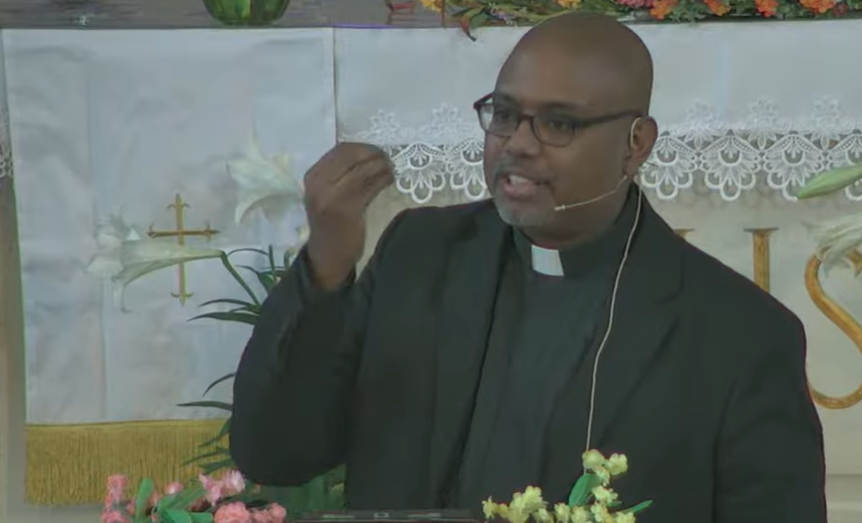
“Firstly,” he said, “I would argue that the church’s internal vocation is to become what we preach. The church must be something before it can say something. We are called to forge a wider Christian communion. Not uniformity, but genuine communion across national, ethnic, racial and gender difference. This means the global church taking its own Catholicity seriously and that our siblings are in India, in Palestine, in Indonesia, in Brazil. And these are not simply illustrations of our faith, but actually constitutive of it.”
Peacock continued, “Practically building relationships across the global church, something that the United Church of Christ does so well, is not merely charity now, but genuinely mutuality dismantling the notions of Christian nationalism where power, voice, and theological contributions are flowing in all directions. We must decouple the idea of nation from ethnic and religious identity. The church has a public responsibility to argue in the public square, not just in the church. That national identity must be civic. We must attend to the politics of the nation as citizens, not as Christians, not ethnic or religious.”
“We do not resist Christian nationalism primarily by being better politicians, though political engagement matters,” Peacock concluded. “We resist it by being more faithfully the church, a community whose common life makes the nationalist lie visible.”
Peacock and Thompson continued their conversation together, and took questions from those who attended.
You can watch the entire event HERE:
Content on ucc.org is copyrighted by the National Setting of the United Church of Christ and may be only shared according to the guidelines outlined here.
Related News
National Ministries, along with Central Pacific Conference release joint statement condemning school shooting in Bend, Oregon
The United Church of Christ, in collaboration with the Central Pacific Conference, has...
Read More
‘No death should be fodder for public entertainment’ – Rev. Karen Georgia Thompson issues statement on the initial intention of the live broadcast of the execution of Nidal Malik Hasan
The United Church of Christ’s General Minister and President/CEO, the Rev. Karen Georgia...
Read More
We Are Not Alone
A Tent of Our own Making is a series of gatherings in the United Church of Christ where...
Read More