Sermon Seeds: They Left the Tomb
Sunday, April 5, 2026
Resurrection Sunday | Year A
(Liturgical Color: White)
Lectionary Citations
Acts 10:34-43 or Jeremiah 31:1-6 • Psalm 118:1-2, 14-24 • Colossians 3:1-4 or Acts 10:34-43 • John 20:1-18 or Matthew 28:1-10
https://lectionary.library.vanderbilt.edu/texts/?z=s&d=42&y=17134
Focus Scripture: Matthew 28:1-10
Focus Theme: “They Left the Tomb”
Series: That Message Spread (Click here for the series overview.)
Reflection
By Cheryl A. Lindsay
When we share the story of the ministry of Jesus, prominent characters enter the narrative. Some receive only a glimpse–a singular highlight that may not include their name or any other significant identifying markers. Others, weave in and out of the story—showing up at specific moments when their participation advances the story. Still, there are others who feature securely as supportive cast members. Their names are noted, their backgrounds described, and their thoughts revealed. And, then there are the women who often go unnoted, undescribed, and unrevealed in the narrative, yet their presence can be uncovered through careful reading and attention to detail.
In Matthew’s account of the Passion and Resurrection, the evangelist does not note the presence of the women at the Last Supper, yet his careful distinction that Jesus took his place among the twelve disciples when the meal attendees were more broadly described as simply “disciples” indicates that there were far more participating in the communal meal. Much of the remaining Passion account focuses on the roles of Judas, Peter, Barabbas, Simon of Cyrene, and even the soldiers who served as agents of the state. Only a brief reference at the death of Jesus acknowledges the presence of the women.
Many women were also there, looking on from a distance; they had followed Jesus from Galilee, ministering to him. Among them were Mary Magdalene, and Mary the mother of James and Joseph, and the mother of the sons of Zebedee. (Matthew 27:55–56)
The description of their activity contradicts itself. They state that the women kept their distance while also affirming that they ministered to Jesus. Distance does not allow active ministry to take place. Perhaps, as the persecution escalated, the women were barred from proximity to Jesus and, as a result, the ability to care for him, which was their ultimate goal.
The contrast with the other disciples–the twelve in particular–was stark. Those disciples no longer wanted to be proximate to Jesus. Peter embodied the struggle. He wanted to be close enough to witness what was happening to Jesus while also distancing himself enough to keep his association with Jesus from being known. Even being forewarned by Jesus could not keep him from betraying Jesus through denial. But, how many of us want Jesus to be near to us when it’s for our benefit but move swiftly from the way of Jesus when it becomes inconvenient?
The women take the alternative path set by Jesus, and they follow him. They follow him from town to town. They follow him to the cross. Then, they follow him to the tomb. Their goal simply seems to be as close to Jesus as possible whatever his condition. The gospel passage opens at the dawn of the new week. Matthew notes that Mary Magdalene and the other Mary (presumably but not necessarily the mother of James and Joseph) go to see the tomb.
“Last at the cross, first at the tomb,” the women have come to watch. It was not uncommon for friends to come and wait by a tomb in case an apparently dead person should revive. This might continue as far as the third day. The effect of these visits was to confirm death. The women who come to perform this sad task of confirming death instead find themselves running for joy, announcing life. Waiting and watching in sadness, they have become the first witnesses to the resurrection. Once again the last are first. They are also first to worship the risen Lord. The Gospel of Matthew ends as it begins with an angel saying, “Do not be afraid” and then guiding the faithful ones as to what they are to do. In the first chapter the angel said to Joseph, “Do not be afraid to take Mary as your wife for the child conceived in her is from the Holy Spirit. She will bear a son, and you are to name him Jesus, for he will save his people from their sins” (1:20–23). Now, in the final chapter of Matthew’s Gospel, the angel says to the women, “Do not be afraid; I know that you are looking for Jesus who was crucified. He is not here; for he has been raised, as he said. Come, see the place where he lay. Then go and tell his disciples” (28:5–7). This is the sixth of seven important texts with the message “do not be afraid” (1:20; 8:26; 10:31; 14:27; 17:7; 28:5; 28:10). The women obey the angel, just as Joseph did in the beginning; “with fear and great joy they ran to tell his disciples” (28:8). Jesus meets them on the way and addresses them with the final “do not be afraid” (28:10).
Anna Case-Winters
Matthew’s gospel tells us that the tomb had been guarded. The authorities likely suspected that supporters of Jesus would come to steal the body and claim resurrection. The earthquake is for them; it stuns them into inaction and eliminates them as a threat to the gathering women who witness the stone rolled away and the angelic appearance. These women receive heavenly encouragement and the good news that Jesus has been resurrected and released from a tomb that had remained guarded and sealed. As Warren Carter notes, “On normal expectations, the Gospel story should end with Jesus’ death and the ruling elites’ victory. Chapter 28, though, boldly declares God’s miraculous intervention, which creates a different future with the raising of Jesus (Carter 2000, 541–54). The worst that imperial power can do is thwarted and reversed.”
The women left the tomb to share their great joy with the other disciples. Along the way, they encounter the risen Christ who directs them to share the invitation to his followers, which he indicates as multi-gender, to meet up with him in Galilee. In this account, there is no need for any of the disciples to return to the empty tomb or wait in an upper room, confirmation will come through an encounter with the Living God on the next stop on the journey.
The sacred role of the women continues as they are present for the burial of Jesus by Joseph of Arimathea and are then there at the tomb when it is revealed to be empty (Mt 27:57-61; 28:1-10). An angel from the spiritual realm is present as the earth breaks once more, but this time it is the birth pangs of Jesus’ resurrection as mother earth again plays her sacred feminine role as “the womb of the resurrection.” In the Olivet discourse, Jesus spoke about earthquakes in various places, describing them as birth pangs (Mt 24:7-8), and the apostle Paul speaks of the creation groaning in labor pains (Rom 8:22). Just like a seed in the soil must crack open and disrupt the soil around it to break forth, so too does the earth quake as the firstborn of the new creation breaks forth as God raises Christ from death (Rom 8:29; Col 1:15, 18). The women, like midwives who have completed their work to shepherd this new resurrection life, can now bring the male disciples back into the story as these women are the first proclaimers of the bodily resurrection of Jesus, whose feet they have touched (Mt 28:9). Matthew indicates that the current religious leaders continue in their collusion with the Romans even to the time of Matthew’s writing of his Gospel, in order to squash the voices of the women and by extension the rest of the disciples (Mt 27:62-66l 28:15).
H. Daniel Zacharias
Yet, the good news emerged as triumphantly as Jesus’ resurrected body from a sealed and guarded tomb because the women left the tomb. They did not allow grief, fear, or uncertainty to immobilize them. They continued to do what they had done in his ministry, his crucifixion, his death, and his burial. They followed Jesus. They sought the places where he could be found, and Jesus displayed himself to them even as he expanded the destinations they would reach. This too reflects and reveals the power of the resurrection, and the charge it leaves with those who would also follow The Way.
The notion of resurrection emerged in contexts of imperial tyranny to affirm God’s triumph over death caused by imperial tyrants, and to provide assurance of participation in God’s eschatological purposes (Dan. 12:1–3; 2 Maccabees 7). With joy and fear, the women obey the instruction to proclaim this message to the disciples in Galilee, an instruction renewed in their worshipful, fearful encounter with the risen Jesus (28:8–11; Cotter).
Warren Carter
The resurrected life affirms allegiance to the kindom of God, humble acceptance of the sovereignty of God, and active participation in the realm of God. To celebrate the resurrection of Jesus is to proclaim, with bold joy, that tyranny is not the way of the Holy, compassion triumphs over empire, and love realized and embodied can infiltrate any space.
The resurrected life also leaves the cross and tomb behind. It moves forward with new life and power. It gathers its community to continue the work, expand the reach, and engage the next opportunity to overcome fear, cast down evil, remove barriers to life, and find the Risen One among us.
Touch Christ’s feet and feel how tangible the gospel can be. Worship God with our work and ways of being in the world. Commemorate the resurrection by living into the redemptive vision that no cross could end and no tomb could contain. Even when it requires holding fear and joy in sacred tension, emulate the example of those women and leave the tomb quickly and follow Jesus in the world that God created…the world that can be.
Reflection from Voices of People of African Descent
The 33rd General Synod adopted a Resolution to Recognize the United Nations International Decade for People of African Descent (2015-2024). As part of its implementation, Sermon and Weekly Seeds offers Reflection from Voices of People of African Descent related to the season or overall theme for additional consideration in sermon preparation and for individual and congregational study.
… and there was much blood, many motherless, many maimed legs, many broken homes and all because a few hungry souls sick with greed wanted everything for themselves. They took the virtues that arise from that as true virtues of the human heart. They practised charity, pity; they even made laws and rules of good conduct for those they had made motherless, for those they had driven into the streets. Tell me … would we need pity, charity, generosity, kindness if there were no poor and miserable to pity and be kind to?
― Ngũgĩ wa Thiong’o, Petals of Blood
For Further Reflection
“The tombs of renowned men and women are famous for the bodies they hold; but the tomb of Christ is famous because it holds none.” ― P.K. Satheesh Kunjumon
“A civilization is a tomb of the old Culture, and womb of the new.” Joe Dixon,
“What if the empty tomb was simply God saying that the miracle that happened there is just a foretaste of the miracles that can happen within us? And if that’s the case, nothing within us is really dead. Rather, it’s just a bunch of stuff waiting its turn to stand up and breathe again.” ― Craig D. Lounsbrough
Works Cited
Case Winters, Anna. Matthew: A Theological Commentary. Louisville: Westminster John Knox Press, 2015.
Warren, Carter. Gale A. Yee, Ed. Fortress Commentary on the Bible: Two Volume Set. Minneapolis: Fortress Press, 2014.
Zacharias, H. Daniel “The Gospel of Matthew.” Esau McCaulley, Ed et all. The New Testament in Color: A Multiethnic Bible Commentary. Downers Grove: IVP Academic, 2024.
Suggested Congregational Response to the Reflection
During the Season of Easter, commit to spreading the good news of God’s liberating, redeeming, and reconciling love through consistent communication. Begin this week by incorporating the “Ritual of Affirmation of the Resurrected Life” found in the Worship Ways liturgy for Resurrection Sunday found below.
Worship Ways Liturgical Resources
https://www.ucc.org/worship-way/resurrection-sunday-a-april-5/
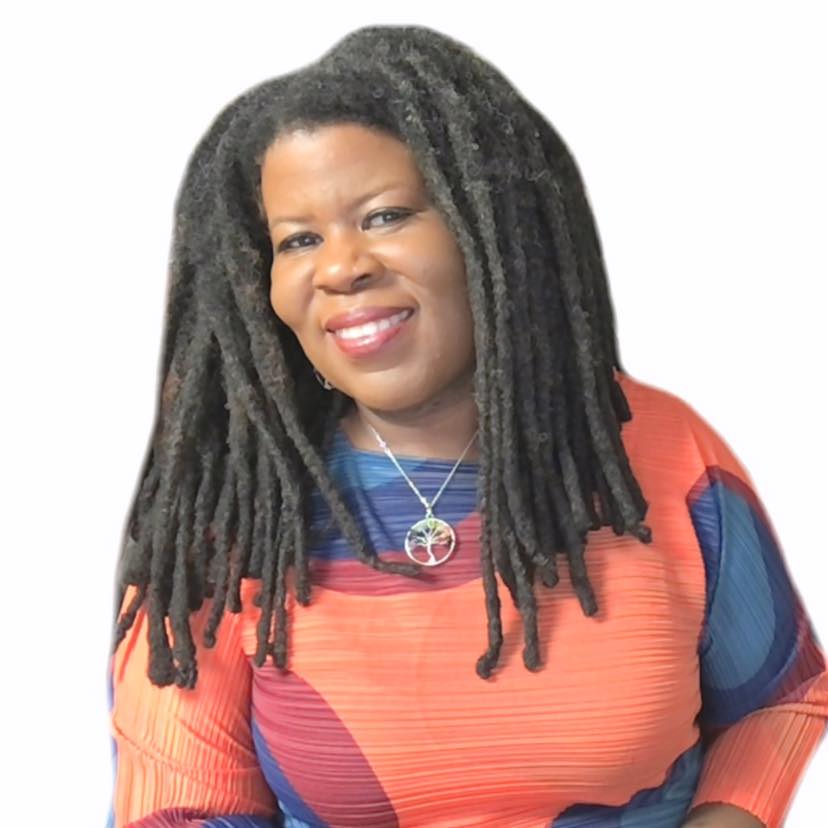
The Rev. Dr. Cheryl A. Lindsay, Minister for Worship and Theology (lindsayc@ucc.org), also serves a local church pastor, public theologian, and worship scholar-practitioner with a particular interest in the proclamation of the word in gathered communities. You’re invited to share your reflections on this text in the comments on our Facebook page: https://www.facebook.com/SermonSeeds.
A Bible study version of this reflection is at Weekly Seeds.