Sermon Seeds: The Signs
Sunday, March 15, 2026
Fourth Sunday in Lent | Year A
(Liturgical Color: Violet)
Lectionary Citations
1 Samuel 16:1-13 • Psalm 23 • Ephesians 5:8-14 • John 9:1-41
https://lectionary.library.vanderbilt.edu/texts/?z=l&d=28&y=17134
Focus Scripture: John 9:1-41
Focus Theme: The Signs
Series: Tested. Opened. Naked. (Click here for the series overview.)
Reflection
By Cheryl A. Lindsay
Signs provide direction, points of reference, and order. They regulate the flow of movement and they indicate milestones and destinations. Signs tell us permissible actions, extend hospitality, or restrict access. Signs may take many forms, tangible or spiritual, permanent or situational, visible or concealed. A secret handshake or distinct knock may indicate belonging to an exclusive group. A sign on a highway may alert you to speed limits, remaining distance to large cities, or available resources at the next stop. At their essence, signs regulate actions by offering clarity.
The Gospel according to John contains what has been characterized as the Book of Signs. It is not a formal division; rather, it’s a way of identifying the organization of the narrative. Jesus used signs and wonders as a means of revelation of his identity. The miracles were not indiscriminate but deeply connected to his transformative, redemptive, and liberative acts.
John explicitly said in his “purpose statement” (John 20:30-31) that the aim of his Gospel is to present Jesus as the promised Messiah of the Old Testament Scriptures and the unique Son of God. And his primary means of revealing Jesus as the divine Messiah is the seven sign-miracles (σημεία) and their attendant contexts of teaching, all of which are recorded in the first twelve chapters of the Gospel, commonly called the “Book of Signs.”…. The sign-miracle of Jesus’ healing the lame man at the Pool of Bethesda (5:1-15) was performed during an “unnamed feast.” While the feast is not named, probably it was the weekly feast of the Sabbath, thus occasioning the controversy with the religious leaders. The fourth sign-miracle of Jesus’ feeding of the five thousand (6:1-14) and its companion miracle of Jesus’ walking on the Sea of Galilee (vv. 15-21) are both performed against the backdrop of the Passover Feast.12 Both miracles were designed to evoke memories of God’s delivering the Israelite nation from its Egyptian bondage through the Exodus….as the Messiah grants spiritual sight (eternal life) to those who believe in Him, here and now.
Stephen S. Kim
It is worth noting that Jesus breaks cultural and religious norms in this encounter. That action proves more significant than the physical healing that takes place. The reaction of the religious leaders who object provides evidence. Healing, for them, does not belong on the sabbath day. Further, the manner of healing would have been particularly offensive to them as the nature of the encounter would have made Jesus ritualistically unclean.
Like people in other cultures, Palestinian Jews apparently believed that human excreta (including saliva) were forms of dirt rendering a person ceremonially unclean. Under certain conditions, however, it was believed that that very “dirt” could become an instrument of blessing in the hands of authorized individuals. Thus, blood and saliva generally pollute, but in certain contexts blood cleanses and saliva cures. In the OT, saliva may convey ceremonial uncleanness (Lev. 15:8). If the reversal of this taboo also applies, then by using saliva to cure a man, Jesus claims to possess unusual spiritual authority (cf. Matt. 8:1–4).
Andreas J. Köstenberger
This passage invites us to consider how cultures, societies, and traditions determine who deserves to be healed and whose suffering should be alleviated. The man born with a physical limitation would likely have been ostracized, along with his parents, from society. The assumption would have been that he or his parents sinned and his condition was a consequence or curse visited upon him by God. Extending that thinking, his presence on the sabbath would have been objectionable.
Too often, people who are different, particularly with visible limitations, make others uncomfortable. Those who do not need accommodations in a particular area may chafe against those who do. While our understanding of disability has evolved culturally, too often, the expectation is that those in need must be grateful for meager attempts at accommodation rather than receive full hospitality that leads to equity and belonging. Accessibility is a miracle within our reach; we have both authority and resources to facilitate wholeness for disabled persons in our communities. And, we don’t need to spit in their eye to do it. We can reconfigure seating to make room for wheelchairs, limit distracting sounds, offer widgets, and provide descriptions of visuals.
The miracle is not simply that the man had his sight restored as if it was a curse being lifted, the miracle is that the man, who was considered cursed, has been publicly recognized by the divine for his worth. Further, that man is able to witness for the liberating gospel of Jesus before skeptics and detractors—the same ones who objected to his being made whole. His agency has increased and his voice now rings out with critique for those who have lost sight of the humanity of Jesus’ act of compassion and love.
The phrase “give glory to God” constitutes a solemn exhortation to tell the truth and to make a confession, with the implication that the person so exhorted has done wrong.[54] In the context of the Gospel, this may constitute yet another instance of Johannine irony. For the blind man will indeed “give glory to God” (Beasley-Murray 1999: 158). Clearly, the veracity of the miracle is no longer the issue; discrediting Jesus is the only concern (Ridderbos 1997: 344). “This man is a sinner” (cf. 8:29, 46) would be the inference especially of the stricter rabbinic school of Shammai. Anyone who broke the Sabbath, and thus the law, was a sinner (cf. 9:16).
Andreas J. Köstenberger
The religious leaders have lost their perspective on what it means to keep the sabbath holy. Holy is the operative word. What is holier than compassion? What is holier than an encounter with the divine? What is holier than being made well—in spirit as much as in body?
It does not require a fully functioning body to be well and whole spiritually. This miracle should not encourage anyone to consider or suggest that someone who is blind is not or cannot be whole. The miracle is a tangible demonstration, or a sign, of what Jesus was realizing spiritually.
In healing the blind man, then, Jesus was revealing His deity. This miracle also has deep messianic implications. The Old Testament reveals that giving sight to the blind would be a sign of messianic activity. Isaiah predicted, for instance, that the Messiah would be “a light for the Gentiles” and would “open eyes that are blind” (Isa. 42:6-7). Furthermore this healing of a blind man from birth illustrates one of the characteristics of the messianic kingdom when “the eyes of the blind [will] be opened” (36:5). In fulfillment of these messianic prophecies Jesus gave sight to the blind (cf. Matt. 9:27-31; 12:2223; 15:30; 20:29-34; 21:14). The miracle then provides a foretaste of the messianic blessings to be realized in the kingdom when “the eyes of the blind will see” (Isa. 29:18). As the promised Messiah of the Old Testament, Jesus will give sight to the blind in His coming kingdom. But the future work of the Messiah has implications in the present as the Messiah grants spiritual sight (eternal life) to those who believe in Him, here and now.
Stephen S. Kim
The man who regains his physical sight repudiates those who do not even realize they lack spiritual sight or discernment. They miss the signs because they refuse to look for them. Even his testimony cannot sway them.
Let us be careful, alert, and receptive to recognize the signs of Christ active in our midst.
Reflection from Voices of People of African Descent
The 33rd General Synod adopted a Resolution to Recognize the United Nations International Decade for People of African Descent (2015-2024). As part of its implementation, Sermon and Weekly Seeds offers Reflection from Voices of People of African Descent related to the season or overall theme for additional consideration in sermon preparation and for individual and congregational study.
Excerpts from “A Prayer for Healing” (1983) by Richard Daniel Henton
God in heaven, we thank Ya because healing is the children’s; because you’re the answer to all our problems; and you’re the cure for our ills. And as we look to Thee tonight, we don’t have to tell you to go nowhere….
And in the name of Jesus, I pray that those that are sick,
that’s suffering
and tired of being sick
and tired of the pain
and tired of the shots,
Gawd, my Savior,
tired of one operation after another,
Stretch out your hands in the Name of Jesus!
Jesus! My friend in God. Touch now! Touch now! Touch the fever! Touch the cancer! Touch that tumor! [Touch] that malignant growth!
Heal that blood pressure! Heal that heart condition! Heal that consumption—the tuberculosis! Heal the hemorrhoids! In the Name of Jesus….
Stop that man from groanin’.
Stop that woman from moanin’.
Heeealll! by the wound in your side.
Heall! For your glory tonight.
For Further Reflection
“I look for a sign. Where to go next. you never know when you’ll get one. Even the most faithless among us are waiting to be proven wrong.” ― Jillian Laure
“The importance of an artist is to be measured by the quantity of new signs which he has introduced to the language of art.” ― Henri Matisse
“I remind myself that not everything is a sign, that some things simply are what they appear to be and should not be analyzed, deconstructed, or forced to bear the burden of metaphor, symbol, omen, or portent.” ― Diane Schoemperlen
Works Cited
Kim, Stephen S. “The Significance of Jesus’ Healing the Blind Man in John 9.” Bibliotheca Sacra 167, no. 667 (2010): 307–18.
Köstenberger, Andreas J. John (Baker Exegetical Commentary on the New Testament). Grand Rapids: Baker Academic, 2004.
Suggested Congregational Response to the Reflection
During the Season of Lent, reflect and discern as a community the tangible acts of liberation available as a response to communal events and realities and commit to realizing those acts within the season. Love Knows No Borders is a valuable new UCC resource to consult.
Worship Ways Liturgical Resources
https://www.ucc.org/worship-way/lent-4a-march-15/
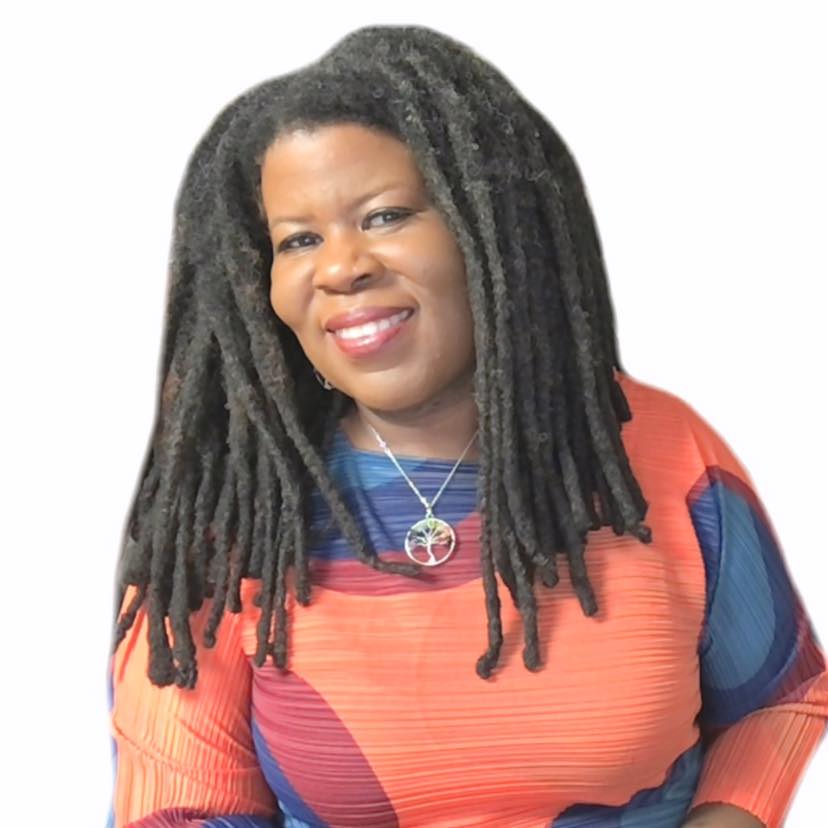
The Rev. Dr. Cheryl A. Lindsay, Minister for Worship and Theology (lindsayc@ucc.org), also serves a local church pastor, public theologian, and worship scholar-practitioner with a particular interest in the proclamation of the word in gathered communities. You’re invited to share your reflections on this text in the comments on our Facebook page: https://www.facebook.com/SermonSeeds.
A Bible study version of this reflection is at Weekly Seeds.