Sermon Seeds: Ripe for Harvesting
Sunday, March 8, 2026
Third Sunday in Lent | Year A
(Liturgical Color: Violet)
Lectionary Citations
Exodus 17:1-7 • Psalm 95 • Romans 5:1-11 • John 4:5-42
https://lectionary.library.vanderbilt.edu/texts/?z=l&d=27&y=17134
Focus Scripture: John 4:5-42 | “Ripe for Harvesting”
Focus Theme: Ripe for Harvesting
Series: Tested. Opened. Naked. (Click here for the series overview.)
Reflection
By Cheryl A. Lindsay
Harvesting may evoke imagery of individuals in a field picking produce by hand. It may also conjure a more industrial approach utilizing large equipment on a commercial farm that cuts and collects wheat or corn across acres of land. More personally, harvesting may involve a home garden yielding herbs and vegetables gathered in anticipation of an imminent meal. Whatever notion associated with harvesting, the process contains more complexity than simply plucking, cutting, and collecting.
A harvest does not occur in a vacuum or as an isolated step. Before a crop can be harvested, the land has to be prepared. Seeds or plantings need to be procured and/or cultivated. There is the planting itself and the maintenance that follows. Watering, weeding, fertilizing, and pruning may all be engaged in the maturation process before harvesting can take place. Some plants may be harvested multiple times as they continue to proliferate and reproduce while connected to the vine. Others must be harvested from the root allowing a one-time extraction for use.
When Jesus speaks of harvesting in the gospel text, however, the reference functions symbolically not literally. His discussion is not contained to fruits and vegetables. Rather, he refers to an opportunity involving the kindom of God and human beings. An extensive conversation with a Samaritan woman and her resulting impact inspires his musings as he reframes his disciples’ understanding.
The entire encounter is a series of reframing that rivals Matthew’s account of the Sermon on the Mount. Rather than an address to countless observers, this is a direct and highly personal conversation with an individual with multiple identities explored in the text, including the noteworthy national and ethnic identity as a Samaritan. As the text notes, Jews and Samaritans experienced a relational rift that should have precluded this conversation. The text offers no further explanation of that divide, but history provides context.
After the exile, the focus of the biblical text is on Judah. However, while the monarchy of Israel was destroyed, many of the people of Israel remained there….According to archaeological surveys, Assyria did not ravage the Israelite countryside, and the Israelites deported by the Assyrians were only part of the society’s elite. At the same time, the existence of a northern Hebrew dialect in some parts of the Hebrew Bible, sometimes called Israelian Hebrew, adds to the evidence that the culture of the previous nation endured…To summarize, Israelite culture continued in the northern territory….The causes of the tensions between Judah and Samaria may never be known. Knoppers reminds modern readers that because of their shared culture, worship of the same God, and proximity, the Jews and Samaritans, like it or not, were connected, and their fates were intertwined. Despite the animosity reflected in the biblical text and other sources, the two provinces continued in the same fraught sibling relationship that had been the norm since the split after Solomon’s death.
Beth LaNeel Tanner
With interpretative fixation on Jesus’ confirmation of the woman’s moment of vulnerability and transparency, “I have no husband,” the profound magnitude of this encounter gets lost in shame-inducing theology rather than the liberating reality of the Messiah meeting an ostracized woman who has self-isolated herself from her community, knowing everything about her, and revealing himself to her in a way unparalleled in any other gospel account. There is no condemnation from Jesus, only acknowledgement and praise that the woman has shared her truth. Jesus then ties her moment of confession to worship, implying that she is a real worshipper because that requires spirit and truth.
The woman has chosen the time of day when the sun is at its height in order to avoid the other women who venture to this well to find water. At best, she was surprised, and at worst, dismayed, to find a man at the well. This woman with her multiple relationships has likely needed those affiliations for safety and protection at best or has been coerced into abusive and exploitative entanglements at worst. Her questioning of Jesus’ attempts at conversation betray her concern as well as another significant barrier: Jews and Samaritans do not associate. The verses immediately preceding this pericope alert the audience that Jesus was compelled to go through Samaria rather than around it as was the standard practice.
Jesus journeyed on assignment, and this woman plays a pivotal role in advancing the gospel beyond the limited confines of his own community. In the Acts of the Apostles, Jesus will later use his final encounter with his disciples to commission and command them to spread the good news specifically to Samaria despite the acrimony and division noted above. The territory demonstrated receptivity to the gospel and Jesus specifically during this encounter and apparently remained fruitful with a harvest season that extended far beyond the confines of this significantly layered passage.
Food is the product of a “harvest,” which “comes” at a certain time of year…. Six months between sowing and harvest were normal, but “four months” seems to have been a kind of best-case scenario. In a parable in another Gospel, Jesus made the point that patience is required in waiting for “the harvest” (ho therismos, understood as “the kingdom of God”), but that nothing can hold it back when it is ready. When its time comes, immediate action is required (Mk 4:26–29). Here he uses the same image to expand on his comment to the Samaritan woman both that “an hour is coming” (vv. 21, 23), and that it “now is” (v. 23). The “hour” he now calls “the harvest,” and it is fair to conclude that this harvest corresponds in some way to the salvation promised in his reference to the Father’s search for “true worshipers” to worship “in Spirit and truth” (vv. 23–24). Just as in the Markan parable, Jesus weighs the need for patience over against a call for immediate action, and the call for action wins out. Conventional wisdom dictated a four-month wait, but Jesus announces decisively (“Look, I say to you”) that the time for waiting is over: “Lift up your eyes and look at the fields, that they are [ripe] for harvest.”
J. Ramsey Michaels
Interestingly, the woman that has just met Jesus understands his ministry and engages in it with a zeal and fruitfulness that will take the disciples who accompanied Jesus far more instruction and attempts. She, like them, was plucked from her daily life. She did not need to be knocked off her horse or have her heart burn. An encounter with Jesus in which she was acknowledged, accepted, and answered propelled her into ministry to the people who had cast her on the outskirts only to turn around to follow her back to Jesus for themselves.
The reader knows what the disciples do not, that the townspeople are on their way back to the well even as Jesus speaks (v. 30), and that if the disciples look they will see them coming into view. “Look, I say to you,” no less than the more characteristic “Amen, amen, I say to you” (1:51; 3:3, 5, 11) introduces a decisive revelation. Jesus is telling his disciples that the “harvest” he has in mind is a harvest of souls, not of grain, and that its time has come. Two chapters later, he himself will “lift up his eyes and look,” just as he tells his disciples to do now, and will see “that a great crowd was coming toward him” (6:5), just as the Samaritans “were coming to him” now (v. 30). Such a harvest recalls an occasion in two other Gospels where he said, “The harvest is great, but the laborers are few. Pray, therefore, the Lord of the harvest, that he send forth laborers to his harvest” (Mt 9:37–38//Lk 10:2). In Matthew the “harvest” (in a grand mixture of metaphor!) consisted of “sheep not having a shepherd” (Mt 9:36), and the same is true here, except that instead of “the lost sheep of the house of Israel” (Mt 10:6), the “harvest” consists of Samaritans, who were specifically excluded according to Matthew (10:5).
J. Ramsey Michaels
A community has been restored, not just because of new belief in Christ but in a new way of being. To reduce this harvesting of souls to right belief is to ignore the work of reconciliation of a community with itself. The woman who was on the outside has moved to the center. The one who avoided contact necessary to meet basic human physical needs has initiated a revolution to satisfy spiritual thirst in the name of the divine who chose her to be the catalytic instrument that will bring about her own liberation and that of her oppressors. Thanks be to the Good Reaper that she (and they) were ripe for harvesting.
Reflection from Voices of People of African Descent
The 33rd General Synod adopted a Resolution to Recognize the United Nations International Decade for People of African Descent (2015-2024). As part of its implementation, Sermon and Weekly Seeds offers Reflection from Voices of People of African Descent related to the season or overall theme for additional consideration in sermon preparation and for individual and congregational study.
“A Slave Mother’s Prayer” (1890) by Sallie Smith
Madam, although I did not have religion when I used to live in the woods, yet it seemed I could not keep from praying. I’d think of my mother, how, just before she died, she told me “come.” And that word would always followed me. I used to lie out in the woods on logs with moss under my head, and pray many and many a night. I hardly knowed what to say or how to pray, but I remembered how I used to hear my mother praying, on her knees, in the morning before day, long before she died, and I just tried to say what she used to say in her prayers. I heard her say many a time, “O, Daniel’s God, look down from heaven on me, a poor, needy soul!” I would say, “O, Daniel’s God, look down from heaven on me in these woods!” Sometimes it seemed I could see my mother right by my side as I laid on the log asleep. One time I talked with her in my sleep. I asked her, “Mother, are you well?” And it seemed I could hear her saying, as she beckoned to me, “Come, O come, will you come?” And I did try to get up in my sleep and start to her, and I rolled off the log. By that time I woke up, and the sun was shining clear and bright and I was there to wander about in the woods?
For Further Reflection
“AS I watch’d the ploughman ploughing,
Or the sower sowing in the fields, or the harvester harvesting,
I saw there too, O life and death, your analogies;
(Life, life is the tillage, and Death is the harvest according.)” ― Walt Whitman
“Our bonfire burns brightly,
alighting our hot harvest.
Scarce seeds of winter’s heat,
as its first dawn inflames.
Sprouting into a plant
that roots within my soul.
[Winter Solstice’s Secret]” ― Susan L. Marshall
“From the soil of mistakes, we harvest lessons of wellbeing, watering our roots with the wisdom of experience.” ― Dr Prem Jagyasi
Works Cited
Michaels, J. Ramsey. The Gospel of John (The New International Commentary on the New Testament). Grand Rapids: Wm. B Eerdmans Publishing Co., 2011.
Tanner, Beth LaNeel. Ancient Israel and Judah: Why History and Cultural Context Matter for Reading the Hebrew Bible. Louisville: Westminster John Knox Press, 2025.
Suggested Congregational Response to the Reflection
During the Season of Lent, reflect and discern as a community the tangible acts of liberation available as a response to communal events and realities and commit to realizing those acts within the season. Love Knows No Borders is a valuable new UCC resource to consult.
Worship Ways Liturgical Resources
https://www.ucc.org/worship-way/lent-3a-march-8/
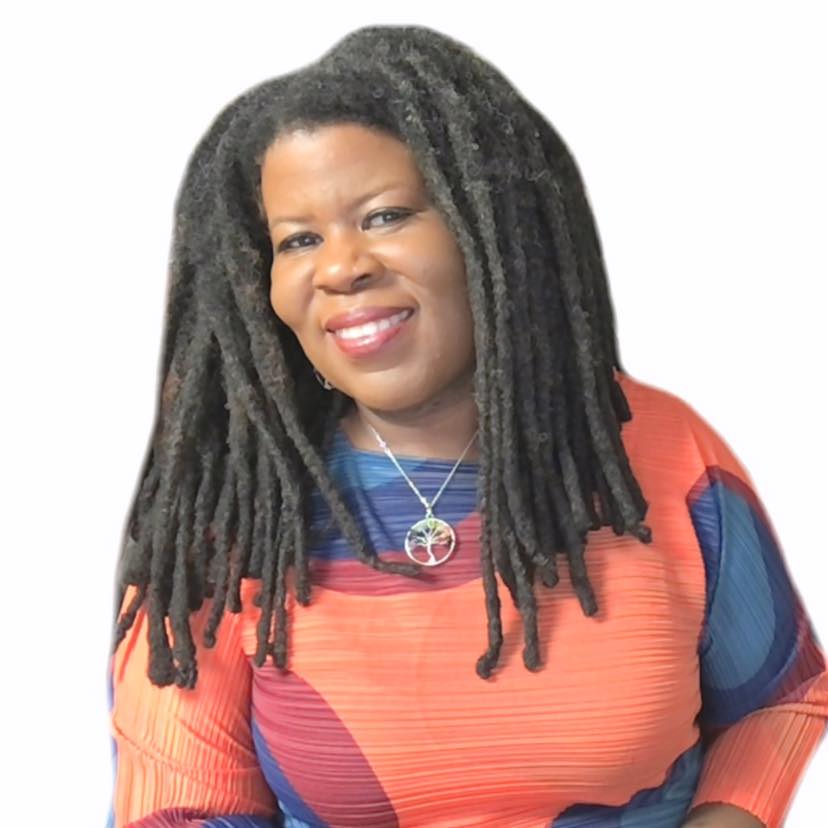
The Rev. Dr. Cheryl A. Lindsay, Minister for Worship and Theology (lindsayc@ucc.org), also serves a local church pastor, public theologian, and worship scholar-practitioner with a particular interest in the proclamation of the word in gathered communities. You’re invited to share your reflections on this text in the comments on our Facebook page: https://www.facebook.com/SermonSeeds.
A Bible study version of this reflection is at Weekly Seeds.