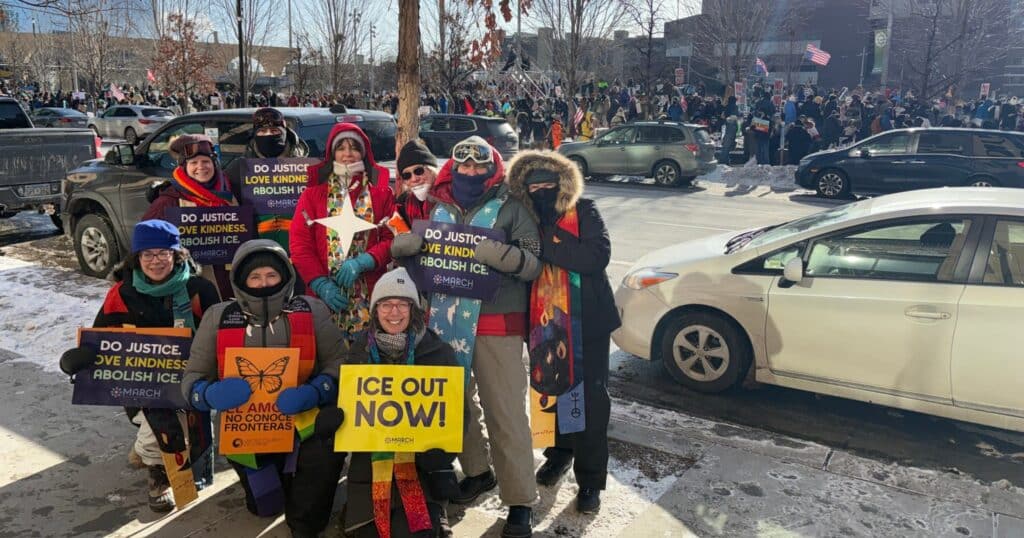
Meet six UCC clergy who traveled to Minneapolis to put faith in action
Long tables piled high with hats, scarves, long underwear, winter coats, and hand warmers lined the lobby of Westminster Presbyterian Church in downtown Minneapolis, where more than 600 religious leaders from across the country gathered on Jan. 22.
The warm clothing had all been donated from neighbors around the area – including from Creekside UCC – for the faith leaders readying to join in collective public actions in sub-zero temperatures.
“People had dug through their closets and went out in the below-freezing temperatures to deliver these items, working to ensure that all those who had come in from other areas would be cared for, too,” reflected Megan Bergert, UCC Minister for Refugee and Migration Ministries, who was among the faith leaders who traveled cross-country to the gathering.
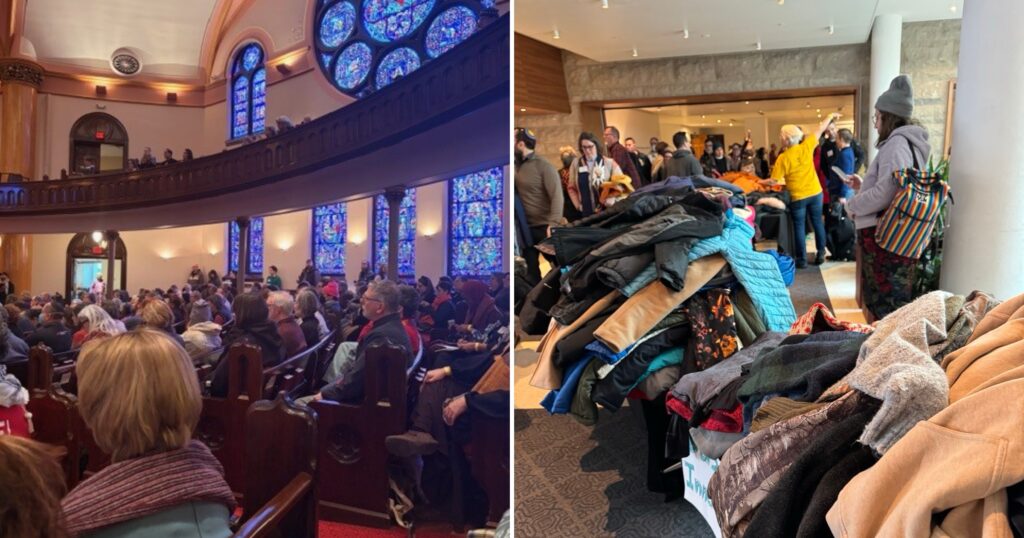
This is one of many acts of care that echo throughout the Twin Cities and demonstrate how quickly people have built networks of response and resourcing since an influx of federal agents began in early January.
Within less than one week of the organization MARCH (Multifaith Antiracism, Change & Healing) inviting out-of-state faith leaders to come to Minneapolis for training and to participate in the general strike and walkout organized by labor leaders and faith groups, hundreds made quick arrangements to show up for support and training.
As the Rev. Rebecca Voelkel, pastor for justice ministries at Lyndale UCC, welcomed the clergy packed into the sanctuary on Jan. 22, she reflected to them, “In the face of all the pain and suffering in our cities and our country, you are a beautiful, beautiful sight.”
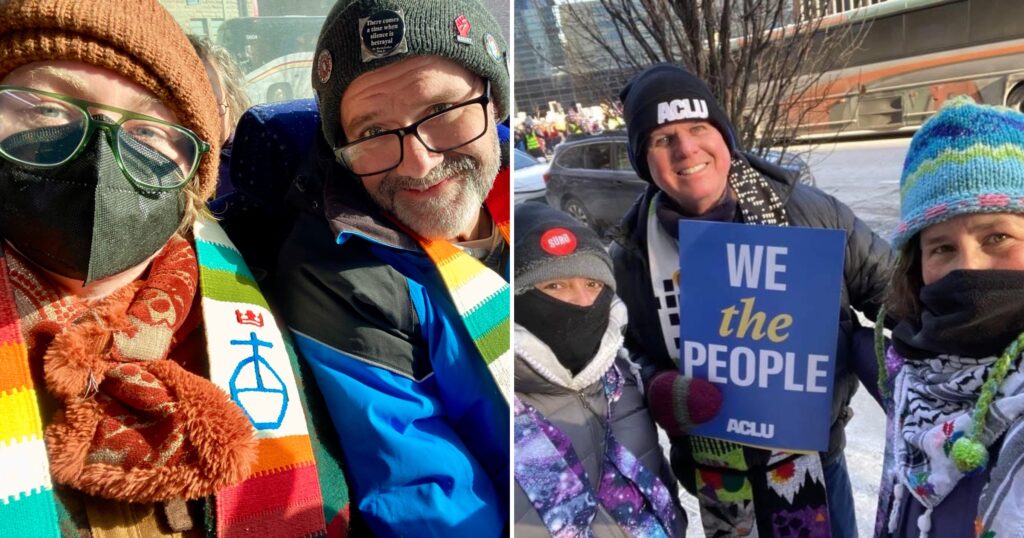
UCC ministers and leaders were prominent among the crowd of religious and moral leaders, with around 100 in attendance. Below are reflections and photos from six of them who came, from Massachusetts to Washington.
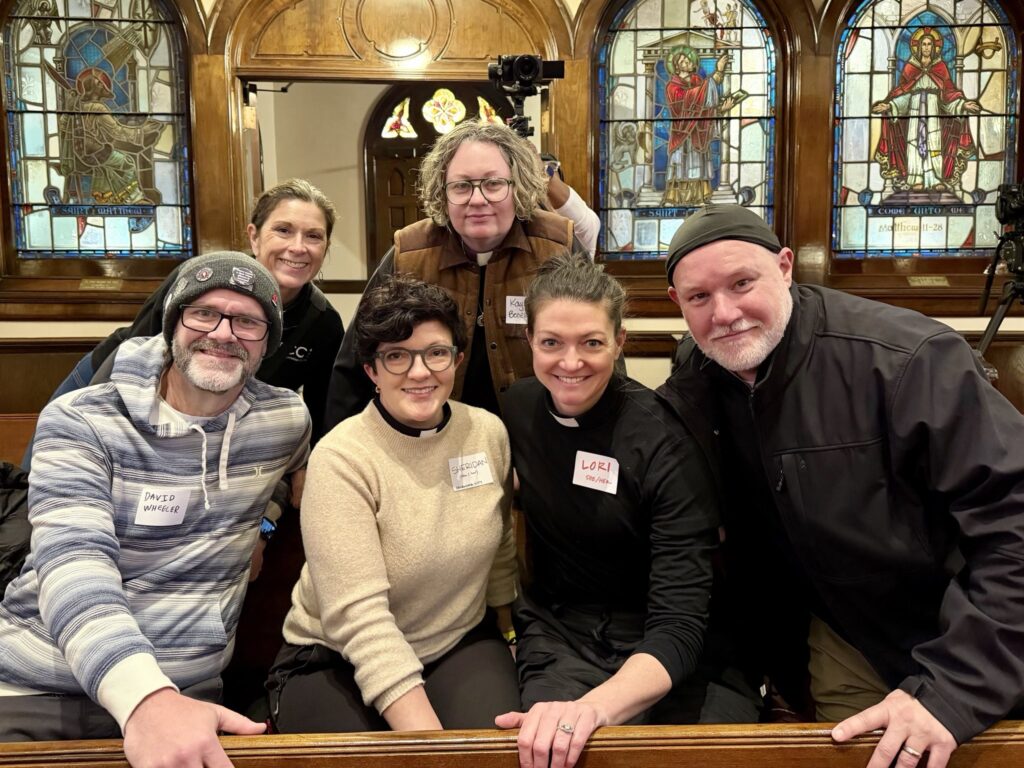
Neighborhood patrols as community care
The Rev. David Wheeler, senior minister of New Covenant Christian Church, traveled with a van of 17 UCC clergy from Oklahoma. He was deeply touched by the opportunity to sing among clergy kindred of so many different faiths and traditions, and he undertook a shift patrolling the neighborhood together with a UCC colleague.
“It was shocking. What we see on the TV or internet does not adequately depict the crisis in Minneapolis. In person, it feels like an occupied territory being held captive by military forces. There is an emotional edge and tension that cannot be described with words. What mattered most to me was the sense of community, solidarity, and care when the clergy were together,” Wheeler said. “What I’ll bring home is a determination to build connections and systems in Oklahoma so that we can protect our neighbors and keep everyone safe from the lawless, violent oppression of ICE. We are already working on it.”
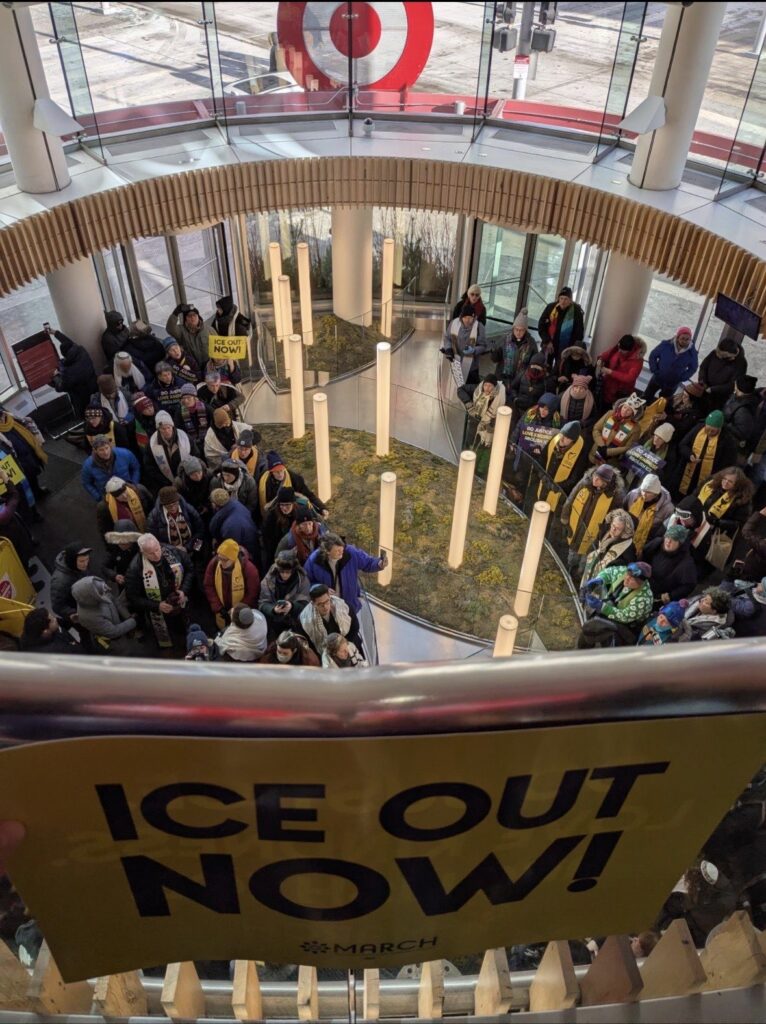
Protesting businesses working with ICE
The Rev. J. Bennett Guess, a former UCC executive minister and national officer and the current executive director of ACLU Ohio, was part of 200 interfaith leaders who participated in a sing-in and protest at the Target corporate headquarters as part of the Jan. 23 economic blackout in Minneapolis. The Target Corporation, a Minneapolis-based company, has participated with ICE, allowed them to use store parking lots, and donated $1 million to Trump’s Inaugural Committee.
“We are living through an era of great political tyranny and cruelty, but this crisis is also one of great moral and spiritual consequence. That’s why it is so fitting that these massive protests were led, in part, by faith leaders. We must ask ourselves to look inwardly, to reflect and act out of a deep, urgent concern for our shared humanity, not merely political perspective or party affiliation,” Guess said. “We are witnessing great persecution and brutality right now, mostly directly targeted at Black and brown people and communities, but we are also witnessing an awakening, an uprising, among this country’s people of faith, who are now loudly demanding justice and a collective reexamination of our nation’s soul, to find a far better moral center and compass.”
Over 100 clergy arrested at the airport
Two pastors of First Sandwich UCC traveled from Massachusetts to the gathering and stood among faith leaders demonstrating against ICE tactics at the Minneapolis-St. Paul Airport, where around 100 clergy were arrested. In the frigid cold, protesters called on airlines, particularly Delta Air Lines and Signature Aviation, to stop cooperating with ICE operations in Minnesota.
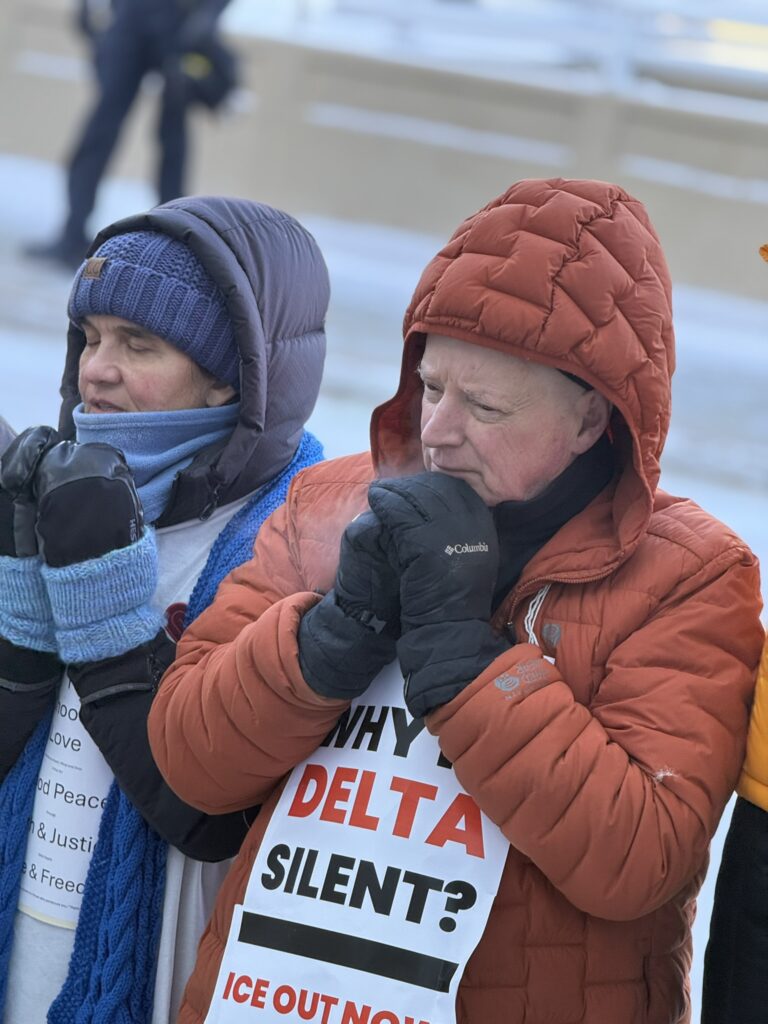
Rev. Tina Walker-Morin, senior minister, reflected on gathering first with the large group of faith leaders and then in the collective Jan. 23 march through Minneapolis.
“On Thursday and Friday, we witnessed the power of the Spirit when people come together. Beside me in training were Muslims, Unitarian Universalists, Buddhists, Jewish, and Indigenous faith leaders, just to name a few. The Spirit that gathered 600 faith leaders (and 650 more who answered the call but could not attend because physical space was limited) knew no faith tradition; it knew no divides. I felt the power in the people coming together – not just among the 600 leaders, but marching in the streets with 50,000 other people. It was a beautiful and powerful reminder that the collective Spirit is greater than any one person,” Walker-Morin said.
“We cannot stand divided if we intend to prevail over violence, control, and disregard for humanity,” said the Rev. Jennie Valentine, minister of faith formation. “‘No one is getting left behind this time. No one is getting left behind. We get there together or we never get there at all’ are the lyrics from a song we learned in training. Wherever we are, we must cross dividing lines so that we can all link arms to ensure that no one is left behind to be harmed – physically, spiritually, and emotionally. I return home with intention, determination, and a quiet knowledge that as this authoritarian push continues to spread across the country as expected, together we can protect each other and refuse to allow this inhumane treatment of people to continue.”
Walker-Morin’s and Valentine’s full reflections are available from the Southern New England Conference UCC.
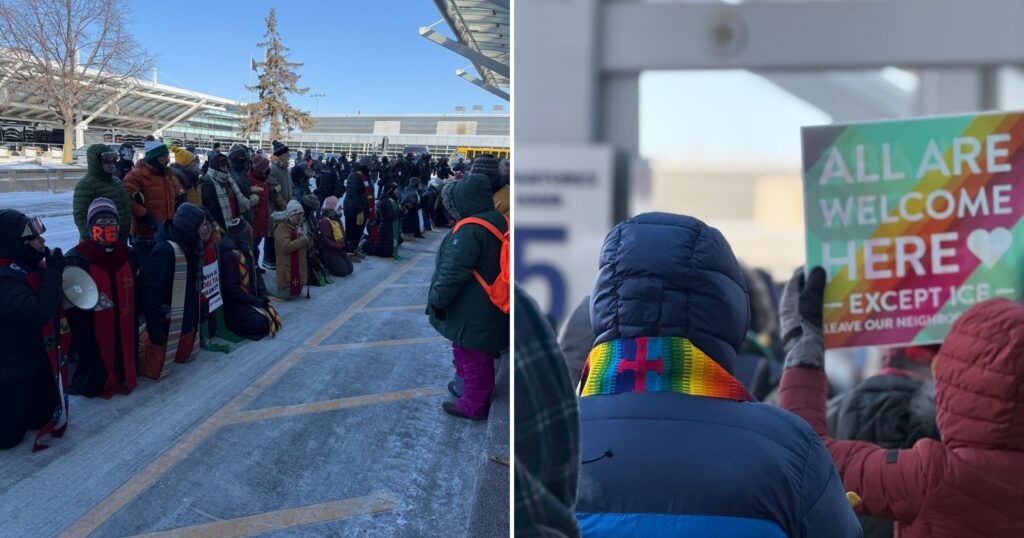
At the airport protest, the Rev. Marci Scott-Weis, senior pastor of Magnolia UCC in Seattle, experienced how clergy supported one another through presence.
“It was 20 below that day and so cold it was dangerous to expose your skin for greater than five minutes. The 100 clergy who were engaging in civil disobedience stood in a line in the road in front of us and the remaining clergy lined up in front of the rest of the crowd (10 deep behind us), so that the clergy were facing a line of clergy in stoles about three feet away from them. The police then arrived in force and the clergy who were prepared to be arrested got on their knees in that frigid cold, kneeling on that cold cement. And they stayed there for close to an hour as each one was taken away to be arrested one by one.
“As that happened, we stayed in front of them, holding their eye contact, smiling, singing, praying, and holding sacred space for and with them. It was holy and it was sacred. There was a moment where someone started singing ‘Here I am Lord’ and I swear that song will never hit me the same. I will always see those clergy on their knees in that frigid cold, preparing to be arrested on behalf of their neighbors, showing the world what it means to love,” she said.
ICE Out of Minnesota March
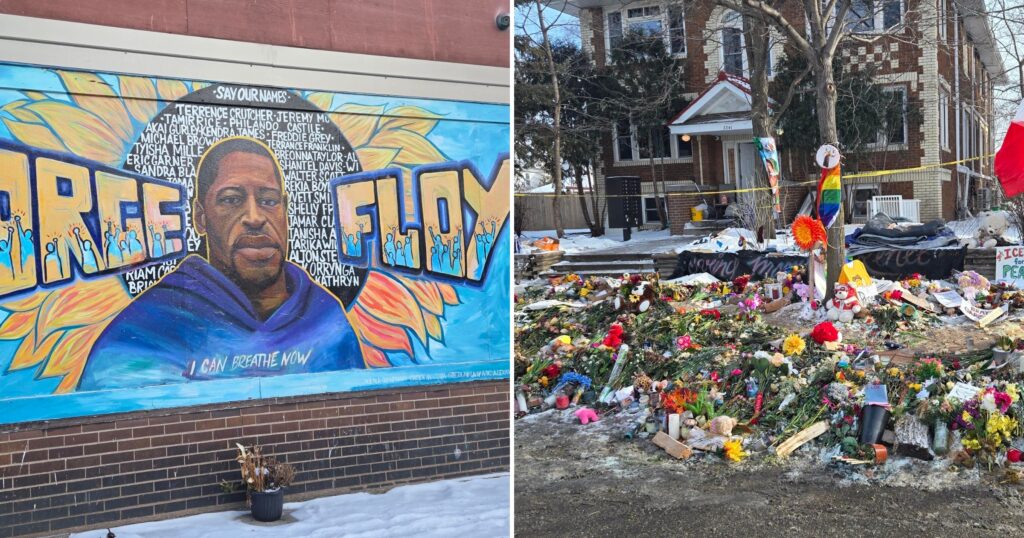
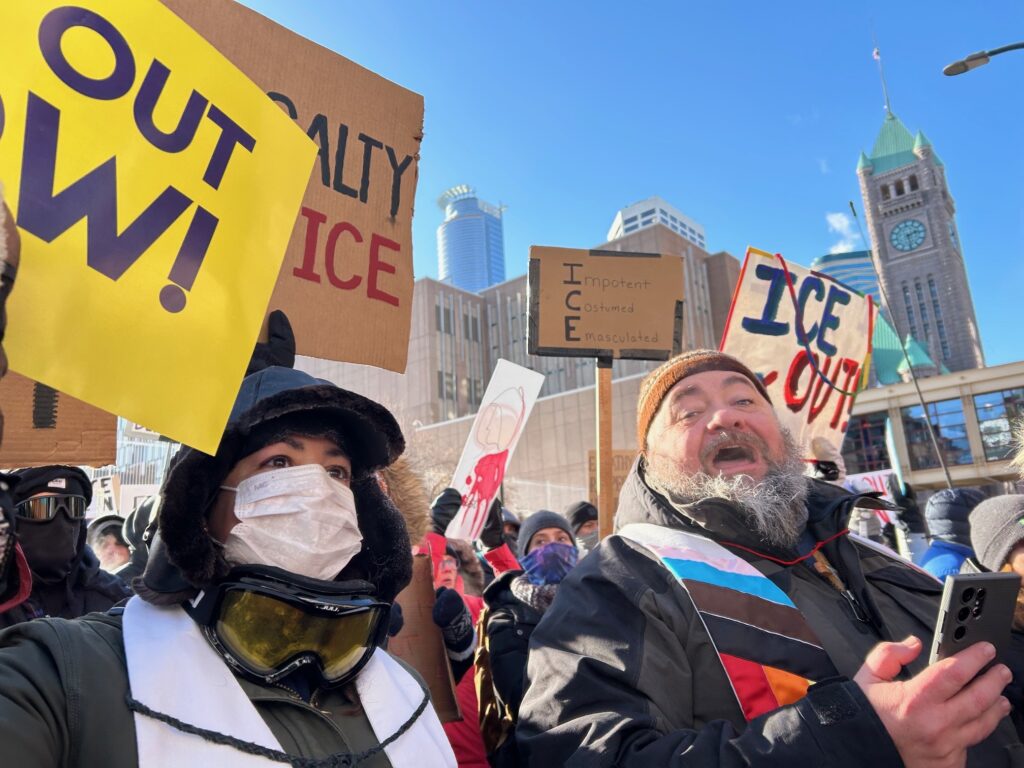
Many faith leaders, including Bergert, participated in the Jan. 23 march when, organizers reported, over 700 businesses shut down statewide and over 50,000 people took to the street in peaceful protest.
“What I learned in Minneapolis is that there is a place for everyone in the support, witness, and action. We were marching down the streets of Minneapolis to ally ourselves with migrants, and, concurrently, to show solidarity against all forms of authoritarianism and denigration of civil and human rights. As a representative from the UCC National Setting, it was imperative for me to be able to join the UCC organizers on the ground and bring the support of UCC congregants across the country.
“‘Who keeps us safe? We keep us safe!’ is a familiar organizing chorus, and that ‘we’ needs to include a deep collective meaning. ‘We’ isn’t just the tiring, tireless community members at the epicenter of the action; ‘we’ encompasses all who understand us to be created by God, all who believe in Christ’s call to care for one another, all who can see that the flourishing of any one person is tied to the flourishing of their neighbor.”
What love looks like under federal occupation
Also traveling from Massachusetts, the Rev. Robin Bartlett, senior pastor at First Church in Sterling, reflected that her time in Minneapolis offered some of the best training she’s received during her years of ministry.
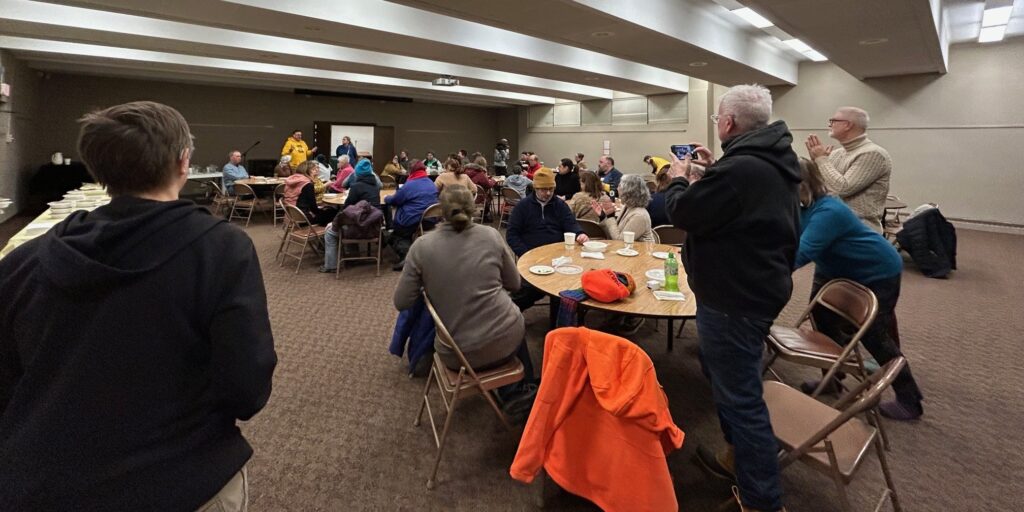
“The people of Minneapolis taught me what it looks like to love one another under federal occupation, and what it means to keep neighbors safe.” Bartlett said, “They collect food to deliver to people who are afraid to leave their homes; they protect the daycares and schools with their bodies at drop-off and pick up; they walk the children of immigrants to school; they volunteer for once-a-week ICE patrol, whistling when ICE are about to snatch their neighbors and filming for public record; they build back doors that ICE has beaten down; they collect and donate money for rent to people of color who are too scared to leave their homes to go to work.
“They manage to do this all at the same time that they work a day-job and go to yoga. When they get tired, they lift each other up. When they are in despair, they sing. These people are not ‘protesters,’ much less ‘agitators.’ They are people like you and me who love their communities. And as one Minneapolis professional said, ‘We aren’t special… We just know how to neighbor.’”
Spreading knowledge nationwide
The organizers who invited and hosted the faith leaders in Minneapolis communicated the importance of rooting in accountability to impacted communities, as well as the urgency to build the relationships, skills, and commitments needed for sustained action across the country
“The organizers in Minneapolis are remarkable,” Bergert said. “Their generosity in outreach, their clarity of message, their thoughtfulness in connecting. It was very clear that the action in Minnesota is possible because they have been building relationships between interfaith alliances and community resources for years. They haven’t considered the work of justice to be ‘done,’ ever.
“Rev. Dr. Tanya Sadagopan, Minnesota Conference minister, is working to lift up and support the clergy and community members, and you can see the ways in which the folks in the different settings of the organizing in Minnesota help sustain each other through sharing of resources, of time, of space. To be ready to face imminent threat, you can’t hunker down and shut others out; more than ever, it’s a time to open up to being present in others’ lives, in their worship, in their day to day concerns, so that when the time for organizing is most urgent, you’re already connected in a community of care.”
Content on ucc.org is copyrighted by the National Setting of the United Church of Christ and may be only shared according to the guidelines outlined here.
Related News
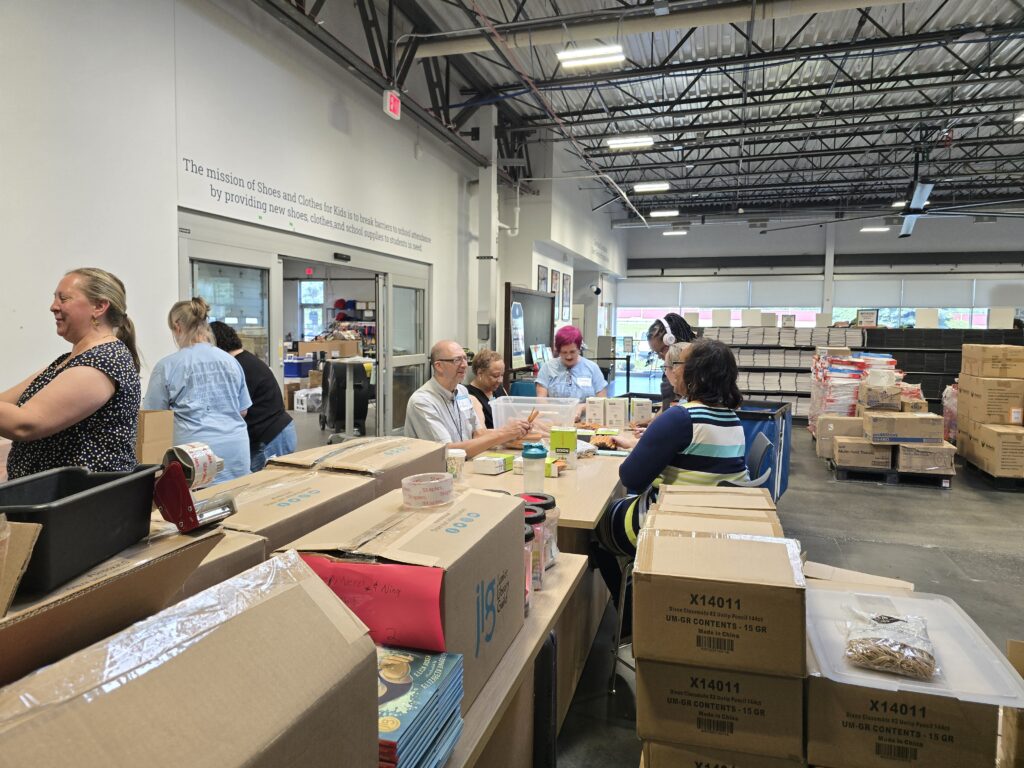
Faith in Action: National Ministries staff roll up their sleeves for service projects in Northeast Ohio
Twice a year, the staff of the National Ministries of the United Church of Christ gather in...
Read More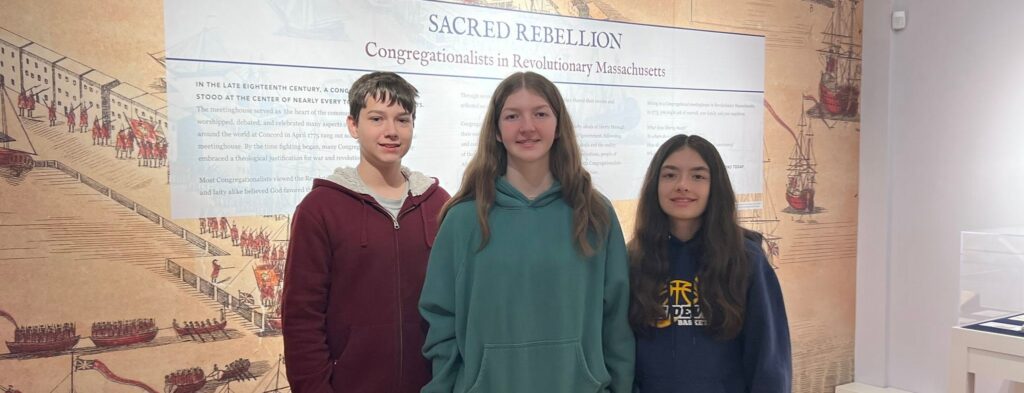
The next 250 years: A legacy of sacred rebellions informs and inspires today’s faith shapers
On July 8, 1776, with the newly minted Declaration of Independence in his hands, Colonel John...
Read More
UCC issues emergency appeal following Venezuela earthquakes
Following a series of devastating earthquakes that ravaged the country of Venezuela, leaving...
Read More