Sermon Seeds: Called the Holy Way
Sunday, December 14, 2025
Third Sunday of Advent | Year A
(Liturgical Color: Rose, Violet or Blue)
Lectionary Citations
Isaiah 35:1-10 • Psalm 146:5-10 or Luke 1:46b-55 • James 5:7-10 • Matthew 11:2-11
https://lectionary.library.vanderbilt.edu/texts/?z=a&d=3&y=17134
Focus Scripture: Isaiah 35:1-10
Focus Theme: “Called the Holy Way”
Series: May Peace Be Within You (Click here for the series overview.)
Reflection
By Cheryl A. Lindsay
I do not know that I have ever considered a highway to be holy. There have definitely been roads that have inspired me to pray. The twists and turns, the rapid elevations and descents, the impact of weather conditions, and the behavior of other drivers have, at times, conspired to bring me closer to God. As a long-time, long-distance driver, I have driven through storms and sunshine, through the monotony of corn fields in Iowa and Indiana, the harrowing twists around a Hawaiian crater, icy roads in New England, aftershocks of a major earthquake in Southern California, swampy land in Florida and Louisiana. As a traveler, I have been driven up the hills to reach the elevated city of Assisi in Italy by a taxi driver so aggressive that I could not enjoy the view as I hung onto my seat for dear life.
Highways have taken me to places, encounters, and moments that I consider holy. One morning during that trip to Assisi, I looked quietly over the landscape to marvel at God’s creation and the considered generations of people who had gathered in service of God’s work. While the trip down from that Hawaiian crater was disconcerting, the view of the sunset was worth every bit of discomfort. Many of my trips have taken me to be with loved ones or to engage in the work that I love. All of that denotes holy encounters and sacred moments. But perhaps, I underestimated the significance of the journey and the road that led me to my destinations.
The prophecy of Isaiah documents an extended and extensive journey “of a complex and demanding period in the life of biblical Israel: from a settled, monarchical society through disaster, exile and loss to a new existence amid the rubble and rebuilding of Jerusalem.” (Jenni Williams) Chapter 35 concludes the first part of that story.
While Isaiah 34 paints a picture of bad news for those ancient nations who stand in opposition to God, the passage comprises half of a salvation oracle for Israel. Packaged together with chapter 35, the more hopeful aspect of this message of return and redemption, the two chapters are viewed by most commentators as belonging together, serving as a kind of transition between First and Second Isaiah, portions of the book that address different social situations for Israel. The vindication of Zion through both destruction in chapter 34 and the abundant life and rejoicing in chapter 35 are two parts of the same message.
Benjamin T. Conner
Destruction and hope live in tension with one another, and even in the more hopeful chapter of the combined message reminds the audience of all that needs restoration. Destruction requires some level of repair even if that is clearing out the debris. The reversal of exile necessitates another move that may include physical location but certainly reflects a change in status. As Martin A. Sweeney notes, “Isaiah 34–35 introduce the second half of the book of Isaiah, in chapters 34–66, with an emphasis on the judgment of the nations, here represented by Edom, and the return of the exiles to Zion….Isaiah 35 portrays the return of the exiles to Jerusalem as a second exodus, much like Second Isaiah.” The transition brings change. In the vision presented in Isaiah 35, that change is revolutionary, cataclysmic, norm-shattering, and miraculous in keeping with the first Exodus event. Like that saga, the next phase of their life takes them on a significant journey. The ends may be desired, but even good reversals require adjustment. Even good news may cause upheaval, disorientation, and resistance.
The same power of God that dispensed justice in the previous chapter now enables and evokes life. The announcement of the good news about the arrival of the Lord bears a power that affects that change—the transformation in Isaiah 35 describes a curse being removed, peace being restored to all creation, and a new highway through a blossoming wilderness to a promised homeland. The message of destruction wasn’t the last word.
Benjamin T. Conner
Liberation from Babylon is not only a cause for joyful celebration, it is a catalyst for a new ordering to their world. Freedom from oppression receives divine approval and meets divine alignment. Restoration meets the will of God. The psalmist declares that the Holy One executes justice. Mary, in her prophetic utterance and song of praise, proclaims the liberative promise of the coming of Christ preparing to be birthed into the world.
But not everyone chooses the way of liberation. For the oppressor, the liberation of their targets seems punitive and diminishing of their power. For the wicked, justice does not seem to be good news. Those who ally themselves and compromise themselves to the kingdoms of this world, the kindom of God offers a nightmare rather than a cherished hope. Participating in the realm of God is a choice not a compulsory act. Nor is it without peril, labor, or sacrifice. The road is there, open, and available, but no one is forced to take it. And there are some that, due to their choices, will not be able to traverse it.
That path, Isaiah informs the audience, is called the Holy Way. For those who accept the opportunity to travel it, the rewards exceed the promise of liberation. Freedom is the minimum. God’s liberation is a standard opening the gateway to flourishing life.
Acclimation is key for the context of Isaiah 35. The prophet is addressing a community defeated by war, removed by an oppressive power, experiencing desolation and dislocation, and then acclimation. The prophet is called to create a new vision, a reminder that the order of things as they are is not as God intends them to be and can be overcome by God’s creative power. God’s promise is not just the end of exile, but a redemptive reversal based in the coming of God that makes the people whole and transforms creation. All creation is restored.
Ann Fritschel
Jenni Williams describes it this way:
Yet what is envisaged here goes far beyond the description of a safe return from Babylon in chapter 40. What is promised here is much more in line with the idea of a re-made world where deserts bloom, people are healed, and there is no more sorrow. We may also note that in chapter 40 there do not seem to be conditions about who will return, whereas in 35.8 it is clear that some people are excluded from this promise by virtue of their ideas or behaviour.
Jenni Williams
Advent begins the Christian year with a strong reminder, despite all circumstances and predictions, that the Holy One offers a path counter to the trajectory of the world and its oppressive, dehumanizing, and destructive systems. Advent bids us to remember the sojourns of spiritual ancestors and all the detours, delays, and derailments they experienced. Advent invites us to commemorate the persistent presence of God with Us. Advent encourages us to celebrate with hope, humility, and shouts of hallelujah the goodness and glory of God in the land of the living.
Yet, Advent concerns itself with the future-making present as much as the past. Advent bids us to embody hope, peace, joy, and love. Advent invites us to find good news in unexpected places with miraculous, unimagined results. Advent encourages us to take an adventurous trip on a path…called the Holy Way.
Reflection from Voices of People of African Descent
The 33rd General Synod adopted a Resolution to Recognize the United Nations International Decade for People of African Descent (2015-2024). As part of its implementation, Sermon and Weekly Seeds offers Reflection from Voices of People of African Descent related to the season or overall theme for additional consideration in sermon preparation and for individual and congregational study.
“On Liberty and Slavery”
By George Moses Horton
Alas! and am I born for this,
To wear this slavish chain?
Deprived of all created bliss,
Through hardship, toil and pain!
How long have I in bondage lain,
And languished to be free!
Alas! and must I still complain—
Deprived of liberty.
Oh, Heaven! and is there no relief
This side the silent grave—
To soothe the pain—to quell the grief
And anguish of a slave?
Come Liberty, thou cheerful sound,
Roll through my ravished ears!
Come, let my grief in joys be drowned,
And drive away my fears.
Say unto foul oppression, Cease:
Ye tyrants rage no more,
And let the joyful trump of peace,
Now bid the vassal soar.
Soar on the pinions of that dove
Which long has cooed for thee,
And breathed her notes from Afric’s grove,
The sound of Liberty.
Oh, Liberty! thou golden prize,
So often sought by blood—
We crave thy sacred sun to rise,
The gift of nature’s God!
Bid Slavery hide her haggard face,
And barbarism fly:
I scorn to see the sad disgrace
In which enslaved I lie.
Dear Liberty! upon thy breast,
I languish to respire;
And like the Swan unto her nest,
I’d like to thy smiles retire.
Oh, blest asylum—heavenly balm!
Unto thy boughs I flee—
And in thy shades the storm shall calm,
With songs of Liberty!
For Further Reflection
“Love is holy because it is like grace–the worthiness of its object is never really what matters.” ― Marilynne Robinson
“Where there is sorrow, there is holy ground.” ― Oscar Wilde
“Holiness does not consist in doing extraordinary things. It consists in accepting, with a smile, what Jesus sends us. It consists in accepting and following the will of God.” ― Mother Teresa
Works Cited
Conner, Benjamin T. “Between Text and Sermon: Isaiah 35.” Interpretation 73, no. 4 (2019): 389–91.
Fritschel, Ann. “Flourishing: Land, People, Community: A Bible Study on Isaiah 35:1-10.” Currents in Theology and Mission 51, no. 3 (2024): 6–9. EBSCOhost.
Sweeney, Marvin A. “Isaiah 1-39.” Gale A. Yee, Ed. Fortress Commentary on the Bible: Two Volume Set. Minneapolis: Fortress Press, 2014.
Williams, Jenni. The Kingdom of our God: A Theological Commentary on Isaiah. London: SCM Press, 2019.
Suggested Congregational Response to the Reflection
During the season of Advent, return to the Advent Wreath following the sermon and ask the gathered congregation to express (verbally or silently) where they find the emphasis of the week: Joy.
Worship Ways Liturgical Resources
https://www.ucc.org/worship-way/advent-3a-december-14/
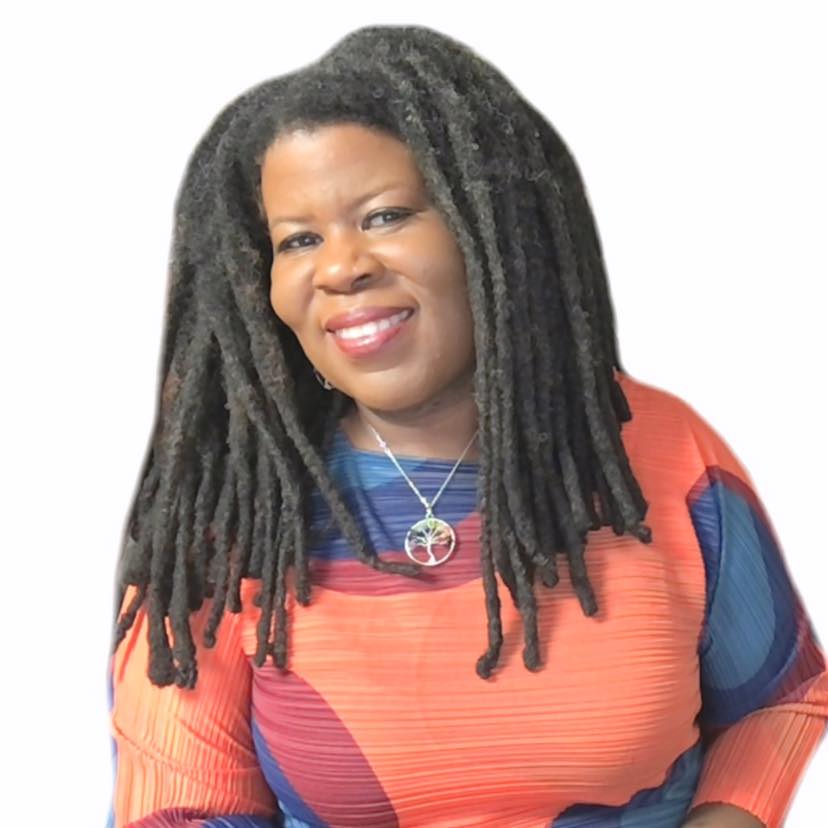
The Rev. Dr. Cheryl A. Lindsay, Minister for Worship and Theology (lindsayc@ucc.org), also serves a local church pastor, public theologian, and worship scholar-practitioner with a particular interest in the proclamation of the word in gathered communities. You’re invited to share your reflections on this text in the comments on our Facebook page: https://www.facebook.com/SermonSeeds.
A Bible study version of this reflection is at Weekly Seeds.