Sermon Seeds: A Branch Shall Grow
Sunday, December 7, 2025
Second Sunday of Advent | Year A
(Liturgical Color: Violet or Blue)
Lectionary Citations
Isaiah 11:1-10 • Psalm 72:1-7, 18-19 • Romans 15:4-13 • Matthew 3:1-12
https://lectionary.library.vanderbilt.edu/texts/?z=a&d=2&y=17134
Focus Scripture: Isaiah 11:1-10
Focus Theme: A Branch Shall Grow
Series: May Peace Be Within You (Click here for the series overview.)
Reflection
By Cheryl A. Lindsay
A branch is an offshoot of something else. It grows attached to something else. Its life, nature, and identity depend upon something else. Branches are not independent. They embody interconnectedness, mutual dependency, and growth. The branch needs the tree trunk and the roots to exist, receive vital nutrients, and expand. At the same time, the process of cutting enables the branch to give life to new plants.
I have a collection of houseplants, and occasionally, I will pinch some leaves and place them in water to start a new plant. This does not work with all of them, but for the plants that will form roots from leaves, the process of pinching yields dual results. The new plant is obvious, but the existing plant revitalizes through cutting that functions in a similar fashion to pruning. The difference is that in pruning, dead or excess leaves are removed and discarded. In cutting, the gardener trusts that the cut part will continue to live when separated from the source.
Then, there is the testimony of the Banyan tree. It’s an extraordinary spectacle. Roots grow from the branches of the tree. The branches are long and the roots seek water from the ground. The Banyan tree can live for hundreds of years and expand to cover acres under its canopy of branches and sustaining roots. Most trees do not function this way, and the Banyan tree may seem like a creation of fantasy rather than another version of a fig tree.
The world described in Isaiah 11 may also seem to be the fruit of impossible fantasy rather than a prophetic, imagined future crafted by the abiding love and longing of the Holy One. The text begins with a shoot coming from a stump. One need not be a horticulturalist to question the probability of a shoot, which is a manifestation of new life from active roots, being birthed from a stump, a dead thing. The cutting down of the tree, including most of its trunk and all its branches, produces the stump. Sometimes, that cutting happens in order to harvest the wood and use it for other purposes such as construction or fuel. At other times, the cutting occurs after the tree has died. There may still be harvesting, but the cut may also be a precaution to keep the tree from falling and causing greater damage. In addition, the tree may have fallen on its own and left only a small remnant connected to the soil–the stump.
There are certainly more straightforward ways to describe a descendant of the biblical figure Jesse. While prophecy is often poetic, the use of improbable imagery suggests unusual circumstances and miraculous results. A description of an exemplary human follows and bridges to a series of unbelievable pairings and divine promise of restraint, protection, and flourishing. The prophet invites communal imagining of a glorious future from an unlikely source. To comprehend the enormity of the vision, the reader benefits from an understanding of the contextual reality of the original audience.
The intent of the book of Isaiah, specifically Isa 1-39, cannot be fully grasped without attending to its imperial context, whether it be the Assyrian, the Babylonian or the Persian Empire. In Isa1-39, the Assyrian period assumes significance as the text points to the Assyrian threat and its propaganda. The expansionist agenda of the Assyrian Empire came into fruition with the coronation of Tiglath Pilesar III as King of Assyria in 744 BCE. Throughout the centuries of Neo-Assyrian imperial rule, Assyrian propaganda and ideology—positioning Assur as the chief of the pantheon and the Assyrian king as the human representative of universal dominion—were effectively transmitted throughout the empire via various channels. The findings of Peter Machinist about the Neo-Assyrian propaganda and its reflection in First Isaiah have been significant in understanding how the oracles in First Isaiah sought to deflect and rework the Assyrian propaganda prevailing in the eighth and seventh centuries. Michal Chan notes that in many passages, an anti-Assyrian tone prevails. He points to Isa 10:5-6, 16-19 and 33-34, in which Assyrian royal propaganda is subverted to challenge the Assyrian king’s claim to rule the world.
Philip P. Sam
Also significant in considering this text, the book of Isaiah does not present a clear, contiguous manuscript. In other words, the text in its presented form is derived from patching together multiple pieces to make the whole. As Marvin A. Sweeney notes,
Isaiah 11 was more likely written in the time of King Josiah of Judah (640–609 BCE), who was known for his program of religious reform and national restoration. The reign of Josiah saw many editions of the narrative and prophetic books, such as Joshua–Kings, Isaiah, Amos, Hosea, and portions of Jeremiah that were edited to support the Josian reform. Isaiah 11, with its vision of a child king who would reunite Israel and Judah to bring home the exiles from Assyria and Egypt, is an example of such work.
Marvin A. Sweeney
Notably, the biblical tradition records that King Josiah’s reforms were inspired by a rediscovery of the Book of the Law. The composition of Isaiah 11 during his tenure suggests that sacred remembering facilitates sacred imagining with a particular emphasis on a world of unimagined peace, where justice reigns, righteousness rules, and harmony prevails.
The result of this will be an idealized state of peace (shalom): pictured by the most fundamental enemies or predators and prey living side by side. Peace should be understood as much more than the absence of war: it evokes a state of existence in which life goes well, people have enough, and are safe from oppression in any form and live in harmony with one another. It is a form of societal well-being. It might be tempting to understand this prophetic picture of peace as some kind of idealized perfect world as often pictured in apocalyptic writings (see chapter 24 for more on this). However, if we look at what is described here, it is at the local, human level and is primarily about safety in normal Israelite life. All the animals mentioned as under threat are domestic, all the risky situations that can occur with children are part of daily life on a farm. This is the life of an Israelite farming family used as a way of articulating what a life without constant threat could look like. It is not a universal, eschatological reversal of conflict and death in the animal kingdom and human realm: it is limited to ‘my holy mountain’, which is used in Third Isaiah as a way of talking about Jerusalem, the place where the people of God live and worship. The knowledge of the LORD will lead to safety for his people, presumably since he is known to be awesome and powerful, so those under his protection are not at risk of attack.
Jenni Williams
Peace is localized and particularized in this passage and in God’s realm. That does not exclude a broader and more expansive vision of peace for the world, but the peace articulated in this passage is not, in truth, fantastical. It is attainable and achievable. Cutting a branch off of the Banyan tree and cultivating it to grow seems an insurmountable task, but pinching a few leaves off a houseplant is within reach. New life will grow when we pursue contextually big, tangible, just barely possible dreams and trust in the God of the promise to move miraculously through us.
Christians tend to consider Jesus to be the fulfillment of this prophecy. At a minimum, we rightly read it through the lens of the life of Christ. Yet, Hebrew scholars inform us that the text points to King Hezekiah. This is only complicated and in conflict when a dogged conformity to binary choices exists. Healthy trees have multiple branches. Hezekiah appeared to be the branch needed in his day. Jesus, for Christians, is the branch worth emulating and connecting to. Further, Christ teaches disciples the way to be a branch, and for the kindom of God to thrive, bear fruit, and be fulfilled, all those branches must grow.
Reflection from Voices of People of African Descent
The 33rd General Synod adopted a Resolution to Recognize the United Nations International Decade for People of African Descent (2015-2024). As part of its implementation, Sermon and Weekly Seeds offers Reflection from Voices of People of African Descent related to the season or overall theme for additional consideration in sermon preparation and for individual and congregational study.
“Sorrow Home”
By Margaret Walker
My roots are deep in southern life; deeper than John Brown or Nat Turner or Robert Lee. I was sired and weaned in a tropic world. The palm tree and banana leaf, mango and coconut, breadfruit and rubber trees know me.
Warm skies and gulf blue streams are in my blood. I belong with the smell of fresh pine, with the trail of coon, and the spring growth of wild onion.
I am no hothouse bulb to be reared in steam-heated flats with the music of El and subway in my ears, walled in by steel and wood and brick far from the sky.
I want the cotton fields, tobacco and the cane. I want to walk along with sacks of seed to drop in fallow ground. Restless music is in my heart and I am eager to be gone.
O Southland, sorrow home, melody beating in my bone and blood! How long will the Klan of hate, the hounds and the chain gangs keep me from my own?
For Further Reflection
“The branches do not support the root. But the root supports the branches.” ― Lailah Gifty Akita
“Do not take a refuge to the close rotten branches during drowning attempt to reach to the solid ones even if they are far.” ― Kamaran Ihsan Salih
“Silence can always be broken by the sound
Of footsteps walking over frozen ground
In winter when the melancholy trees
Stand abject and let their branches freeze” ― Merrill Moore
Works Cited
Sam, Philip P. “The Shoot in Isaiah 11: A Subversive Hybrid Figure.” Old Testament Essays (New Series) 38, no. 1 (2025): 17–38.
Sweeney, Marvin A. “Isaiah 1-39.” Gale A. Yee, Ed. Fortress Commentary on the Bible: Two Volume Set. Minneapolis: Fortress Press, 2014.
Williams, Jenni. The Kingdom of our God: A Theological Commentary on Isaiah. London: SCM Press, 2019.
Suggested Congregational Response to the Reflection
During the season of Advent, return to the Advent Wreath following the sermon and ask the gathered congregation to express (verbally or silently) where they find the emphasis of the week: Hope.
Worship Ways Liturgical Resources
https://www.ucc.org/worship-way/advent-2a-december-7/
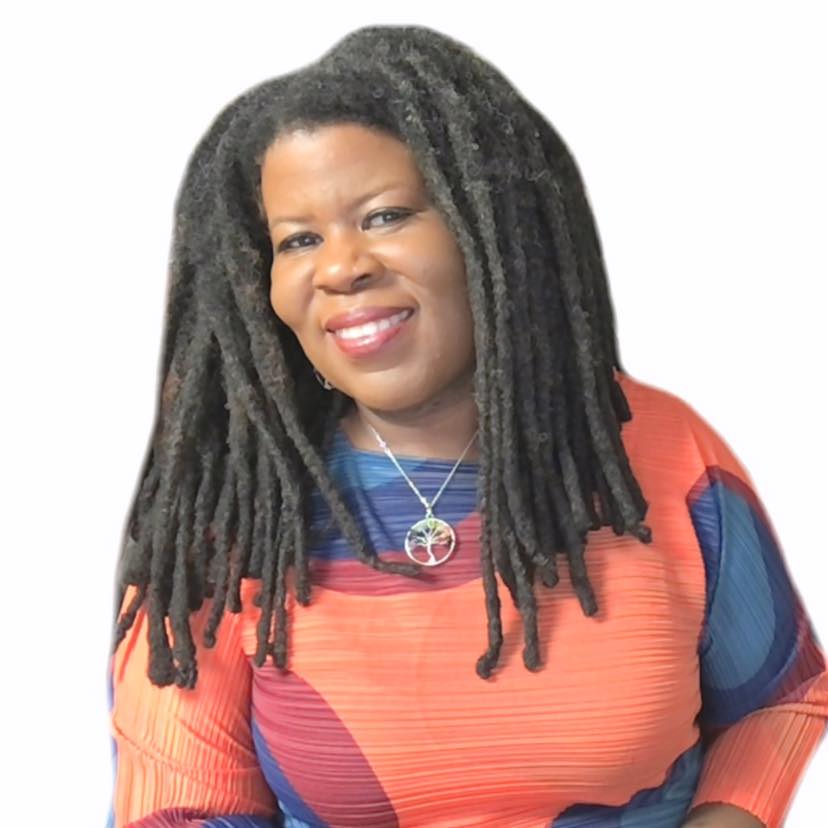
The Rev. Dr. Cheryl A. Lindsay, Minister for Worship and Theology (lindsayc@ucc.org), also serves a local church pastor, public theologian, and worship scholar-practitioner with a particular interest in the proclamation of the word in gathered communities. You’re invited to share your reflections on this text in the comments on our Facebook page: https://www.facebook.com/SermonSeeds.
A Bible study version of this reflection is at Weekly Seeds.