Conference Ministers tell Congress: ‘Love Knows No Borders’ in week of advocacy, public witness
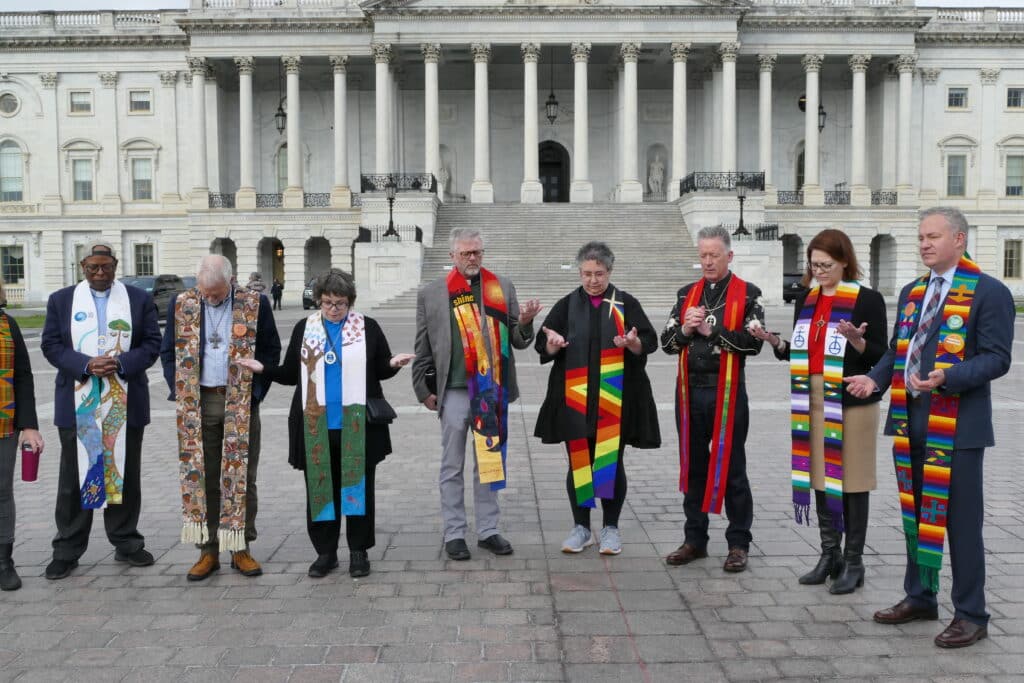
“Love Knows No Borders” was the recurring theme the week of Oct. 27 in Washington D.C., as 22 Conference Ministers of the United Church of Christ gathered in the nation’s Capitol for a week of advocacy training, public witness, and meetings with elected members of Congress.
The meetings come on the heels of tumultuous times in mainly Democratic-led cities across the country. President Donald Trump has deployed National Guard troops to cities such as Chicago, Portland, Memphis, and Washington D.C., as part of his plan to clamp down on crime in those areas. And as the government shutdown enters into a historic 40-plus day battle with some light at the end of the tunnel, the opportunities for the Conference Ministers to bring the stories of those they represent gave the week even more meaning.
“Our faith compels us to speak out against injustice. Advocating for the dignity and rights of immigrants and LGBTQ individuals is a testament to our belief in a God who champions love over hate, compassion over indifference, and unity,” the Rev. Freeman Palmer, Conference Minister for the Central Atlantic Conference said.
Over several days, participants engaged in advocacy training sessions and conversations about the intersection of faith and public life. They also spent time in worship and prayer, grounding their work in the UCC’s commitment to love our neighbors and the pursuit of a just world for all.
Postcards from UCC congregations across the country were delivered to members of Congress, each bearing personal stories of how families and communities have been directly affected by current immigration, refugee, and civil rights policies. Many of these stories were also shared publicly during a witness held near the U.S. Capitol, where ministers and participants gathered to faithfully lift up voices too often overlooked in national debates.
Path of Peace and Justice
On Tuesday evening, Conference Ministers met with local clergy of the Potomac Association, which includes UCC congregations in D.C., Maryland, and Virginia, to hear about issues and challenges facing members on the ground. In the nation’s capitol, clashes with the National Guard and Immigration and Customs Enforcement (ICE) agents have been intense, with reports of people having their windows bashed in, being forced from their homes and vehicles, and those who are citizens and of legal status being detained anyway.
All seven of the clergy who participated in the roundtable discussion shared stories of congregants who are facing personal and professional challenges, including those who have been laid off or furloughed from their jobs, many of them working in the federal government.
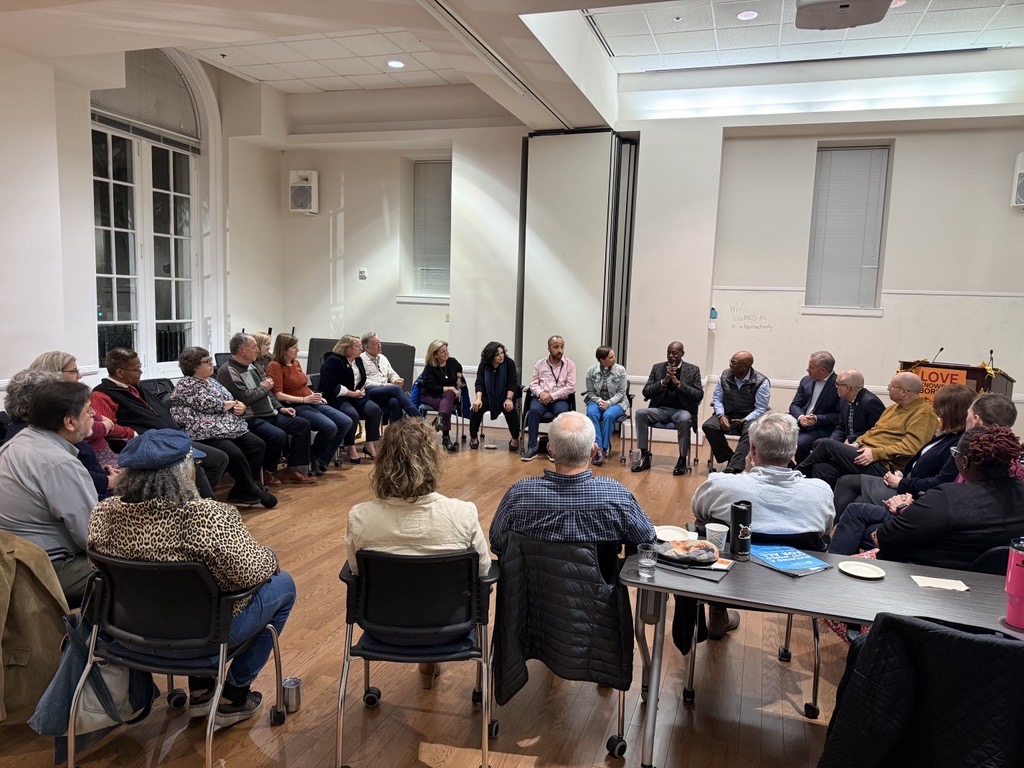
“This is all good, but I’ll be honest, it’s hard to live in D.C. Toxic energy radiates from the White House and Capitol, the chaos is never ending, and injustice just keeps expanding,” said the Rev. Ellen Jennings, pastor of the Cleveland Park Congregational UCC in upper Northwest D.C.
For Jennings, this is personal. In addition to the challenges her congregants face, her husband is a furloughed employee who is going without a paycheck. They have an autistic son who depends on SSI and a Medicaid waiver for his support services.
“Some days I’m just really tired. And that’s okay. We each have days like this,” Jennings said.
Those people Jennings refers to are the woman in her congregation working to find resources, though she’s furloughed herself, or the young mother who is volunteering, even though, she too, is furloughed.
“And this helps me breathe. Because we don’t have to reinvent the wheel. All we have to do is keep walking the path of peace and justice set out for us by Jesus,” Jennings said.
‘The Least of These’
By that Wednesday morning, there was a renewed sense of energy and excitement in the United Methodist Building as Conference Ministers prepped for their meetings with Congressional Members and their staff. Helen Nwabara, the International Policy Advocate for the Office of Public Policy and Advocacy spearheaded this effort by organizing all of the meetings with political leaders such as Rep. Adam Schiff (D-CA), Rep. Jaime Raskin (D-MD), Jon Husted (R-OH), and Ted Cruz (R-TX).
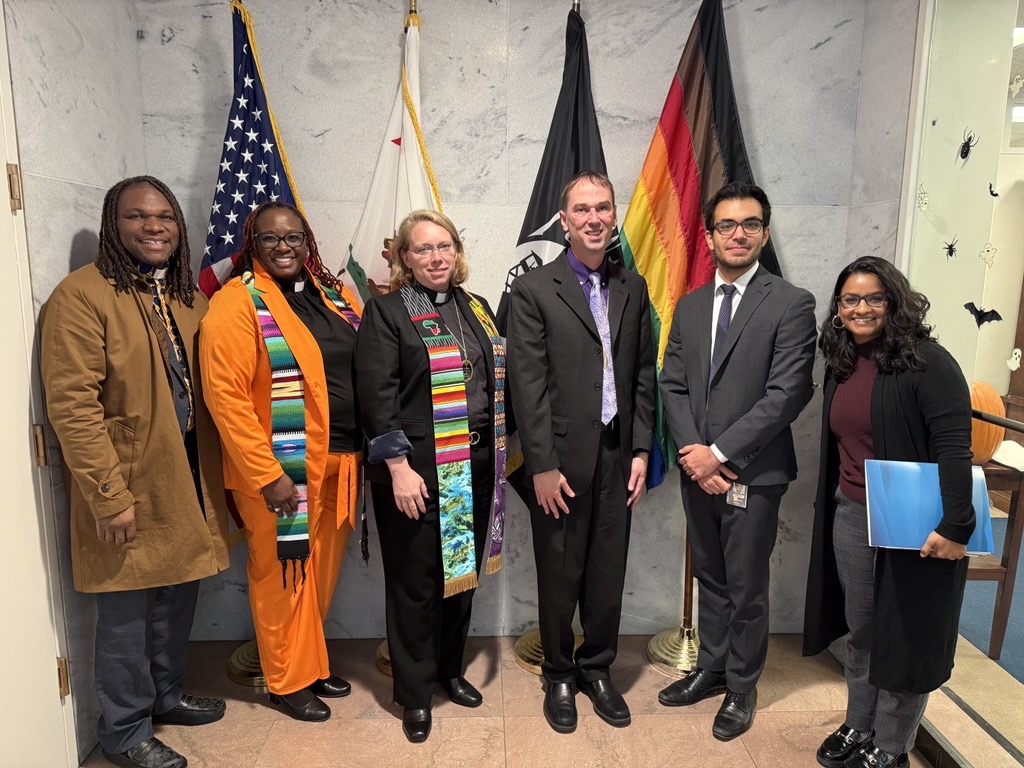
The Reverends Rachael Pryor, Conference Minister for the Southern California Nevada Conference, Davena Creer-Jones, Conference Minister for the Northern California-Nevada Conference, and Darell Goodwin, Conference Minister for the Southern New England Conference all attended a meeting with Rep. Schiff’s congressional staff where they each shared stories of struggle, heartache and triumph.
Creer-Jones shared stories of those within her Conference of people afraid to leave their homes, federal workers losing or being furloughed from their jobs, and the suspension of SNAP benefits. Creer-Jones shared her fears of militarized police presence if those who rely on SNAP benefits are faced with difficult decisions.
In the afternoon, the Reverends Bonnie Bates, Conference Minister for the Penn Northeast Conference, Molly Carlson, interim Conference Minister for the South Central Conference, and Gordon Rankin, Conference Minister for the New Hampshire Conference met with congressional staff from Rep. Cruz’s office.
Bates spoke about the Protecting Sensitive Locations Act, which is a policy that bans federal immigration enforcement agents from entering locations such as schools, hospitals, and places of worship. Bates shared the story of an individual who lives in College Station, and along with her husband, live in constant fear as both of them are undocumented. Their children, however, are legal citizens, which currently grants citizenship to those born on U.S. soil.
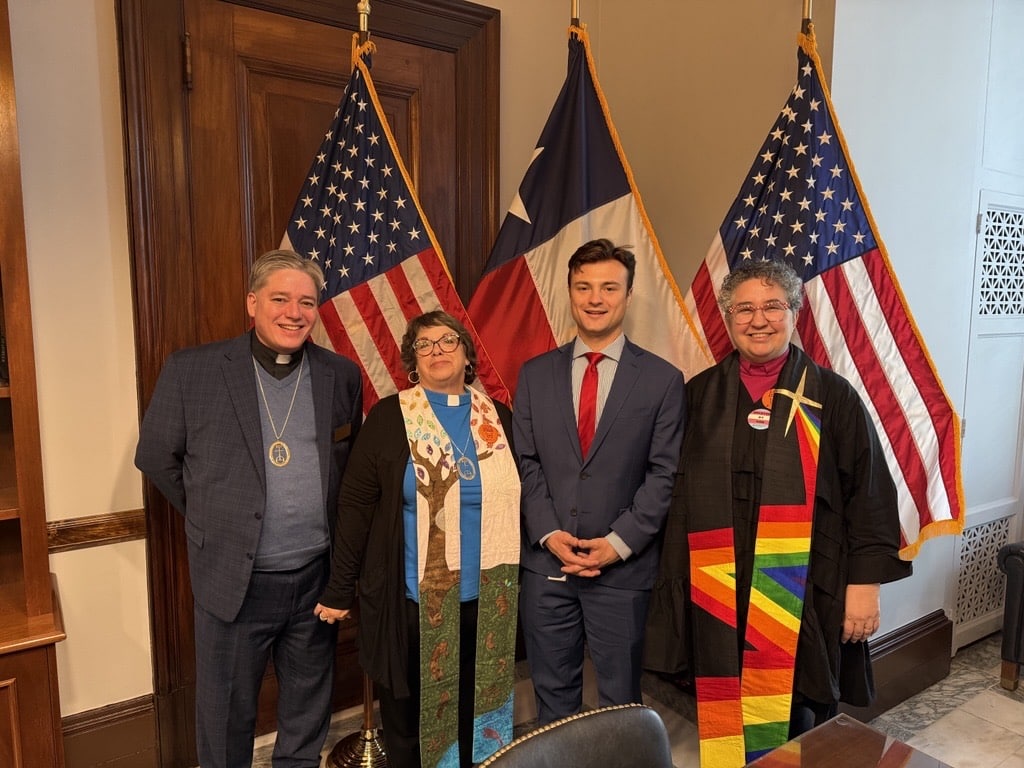
The Conference Ministers spoke about fears that churches have about parishioners being unlawfully detained by ICE agents, and the domino effect that would have on the surrounding communities, and small businesses, many that or migrant-owned establishments. The recurring theme in this meeting was Matthew 25, verses 42-45, which describes Jesus’ parable of the sheep and goats, where He explains that those who neglect the needs of the poor and vulnerable, the least of these, have also neglected Him.
A Public Witness
The week capped off with a public witness of Conference Ministers, National Ministries staff, and members of the larger advocacy and grassroots organizations outside of the United Methodist Building on Wednesday afternoon. According to the Rev. Michael Neuroth, director of the UCC Office of Public Policy and Advocacy, the gathering was a chance to ‘proclaim the truth of the sacred stories and identities being violently attacked and disappeared by a cruel regime.’
“We stand here today to say no, to say no to hate, no to tyranny and terrorism, no to the violation of our constitution and the undermining of our democracy,” Neuroth said. “We also gather here to say yes. Yes to love, yes to our rights, yes to the rule and law of our constitution.”
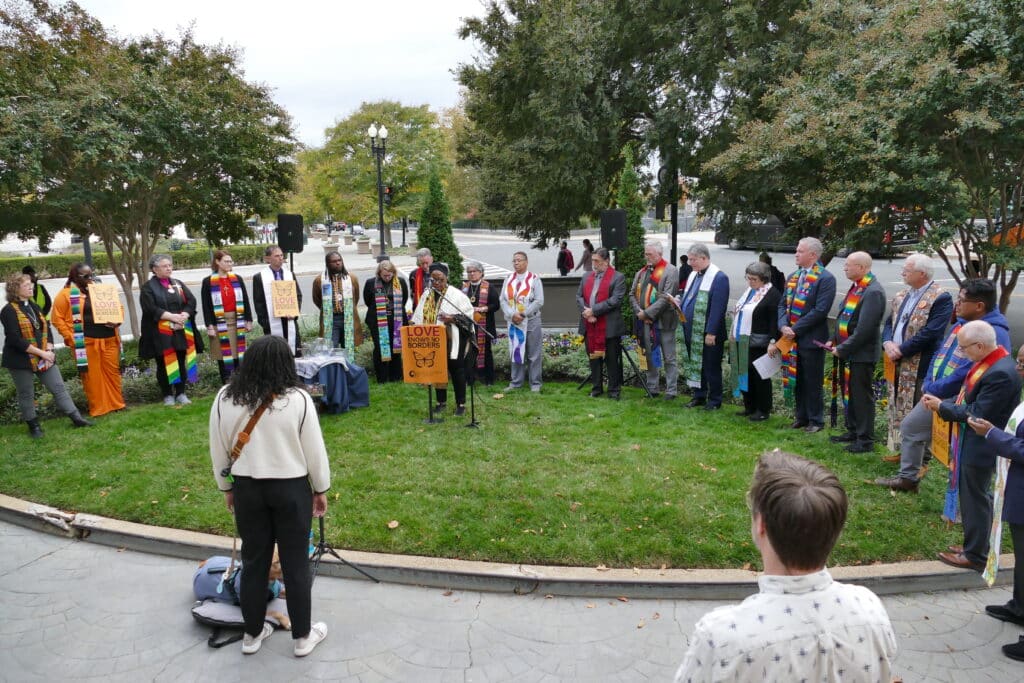
Conference ministers shared stories submitted to them by members of their community. From anecdotes of ministers being assaulted during peaceful protests, to trans family members fearing for their safety daily, these stories offered personal insight into the on-the-ground effects of the administration’s policies of exclusion and fear.
Rev. David Long-Higgins, Conference Minister of the Heartland Conference UCC, shared a story of a family he met in Mexico who had fled for their lives from Venezuela. “After traveling for years,” he shared, “they had been waiting nine months for their credible fear interview to be granted asylum. The interview was scheduled for the week of January 20, and was summarily canceled following the inauguration. What we heard from this family was a credible love testimony and the ache of their hearts for their whole family, especially their children, to be free of the daily fear of losing their lives.”
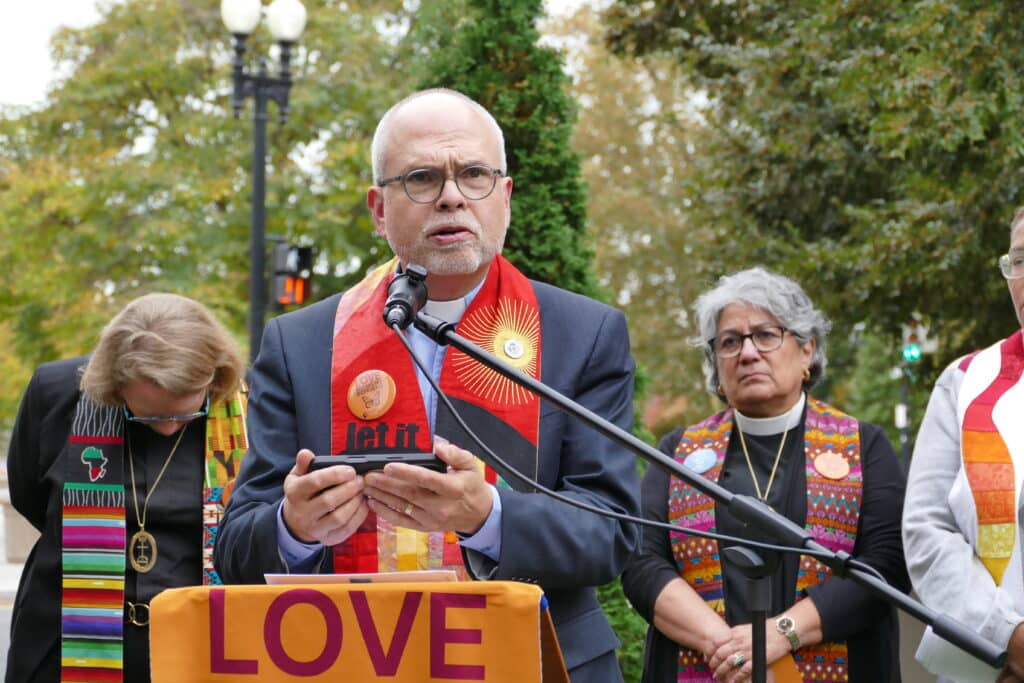
After each story, the minister would pour water into a collective basin, symbolizing the tears shed from the communities suffering under these policies.
In addition to UCC Conference Ministers, the vigil included speakers such as Bishop Vashti McKenzie, President and General Secretary of the National Council of Churches, and Rev. Juilo Hernandez, Executive Director of Congregation Action Network, who posed the question of what love looks like in public square and how we can, as the church, reconnect with Jesus’ message of love.
The vigil concluded with Rev. Shari Prestemon, Associate General Minister and Co-Executive of Global Ministries for the UCC, reflecting on the powerful stories and water ritual. “We will resist evil and oppression and follow the way of our savior,” Prestemon said, “and witness the love and grace of God made visible by what we do here today.”
You can watch the full witness in the video below.
Content on ucc.org is copyrighted by the National Setting of the United Church of Christ and may be only shared according to the guidelines outlined here.
Related News
National Ministries, along with Central Pacific Conference release joint statement condemning school shooting in Bend, Oregon
The United Church of Christ, in collaboration with the Central Pacific Conference, has...
Read More
‘No death should be fodder for public entertainment’ – Rev. Karen Georgia Thompson issues statement on the initial intention of the live broadcast of the execution of Nidal Malik Hasan
The United Church of Christ’s General Minister and President/CEO, the Rev. Karen Georgia...
Read More
We Are Not Alone
A Tent of Our own Making is a series of gatherings in the United Church of Christ where...
Read More