
Color Lines: Politics and the Church
Diversity is an inherent part of the life of the church. Diversity may even be pluralized, a sign that the breath of diversity is a multiplicity within the one word, emphasizing there are many categories to be considered. Race, age, gender, theology, geography, language, church size and more identify these places where differences are more visible in the life of the church. More recently, political affiliation is appearing as a diversity marker in the life of the church in a new way.
Political diversity has long been a part of the layers of diversity present in the church. The people have always voted based on their convictions. More prevalent now is the overlay of political colors (Democratic – blue and Republican – red) to identify congregations and organizations, in much the same way states and cities are labeled. References to states as red or blue is a part of life in the United States, with these references being based on the ways in which presidential candidates have won or lost those states over the years. These color lines have now permeated the church in a way that now identifies churches as red and blue and purple.
In 2024, Public Religion Research Institute published a report on Christian Nationalism. Support for Christian Nationalism in All 50 States: Findings from PRRI’s 2023 American Values Atlas. The study included interviews with 22,000 adults. The results noted: “Roughly three in ten Americans qualify as Christian nationalism Adherents or Sympathizers,” with “residents of red states are significantly more likely than those in blue states to hold Christian nationalist beliefs.” The linking of states, politics and church went a bit further. “Among Americans who attend religious services weekly or more, a majority (52%) are Christian nationalist Adherents or Sympathizers, compared with 38% of those who attend a few times a year and 18% of those who seldom or never attend.”
This study and others like it are making the connections between politics and the church in a way that amplifies the divide. While the description of these states is related to past elections, the overlay of political colors on the church is problematic for many reasons.
Politics has always been present in the church. Individuals bring their political values with them to church, although these values are not always expressed openly. The demarcation of red and blue churches, though referencing the predominant political values of the members of that congregation is an imposed narrative that is contributing to the widening gap in congregations and denominations. This colorized view of the church prioritizes politics over people at the expense of the unity of the church. The colorized church is once again faced with complicity in its willingness to be a political tool.
An antidote to the problem of the color lines has been the increasing use of “purple churches” as a way of acknowledging that many congregations include people of different political views. While this acknowledgment is much needed and even welcomed in pushing back against promoting political values on the church, purple while an attempt at inclusion, supports the political colorization of the church through association with the two-party system in the US.
Cries of separation of church and state continue to ignore the congealing political overlay on the church. There is no discomfort in the use of political colors, yet these cries come when the call for justice steps into advocacy and activism.
The church, the body of Christ, should prioritize faith over politics, love over fear, and hope over despair. Regardless of the political colors it chooses to wear, the church is once again aligning itself with the political will at the loss of its prophetic witness. A church coopted and colorized is a church that is losing its voice, whispering into the winds of irrelevance.
Related News
Join the United Church of Christ in Observing Just Peace Sunday
Communities are invited to join churches across the United Church of Christ in observing Just...
Read More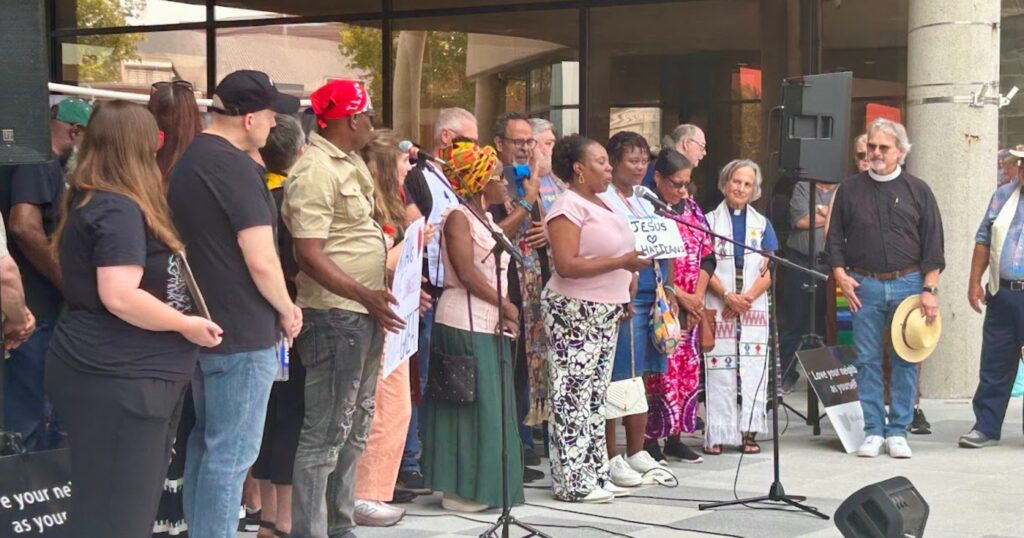
In Springfield, faith leaders from near and far joined rallying cry to ‘unshackle’ Haitian immigrants
In Springfield, Ohio, U.S. Immigration and Customs Enforcement have required many Haitian...
Read More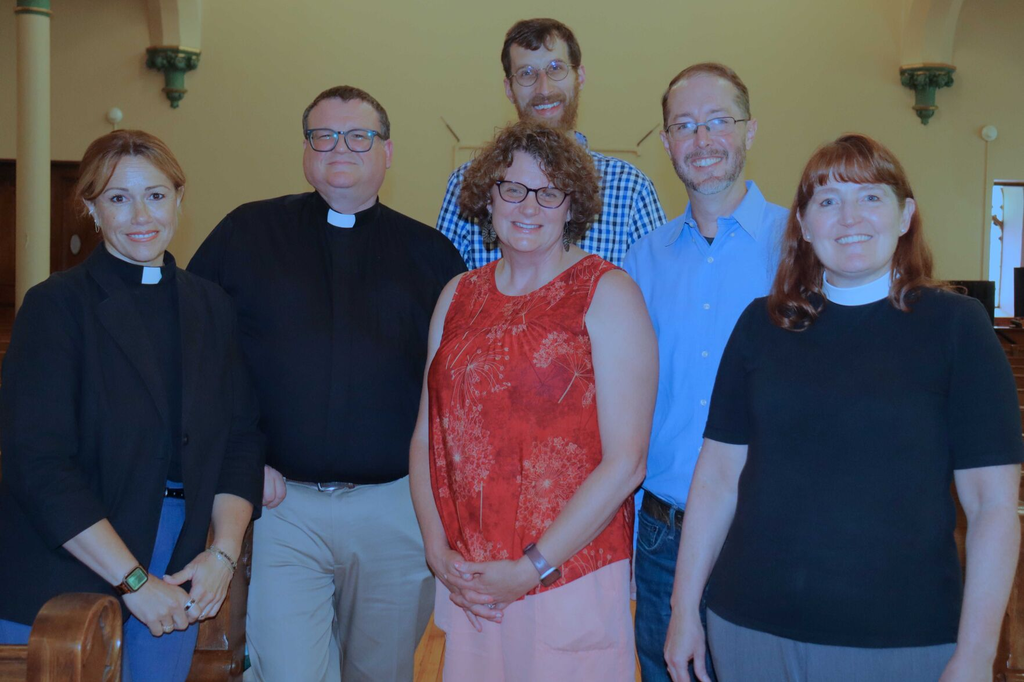
From the pulpit to the emergency room: Frederick faith leaders are using their churches to help erase millions of dollars in medical debt in their community
When the Rev. Chance Martinez-Colon learned of the burgeoning medical debt among Frederick...
Read More