‘This is a resurrection model’: How two small, aging Wisconsin churches joined to build new space and community ties
When the Rev. Staci Marrese-Wheeler became pastor of Lakeview Moravian Church in 2009, she believed she would bring her skills as a former hospice chaplain to help this church end its life well. It was a small, greying congregation with long-time committed members, but they no longer had a strong presence in the surrounding Madison neighborhood like when the church began in the 1950s.
Yet now, over a decade since Marrese-Wheeler began, the church has stepped out on faith with big changes that have led to a new church identity and name – Common Grace – and the building of a brand new community center, worship space, and housing complex.
As the construction project is now underway, Marrese-Wheeler was one of several featured speakers to share her congregation’s path of revisioning church and engaging with community and at last month’s Partners in Building conference, which is held annually by the United Church of Christ Church Building and Loan Fund (CBLF).
‘Callings into community’
Marrese-Wheeler points to two movements around 2016 that planted seeds which would grow into a more community-oriented ministry.
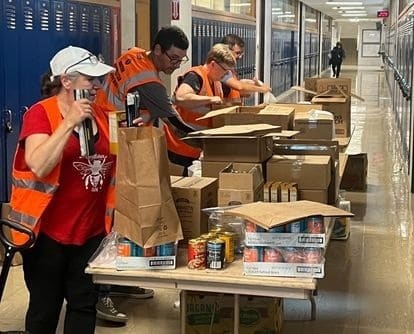
First, the elementary and middle schools located directly across the street from the church – which the church had supported through tutoring and a school adoption program – got new administrators who invited the church to help address student needs for food security. While the small congregation initially felt overwhelmed by the request, Marrese-Wheeler said, they decided to pray about it.
Second, Marrese-Wheeler began meeting with an ecumenical group of local pastors to share the challenges several were facing at their churches, like too much building to maintain and significant community needs. They began finding ways to collaborate, and the leaders of the three smallest churches considered ways they could best share resources. Over time, this led Marrese-Wheeler’s Moravian congregation to merge with the nearby Zion Faith Community, which was affiliated with the ELCA, to become Common Grace.
“It was a long process that involved reaching out to ecumenical partners, listening to community partners, and also looking back at our history,” Marrese-Wheeler said. “But most importantly, our process involved prayer – the very concerted prayer that if we opened our doors and opened our hearts, we would be offered clear needs and callings into our community.”
‘Church is rethinking itself’
Common Grace began worshipping as one federated body in 2021 with a vision of doing even bigger community work: creating a neighborhood community center.
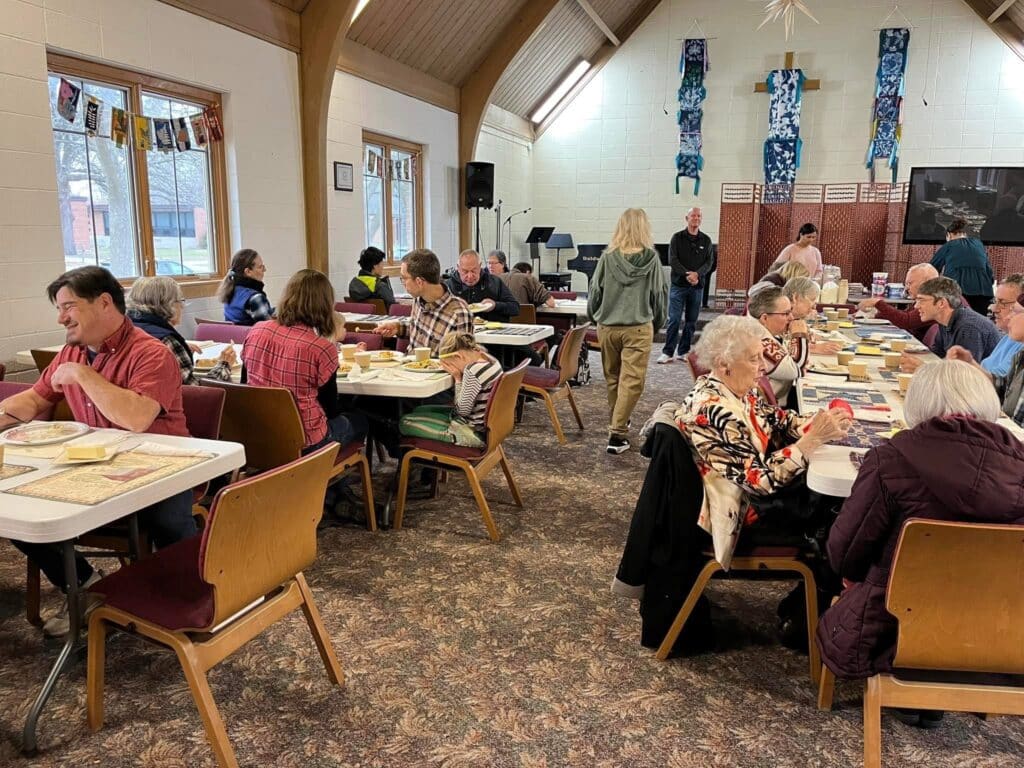
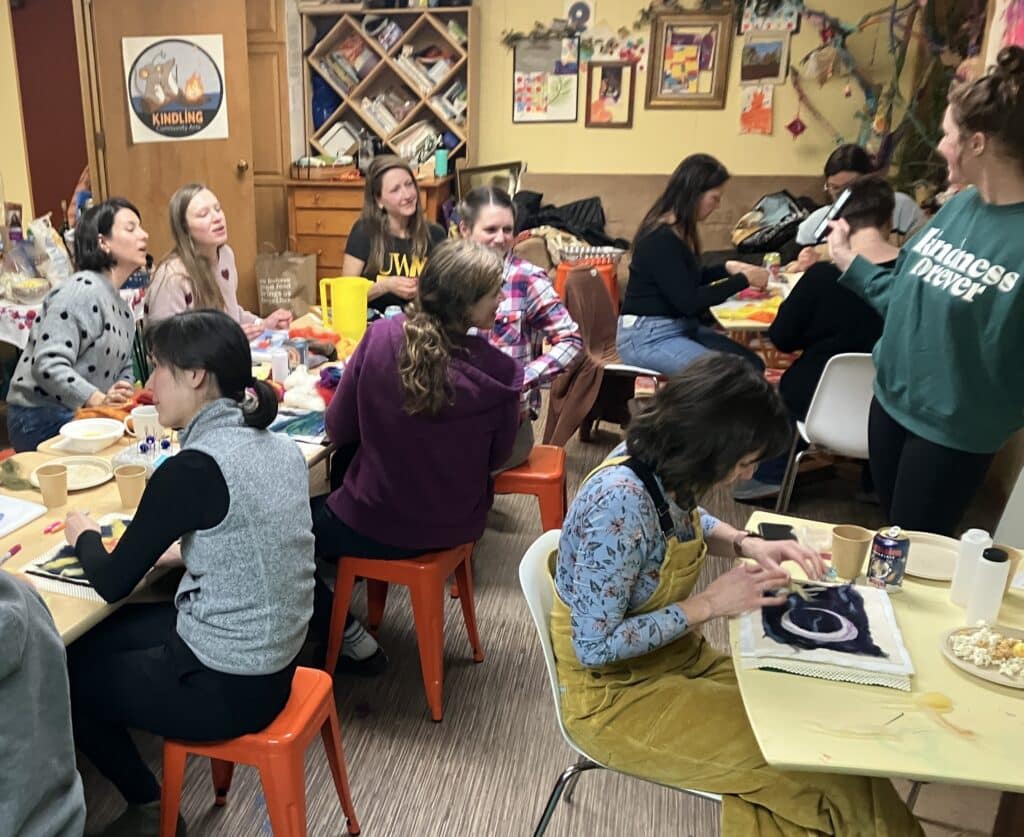
They settled into the building of the former Lakeview church and made concerted efforts to invite community groups to share the space. Groups that set up shop there include a fair-trade retail store, a community arts program, and several small organizations that meet throughout the week.
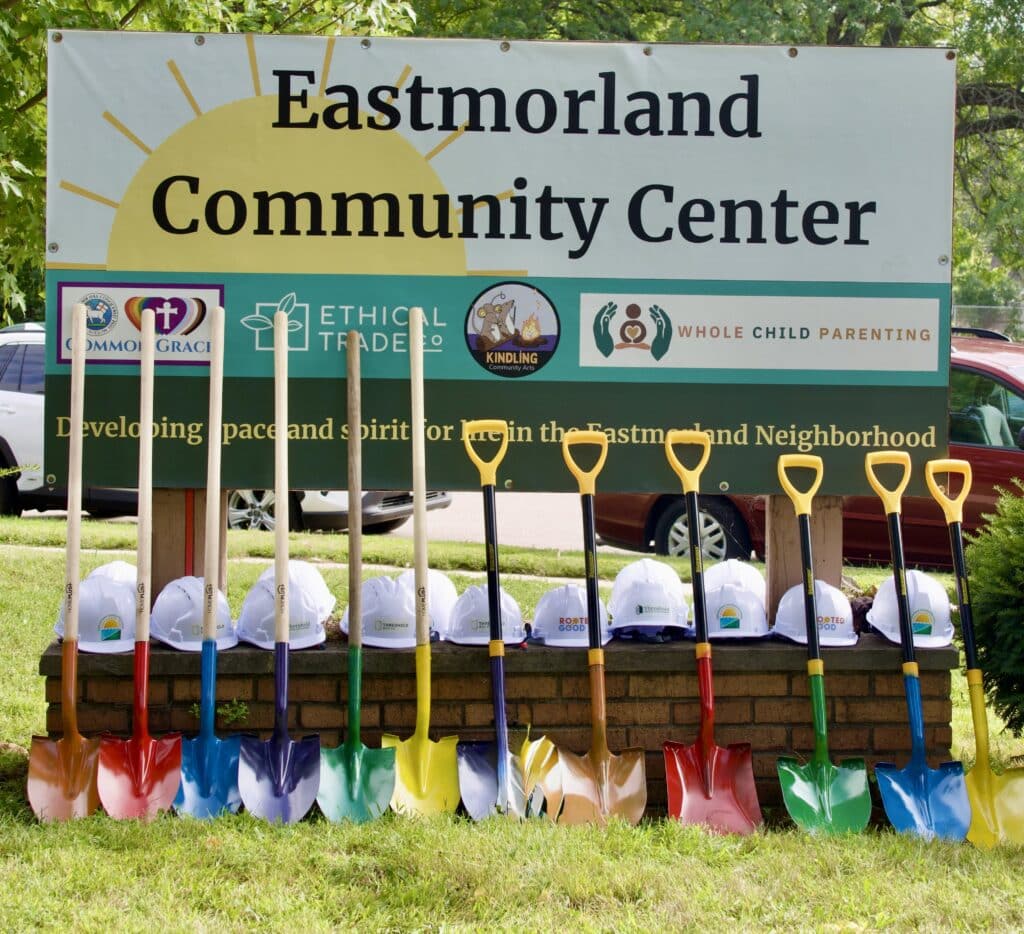
One of the most important decisions in communicating their new focus was making a clear statement with the church sign, Marrese-Wheeler said. They removed the church’s name and put up a sign introducing the building as the Eastmorland Community Center.
“We needed the community to help us continue forming what we’re doing here, and we can only do that if it’s accessible and feels like a place they can come. So the church stepped back as part of the identity, and we had community meetings where people helped us dream and vision about what was needed in the community,” she said.
In February, a UCC congregation that decided to sell their building began worshipping with Common Grace while still in discernment about their next steps as a faith community.
“It’s convincing me that church is rethinking itself – whether at the ‘big C’ Church level or the small congregational level – on how to become more faithful and not stay in the same mold until we cannot anymore,” Marrese-Wheeler offered. “I think that’s hopeful in a time when the country is saying scarcity is the only thing we can respond to. What I’m seeing is people who are saying that community is the antidote for scarcity. We as Christian people do community well, and we can offer this not only for our own people, but for the larger part of our communities.”
For Common Grace, she reflected, church isn’t just Sunday morning. It’s the school food program, the community gatherings, the neighborhood community association, and all the partnerships created there.
Digging into the details
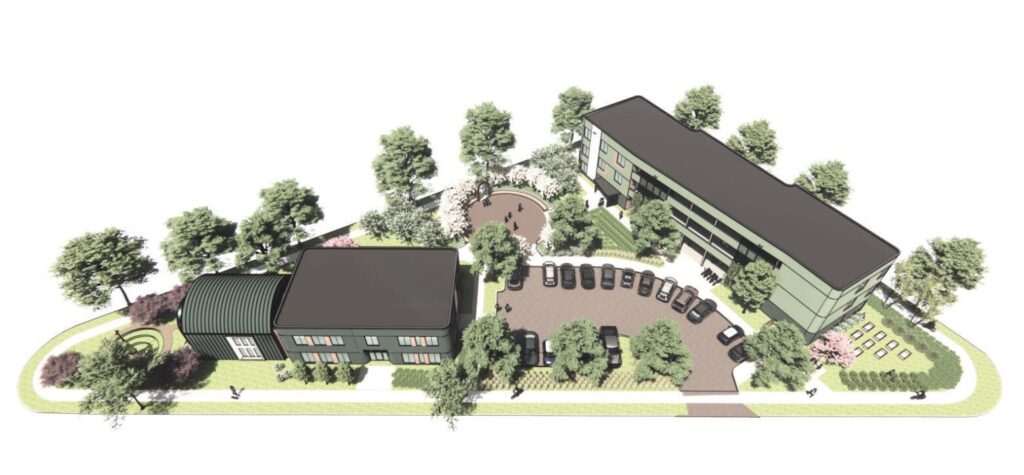
With much planning and discernment, Common Grace set their sights on demolishing the 70-year-old building to rebuild the Eastmorland Community Center as a more accessible space designed for versatile community use. The $8.5 million redevelopment project will include a two-story, 6,800 square-foot community center with a multi-use gathering space where Common Grace will worship. It includes a nearby three-story apartment building with around 25 units of lower-cost housing which will remain owned by the church as one income source to supplement the community space.
While Common Grace started out with $450,000 from the sale of Zion Lutheran Church’s building, they worked with CBLF to run a $1.5 million capital campaign for the project. So far, donors have pledged over $800,000.
Common Grace’s community partnership made this project unique, said the Rev. Drew Terry, CBLF mission interpreter, who worked with the church on the campaign. He adapted the process and materials to fit this need and included both community members and church members in a feasibility study that showed there was sufficient resources and excitement for a campaign, and he resourced and met with them weekly to run it.
“It is truly an amazing work of God that through Common Grace’s people and vision and the resources of the CBLF program, we were able to take what was initially a $500,000 goal to raise $1.5 million. It was truly a blessing, honor, and joy to be part of this demonstration of God’s transformative work,” Terry said.
For anyone considering a project of this scope, Marrese-Wheeler encourages people “to see what you have in terms of resources nationally, denominationally, and to find out who your neighbors are.”
A local two-year program called Awaken Dane supported Common Grace’s efforts in doing community impact work across ecumenical lines. And the national program RootedGood assisted them in envisioning and moving through the process of using their church property creatively. Common Grace received a $400,000 deferred loan through the city of Madison, and their construction loan came from the Texas Methodist Foundation.
Breaking ground
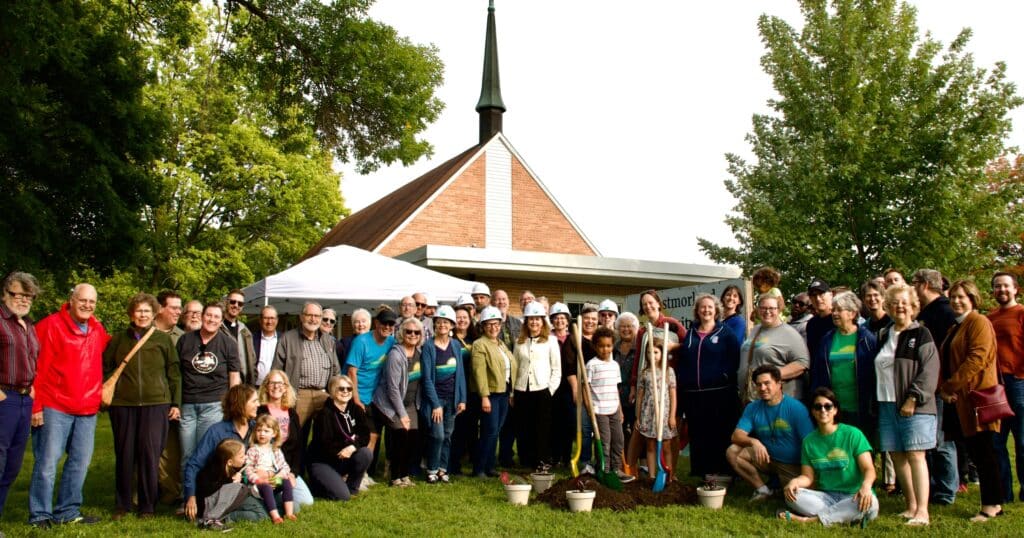
In September, a large group gathered to celebrate the Eastmorland Community Center ground-breaking.
Marrese-Wheeler reflected on how this transitional time is both sad and exciting for many. The relief of replacing a leaky roof and the asbestos tiles beneath the carpets is joined by memories that “the building was so much more than that in the life of this neighborhood for many years.”
The people of Common Grace are temporarily worshipping in another church building – a relationship formed through their ecumenical work. They have had no shortage of other churches reaching out to assist in this time of transition, Marrese-Wheeler said.
“I feel like God has blessed what we’re doing in ways that matter each moment and each step along the way,” she said.
Now the sole pastor and co-executive director of the community center, Marrese-Wheeler has found herself preparing “a bazillion tasks I wasn’t planning for and have to figure out” like the accounting processes, tax preparation and auditing, and hiring a building management group for the apartments.
The pastoral work offers her a sense of balance, she said.
‘Bad business, great resurrection’
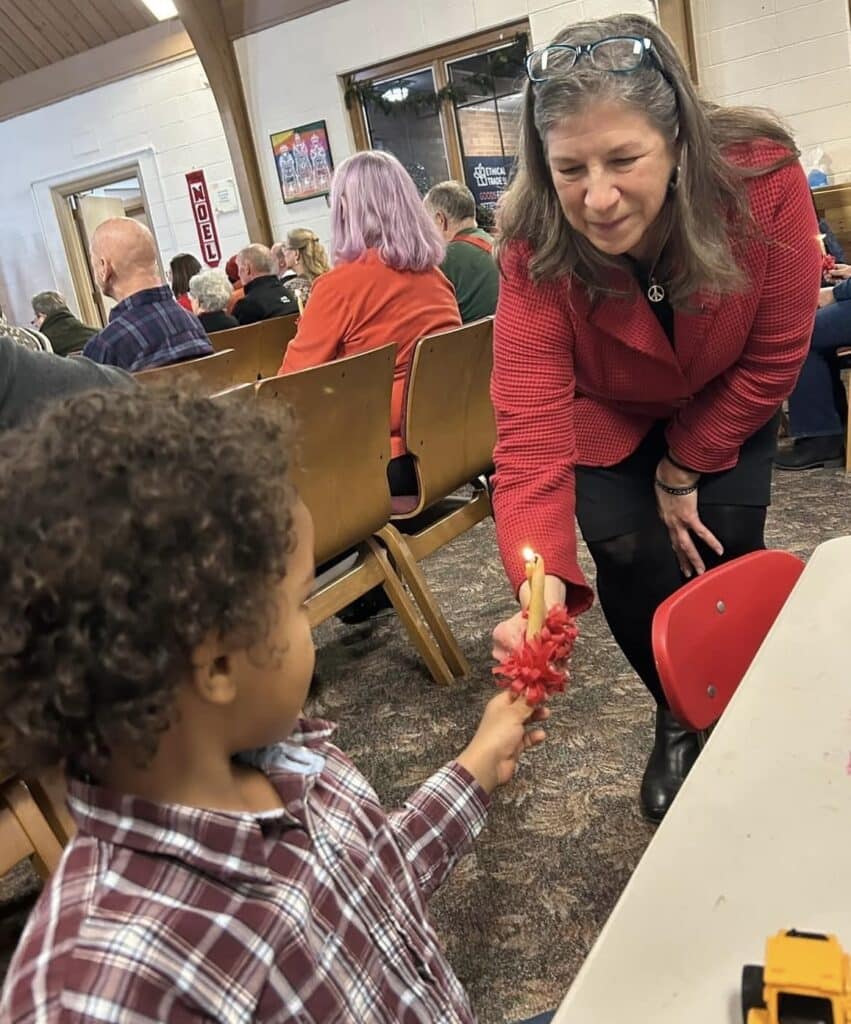
New people have come to Common Grace. Though the worshipping community is similar to the size of the two congregations that initially joined together, there are now several families with children and a new need to plan for Sunday school classes, Marrese-Wheeler said.
“Those people would not have come if it had not been a community church,” she said. “That neutral denominational name and the idea of two churches working together made a difference to them. The other thing it did was say something new is happening in our neighborhood, and that brought people that were much more neighborhood-centered again.”
While the church has had the ability to offer no-cost and very low-cost space to community groups in the past, they will have to consider what an affordable, sliding scale model can look like to both support community groups and help to cover the new building’s loans.
But those are questions they are readily seeking to navigate.
“This is a resurrection model; this is not a business model. It’s bad business, but it’s great resurrection,” Marrese-Wheeler said. “The overarching principle has to be about new life and abundance — not always playing by the well-thought-out business rules, but by the gospel ethic of unconditional love and mutuality. Those are the principles that are leading and guiding us here.”
Content on ucc.org is copyrighted by the National Setting of the United Church of Christ and may be only shared according to the guidelines outlined here.
Related News
UCC Southwest Conference sets out to let spiritual sojourners know it’s ‘not that kind of church’
Not that kind of church: No judgment. No hierarchy. No kidding. This is the new slogan of...
Read More
‘Dangerous and Should not be tolerated’: UCC signs letter denouncing anti-Muslim bigotry from elected officials
The Office of Public Policy and Advocacy, as well as the National Ministries of the United...
Read More
Young people want God and UCC conferences are noticing: Southern New England adds Minister of Youth and Young Adults to its staff
When Devin Shmueli saw the Southern New England Conference UCC (SNEUCC) was seeking a...
Read More